United Way, other nonprofits can now pay rental deposits for frailest Californians
A new Medi-Cal housing initiative helped Dolores Mora escape a frightening situation at her apartment building in Sacramento’s Del Paso Heights neighborhood.
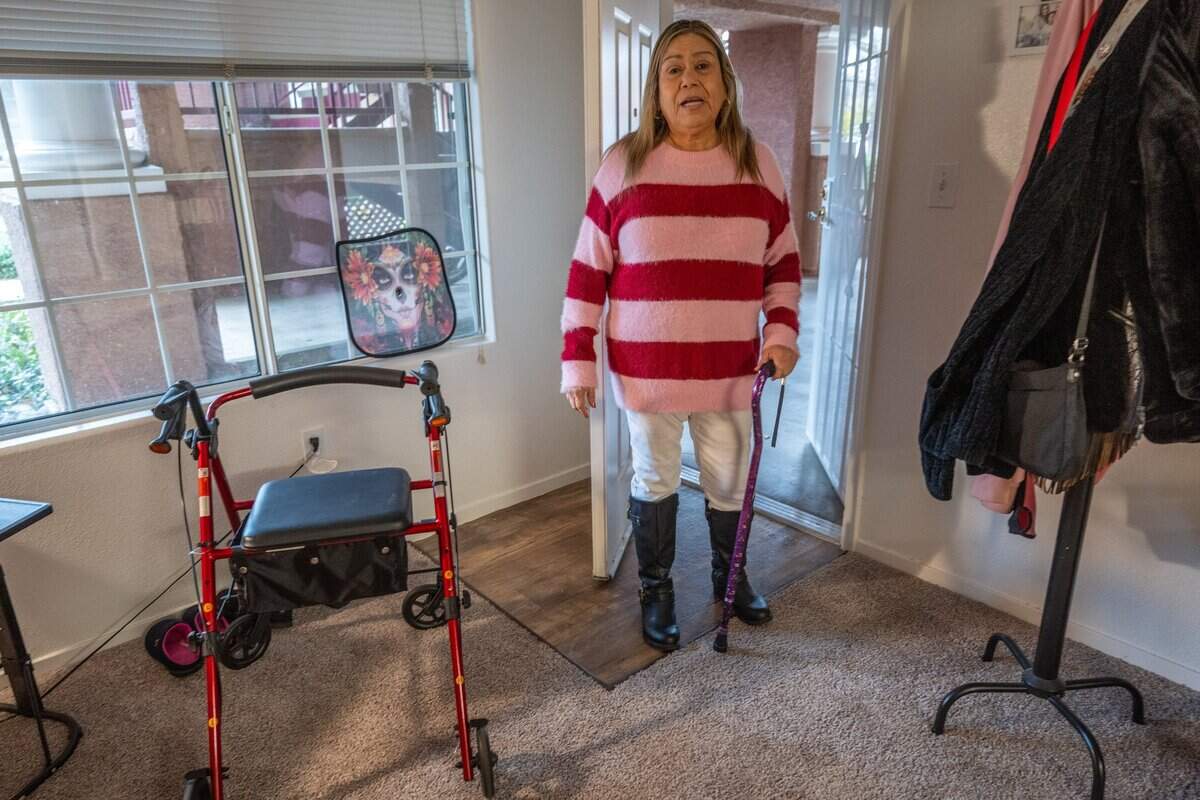
Mora, 58, never felt safe in the neighborhood, she said, but her anxiety spiked after she was nearly assaulted in her complex. Back problems have left her unable to work and have made it difficult for her to walk, she said.
To numb her fears over her living situation, Mora said, she began buying alcohol at a liquor store across the street, sometimes drinking as much as a fifth of vodka a day.
She wound up in the hospital four times over the three years she lived there with health issues caused by the drinking, she said, and finally, the doctors asked whether there were any services they could offer her to improve her health and safety.
“I told them I needed to move from where I was at in Del Paso Heights,” she said. “It was a really rough place to live.”
The frailest Medi-Cal patients often confront housing challenges that can exacerbate their health conditions, but an innovative new California initiative is putting navigators and funding in place to help them find stable places to stay.
Mora’s case manager with River City Medical Group connected her with the United Way California Capital Region. This nonprofit and others in the Sacramento region are providing either in-depth case management or community supports such as housing navigation or both for Medi-Cal members diagnosed with complex medical conditions.
Because of health challenges faced by this population, Medi-Cal spends half its funds to care for just 5% of its beneficiaries, the agency has reported.
Though this ratio is stunning, it’s not all that dissimilar from demands faced by other Medicaid programs around the country. For years, the state and federal governments have been experimenting with how to improve the health of this population of frequent users and encourage them to seek care before they face a health crisis.
The key, they have found, appears to lie in working to improve so-called social determinants of health — housing stability, access to clean water and nutritious food, neighborhood violence and the like — for the frailest Medi-Cal recipients.
Studies have shown that social determinants of health play a greater role in shaping people’s health than their genes or access to health care services. For this reason, many who qualify are homeless residents who live with circumstances that aggravate their medical conditions.
Medi-Cal and other Medicaid plans around the nation have enlisted insurers, medical teams and grass-roots nonprofits in a far-reaching, multiyear plan to transform the government-run program that oversees health services for the nation’s poor, elderly and disabled citizens. In California, this plan is known as CalAIM, or California Advancing and Innovating Medi-Cal.
As part of this new approach, Medi-Cal managed care plans can provide enhanced care management to ensure beneficiaries have the means to adhere to physicians’ orders and community support services such as helping members find and sustain affordable housing, said Tessa Outhyse, a spokesperson for the California Department of Health Care Services. Community support services launched in 2022.
In Sacramento County, Health Net, Kaiser Permanente, Molina Healthcare of California and Anthem Blue Cross all have been providing thousands of dollars to help members with the highest needs achieve and maintain housing stability. In addition to United Way, other nonprofits offering housing navigation include Community HealthWorks, A Senior Connection and Lao Family Community Development.
“Managed care plans are responsible for determining when and how these services are appropriate for each member, making sure they are provided at the right time for the most benefit,” Outhyse said.
Each Medi-Cal managed care plan establishes how much money they will provide members for housing services and, in conjunction with medical teams, determine when and how often members can qualify for this assistance, Outhyse said.
Housing in an affordable housing crisis
Dawnté Early, the CEO of the local United Way affiliate, said that United Way began offering housing services in October 2023. There’s a shortage of affordable housing, she said, so Medi-Cal beneficiaries need all the help they can get to locate places to stay that are within their budgets.
The United Way has used community supports funds to do things like paying housing deposits, covering rental application fees, paying off debts to help beneficiaries achieve the credit score needed to qualify for housing, buying beds or other furniture needed for living. One United Way client, Early said, had to put in 80 applications before she found a place to stay.
Health Net made a $12,000 donation to help the United Way begin covering housing deposits because it can take a little while for nonprofits to get reimbursed by the plans. Nancy Kalev, the company’s senior director for Systems of Care, described housing as the most important social determinant of health, saying it can account for up to 80% of a person’s health outcomes.
“Housing interventions can result in both improved health outcomes and decreased health care costs,” Kalev said, so addressing the housing needs of our members aligns with Health Net’s mission to transform the health of the communities we serve, one person at a time.”
DHCS is still evaluating the impact of the community supports services, Outhyse said. Prior short-term pilot programs such as Whole Person Care and Health Homes Program produced some positive results on health outcomes and cost savings, she said.
The State University of New York at Albany assessed the impact of Medicaid housing initiatives taken with roughly 15,000 high-acuity beneficiaries since 2012. Researchers found profound impacts on health care use and costs: Hospital in-patient days plummeted by 40%. Emergency room visits dropped by 26%. The number of patients admitted for inpatient psychiatric care fell by 27%.
Edward King, the local United Way’s chief program officer, said members can apply for housing navigation services or CalAIM resources by speaking with their primary-care doctor, asking for help from their Medi-Cal managed care plan or calling a nonprofit that offers the services. To reach United Way, King recommended emailing calaim@uwccr.org.
In its first 12 months of operation, the United Way has helped 200 households to get housing, King said. He’s seen Medi-Cal managed care plans move very quickly to help patients in need, he said. In one case, for instance, a Yolo County client lost their home to fire, and his team was able to help them move into permanent stable housing within two weeks.
“These services really work to improve the quality of life for the individuals, but it also works to improve the quality of the community,” King said.
Stable housing and regular check-ins
A thankful Mora said she’s gotten her alcohol addiction under control. CalAIM’s enhanced care management and community supports have transformed her life for the better, she said.
While a United Way housing navigator helped her locate and move into new digs a year ago, her case manager at River City Medical Group regularly checks in with her to determine whether she’s maintaining her sobriety and is getting the medical care she needs.
Surrounded by photos of her grandchildren, Mora sat in her apartment in a quiet, verdant, seniors-only complex in the Natomas area and talked about how drastically her outlook and life have changed in a year.
Her seniors-only community has a clubhouse where she can get breakfast, watch a big-screen TV or socialize with other residents if she likes. There’s also a heated pool and jacuzzi that she can use to help manage her back pain.
Mora said her doctor told her that her back problems likely stem from years of repetitive work. As a child, she worked in farm fields, stooping over to pick tomatoes and onions or tossing heavy melons onto tractors. Then, as an adult, she worked for years in convalescent homes as a certified nursing assistant, lifting patients, supporting them as they went to the bathroom and doing other strenuous work.
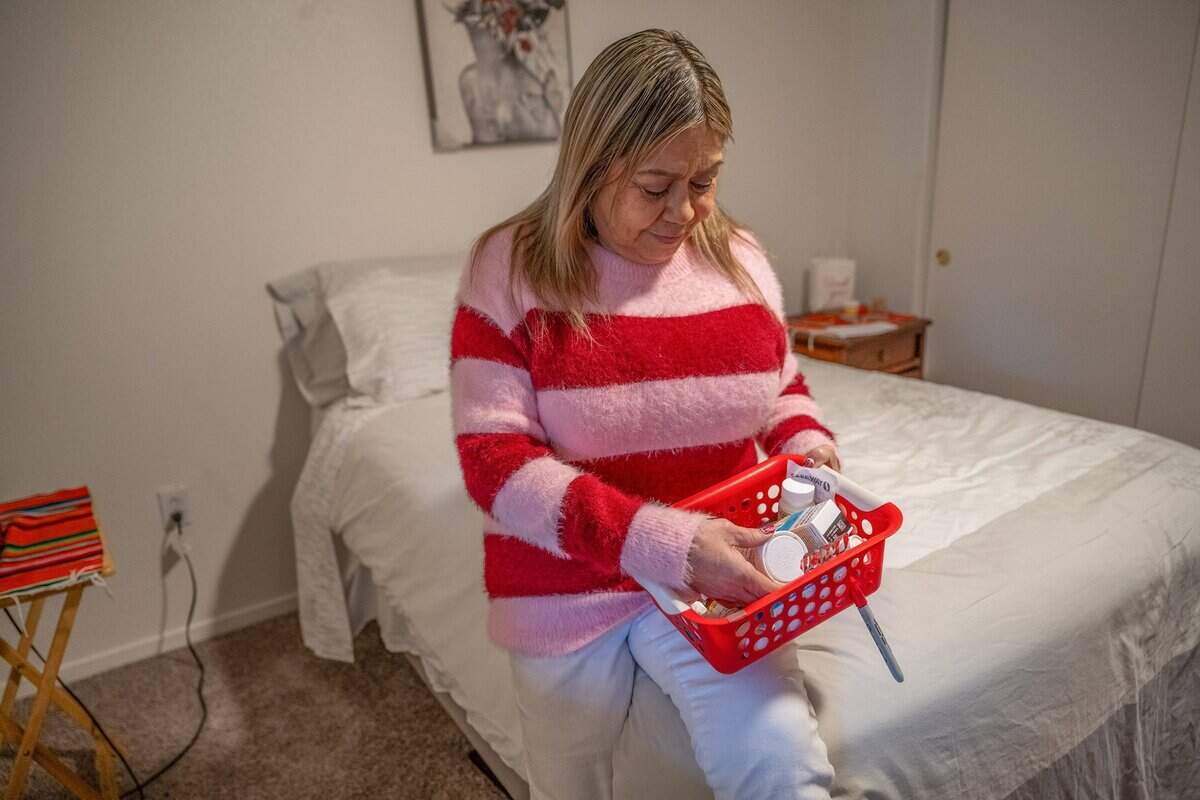
She quit drinking when she moved to her Natomas home, a habit she said she picked up as a child living in a household where everyone around her drank alcohol. When overwhelmed by the problems in her life, Mora said, she has returned to drinking and also has attempted suicide.
Her children, she said, wanted to prevent the inter-generational curse of alcoholism being passed to their children.
“My kids, they wouldn’t be around me when I was drinking,” she said, shedding tears at the memory. “They’d say, ‘Mommy, you’re always working, always helping other people. Why can’t you help yourself?’ That was really hard for me. I didn’t want my kids to see me like that.”
She has since reconnected with two of her four children, she said, and regularly sees three of her grandchildren, including a recent outing for the Rocklin Tree Lighting Festival. “They call me Nani, not grandma,” she said with a laugh.
After years of enduring domestic violence to maintain a place to stay, Mora said, she now lives alone and savors the peace. Her United Way housing navigator recently helped her renew the Section 8 housing voucher that pays a big portion of her rent.
“Thank God, I have him because I don’t know what I would have done,” she said. “He sat here, and we did all that together.”