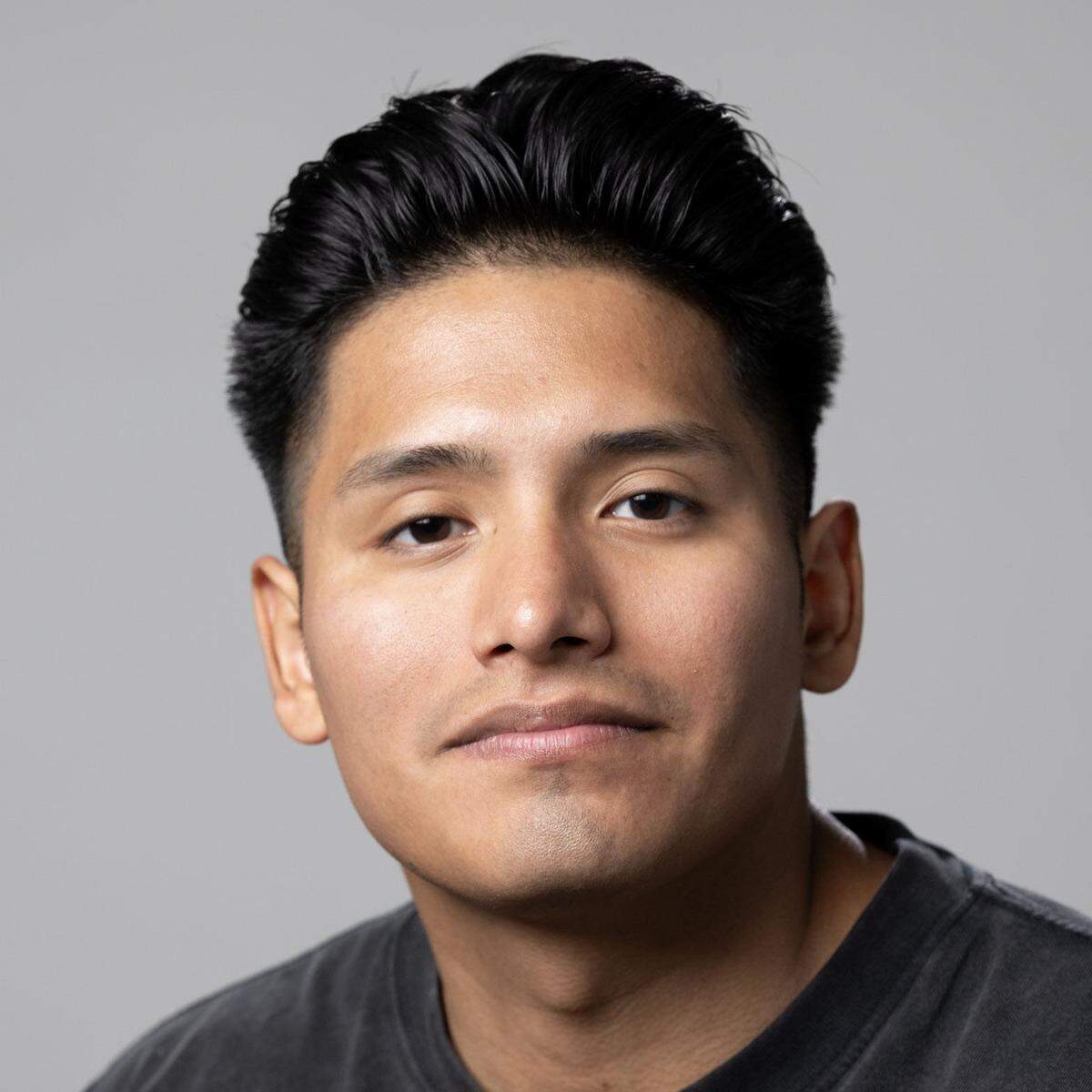
Leading change in Sacramento: Meet The Bee’s Top 25 Latino Change Makers

The Sacramento Bee’s Equity Lab is debuting its Top 25 Latino Change Makers, individuals who are leading change in Sacramento and neighboring communities.
This project, in partnership with Nehemiah Emerging Leaders Program, aims to recognize these leaders and their contributions. It follows The Bee Equity Lab’s Top 25 Black and AAPI Change Makers.
Change makers are people who are committed to leading positive transformations in their communities. They are shifting the landscape in medicine, science, policy, economy, education, art and advocacy with their authenticity, problem-solving and vision for a better Sacramento.
The list includes individuals who have done exceptional work to promote equity, strengthen community ties and amplify the voices of the region.
Near the end of last year, we called out for nominations. Our selection committee included Scott Syphax, the founder of NELP, Scot Siden, chief operating officer of NELP, José Gonzalez, founder of Latino Outdoors, Marcos Bretón, California opinion editor for McClatchy Newspapers, Adam Ashton, assistant managing editor for The Bee and Mathew Miranda, Latino communities reporter for The Bee.
Here are The Sacramento Bee Equity Lab’s 2022 Top 25 Latino Change Makers.
Gema Godina-Martinez
Washington Elementary School principal
Gema Godina-Martinez is a proud product of the Sacramento city schools. But as a marginalized student in these schools, Godina-Martinez faced inequities and often felt excluded in the educational system. Those experiences became the primary driver for a career in education.
Godina-Martinez graduated with a bachelor’s degree in sociology from Sacramento State, and then a master’s degree in multicultural education. She earned a doctorate in educational leadership. She had one goal in mind throughout her path in higher education: to create stronger support systems and opportunities for marginalized students.
It culminated in one of her proudest moments, a Ph.D. dissertation on the need to create support networks for Latino educators.
She eventually landed a job at C.K. McClatchy High School, working 18 years as an educator and assistant principal. Now, Godina-Martinez is the principal of Washington Elementary School and leads a team of educators who are committed to making their school equitable for all students.
For Godina-Martinez, that change is centered in Sacramento. The city has shaped her, and she plans to return the favor.
“This is my community,” Godina-Martinez said. “These are my people. This is my area to change.”
Dinorah Klingler
Founder of Mariachi Bonitas, CEO of Dinorah Entertainment
Dinorah Klingler moved to Sacramento in 2007, bringing along with her a love for music. Klingler — who sings in Spanish, Italian, Portuguese, Greek and English — has since become most synonymous with the growth of Mariachi music in the city.
Born and raised in Mexico City, she started her musical career at the age of 4 while performing in front of crowds in the subway. Klingler joined her first professional band at 14, eventually becoming a multi-award winning musician and performing for audiences across Mexico and the U.S.
In 2014, Klingler started the now annual Mariachi Festival de Sacramento, a first of its kind in the city. At the start of the pandemic, she held weekly performances in the front of her home to the delight of neighbors and friends.
But Klingler takes the most pride in forming Mariachi Bonitas, Sacramento’s first all-female Mariachi band. The band, made up of 12 members, is a rarity in a still male-dominated profession. Klingler calls it an honor to perform with her band and is determined to continue leaving her musical mark on Sacramento.
“I want to give back to the city of Sacramento as much as possible with my work, with my music and with my bands,” Klingler said.
Art Pimentel
President of Folsom Lake College
As a former English learner and first-generation college student, Art Pimentel relates to many of the students in the community college system. That’s why he’s spent the last 17 years working to ensure these institutions serve and support students of color.
Pimentel’s relationship with education stems back to his childhood in Woodland’s public schools and eventually the local community college, where he took math classes to complete a university requirement. He left the city briefly to earn his bachelor’s degree in social sciences at Sacramento State.
Pimentel would return to his hometown, serving on the city council and working for the Yolo County Board of Supervisors. He was then recruited to work at Woodland Community College, and, as he puts it, saw the opportunity to change lives.
Since then, Pimentel said he has relished seeing the diversity of students attending and graduating from community colleges. He worked in several educational roles before becoming president of Woodland Community College in 2019.
This month, Pimentel begins a new position as president of Folsom Lake College. He looks forward to serving the growing Latino population in the region.
“Education is the great equalizer in our society that helps change people’s lives, but the community college system, in particular, is primed to help address those educational gaps and provide opportunities for our diverse populations,” Pimentel said.
Oscar Villegas
Yolo County supervisor
From a young age, Oscar Villegas had a keen interest in social services. He understood county services helped his immigrant family during tough times. They inspired him to pursue a lifelong career of public service.
Villegas grew up in the streets of Byrte, one of West Sacramento’s oldest and most predominantly Latino neighborhoods. He earned a bachelor’s degree in criminal justice at Sacramento State but decided against a career in law enforcement. Instead, Villegas spent nearly 10 years regulating substance abuse facilities with the California Department of Alcohol and Drug Programs. In 2008, he transitioned to the California Board of State and Community Corrections.
Villegas went on to join West Sacramento’s planning commission and serve on the city council for 14 years. Under Villegas’ leadership, West Sacramento opened its first mental health clinic, renovated its library, and launched a universal preschool for students with limited English proficiency.
Then in 2014, Villegas became the first Latino elected to the Yolo County Board of Supervisors. He became the board’s chair last month.
As a grandson of former braceros, Villegas is especially proud to serve a county known primarily for its agriculture. Supporting the industry brings his life full circle, Villegas said.
“I feel like this work has been a calling,” Villegas said. “It’s been a labor of love and there’s no end in sight.”
Richard Falcon
Founder of Teatro Nagual
In 2006, Richard Falcon was introduced to a musical about Cesar Chavez and the creation of the United Farm Workers. It changed his life.
Since then, it’s been Falcon’s mission to empower the Latino community and future generations of theater lovers. In 2006, he founded Teatro Nagual, a theater arts company with that goal.
Falcon grew up in Hayward in a neighborhood known as tortilla flats. Initially studying math, he switched majors in college to follow his passion. Falcon honed his craft at the American Conservatory Theatre, performing and practicing what he calls “white American theater.”
After viewing the UFW musical, Falcon began to question the lack of Latino representation in theater, and realized the importance of showcasing his community’s stories.
Now, he draws on his background and commitment to social justice to tackle complex issues such as immigration, environmental justice and water rights. His bilingual plays are inspired by Latino activists and community leaders.
Falcon prides himself on creating a space and foundation for youth who are passionate about theater.
“We got a great group of young Latinos, Latinas, young teenagers who are now finding that maybe they have a home in Sacramento without having to leave to Chicago or Los Angeles or New York,” Falcon said.
Rita Gallardo-Good
Director of civic affairs at Sacramento State
Rita Gallardo-Good got her start in public service at 13, when she lied about her age to secure a job working with teens in Los Angeles. This early desire to work was a testament to her parents who instilled a passion for community and education.
Today, Gallardo-Good is responsible for creating campus partnerships for Sacramento State at the local and regional level. She is particularly passionate about youth leadership development and women empowerment.
Gallardo-Good grew up in Southern California with immigrant parents who had limited formal education. She went on to work for several state agencies and then-state Sen. Alex Padilla as a legislative consultant. She proudly advocated and worked on Senate Bill 1440, which passed in 2010 and created easier transfer pathways for community college students.
In May of 2024, Gallardo-Good will finish her doctorate in educational leadership at Sacramento State. In her eyes, the degree will further opportunities to help Latino youth maximize their potential and uplift women.
“I’m grateful for the opportunity to be in a place where I can bring others together and provide them with resources to improve their lives or help them to grow academically,” Gallardo-Good said.
Alex Rodrigo
Senior vice president and general manager for the Sacramento Kings
Alex Rodrigo is at the center of one of the world’s most sustainable and technologically advanced sports arenas: the Golden 1 Center. As senior vice president and general manager for the Sacramento Kings, he manages the execution of all sports and entertainment operations of the arena.
It’s a role that positions Rodrigo, the son of Colombian immigrants, in a rare space in the sports world.
Rodrigo’s diverse career started with a eight-year term in the U.S. Air Force, during which he was assigned to three international tours in Japan, South Korea and Panama. He later worked in the hospitality and real estate industry.
In 2012, Rodrigo’s career pivoted toward sports when he landed a role with the St. Louis Cardinals. He followed that up by working as vice president of sports and entertainment for the St. Louis Blues.
During Rodrigo’s time in Sacramento, the Golden 1 Center has increased the number of Latino performances, served as a care facility throughout the COVID-19 pandemic and began sourcing 90% of the arena’s food within a 150-mile radius. But he is the first to recognize that these achievements are a team effort.
Rodrigo is committed to lifting up future Latino generations, emphasizing the importance of diverse people serving as role models.
“Change is inevitable,” Rodrigo said. “It’s going to happen. It’s either going to happen for you or against you, but it’s going to happen. And we need to be advocates and ambassadors for it.
Lydia Ramirez
Senior vice president, chief operations officer and chief DEI officer at Five Star Bank
Lydia Ramirez recognizes she is the Sacramento region’s highest-ranking Latino in the banking field. And, knowing the value of mentorship, she’s on a mission to pay it forward.
A native of the Bay Area, Ramirez began her banking career as a junior at UC Davis while looking for some extra weekend cash. That was the beginning of a budding 17-year career at Union Bank.
Ramirez eventually left for a senior vice president position at Five Star Bank, where she quickly rose up the ranks. Last year, along with finishing up a master’s degree at Sacramento State, Ramirez became the chief operations officer and chief diversity equity inclusion officer.
She created the latter title by establishing the bank’s DEI program. Ramirez says inclusivity is key in building a successful workplace. She says she’s focused on ensuring her community is properly represented.
She embraces investment in young talent through her mentorship work with several local organizations, including the Sacramento Hispanic Chamber of Commerce.
“For so many of our people, if we can climb on the shoulders of those that came before us, we only get better and better every single time,” Ramirez said. “But we also have to reach down and bring others up.”
Melinda Guzman
Attorney
When Melinda Guzman began her legal career 35 years ago, her father, a former immigrant railroad mechanic, would avoid entering the law firm building where she worked.
“He didn’t want to embarrass me,” said Guzman.
Guzman’s humble beginnings, combined with a UC Davis education and passion for activism, led to years of corporate success, her own law firm and a lifetime commitment to justice.
Guzman grew up in Fairfield, California, with parents who had no formal education. Her parents nonetheless emphasized school, leading their four daughters to attend UC Davis.
Guzman studied political science, and followed that by attending law school. She went on to work in corporate law, representing large companies and winning.
Her success did not go unnoticed.
In 2004, former Gov. Arnold Schwarzenegger appointed Guzman to serve as a member of the Board of Trustees for the California State University. A few years later, Guzman became the independent director for the Federal Home Loan Bank of San Francisco. She continues to serve in that role.
Then in 2014, Guzman was given the Ohtli Award — the Mexican’s government’s highest honor given to individuals who enhance the lives of Mexicans living abroad. She received the award for leading a nonprofit organization, Cien Amigos, that worked with Sacramento’s Mexican Consulate.
Guzman says the key to her success has been combining professionalism with her family and cultural background.
“You can really be a professional, you can do well, but you can do so in your shoes and in your voice,” Guzman said.
Carissa Gutierrez
Executive Director of Latino Center of Art and Culture
Carissa Gutierrez, executive director of Latino Center of Art and Culture, is committed to elevating the stories and creative expression of her community. By doing so, she seeks to strengthen Sacramento’s Latino identity and sustain its art, culture and traditions.
A native of Sacramento, Gutierrez developed an early love for her city’s culture. She recalls attending Dia de los Muertos events, gallery exhibitions and musical performances such as baile folkloricos.
She embraced that passion, combining it with a desire to advocate on behalf of her community, and earned a bachelor’s degree in political economy and a minor in Spanish literature at University of California at Berkeley. It’s also when Gutierrez started living by the motto, “think globally, act locally.”
After graduating, she worked in various spaces including mental health, local and federal government, hospitality and nonprofits. Through her work, she remained dedicated to social justice and advocated for overlooked voices.
Gutierrez returned to her hometown in 2018, seeking people who shared similar ideals. She found what she was looking for in the city’s arts scene, and then with the nonprofit Latino Center of Art and Culture. Four years later, Gutierrez was named the executive director.
She cherishes the role, seeing it as an opportunity to truly be in service of her community.
“If there’s anything that I can do to make one person feel like they are seen and they belong, then I’ve done my job,” Gutierrez said.
Gabby Trejo
Executive director of Sacramento Area Congregations Together
Gabby Trejo is the executive director of Sacramento Area Congregations Together, a faith-based organization that seeks to equip people with the skills needed to advocate for racial and economic justice.
Trejo has been committed to these efforts since she was a child growing up in Tijuana, Mexico, where she saw her grandparents house and offer food to disadvantaged people in their area.
“We come from a community where we are constantly helping each other, so community organizing just became an extension of what I had been doing,” Trejo said.
Trejo went on to be the first in her family to graduate from high school and college. After earning a degree in international relations at Chico State, she worked with nonprofits that focused on at-risk youth and violence prevention.
A passion for tackling systemic issues eventually led Trejo to Sacramento ACT, where she has worked for 10 years. Now, she leads a coalition of congregations, schools and community groups that represent 60,000 families in the county.
As a proud Catholic woman, she feels fortunate to help create future generations of advocates who are able to merge faith and justice.
Joe Flores
California Workforce Development Board’s Prison to Employment Reentry Initiative lead, City of Sacramento Parks and Community Enrichment Commissioner
Joe Flores donned lucha-themed masks during the COVID-19 pandemic, aiming to showcase his pride for Mexican culture.
The masks, modeled after the facial coverings worn by Mexican wrestlers, and the word lucha (fight) served as a representation of Flores’ professional career. He has advocated for under-represented populations, while prioritizing public service and community enrichment.
“Lucha, to me, means so many different things on top of the great costumes and colors,” Flores said. “It’s fighting for yourself, fighting for your family and fighting for our people.”
Currently, Flores is the lead for the California Workforce Development Board’s Prison to Employment Reentry Initiative, where he oversees an array of grants and initiatives for formerly incarcerated individuals.
His role centers on creating opportunities and providing services to this community. The goal is to ensure they successfully re-enter the labor service and society.
This past summer, on behalf of CWDB, Flores was selected to develop and implement a federal prison model for trades and unions re-entry programs.
Flores says his work is deeply personal, knowing that persons of color are overrepresented in the state prison population. He aspires to reduce recidivism across California.
Cathy Rodriguez
Sacramento Hispanic Chamber of Commerce CEO
Cathy Rodriguez leads one of the largest and most influential Latino organizations in the region, the Sacramento Hispanic Chamber of Commerce. As president and CEO, she oversees everything from strategic and operational planning to advocacy and policy development.
She does it to accomplish one goal: support and maximize the growth of Latino businesses. That passion stems from her immigrant parents, who taught her to take advantage of all opportunities and help inspire others.
“What drives me is how am I helping someone get to their next step, how am I helping them reach their full potential,” Rodriguez said.
Rodriguez began connecting with Sacramento’s community nearly 30 years ago, when she managed outreach and admissions for the UC Davis School of Medicine. She later worked in The Sacramento’s Bee public affairs department.
During that time, Rodriguez says she connected with the Latino community and formed relationships with local organizations. This experience proved to be beneficial when she began at the chamber of commerce in 2012. Within two years, she was promoted to CEO and president.
In this role, Rodriguez has prioritized improving community resources and ensuring economic prosperity is attainable for all. During the pandemic, she also launched a bilingual campaign to help business owners increase digital marketing and develop models to navigate closures.
Daisy Gonzales
Interim chancellor of the California Community Colleges
Daisy Gonzales wants to support the next generation of Latinos with Ph.D.s. For her, that begins at the community college level.
Born into an immigrant family in Los Angeles and raised as a foster youth, Gonzales has become the interim chancellor of the California Community Colleges. It is the largest system of public higher education in the United States and serves 116 colleges and more than 1.8 million students.
Gonzales was one of those students. She began her education at Los Angeles Valley College and went on to study at Mills College and UC Santa Barbara, where she earned her master’s and doctorate degrees.
Prior to joining the chancellor’s office in 2017, Gonzales worked as a dual-immersion teacher and a principal budget consultant for the state Assembly. In 2021, she became the first Latina to lead the state’s community college system.
Gonzales says she earned this position “not by mistake.” She is representative of the majority of students. Women outnumber men in California community colleges, and Latinos are the system’s largest ethnic group.
Gonzales is now focused on increasing college affordability for Latinos and creating clear educational pathways for students to achieve upward mobility.
“I want to design institutions that treat people with dignity and respect.. Because that’s how you make transformational change sustainable,” Gonzales said.
Angela Chavez
Founder of Chicas Latinas de Sacramento, director of communications for Courage California
When Angela Chavez realized the lack of diversity among volunteer organizations, she committed herself to narrowing that gap. She founded Chicas Latinas de Sacramento, which is now widely recognized as the city’s premier Latina volunteer organization.
“I couldn’t be the token Latinx person volunteering at all these organizations. It wasn’t just language barriers, there were cultural barriers, and if we want to adequately serve our people, they need to be culturally adequate.”
Born and raised in Sacramento, Chavez was passionate about volunteerism at a young age. She majored in journalism at Sacramento State, seeking to merge her love for storytelling and community-driven work.
Chavez reported in the Central Valley for a few years before returning to her hometown to work in the nonprofit sector. These experiences, she said, set the groundwork for starting her own group in 2009. Now, the nonprofit consists of more than 300 Latina volunteers who seek to increase cultural awareness and serve Sacramento’s Latino community.
Chavez is also the communications director for Courage California, a statewide liberal advocacy organization. She strives to empower community advocates to effectively share their stories and lift up future generations of Latinos.
Eduardo Bermudez
Medical Services Director for Kaiser Permanente facility in Downtown Sacramento
Eduardo Bermudez grew up in Calexico, a border town in the Imperial Valley, where, he says, there were limited expectations for the predominantly Latino students. And though most steered toward a career in labor, Bermudez wanted more.
Today, Bermudez is the medical services director at the Kaiser Permanente in downtown Sacramento, where he oversees nearly 300 physicians, nurses and staff. He’s also an associate professor at the UC Davis Medical Center.
An internal medicine physician with Kaiser Permanente since 1991, Bermudez has focused on addressing disparities in health care.
He spearheaded the creation of Salud en Espanol, the downtown facility’s first bilingual primary care department. He created a Latinx community elective class at UC Davis to educate students about health care for Hispanic patients. And when the COVID-19 vaccine became available, Bermudez routinely held town halls and did bilingual media interviews.
He is also passionate about mentorship, championing a program with Thomas Edison Language Institute: a K-8 school in an underserved area of Sacramento.
Bermudez is especially proud of the trust and relationships built with patients throughout his 40 years of practicing medicine. When his career is over, those relationships will be what matters most to him.
“When somebody can trust me with the most intimate issues that they have and I am able to show compassion ... That connection, trust foundation is most important to me,” Bermudez said.
Francisco Castillo
Director of State Government Relations West Region Diageo North America
Francisco Castillo’s passion for investing in underserved communities is rooted in his own lived experiences.
Born in Nicaragua, Castillo immigrated to San Francisco at the age of 5. He was raised by a single mother who struggled to balance her two jobs and relied on social welfare programs. Castillo says these vivid memories set the foundation for his career choices.
Castillo began his career as a job developer for the Mission Language and Vocational School in San Francisco, which offers job placement services to low-income, non-English speakers. He later served in roles in the administrations of Arnold Schwarzenegger and Gavin Newsom.
Castillo eventually landed a role with Union Pacific Railroad, where he prided himself on forming alliances with community partners. He highlighted Union Pacific’s 2020 investment in new soccer fields at O’Neil Park on Broadway.
“I wanted to make sure that we actually walked the talk,” Castillo said. “If we are interested in being good partners and good neighbors where we live, work and play, then we have to make sure that we invest in those communities.”
This month, Castillo became director of state government relations for Diageo, a multinational alcoholic beverage company. He will manage the company’s legislative strategy in the western states.
Castillo also serves as the chair of the Yolo County Children’s Alliance, which is the county’s largest multi-service agency serving Latino children and families.
Mariana Corona Sabeniano
Chief of staff for state Sen. Monique Limón and a Sacramento County Board of Education trustee
Mariana Corona Sabeniano has worked in the California Legislature for 15 years, helping advance policy on education, health care and women’s issues. Corona Sabeniano’s drive stems from her upbringing as a daughter of immigrants.
Corona Sabeniano, the eldest of six children, was raised in the small Colusa County town of Arbuckle. At 12, she began working alongside her farmworker mom and family to help her family financially. She went on to earn a government degree at Sacramento State and a law degree from McGeorge School of Law.
Her career in the California Legislature began as an intern. That was her first exposure to government, and the opportunity to push for change through legislation.
“‘I really fell in love with government work, making change, and helping provide a better system for families through policymaking,” Corona Sabeniano said.
Fifteen years later, Corona Sabeniano has worked her way up the political ladder and has become the chief of staff for state Sen. Monique Limon, who represents the County of Santa Barbara and parts of Ventura County. She supervises 14 staff members, overseeing legislative priorities and processes within the office.
Last June, Corona Sabeniano was elected as a trustee for the Sacramento County Board of Education, Area 2. The role is one of many ways Corona Sabeniano hopes to give back to her community and provide opportunities for students to learn and develop their leadership potential.
Jose Bodipo-Memba
Sacramento Municipal Utility District chief diversity officer
Jose Bodipo-Memba is keenly aware of his Afro-Latino identity and, despite facing pushback at times, he has leveraged it to bridge communities.
Bodipo-Memba was born to parents from Equatorial Guinea, the only former Spanish colony in Africa. He grew up in Novato, where he recalls dealing with racial and cultural exclusion in Marin County.
“Growing up was a weird kind of deal, trying to feel accepted from multiple places and not really feel accepted within a lot of spaces,” he said.
Bodipo-Memba gained confidence through sports, and eventually academics at UC Berkeley, where he earned a degree in history. Following college, he worked as a high school teacher and coach in an underserved community in Oakland.
He transitioned to environmental consulting, primarily working in the San Diego area and with Black and Latino communities. Bodipo-Memba said, during this time, he began truly realizing the strengths of his background.
Bodipo-Memba then joined the Sacramento Municipal Utility District in 2010 and rose to the top of the sustainable communities department. This month, he began the role of chief diversity officer.
His primary focus is creating an inclusive company culture and ensuring all voices and communities are included.
“If we’re really trying to serve the entire community, you can always look around and see who’s not there,” Bodipo-Memba said. “And I think that having the background I have allows me to leverage that voice and make sure it’s in the room.”
Luis Céspedes
Judicial appointments secretary in the office of the governor
At 15, Luis Céspedes was working in the fields when he decided to join a nearby farmworker strike led by Cesar Chavez. Law enforcement arrived, ready to arrest him and other workers.
But suddenly, a United Farm Workers lawyer appeared. Céspedes recalls the man saying he had a restraining order prohibiting any arrests of strikers. He later learned the lawyer had recited the First Amendment.
As he walked home that day, Céspedes said he became committed to a legal career.
“It just hit me very solidly that I wanted to learn how to write and talk like that young lawyer and have the courage to represent others,” Céspedes said.
Céspedes went on to earn his law degree at the University of California Berkeley School of Law and later a master’s degree in urban studies from Occidental College. He followed that by practicing law at his own Sacramento firm for 40 years and working in the California State Assembly.
Céspedes says he has always prioritized protecting constitutional rights, equal access to justice and preserving the rule of law.
In December 2020, Céspedes reached what he calls the pinnacle of his career. Gov. Gavin Newsom appointed him judicial appointments secretary. In the role, he advises the governor on appointments of judges and justices to the California courts.
“I’m living my dream by being able to affect his legacy,” he said.
Ernesto Delgado
CEO and restaurateur of the Ernesto Delgado Hospitality Group
Since immigrating to the United States, Ernesto Delgado has been on a mission to recreate his version of Mexico in the form of culture and food.
He accomplished that in Sacramento with four restaurants — Tequila Museo Mayahuel, La Cosecha, Mesa Mercado and Sal’s Tacos.
“My goal was to always showcase the true Mexico, as I call it, and how my family raised me,” Delgado said.
Delgado arrived in Sacramento in 1994, later earning a degree in graphic design at Sacramento State. After graduating, he worked in the design industry with a focus on advertising services for Latino businesses. Design led him to restaurants, and he eventually began assisting in the planning and concept of Zocalo, a downtown restaurant in Sacramento.
Delgado’s first attempt at opening a restaurant was unsuccessful. But a few years later, in 2011, Delgado opened Mayahuel which is named after his daughter Maya. Mesa Mercado and La Cosecha followed soon after. He took over Sal’s Tacos, located in West Sacramento, in 2019.
He is also leading a project to revitalize Cesar Chavez Plaza and encouraging other Latino-owned businesses to join him in opening storefronts in the area surrounding the plaza. His goal is to create a family-friendly plaza similar to ones in Mexico.
“I want all of Sacramento to experience Mexico,” Delgado said.
Eva Garcia
Owner of Garcia Realty
Eva Garcia moved to Sacramento in 1963, quickly making a name for herself in real estate and becoming a pioneer for Sacramento’s Latino community.
Her list of accomplishments is long: owner of the first Latino real estate brokerage in the region, first Mexican-American to serve on the Sacramento City Unified School District Board of Education and first Latina to serve on Sacramento’s City Council.
In 1980, Garcia was invited by former President Jimmy Carter to testify about high interest rates. And in 1981, she became the state president of the Women’s Council of Realtors — another first for Latinas.
Garcia also was a founding member of the Sacramento Hispanic Chamber of Commerce and La Familia Counseling Center, two pillar organizations for Latinos in the area.
“When you live in a community, you have to be either part of it or the problem of it, and I chose to be part of it and improve people’s lives,” Garcia said.
Garcia opened the realty business in 1967 with her husband, Frank. At its peak, in the 1980s, the couple operated three locations and 70 agents. Today, the business has reverted back to one location and is also represented by Garcia’s son and daughter.
What is the secret to Garcia’s 60 years of success? She says it’s honesty.
“Because of that I believe we were successful … We’re selling to the grandchildren of my former clients now,” Garcia said.
Francisco Silva
CEO and president of the California Primary Care Association
Francisco Silva is the president and CEO of the California Primary Care Association, which has a statewide membership of more than 1,300 community health centers and serves over 7.2 million patients.
He’s instrumental in driving conversation with policymakers to ensure the state is investing in these centers that serve more than a 50% Latino patient population. His commitment to policy work is rooted in a connection to his family and cultural roots.
Born in Mexico, Silva immigrated with his family to the predominantly Latino city of Salinas. He says, at that time, the community had many unmet needs and was specifically underserved in health care. Silva experienced firsthand the role of community-based advocacy, particularly from lawyers, to improve the quality of life for immigrants.
“I saw that and said, ‘lawyers get things done,’ and I went to college with that mindset,” Silva said.
He was further motivated to study law while an undergrad in the mid-1990s, when former Gov. Pete Wilson pushed an anti-immigrant stance. Silva recalls feeling frustrated at the system, and began seeking ways to implement change.
He went on to earn a law degree from UCLA, and later secured a job at the California Medical Association, where his career was marked by years of health care law expertise and advocacy. He focused extensively on developing legal advocacy to prevent major cuts to the state’s Medi-Cal program.
Silva’s legal experience culminated in his current position at CPCA, an organization that he says is anchored in the community.
“We have an opportunity to work with our patients in their language and culture, and to the communities that need it most,” Silva said.
Elodia Ortega-Lampkin
Woodland Joint Unified School District superintendent
When introducing herself to families, Elodia Ortega-Lampkin likes to share her personal story. She’s the daughter of immigrants, a former farmworker and product of migrant education.
By sharing her experience, Ortega-Lampkin hopes to better connect with the community and ultimately encourage the success of students.
“Many of our students and families sometimes don’t think it’s possible for them,” said Ortega-Lampkin, the superintendent of the Woodland Joint Unified School District. “That’s why I’m always sharing that I worked in the field … If I can do it, they’re going to be able to do more.”
Her career began in the California Mini-Corps Program, a statewide program designed to provide direct instructional services for migrant students. It was her first job away from farmwork.
Since then, she has served in roles as a bilingual teacher, school principal, director of English learner services and director of educational services. In each position, Ortega-Lampkin has remained committed to serving low-income and English learner students and increasing access to high-quality public education.
“I work as hard now as superintendent as I did in the fields,” Ortega-Lampkin said. “Making a difference for others is what keeps me motivated.”
Estella Sanchez
Founder and cultural strategist of Sol Collective
It’s been 18 years since Estella Sanchez, while a graduate student at Sacramento State, came up with her thesis project: a community space to maintain culture and tradition.
Her thesis never ended, Sanchez jokes. It became the Sol Collective, a community-based center dedicated to art, culture and activism.
Sanchez, a daughter of Mexican immigrants, founded the center in 2005, and continues to serve as the cultural strategist. She has overseen thousands of community events, while seeing the exponential growth of what was an all-volunteer organization that struggled to pay rent.
In 2017, Sol Collective purchased the building it previously rented and began hiring full-time employees. Sanchez calls the journey a labor of love, made possible by staying true to cultural values and the collective power of community. Among other events, the organization offers art exhibits, workshops and educational workshops.
Sanchez, a native of Sacramento, is proud to contribute to the city’s already rich cultural history.
“We’re part of a beautiful legacy of resilience and cultural movement, so I really hope that continues, and we value it as a city for the Chicano community because it’s unique in our country,” Sanchez said.
This story was originally published January 25, 2023 at 5:00 AM.