
As California cuts funding, can churches support Sacramento’s homeless?
AI-generated summary reviewed by our newsroom.
- California cut HHAP funding by 40%, risking vital services for Sacramento's homeless.
- Churches deliver consistent aid despite no city funding, relying on volunteers and donors.
- City leaders seek deeper public-private ties as churches expand shelter and food programs.
Standing in the middle of 11th Street with a reflective neon-green vest, Marilynn Fairgood looked more like a crossing guard than a church volunteer.
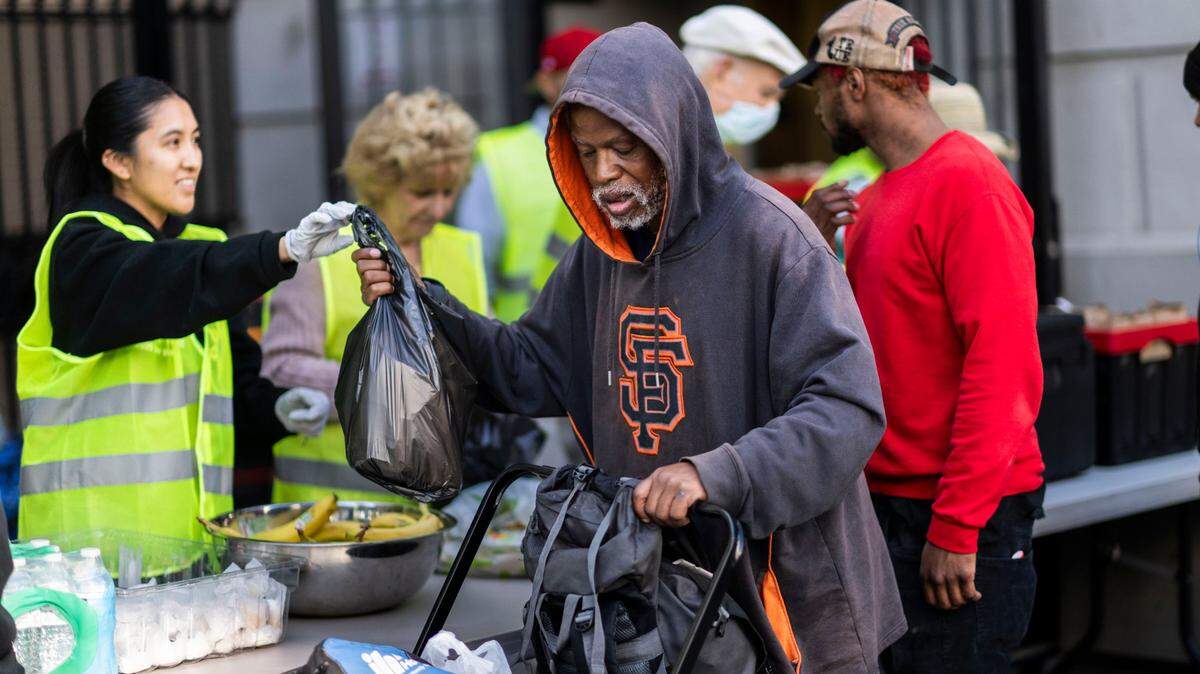
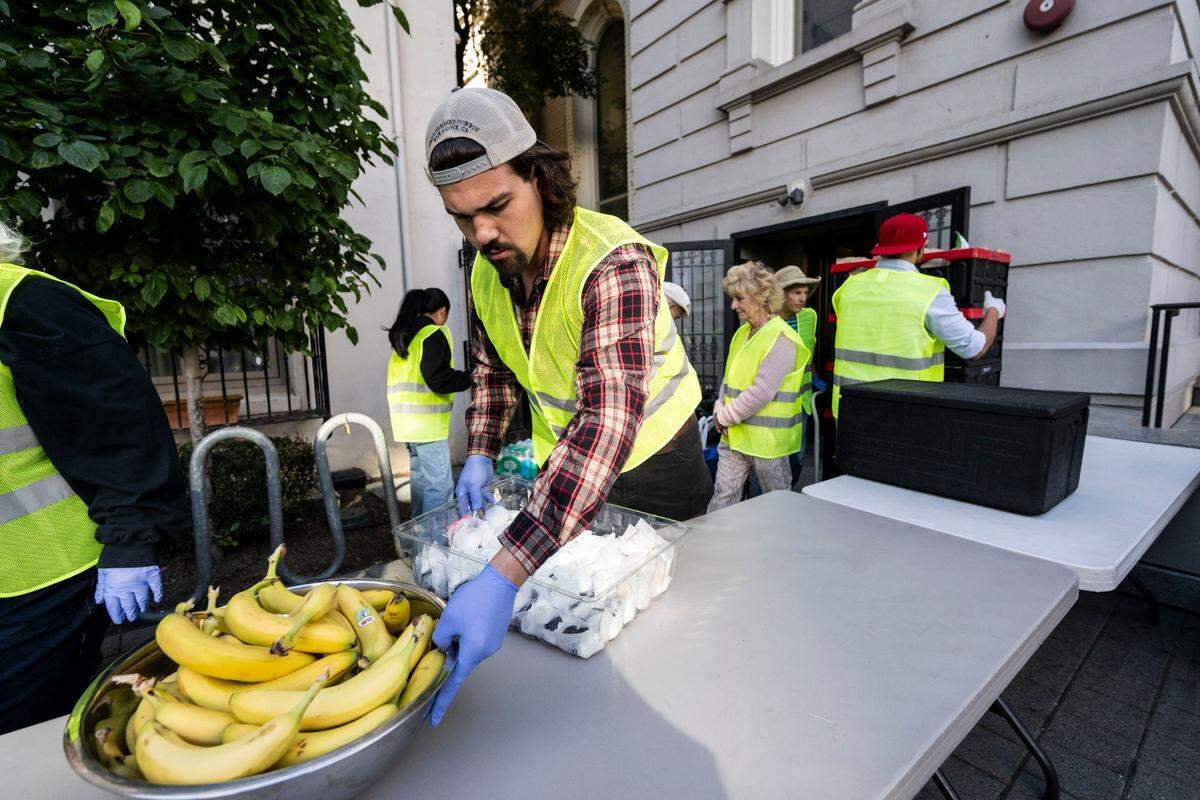
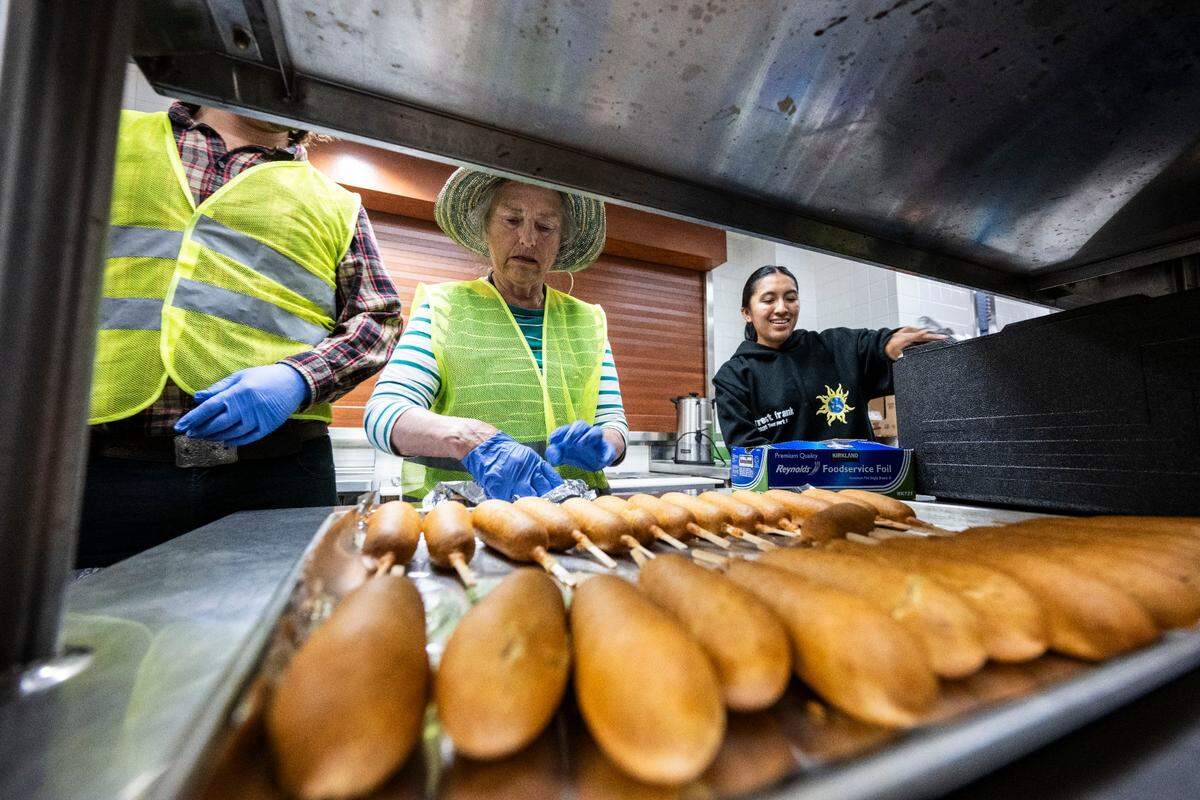
Fairgood runs the Brown Bag Lunch program at the Cathedral of the Blessed Sacrament, which distributes free sack lunches to Sacramento’s homeless population four days a week. Earlier this month, she scanned the line, which extended down and beyond K Street, to ensure that visitors were in a neat order. Once satisfied, she closed her eyes, said a quick Our Father prayer and returned to a folding table where six volunteers began distributing 149 bags of corn dogs, fruit cups and peanut butter crackers.
“We’re doing Jesus’ work right here, feeding our brothers and sisters,” Fairgood said.
Brian Pedro, director of Sacramento’s Department of Community Response, thinks it could be the city’s work, too.
Sacramento County has 6,615 homeless people, according to the most recent survey. In the city of Sacramento, 3,053 of those people are unsheltered.
To provide shelter beds and construct affordable housing units, the city cobbles together funding from federal, state and county governments, with its largest contributor being California’s Homeless Housing, Assistance and Prevention Program. HHAP funding for Sacramento dropped by 40% this year compared to last. Next year, it might disappear completely. The California Legislature approved a budget on Friday without any guaranteed funding for HHAP.
During an address to the Sacramento City Council about homelessness, Pedro argued that the city needs to look beyond the state and to services like Fairgood’s.
“What we haven’t really focused on, and I think we need to really focus in on, is looking at public-private partnerships, looking at our hospitals and our faith-based organizations, not only to help us financially but also to help us programmatically with operations,” Pedro said.
It is a proposal that answers some churches’ prayers.
Practicing what they preach
Alongside food, Fairgood often hands visitors a double-sided piece of paper that lists meal, shower and shelter services in midtown Sacramento. Of the 10 service locations listed, seven are churches and a homeless person can get fed at a church on six out of seven days of the week.
While some non-faith-based community organizations like the Sacramento LGBT Community Center offer similar services for homeless people, the Rev. Mahsea Evans, lead pastor of First United Methodist Church, believes churches have an advantage in sustaining their efforts.
“The work might be the same,” Evans said, “but it’s the ‘why’ of it that our faith communities can offer. Sometimes it’s the ‘why’ of what we are doing that gives people the hope to continue to do the ‘what’ they are doing.”
Volunteers do not need to believe the churches’ “why” to assist their “what.” First United has about 20 volunteers each Monday to provide sit-down hot meals, coffee, snacks and phone charging stations to 130 visitors. While the majority of volunteers are from the congregation, some have never attended a service.
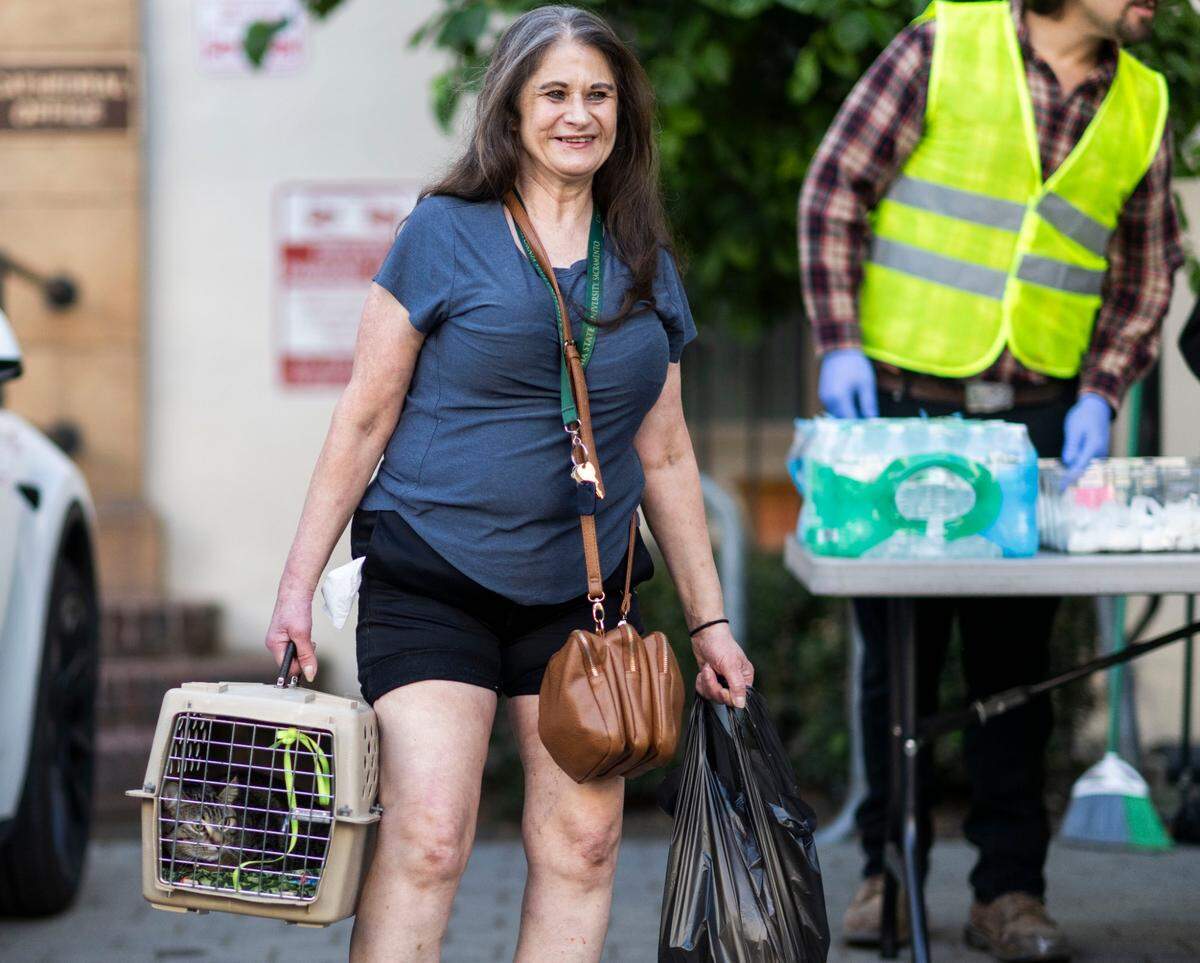
“Church is not necessarily the people we worship with on Sunday morning,” Evans said.
“Church is this larger community of people who are dedicated to offering good in the world…if you’re about trying to create a more equitable and just place in this world, then as far as I’m concerned, we’re siblings.”
First United’s other siblings include St. John’s Lutheran Church, Westminster Presbyterian Church and Trinity Episcopal Cathedral. The four congregations provide their facilities to the midtown chapter of Homeless Assistance Resource Team (HART), a community nonprofit.
Midtown HART began in 2019 and operates respite centers — daytime shelters with food and free hygiene supplies — at the four participating churches. During its first year operating respite centers, HART served breakfast and lunch to around 40 homeless people each day. Now, Midtown HART regularly feeds more than 100 people four days a week. Breakfast includes oatmeal and fruit cups, while lunch can range from ham and cheese sandwiches with a side of fruit to a platter of homemade lasagna.
HART’s emphasis on a hearty meal makes churches ideal for partnership. Churches often have a kitchen, letting Midtown HART prepare hot food on-site. Plus, members of the congregation can double as committed volunteers. Cathedral of the Blessed Sacrament is so committed that its program has missed one day of service across eight-and-a-half years. During chunks of the pandemic, Fairgood donned a mask and handed out meals alone.
Constraints on the church
When Cory Cooper retired to Sacramento in 2019 after a career in the Bay Area’s tech scene, he was looking for a small volunteer role to fill his time. He found Midtown HART online, signed up to volunteer at a respite center and, less than six months later, was asked to be the head organizer of the group.
“I haven’t taken too many vacations since I’ve been doing this,” Cooper said.
Midtown HART does not have any paid staff. It is supported by donations that are fed directly into its services.
A couple months ago, those donations ran out.
“I saw it coming six months before it happened,” Cooper said. To keep services afloat, Cooper donated more than his time.
“I bought the food for a month that we were normally buying out of the nonprofit,” he said.
Midtown HART has been able to shore up savings thanks to private donations and church-run fundraisers, but funding challenges continue to limit their services. Last year, Cooper purchased hundreds of bus tickets for homeless people. Even though Midtown HART pays half-price at $3.50 a ticket, the costs rose into the thousands and became unfeasible for the organization. From November through February, Midtown HART had to cut fruit cups, cheese sticks, and proteins like canned chicken or tuna from their lunches. Visitors received a sole peanut butter and jelly sandwich.
“That’s all we would give them and that was another thing we did because we just didn’t have the money,” Cooper said.
Pastor Evans’ First United Methodist Church used to offer showers for homeless people in their parking lot. In 2020, the church sold the lot so it could fund needed repairs.
“Our sanctuary, which is about 100 years old, was crumbling,” Evans said.
Disrepair forced the Cathedral of the Blessed Sacrament to close its rectory and move its priests into its church, cramping Fairgood’s Brown Bag Lunch Program.
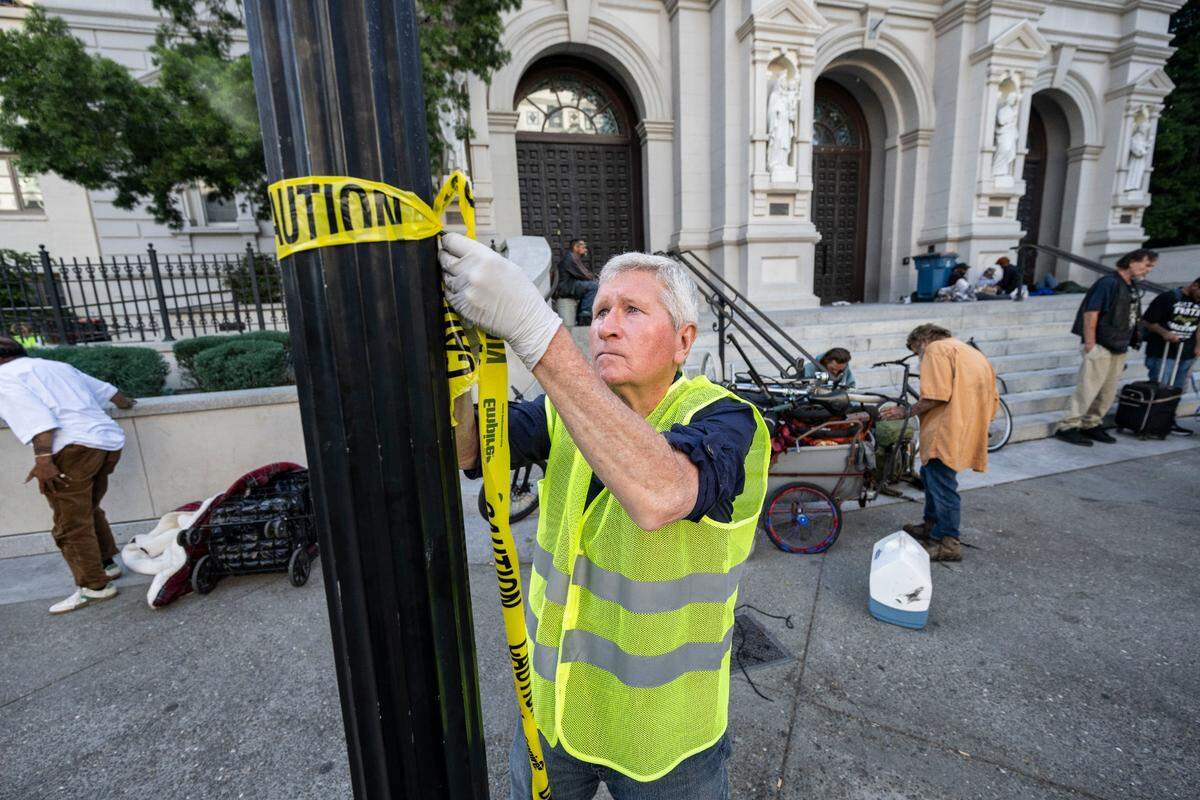
“We don’t have a whole lot of space to put our food because we have to share the space with everyone else,” Fairgood said. In addition to housing the priests, she estimated that there are 27 other ministries operating from the church.
“I began in January 2017 and I actually thought, ‘Oh, you know what? I can hand out a lunch,’” Fairgood recalled. “But, oh, it’s so much more. It’s almost like 24/7 for me.”
Like Cooper, Fairgood’s work is unpaid. The Brown Bag Lunch program gets funding from church collections and private partnerships like food donated by local restaurants. Fairgood applied for a city grant during the pandemic, but was told she didn’t qualify. Today, none of the seven churches providing meals for homeless people in midtown nor Midtown HART receive funding from the city.
But Sacramento still relies on church services to aid its homeless population. Fairgood shared that city police regularly drop off homeless people at the Cathedral of the Blessed Sacrament’s Brown Bag Lunch program. When the Elk Grove chapter of HART established a transitional house for homeless people in Sacramento County, founder Ken Bennett recalled that, “The city of Elk Grove made me take the complaints.”
Both Midtown HART and its participating churches desire more support from the city and county — and not necessarily in the form of funding.
“I know they’re facing cuts and all that, but I wish they were better coordinators,” said Cooper.
Moving toward collaboration
For some faith-based organizations, the government is already a partner in growth.
St. Vincent De Paul is a Catholic social service agency that describes itself as “inspired by Gospel values,” though its programs are for anybody in need regardless of faith.
Seth Castleman, a rabbi, leads Exodus Project, St. Vincent De Paul’s program for individuals returning to Sacramento from incarceration. While the program began as a mentoring service, Castleman realized it was not meeting people’s needs.
“Walking spiritually and accompanying people and assisting them as a coach, as a cheerleader, as a sponsor, was beneficial,” he said. “When they needed housing and they needed a job, it was a little hollow.”
Castleman estimated that 60% of people coming out of jail are housing insecure. To assist them, the Exodus Project began providing wraparound services such as emergency housing, transitional houses, and employment assistance. Seventy-five percent of their funding comes from federal, state and county governments. With a new grant funded by Proposition 47, Exodus Project will sustain its increasing outreach and services.
“We’ve pretty much doubled in size every year since we started,” Castleman said.
The program now serves 2,000 people, many of whom are referred to the program by the county jail and the Public Defender’s office, with which Exodus Project has a contract.
Castleman’s wife has been an attorney with the Sacramento County Office of the Public Defender since 2023. If she comes across someone who could benefit from Exodus Project, she directs them to her husband. For the couple, Sacramento’s work is not completely separate from St. Vincent De Paul’s. Sometimes, they serve the same people.
This story was originally published June 18, 2025 at 5:00 AM.