
Q&A: New Sacramento judge Allison Williams, a former public defender appointed by Newsom
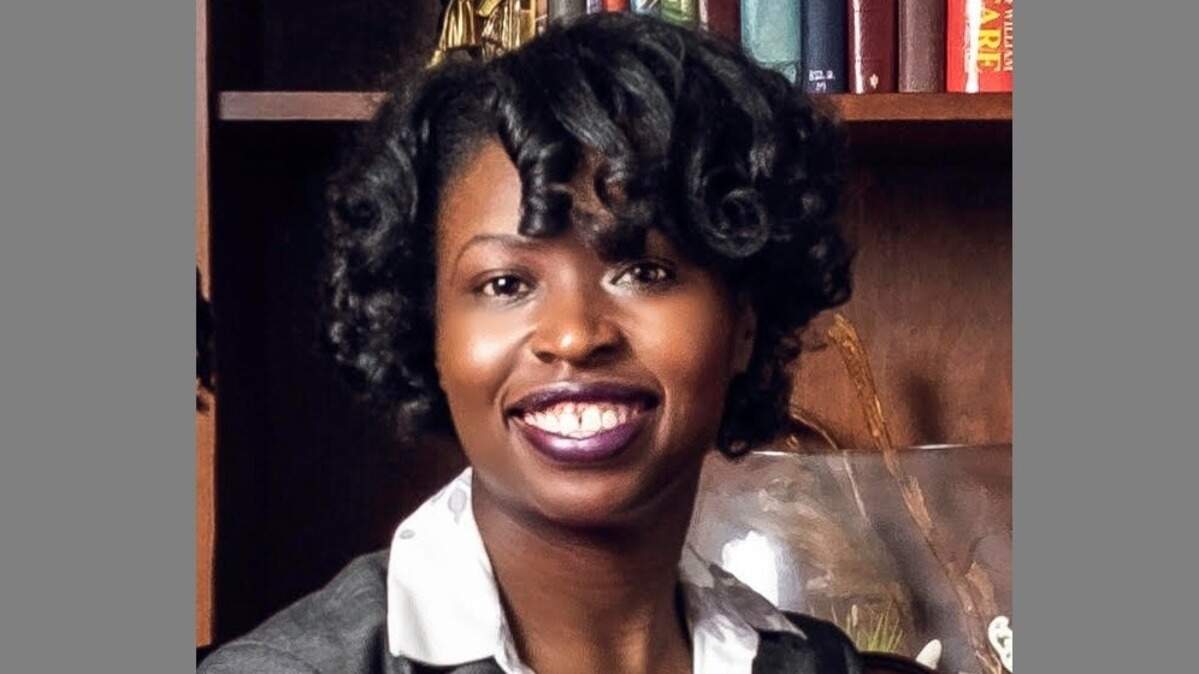
Gov. Gavin Newsom announced last month the appointment of 11 Superior Court judges, including two for the capital region who are people of color.
Allison M. Williams, along with André K. Campbell, will take the bench in January as judges in Sacramento Superior Court.
Williams, a mother of two, comes from the Sacramento Public Defender’s Office, where she served as a criminal attorney for 15 years.
Originally from Guyana, Williams spent the first decade of her life in South America before her family came to the United States — she grew up in Oakland and Hayward — looking for better opportunities. Williams received her law degree from Western Michigan University and passed the state bar in 2005.
Williams spoke to The Sacramento Bee in a phone interview discussing her journey. Note: The following interview has been edited for clarity and length.
Q: What made you go into law? Was it migrating to the United States?
A: No, I got a little older, I would say about junior high school and I just started inquiring to my mom, ‘Why did we leave our country?’ My mom was very active in college, in speaking out against the government when she saw atrocities, when she saw people weren’t allowed to express themselves freely through speech, through demonstration, through protest. In eighth grade, ninth grade, I started really becoming really curious about systems of government. And I didn’t know enough about the Guyanese government, but I started researching it.
And I’m learning about the American government and seeing the differences within our system of jurisprudence; how under the Constitution, in the United States, you are able to freely express yourself and protest against things that you don’t agree with, and you’re not persecuted, you’re not threatened, and you’re not thrown into jail. And so that really piqued my interest in really looking at our systems of government and looking at how people are mistreated and it really just stirred an interest. In Guyana, there was a lot of corruption when it came to the criminal justice system there. Where if you knew people, you got a slap on the wrist when you did commit crimes. Individuals who aren’t the smartest and who couldn’t afford attorneys seem to have been mistreated by the system. And so learning about these two systems really just really propelled me to want to pursue a career in the legal realm.
Q: Do you see any similarities between the American government system, as far as corruption and getting a ‘slap on the wrist’ when certain people commit crimes?
A: I think that is something that we see. We see that in our system of jurisprudence here in the United States and I think sometimes that is why people have some of this distrust at times, right? Where they feel that it doesn’t work for them but it works for others. Whether it’s because it works for the rich, or whether it works for the privileged, or whether it works for those who are connected. So it’s not only in Guyana you see that, but you see that all around the world. We do see that here and it matters because we live here.
Q: Tell me about Western Michigan and what was that experience like for you?
A: Michigan was such an endearing state. I think really what I learned in Michigan was a work ethic. I learned how to work hard and to work hard consistently. I had challenges along the way. Even when I was in high school, people didn’t think I would amount to anything in college. I had the same counselors telling me that.
In Michigan, when I heard the same thing I was so determined to prove people wrong because I understood the privilege of being able to just go to law school. I took it very seriously and working hard was something my parents really instilled in me. So I think I started to develop just a character of working hard and surrounding myself with individuals who would also encourage that type of character.
I interned at the district attorney’s office and the public defender’s office. I learned more about our system of jurisprudence. I learned more on a practical level. It was there that really my love for law (developed), my love for our system, even though it’s not a perfect system. It tries to be perfect.
Q: You’re officially celebrating 16 years since you were admitted to the bar. Tell me what that initial feeling was like; take me back to 2005.
I’ll never forget this story. Well, this story had an impact on my life. So I went to Western Michigan University, a small school and I remember sitting out with a counselor. She told me that based upon all these demographics, based upon this algorithm that she did, that she believed that I had a 12% chance of passing the California bar exam on the first try, and so she told me to take it as a practice test. I was so devastated. Actually, I was just disappointed that she would tell me this.
She said based upon you being a Black immigrant woman, based upon your GPA from undergrad, based upon all these different factors I have a 12% chance of passing on a first try. I said I’m going to prove her wrong. And what’s interesting is, you know, she was right. She was right in saying that there’s a 12% chance of passing the bar exam, because 12 people from my class took the bar exam that year, and one person passed and that was me.
I cannot tell you how privileged I feel being an attorney and just looking back on my life. It has been 16 years and in our community – especially in the Black community – when one person wins, we all win. But I also feel that to whom much is given, much is required, and my parents sacrifice so much for me to be able to wear it and I felt this desire to give back to my community in unique ways. And so I was just overwhelmed and delighted to be an attorney, a practicing attorney in the state of California.
Q: In the Public Defender’s Office, how have you been able to shape Sacramento in your current position?
A couple of things. I am currently assigned to the Major Crimes Unit and this is the unit I’ll be leaving before taking the bench. I am one of three Black women in this office. I am the more senior attorney as far as Black women. The other two are entry level attorneys. I’ve been mentoring them. Just being able to be in this unique, special, elite unit, and it’s only four of us.
When I was assigned to this unit, I didn’t take it lightly. I understood that responsibility. But even before being here, I spent several years in the collaborative courts where you’re working with the District Attorney’s Office and you’re working with the courts, and you’re trying to address certain issues within our community. You’re working with the District Attorney’s Office, you’re working with the judges, and you’re working with our community partners, in addressing individuals who suffer from mental health issues, addiction, homelessness, recidivism, and balancing that with community safety, and balancing that with victims rights.
I spent several years working on that assignment and I learned so much in regards to being able to just come together and find solutions to problems that don’t necessarily result in punitive or substantial punitive outcomes, but finding ways to meet those needs through unique measures, through unique solutions, or unique problem solving tools. I enjoyed seeing how that made a difference in our community and in people’s lives.
Q: As one of the few Black women or even African Americans in your position, do you feel any obligation to Black communities?
In 2009, I started a small mentorship program where I saw young ladies of color, at risk between the ages of 13 and 18, who didn’t know professional Black women. I remember they were surprised that I was a lawyer. They’ve never met a lawyer before, a Black woman as a lawyer. They’ve never met a Black lawyer before. And it wasn’t just lawyers, it was Black doctors, it was Black professionals. I always say, ‘When you see it, you can believe it.’ I came across a Black female judge before and it made a difference to me. It showed me that others were walking through these glass ceilings to provide opportunities for me. And so it inspired me to do something of the same, recognizing that women continue to be underrepresented in many areas of our society and Black women receiving even less support and opportunities.
I understand the legacy that the governor has bestowed upon me, in that I can now inspire other people to seek a career in the legal field to become lawyers and to become judges so I don’t take it lightly. I am incredibly humbled and appreciative that Governor Newsom saw fit to bestow this legacy upon me and have it be impactful for our community. The person who I will be replacing, Judge Vasquez, her story resonates with me as a woman of color. Just being appointed to this bench, knowing what can be and what is being expected of me and just the inspiration that I can give back to our community.
Q: Last year, you protested outside the county courthouse for George Floyd, reciting your poem “Rise Up Defenders of Justice.” Why was it so important for you to be a part of that? How do you take those demonstrations into your daily work and apply that in your new position?
When I got home, I had so many emotions that I was really feeling. My children are not immune from it, they also were able to see the hurt that our country was exhibiting. That poem was really to inspire public defenders to be more and to do more in their realm as public defenders. Public defenders have been on the front lines throughout history. That poem was really to inspire colleagues in Sacramento, and around the world, to continue to fight for justice, to continue to call out atrocities, and to propel them to continue to fight for those values that are for fairness, equity, and the right to be heard. And your question is, will I take that to the bench?
Here’s what I can tell you: when I wrote that poem it was from a lens of being a public defender. I wasn’t a judicial candidate, but it certainly helped me to do more and be more in submitting my judicial application. And what I aspire to be as a judge are some of the same values, which is the values of really listening. My grandmother used to tell me, ‘baby, you have two ears and one mouth, and that means you should listen twice as much as you speak.’ I want to be a judge who will listen more, who will be empathetic and sympathetic and patient.
My background is unique and it’s different, and it’s something that has and will give me a deference that maybe some of my judicial peers may not have. Having to be a public defender, I had to learn a lot of patience. I had to interact with individuals who are symptomatic. I had to interact with individuals who were homeless, with individuals who suffered trauma. And so because of that background and experience of how I think it’s equipped me to be a judge that will be somewhat different, and I am okay with that.
Q: And finally, what does this move mean for Allison Williams moving forward?
I don’t know, I am a woman of great faith. The idea of being an attorney was just something that is ideal. I was just happy and content and grateful to be an attorney. Being a judge was never something on my radar. It was never on my radar, Marcus. And it was something that I think God put on my heart to do and to try. And so when you ask me that question, I really don’t know. I know there’s a couple of things, which is to be a great mom to my children and to be a great person to those who need me. But just really, the legacy that’s been placed in front of me is really to be a great public servant.
This story was originally published December 17, 2021 at 10:17 AM.