This Sacramento State program seeks to improve public service through cultural competency
While working as a lieutenant with the Lodi Police Department, Shad Canestrino sought ways to better serve his community.
Last year, he enrolled at Sacramento State’s cultural competency course. There, he learned how to change the way he’s policed for decades this year.
“What this class does is give you a better understanding of various populations,” Canestrino said. “From there, to change your organization, you start philosophically.”
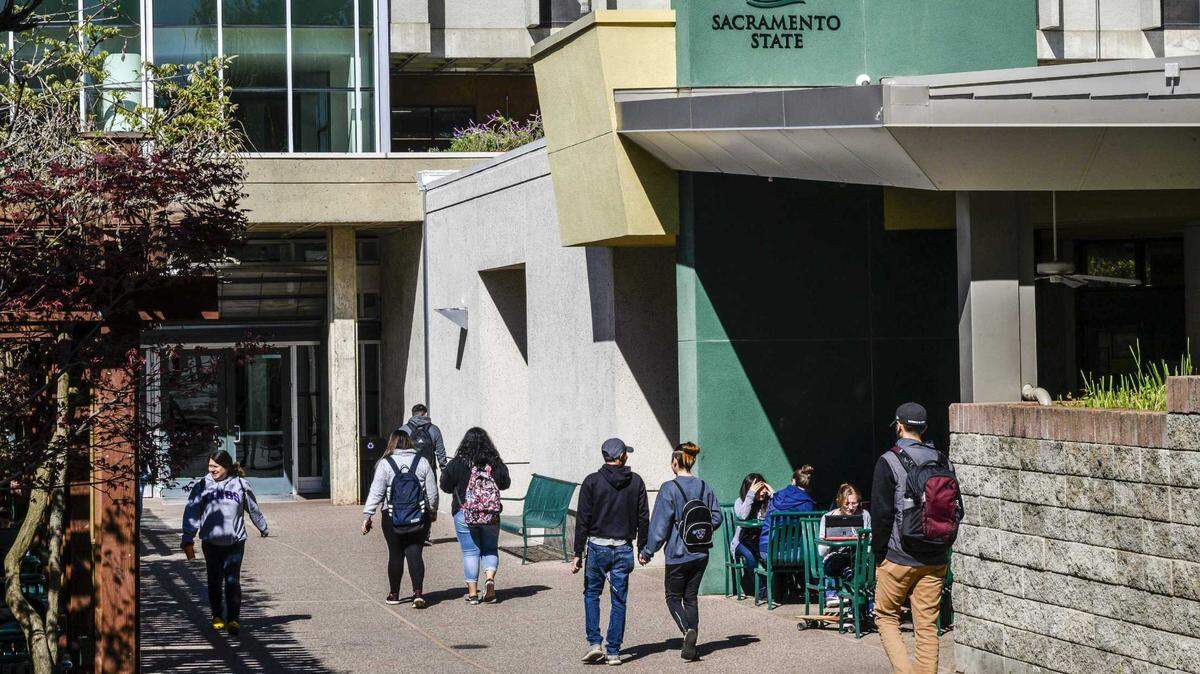
Sacramento State’s College of Continuing Education offers a cultural competency certificate program designed for those working in public service professions, like law enforcement, healthcare professionals and social workers. The latest offer of the program begins Sept. 30 and last through Spring 2025. The program began hiring instructors in 2022, said Tiffany Trotter Vrattos, the senior program manager for the College of Continuing Education. The total cost of enrolling in the program is more than $3,000.
The program focuses on how to work with “vulnerable populations” through a trauma-informed lens. Students must take seven courses to complete their certificate, totaling up to 110 hours of instruction.
Each course focuses on different challenges populations that are systematically disadvantaged face. The goal of the program is to “develop knowledge, techniques, and skills necessarily to understand and better serve vulnerable populations” according to Sacramento State. Instruction includes courses on topics like immigration, homelessness, mental health, sexual violence and race.
In the understanding mental health in America course, students are given an overview of barriers that prevent individuals from accessing treatment and services. This course also includes lessons on mental health and how to improve interactions between those with a mental illness and law enforcement, according to Sacramento State.
“It gives people a stronger background or more education on how to approach folks that fall into these vulnerable populations,” Vrattos said. “Depending on somebody’s background or their living situation, the experience that they’ve had, you would approach them potentially differently than other individuals.”
Being trauma informed
The point of these courses is to provide a trauma informed and more empathetic point of view, said Alexa Sardina, an associate professor of criminal justice. This perspective has been lacking in traditional law enforcement practices.
“Their job is to collect information and to make sure everyone’s physically safe. But there’s also a role of being trauma informed,” Sardina said. “In a sense, it’s just enhancing the understanding and responsibilities law enforcement officers (have) to people who experience trauma.”
During the sexual violence course, students learn trauma-informed practices on how to work with survivors and emotionally support them when they’re reporting an assault.
“Many people don’t report acts of sexual harm, but even those that do often have a really negative experience with both law enforcement and social services,” Sardina said. “Those (experiences) can compound the trauma that somebody’s already going through. We wanted to create a course that would talk about how to reduce that compounded trauma and support survivors.”
Canestrino recalls his course on working with the homeless population, where he learned about a “housing-first” approach. In past procedures, he was taught that someone who’s homeless be drug-free, alcohol-free and have sought mental health support before officers begin to connect them with housing.
This method hasn’t always worked. The most vulnerable populations are dealing with serious mental health crises and hospital beds are often expensive, Canestrino said. During his course, he learned that by providing housing first and serving homeless people in a trauma informed lens is more effective in helping them.
“If we know we’re they’re at, it’s easier for us to provide resources for them,” Canestrino said.
Canestrino received his certificate this year and was able to teach what he learned to not only his team at Lodi Police Department, but as an adjunct professor at California State University, Stanislaus.
“If you want to change the next generation, you’ve got to start changing the way you see the world,” Canestrino said.
“You got to start philosophically,” Canestrino continued. “You have to start with a different idea from the beginning. If you continue to hire and train people the way you are trained for years, you’ll never move forward.”