
Mental health patient was sent to the wrong clinic, and two were killed. Who’s to blame?
Agitated and alone, Martin Lackey-Garcia returned to the Wellness & Recovery Center in Carmichael without an appointment on a Friday afternoon in February last year. He’d been guided to the clinic by Sacramento County’s mental health access team.
Lackey-Garcia didn’t know it at the time, but the staff at the clinic had already determined that his treatment was beyond their capabilities. Still, when he insisted on seeing someone, they escorted him into one of the offices.
Shortly after entering the room, Lackey-Garcia stabbed multiple people with a knife, according to sheriff’s investigators and prosecutors. Two staff members were killed and several others were injured during the Feb. 28, 2020, attacks.
Records reviewed by The Sacramento Bee show that before directing him to the clinic, county workers either missed or miscalculated Lackey-Garcia’s violent criminal history, including a prior incident involving knives. Despite having several documented encounters with police, Lackey-Garcia was sent to a facility that primarily treats “low-intensity” cases.
In court records, victims say that decision set in motion the tragedy at the Wellness & Recovery Center, which provides medication management, drug and alcohol counseling, case management, and therapy. The deaths have put a spotlight on the triage system that funnels hundreds of people like Lackey-Garcia into mental health or substance abuse treatment programs in the region.
Since the stabbings, 19 people have submitted “public entity” claims against Sacramento County, a necessary step before taking legal action. Two lawsuits filed earlier this year are blaming the county’s widely used mental health access team who first evaluated Lackey-Garcia and the triage methods they used to make the “inappropriate” referral.
The access team is one piece of the county’s mental health system that assists the area’s most vulnerable. Its $4.2 million budget supports 27 employees.
One of the lawsuits claims the access team regularly sent the clinic patients whose needs were more complex than what the nonprofit Wellness & Recovery Center could provide. The risk posed by some of those referrals was not always disclosed to the employees, according to the complaint filed in Sacramento County Superior Court.
Lackey-Garcia was arrested and is now at the Rio Cosumnes Correctional Center in Elk Grove, awaiting a court date next week. A physician recently determined that he is competent to stand trial where he will face two murder charges and two charges for attempted murder.

‘He never should have been referred’
A program director said in court records that he and other Wellness & Recovery Center staff met with county officials hours before the February stabbings to discuss the issue of referrals that were too dangerous for the facility. And the county agreed to “stop sending dangerous clients not amenable to treatment,” the lawsuit says.
By then, it was too late.
Eileen Stanwick, a counselor, was fatally stabbed several times with a knife after visiting Lackey-Garcia in the room. As she began to scream, Tracy Drake, a receptionist, rushed in and tried to help.
Drake later told detectives that she jumped on Lackey-Garcia’s back until he began lunging the knife at her, landing blows all over her body — in the head, back, neck, shoulder, arm and breast.
Hearing the chaos ensue, Paul McIntyre, a 57-year-old intern who was blind, entered the room and shut the door before he was stabbed in the chest and later died, according to a preliminary coroner’s report.
Charles McClellan, a program director, was stabbed in the wrist as employees fled in fear. Drake was rushed to Mercy San Juan Medical Center and treated for a punctured lung, two rib fractures, and she needed a blood transfusion, according to court testimony. McClellan was taken to UC Davis Medical Center and lost some function of his hand.
Together they’re suing the county, accusing unnamed employees of civil battery, intentional infliction of emotional distress and creating a situation of peril.
A separate lawsuit filed by Barbara McIntyre, Paul McIntyre’s widow, makes similar allegations against the county, including negligence and wrongful death.
“The county is liable because it did not exercise appropriate care in referring Lackey to the Wellness Center,” said Thomas Kensok, an attorney who is representing McClellan and Drake. “He never should have been referred to the Wellness Center.”
Paul McIntyre is survived by his wife and teenage son. His ambitions to become a social worker were cut short. When he first met his wife, Barbara, at a church group for singles 20 years ago, a rare eye disease was beginning to fully claim his sight.
But Paul wasn’t the type to let his disability get him down, Barbara said in an interview. He did most everything except reading and driving. He’d often catch the bus by himself after he enrolled at American River College, guiding his way with a cane. He did the same thing two or three days a week to get to his internship at the clinic.
“He resisted asking me for rides because he wanted to be independent,” Barbara said.
On the day of the killings, Barbara was about to be released from the hospital when she got a call from their son. “It was his 17th birthday when it happened and he said: ‘Daddy didn’t come home,’ ” she said.
Barbara called hospitals but none of them had answers. She then tried the coroner and got the bad news.
Scoring system to assign patients
At a time when mental health services are in high demand, the incident raises questions about how county staff handles potentially dangerous patients.
To sort a steady stream of incoming calls, Sacramento County relies on a widely accepted tool called LOCUS, which stands for the level of care utilization system. It’s supposed to help clinicians determine the intensity of services needed for each person before directing them to a provider.
Over the phone, an interviewer typically wants to know, in addition to medical and psychiatric history, a person’s risk of harm to themselves or others. And how they cope with daily responsibilities.
A number between one and two gets you community-based care and support services. While scores of five or six are more restrictive with round-the-clock observation.
Once scored, a patient is referred to one of the dozens of providers contracted with the county like the nonprofit Wellness & Recovery Center.
The organization will be paid up to $3.9 million this year to provide “low to moderate intensity” mental health treatment for 1,000 people and support services for another 1,800 people, according to a county contract. Treating people steered to them by the access team is one of the government programs the clinic relies on for most of its revenue, tax records show.
When Lackey-Garcia was screened, records suggest he was no stranger to police. He had been out of jail less than a month after a domestic violence incident a few months before.
In January 2018, he’d violated his parole after chasing a resident with a knife while living in a Sacramento rooming house for homeless people coping with mental illness, according to the records. The police found stab marks on the walls and refrigerator.
At the time of the arrest, Lackey-Garcia was marked as a “high-violent” risk based on a state assessment used to predict whether a parolee will commit a felony in a three-year period, records show. He got 90 days in jail.
Later that year, a few days after Thanksgiving, his mother called the police after he cracked the glass top on the stove inside their Rancho Cordova home. She told the sheriff’s deputies that he’d been drinking and was having trouble with his medication.
She said he was coping with schizophrenia and needed help.
“I just want him to get his medication, and I want him to get counseling. And I want him to let out whatever is bugging him,” Cherise Lackey, his mother, later said in a deposition. “Because he’s been through this stuff for so long, this system for so long.”
Lackey-Garcia was sent to jail but the charges were later dismissed.
To what degree any of this was considered in his initial phone screening with the county’s mental health access team is unknown.
County officials declined to comment on the specifics of Lackey-Garcia’s case or the allegations made in the two lawsuits. But Ryan Quist, the county’s director of behavioral health services, acknowledged that a history of violence would be factored into their decisions when using LOCUS.
“It’s important to remember that an individual in recovery often makes improvements and has step-backs,” Quist said through a spokesperson. “The LOCUS primarily focuses on clinical assessment of their current circumstances. As things change, providers reassess and make recommendations or referrals for higher intensity services or lower intensity services.”
Weighing a person’s criminal history
Seeing Lackey-Garcia through the eyes of the justice system is to see a troubled man who stumbled in and out of state and county lockups. Domestic violence, drug possession and assault charges are a running theme in court records dating back to the mid-1990s.
Quist said any information available to them, including public records, is used to inform the assessment.
Experts said that doesn’t mean he should have gone to one of the highest levels of care.
Dr. Wesley Sowers, a psychiatry professor at the University of Pittsburgh who created the LOCUS tool, said relying too heavily on criminal history when making health service decisions could reproduce the same inequities found in the criminal justice system.
Still, he said, there are some cases when it’s appropriate and would be reflected in the score generated from the tool he pioneered.
“Criminal history is not something that someone would necessarily depend on unless the incidents in question were violent incidents or put somebody in harm’s way,” Sowers said.
“It would be prejudicial especially considering the state of our justice system and its prejudices to use criminal history alone to determine whether somebody needed to be in a restricted setting.”
He said previous episodes of violence or aggression would suggest a more intensive and urgent need for services — if the assessor was aware.
“Any instrument is only as good as the information that’s put into it,” Sowers said. “It’s really dependent on that information-gathering process. Even with incidents like this, we don’t know how much he actually said about his history or what kind of questions they asked him.”
The LOCUS assessment also doesn’t replace clinical judgment and it’s more difficult to accurately evaluate people over the phone, he said. Sowers said there are other details in Lackey-Garcia’s case that might influence his overall assessment.
Jail releases are typically unplanned and taxing, even more so for someone grappling with their mental health. That would be a sign that his “functional status” — another category measured in the assessment — is unstable, Sowers said.
“I don’t know exactly what his circumstances are but that transition is often very stressful. The other thing that it (LOCUS) would pick up is if he had support,” Sowers said.
“I’m guessing that this guy probably didn’t have a whole lot of support — family, friends, even professional services that would help him make that transition.”
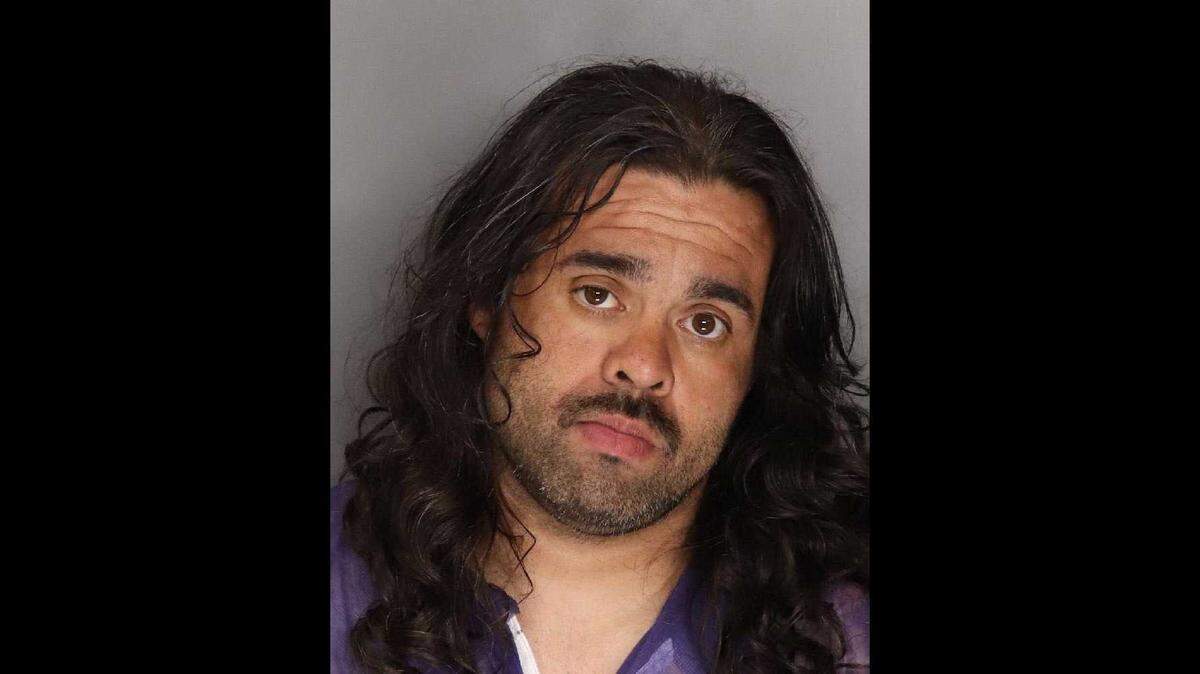
Defendant asks to represent himself at preliminary hearing
Lackey-Garcia appeared before Sacramento County Judge Donald Currier at a preliminary hearing last month.
At times he seemed unaware of the seriousness of the murder and attempted murder charges he faced throughout the meeting. As prosecutor Caroline Park questioned witnesses about the stabbings he grumbled words under his breath and frequently raised his hand in protest.
“What a lie,” he said, exasperated, while one of the detectives testified. “Oh my God.”
Eventually, Lackey-Garcia decided to testify himself against the advice of his attorney Kenneth Rosenfeld. When the prosecutor questioned him, Lackey-Garcia did not deny stabbing multiple people.
Largely missing from the discussion was anything about his mental health history since a doctor had recently found him fit to stand trial. Prosecutors referred the case to a death penalty review committee which determined that if he is convicted, it would not sentence Lackey-Garcia to death (although the state has not seen an execution since 2006).
For a moment, it seemed Lackey-Garcia would represent himself in the case, a decision he’d chosen in the past. Judge Currier advised him against it.
As they haggled over the appropriate trial date, Rosenfeld was placed on stand-by. He said he needed more than 60 days to investigate the mental health status of his client.
This story was originally published May 12, 2021 at 5:00 AM.