What California’s new COVID-19 curfew means for counties in the Sacramento region
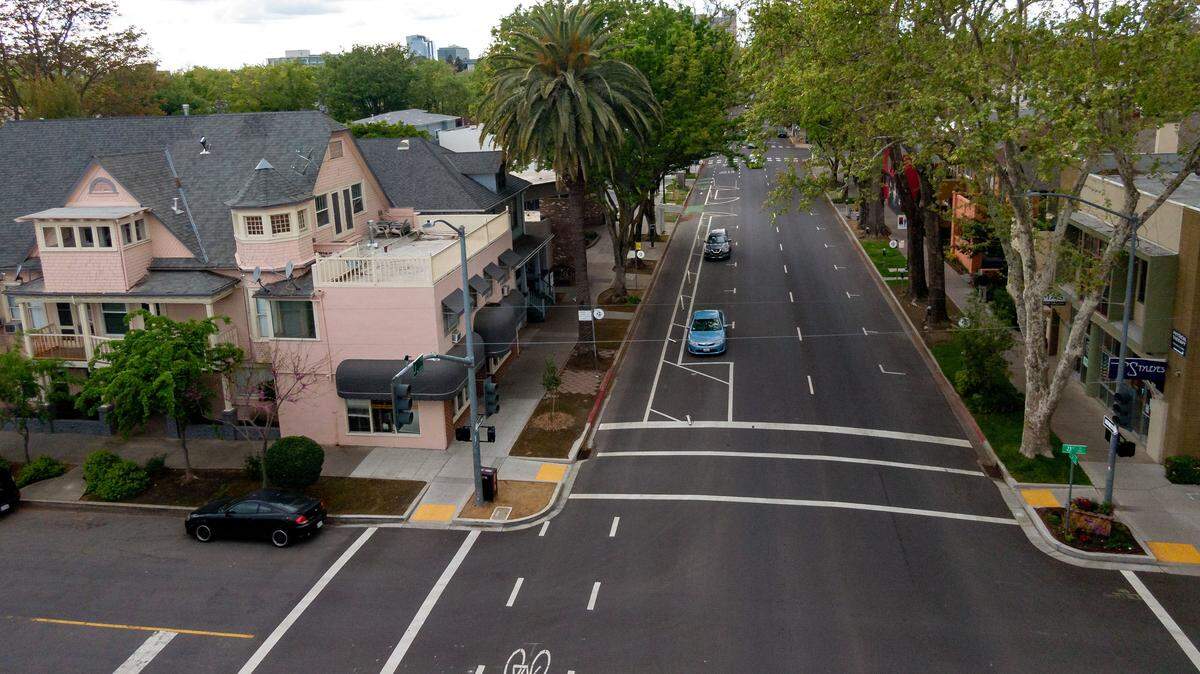
Restaurants, movie drive-ins, cardrooms and other businesses opened late into the night and deemed non-essential throughout the Sacramento region will have to close early starting Saturday as a month-long curfew goes into effect across the state to stall the rapid rise in COVID-19 cases.
The curfew, from 10 p.m. to 5 a.m., will apply in counties in California’s purple tier, where coronavirus transmission rates are widespread. About 37 million Californians are in that highest tier, including Sacramento, Placer, Yolo, El Dorado, Yuba and Sutter counties.
Some law enforcement agencies in the Sacramento region have already announced they would focus on an educational approach when confronted with residents or businesses not complying with this curfew.
Restaurants will have to close up their outdoor dining by 10 p.m., but restaurants open late for takeout or drive-thru will be allowed to remain open overnight. Grocery stores will be allowed to stay open but most have been closing by 10 p.m. since the beginning of the pandemic.
Cardrooms, such as Stones Gambling Hall in Citrus Heights and Capitol Casino on North 16th Street in downtown Sacramento have stayed open by moving their tables into outdoor tents. Both businesses are open 24 hours.
Movie drive-ins deemed non-essential in March and later allowed to reopen under COVID-19 safety protocols will have to adjust their schedules to comply with the curfew. The West Wind Sacramento Drive-In on Oates Drive, for instance, has movies scheduled to start as late as 10 p.m. and midnight.
The Gov. Gavin Newsom’s office announced the curfew Thursday, saying this “limited stay-at-home order” is the same as the restrictions initially put in place as the pandemic first impacted California in March. The curfew will cover only nonessential activities.
State Health and Human Services Secretary Dr. Mark Ghaly said the stay-at-home order in the spring showed that reducing the movement of Californians dramatically decreases COVID-19 spread, hospitalizations and deaths.
“We may need to take more stringent actions if we are unable to flatten the curve quickly,” Ghaly said. “Taking these hard, temporary actions now could help prevent future shutdowns.”
In a live-streamed announcement, state officials said activities in public done after 10 p.m. are often non-essential and more likely the result of social gatherings. The events have a higher likelihood of leading to reduced inhibition and compliance with safety measures, such as wearing a face covering and maintaining safe distancing from others.
In Sacramento County, COVID-19 cases are rising sharply, reporting an all-time high of 559 new cases on Thursday. COVID-19 hospitalizations are on a rapid rise in the county as well.
The capital county’s COVID-19 positivity rate has hit 6.4%, and is moving up quickly. That’s above the 5% line set by the World Health Organization and deemed to be unsafe for reopening most businesses.The county’s all-time high occurred two months ago, when the rate topped 8%.
Kasirye today said the county’s eyes are on Thanksgiving, considered perhaps the most dangerous day of the virus. Health officials have been urging people not to congregate and the CDC urged Americans on Thursday to not travel for the holiday.
“That 6.4% is concerning going into Thanksgiving and the holidays,” Kasirye said. “We are requesting people to rethink their plans and stay home, especially if they have relatives that fall into that category of high risk. We realize people do have COVID fatigue. It’s been a long year, but we have to do it, until we can get to people getting vaccinations.”
Sanjay Varshney, a business professor at Sacramento State, said the direct economic impact is likely minimal because few people are out shopping or dining in the late-night hours. But the order has a psychological effect of spreading “a little more panic and fear,” he said. “The curfew makes it sound like there’s a war going on.”
Impact unclear for casinos on Indian land
The 24/7 world of gambling also could face problems. Casinos on sovereign Indian land probably aren’t subject to the governor’s order, but it’s unclear whether their customers would be allowed to drive there after 10 p.m.
“When somebody is off the reservation, they are subject to the full panoply of California law,” said George Forman, a Bay Area lawyer who specializes in tribal gaming law. It’s also not clear about the status of casino employees who live off the reservation and are scheduled for overnight shifts, he said.
“It is a gray area,” Forman said.
Ben Deci, spokesman for the Yocha Dehe Indian Nation, owner of Cache Creek Casino, said tribal leaders were scrambling to understand what Newsom’s order will mean.
“We had no heads-up that this was coming,” he said. “We don’t know what the impacts and the implications are for our business.”
The region’s cardrooms, meanwhile, will have to abide by the curfew.
“It is disappointing that the state is implementing a one-size-fits-all as the cardrooms are one of the only industries with COVID-19 regulations in place and they do not permit mask removal,” said Kyle Kirkland, president of the California Gaming Association, which represents the cardroom industry. “There is no eating permitted at the tables and every table has plexiglass or social distancing between players.
“We urge the state and county officials to allow our businesses to continue to safely operate outdoors as we have not been able to open indoors for months.”
Enforcement of the curfew
In response to news of the curfew, Sacramento County Sheriff Scott Jones said his deputies will not be out determining whether businesses or residents are complying with the curfew or enforcing any health or emergency stay-at-home orders.
“The Sacramento County Sheriff’s Office will not be determining — including entering any home or business — compliance with, or enforcing compliance of, any health or emergency orders related to curfews, staying at home, Thanksgiving or other social gatherings inside or outside the home, maximum occupancy or mask mandates,” Jones said in the written statement. “Further, we will not dispatch officers for these purposes — callers will be advised to call 311 and be routed to County Health.”
Jones also said his deputies would continue to respond to any potential criminal behavior or impacts to public or personal safety.
The Sacramento Police Department said it would continue its educational approach to stay-at-home orders designed to stall the spread of COVID-19.
“Since the beginning of this pandemic the Sacramento Police Department has primarily taken an educational based approach regarding COVID-19 health orders, said Sgt. Sabrina Briggs, a Sacramento police spokeswoman. “This educational approach will continue with the new statewide limited curfew.”
She also said that business complaints would primarily be handled through the city’s code enforcement department. Complaints for businesses within city limits can be reported by calling 311, Briggs said.
The El Dorado County Sheriff’s Office announced it will not enforce the curfew order. Calls to the Sheriff’s Office about enforcement of any COVID-19 orders will be referred to the county’s Department of Public Health.
“El Dorado County Sheriff’s Office deputies will not be determining compliance with, or enforcing the compliance of, any health order related to this curfew,” sheriff’s Sgt. Eric Palmberg said in a news release. “The Sheriff’s Office will not prevent Thanksgiving activities, maximum occupancies, or mask wearing mandates at social gatherings within the county of El Dorado.”
And Placer County Sheriff’s Office said it would not enforce this stay-at-home order.
“We are not enforcing this new order,” said Angela Musallam, a Placer County sheriff’s spokeswoman. “We are going to be taking the same approach we have from day one which is informational.”
Roseville Police Department also said it would not dispatch officers to reports of violations of the new order, and would focus their efforts on education.
Placer County Board of Supervisors Chair Bonnie Gore took issue with Newsom’s curfew order, saying it “crossed a line.”
“I continue to believe that using a forceful and/or punitive approach is wrong and will not result in further compliance,” Gore said, who represents Roseville. “Beyond continuing to hinder local businesses, this is now a civil liberties issue. We have spent more than eight months inundating residents with information about how to reduce the spread of COVID-19.
“They are aware of the risk and should be trusted to conduct themselves with discretion.”
Assemblyman Kevin Kiley, who represents parts of Placer, El Dorado and Sacramento counties, also disagreed with the Governor’s order.
“Gov. Newsom’s refusal to address the curfew himself, instead deputizing his health secretary, shows he doesn’t understand there’s more than one dimension to such a chilling use of state power,” he said in a statement. “California has had among the harshest restrictions in the country, with little to show for it.
“The evidence on the efficacy of curfews is highly dubious, much as with the Governor’s business and school closures. But the tragic costs of these policies are beyond dispute and could linger for generations. The state should focus on bolstering our hospital and healthcare capacity in every way possible while trusting in the people of California to make their own decisions about a virus whose risks are well understood by all.”
This story was originally published November 19, 2020 at 4:44 PM.