
Farmers’ protest blocks Sacramento highway + Georgette Imura dies: Your AAPI newsletter
It is Thursday, Dec. 24, and this is The Sacramento Bee’s AAPI weekly newsletter.
Here’s a recap of the stories I’ve covered and ones I’m following:
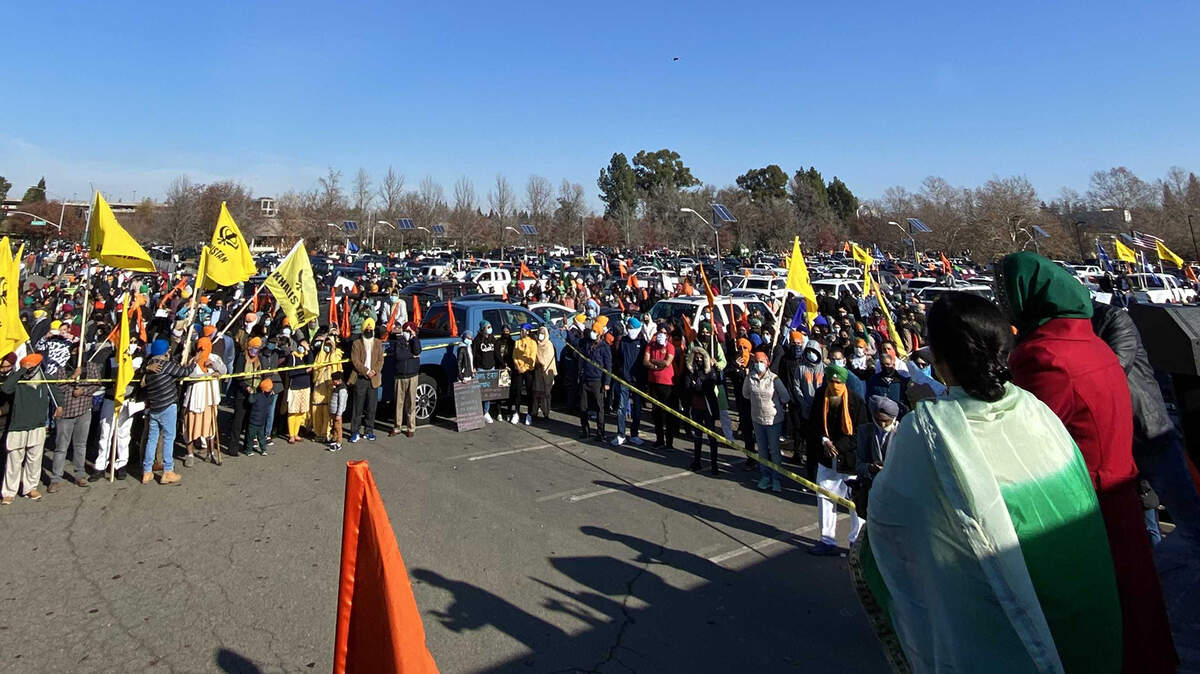
Thousands of protesters blocked traffic on Highway 50 in Sacramento on Saturday to protest against India’s new agricultural laws, which advocates say will cut Punjabi farmers’ profits and make it easier for large corporations to drive them out of business.
“I think it’s about time … to show the people that are protesting (in India) that we’re with them,” said Karam Singh, one of the organizers.
According to organizers, the Indian government’s new laws, passed in September, eliminate the minimum standard price farmers were previously guaranteed for their crops.
Saturday’s protest was organized by several Sikh organizations, including the California Youth Sikh Alliance, the Capital Sikh Center of Sacramento and the Jakara Movement. Cars first gathered in one of Sacramento State’s largest parking lots, where several leaders gave speeches and made prayers. Some protesters showed up in a school bus and sat on its roof playing drums, and many brought handmade signs with messages such as “No Farmers, No Food” and “People > Profit.”
Protesters then drove west in a caravan on Highway 50, blocking traffic on roadways to downtown with motorcycles, cars and even tractors.
“I think it’s going to be a wake-up call for the Modi government,” said Singh, who works with the California Sikh Youth Alliance. “You can’t suppress protesters (in India) in such a brazen fashion and not expect outrage.”
Longtime Sacramento civil rights activist and Capitol staffer Georgette Imura died from lung cancer on Dec. 17. She was 77.
Imura was born Georgette Yamamoto on Oct. 18, 1943, in the Manzanar concentration camp at the foot of the Sierra Nevadas. Described as feisty, headstrong and bold her whole life, Imura entered the Capitol for the first time as a receptionist in 1967, working her way over the course of 28 years to hold numerous leadership positions in the state Legislature.
Imura also advocated for the Japanese American community’s efforts to seek redress for WWII incarceration as director of the Office of Asian Pacific Affairs for state Senate President Pro Tempore David Roberti.
“When she fought, she fought with everything she had,” said former state legislative staffer Maeley Tom, Imura’s longtime friend. “She never did anything halfway.”
Imura was passionate about creating more pipelines for AAPIs to join the Capitol. In 1990, Imura co-founded the Asian Pacific Youth Leadership Project, a four-day, all-expenses-paid workshop that offers hands-on training about the state legislative process, political advocacy and activism.
Community organizer, Capitol fixture, political advocate — Imura was all of these things. But her family will also remember her for who she was behind the scenes, whether it was playing slot machines, threading beads and stones for handmade jewelry or singing Motown tunes in the car.
“She put up with me all these years,” her husband Roy said. “She opened my eyes to see and treat people equally.”
In other news
Sacramento man’s quirky ramen recipes earn him the title ‘Chief Noodle Officer’ [The Sacramento Bee]
How the pandemic threatens to destroy America’s three remaining Japantowns [NBC News]
South Asian women immigrants, some on Covid front lines, left unable to work by Trump admin [NBC News]
Why Indian women became the faces of these Victorian-era postcards [CNN]
Listen: What It’s Like To Grow Up As A Member Of ‘Model Minority’ [NPR]
Judy Yung, Chinatown native and early scholar of Chinese-American life, dies at 74 [San Francisco Chronicle]
How US cities fixed violations to Asian Americans’ voting rights in 2020 [The Guardian]
San Jose Assemblyman Ash Kalra wants to be the next Attorney General [San Jose Spotlight]
Most Influential: Young Kim and Michelle Steel pave way for Asian American women in Congress [OC Register]
Opinion: Asian American and Pacific Islanders are ready to lead [CalMatters]
This week in AAPI pop culture
We may not be out of 2020 yet, but 2021’s inevitable awards season controversy is already heating up. On Tuesday, Hollywood lashed out after the Golden Globes announced American-made film “Minari” would be shut out of its best picture categories for having primarily Korean dialogue.
The Golden Globes is typically used as a metric to predict Academy Award winners. But unlike the Academy Awards, the Hollywood Foreign Press Association requires all Best Dramatic Picture nominees to have at least 50% English dialogue.
That means “Minari,” an American-made film starring Korean American actors, will compete instead in the foreign language category.
“Minari,” starring Steven Yeun, is centered on a Korean immigrant family who moves to a small Arkansas farm in the 1980s. It’s a classically American story of assimilation and pursuing the American Dream, based on director Lee Isaac Chung’s own experiences growing up. The film premiered at the Sundance Film Festival in January to rave reviews, winning the coveted U.S. Dramatic Grand Jury Prize and the U.S. Dramatic Audience Award.
Many Hollywood figures took to social media Tuesday to challenge the HFPA’s decision.
“I have not seen a more American film than #Minari this year,” ‘The Farewell’ director Lulu Wang wrote on Twitter. “It’s a story about an immigrant family, IN America, pursuing the American dream. We really need to change these antiquated rules that characterizes American as only English-speaking.”
“I’m a first-generation American born and raised in New York City and (Minari), a film about a Korean American family searching for the mercurial and multi-faceted American Dream in rural Arkansas, made me feel seen in a way movies rarely do,” director Nia DaCosta posted.
“#Minari is an American film about new Americans,” wrote “Pachinko” author Min Jin Lee. “The English language is not an indigenous language. Enough of this nonsense about Asian-Americans being permanently foreign.”
Others pointed out that “Inglorious Basterds,” an American-made film shot primarily in French, German and Italian, was not classified as a foreign-language film by the Golden Globes.
This isn’t the first time the Golden Globes has frozen out American films not shot in English. Last year, “The Farewell” — another American-made film starring Asian American actors, scripted mostly in Mandarin — was given the same foreign-language film boot.
Whether people actually care about the Golden Globes is still up for debate. But what’s certain is that the abstract veneer of prestige these awards bestow can make or break young filmmakers, especially filmmakers of color, and denying them the ability to compete in top categories diminishes their paths to Hollywood success.
Got a story suggestion? Please reach out to me at awong@sacbee.com.
That’s it for this week’s newsletter. Thanks for reading. I’m off next week — see you in the new year!
Please spread the word about our newsletter and send to a friend. Sign up here to receive this newsletter each week.