
Longtime Sacramento civil rights activist and Capitol staffer Georgette Imura dies at 77
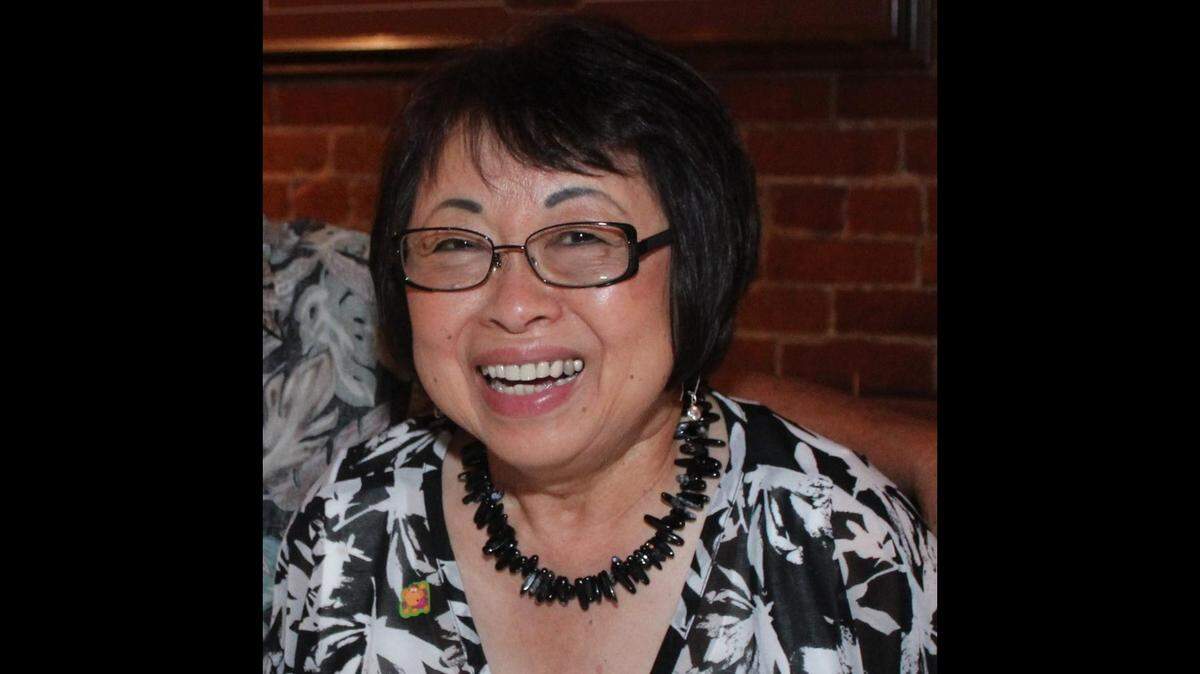
Longtime Sacramento civil rights activist and Capitol staffer Georgette Imura died from lung cancer on Dec. 17. She was 77.
Imura was born Georgette Yamamoto on October 18, 1943, in the Manzanar concentration camp at the foot of the Sierra Nevadas. She spent the first two years of her life imprisoned there before her family was eventually released. Her family settled in midtown Sacramento when she was 4.
Described as feisty, headstrong and bold her whole life, Imura entered the Capitol for the first time as a receptionist in 1967, working her way over the course of 28 years to hold numerous leadership positions in the state Legislature.
“When she fought, she fought with everything she had,” said former state legislative staffer Maeley Tom, Imura’s longtime friend. “She never did anything halfway.”
She did all of that with a high school degree from Sacramento High School, having never completed college. At 21, she married longtime sweetheart Roy Imura, now 77. They have two sons: Todd, 52, and Aaron, 45.
The couple was married for over 55 years after meeting as young teenagers — so young that the two would walk to the movie theater for dates, unable to drive. Roy still remembers the day he first met her, biking up to her house with their mutual friend and seeing her standing on the front porch.
“In those days you got a gold chain and your class ring to signify you were going steady,” Roy said. “She wore it so much that the ring sort of wore off in the middle.”
Community organizer, Capitol fixture, political advocate — Imura was all of these things. But her family will also remember her for who she was behind the scenes, whether it was playing slot machines, threading beads and stones for handmade jewelry or singing Motown tunes in the car.
“She put up with me all these years,” Roy said. “She opened my eyes to see and treat people equally.”
Imura passed away surrounded by her family on Zoom after a three-year battle with non-small cell lung cancer, which is disproportionately higher among Asian women. Todd urged everyone, especially Asian women, to start getting lung scans early.
“I would really hope that her life experience and our new knowledge on this … can be shared with others who might face the same battle,” he said.
A life of public service
Imura began her legislative career as a receptionist for state Sen. Leroy Greene in 1967. She rose to several other positions in the decades that followed, serving as chief of staff to state Sen. Diane Watson and staff director for the California State Senate Democratic Caucus. Imura also advocated for the Japanese American community’s efforts to seek redress for WWII incarceration as director of the Office of Asian Pacific Affairs for state Senate President Pro Tempore David Roberti.
But the more involved Imura became in local government, Tom said, the more she thought: Why were Asians so underrepresented in the Capitol?
“We were working on issues for other ethnic minorities and we realized that no one would talk about Asians, as if we didn’t exist,” Tom said. “We were invisible in the 1970s. We said, ‘We’re so lucky to be here at the Capitol, in the seat of power, and yet we have no voice. Let’s do something about it.’”
So with help from Tom and the few other Asian Capitol workers, Imura went out into Sacramento’s Asian American community and started door-knocking, putting together workshops for Asian residents on the importance of becoming politically involved and practical skills like applying for jobs and political fellowships.
Her passion project, co-founded with Tom in 1990, was the Asian Pacific Youth Leadership Project, a four-day, all-expenses-paid workshop that offers hands-on training about the state legislative process, political advocacy and activism. Imura’s idea was to help AAPI kids see themselves in public service and political roles.
“That was her heart and soul,” Tom said. “She, to me, was a champion. She was really my strength and my rock. I couldn’t have done what I did without her.”
After leaving the Capitol in 1994, Imura established a consulting firm for government relations, through which she helped California’s Japanese American Community Leadership Council pass legislation that saved California’s three remaining Japantowns. And she never stopped fighting to create more pipelines to government roles, serving as a board member at CAPITAL and staying active with the APYL Project.
“Being Japanese, we experienced racism and discrimination,” Todd said. “Seeing how the Black community was very powerful in making a voice for themselves … that was a driving force to help her become an advocate for the Asian community.”
Living on in memories
In her downtime, Imura could be found shouting correct answers at TV game shows like “Wheel of Fortune” and “Cash Cab.” She also got a kick out of playing slot machines at casinos — although she never won big.
Rose Nagao, Imura’s sister-in-law, said Imura helped her find a part-time job in the chief clerk’s office after being a stay-at-home mother for years. It was a crucial boost to Nagao’s self-confidence, she said.
“I told her, ‘You gave me an education,’” Nagao said. “‘I do have a brain, I can do more than collect egg cartons and juice cans for a preschool project.’”
During the final years of her life, Imura began setting small goals. One was to cast a vote in the 2020 election against President Donald Trump, which she did enthusiastically.
Another was to see the birth of Aaron’s second son and her youngest grandson, Max. At one particularly low point in her health, Aaron said, Imura was unable to accompany him and his wife to hear Max’s heartbeat for the first time. So Aaron recorded it on his phone, playing the sound back for her as she lay on her hospital bed.
“I’d like to think it gave her a lot of reason to continue on the fight,” Aaron said. “I told her, ‘You gotta fight this out, and you gotta be around when Max is born.’”
In October, Imura’s family and friends threw her a small virtual birthday party to reminisce on how each of them first met her. Instead, it became another demonstration of what Imura did best, Tom said, which was taking care of others.
“She said, ‘Listen ... I don’t want you to worry about me. I’m fine, I’m ready for this. All of you need to make the most of your lives,’” Tom said. “Everybody said, ‘That’s so typical of her.’ … She was (so) concerned about everyone on the Zoom call that she took all the time she was (given) to speak to comfort all of us.”
At her core, friends and family said, Imura was driven by her desire to find political footholds for underrepresented communities. In the same way that she wanted her sons to have the best opportunities, Todd said, she wanted everyone in the Sacramento community to have a shot at public service.
“It was her way of … spreading her motherhood,” Todd said. “I know there was a place in her heart where she felt like she could have done more for Aaron and me. But she had a much bigger mission in life, and … that’s what made us love her even more, seeing how selfless she was.”
This story was originally published December 23, 2020 at 1:29 PM.