Sacramento will require many buildings to run entirely on electricity. Who it will impact
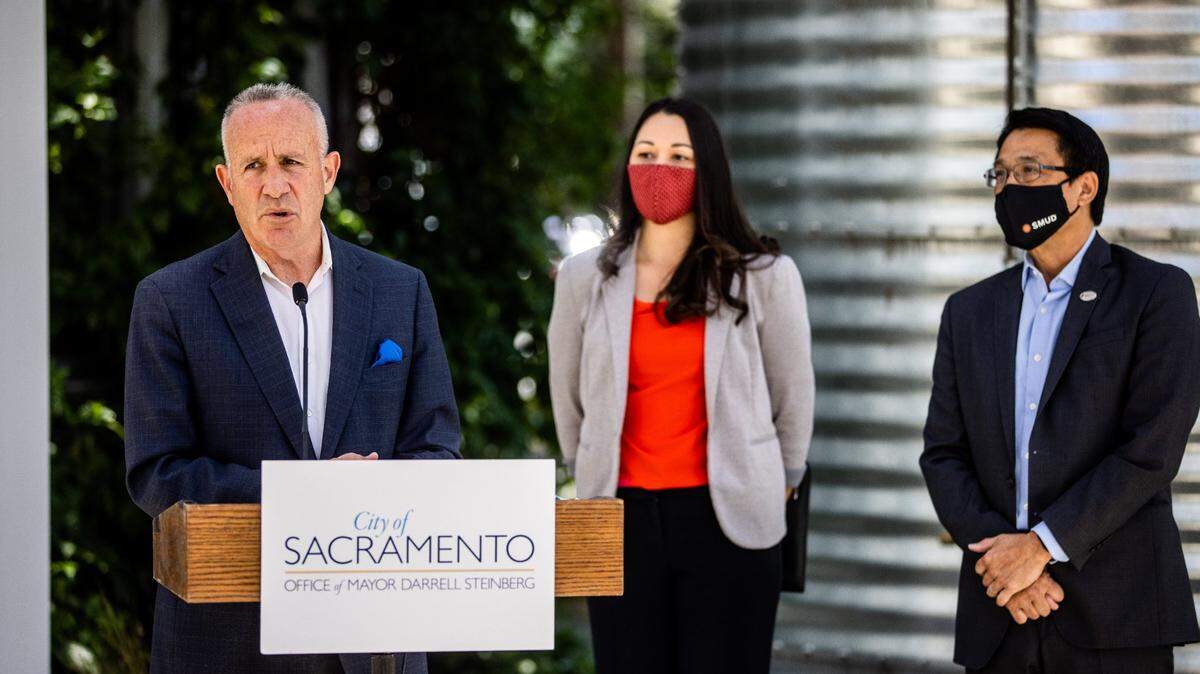
New low-rise buildings in Sacramento will be required to run entirely on electricity by 2023, the City Council decided Tuesday.
To address climate change, 44 other cities in California have adopted electrification ordinances, but Sacramento is the first city in the Central Valley to do so, Mayor Darrell Steinberg said.
“Climate change is not some esoteric issue. There are specific public health consequences now in our Sacramento community,” Steinberg said. “If we are not aggressive about reducing fossil fuel, then we are leaving generations of children, and this generation of children, to live with the same health impacts.”
The Sacramento region has the sixth worst ozone pollution of major U.S. cities, and 10th worst short-term particle pollution, according to the American Lung Association’s State of the Air report.
The ordinance will require residential and commercial buildings with three or fewer stories to be all electric starting in 2023. The plan is then to require all new buildings to be electric by 2026, said Jennifer Venema, the city’s interim climate action lead.
The ordinance passed 7-2, with Council members Angelique Ashby and Sean Loloee voting against it. Both raised concerns about unintended consequences on small businesses, especially restaurants.
“It feels like really bad timing, especially for restaurants,” Ashby said, referring to the coronavirus pandemic’s impact on that industry. “It’s literally the worst time in the modern day history for restaurants.”
Asian restaurant owners in Sacramento have raised concerns with the ordinance because there is not currently an electric alternative for wok cooking, said Frank Louie, executive director of the Stockton Boulevard Partnership, which includes Little Saigon. The high heat from gas is necessary to create the signature flavors of wok cooking — a staple in Asian cuisine.
To address that, Steinberg amended the motion to allow restaurants to keep using gas until new technology is available and feasible. Previously, that exemption was only going to be granted until July 1, 2025. That exemption also applies to some manufacturing equipment and hot water heating for regulated affordable housing projects.
A committee will be formed of business, manufacturing, restaurant, development and labor representatives to give input as well, Steinberg said.
“I don’t know how much better we could do here to balance the risk versus the imperative,” Steinberg said.
Construction costs of going electric
Construction costs for electric buildings can be considerably lower, particularly once Sacramento Municipal Utility District incentives are factored in, according to a blog post on the mayor’s website. In addition, natural gas prices are expected to rise.
Downtown Partnership Executive Director Michael Ault said the ordinance could actually increase the cost of producing housing.
“We really feel the ordinance has the potential to stall new construction within the central city,” Ault told the City Council. “The ordinance will directly impact and raise the cost of producing housing. This will impact housing production at all levels, we feel, especially the affordable and workforce housing.”
The ordinance does not require existing buildings to be retrofitted, which Councilwoman Katie Valenzuela said was disappointing.
“This does nothing to address current emissions because it’s not tackling existing buildings,” Valenzuela said.
The ordinance could cause rates to increase for low-income renters who still have gas, she said.
Valenzuela and Steinberg added an amendment that within 60 days, the council will start working on a plan to require the retrofitting of existing buildings to electricity by 2045, while focusing on addressing the impact on vulnerable communities.
The Mayors’ Commission on Climate Change recommended the ordinance adopted Tuesday as part of a plan for Sacramento and West Sacramento to get to carbon neutrality by 2045.
It’s not the last time the council will consider the topic. The council will have to readopt the ordinance in 2022 before it goes into effect, Venema said.