‘This is our island’: The future is uncertain for seniors living in this Sacramento homeless camp
Twana James has one of the best views in Sacramento.
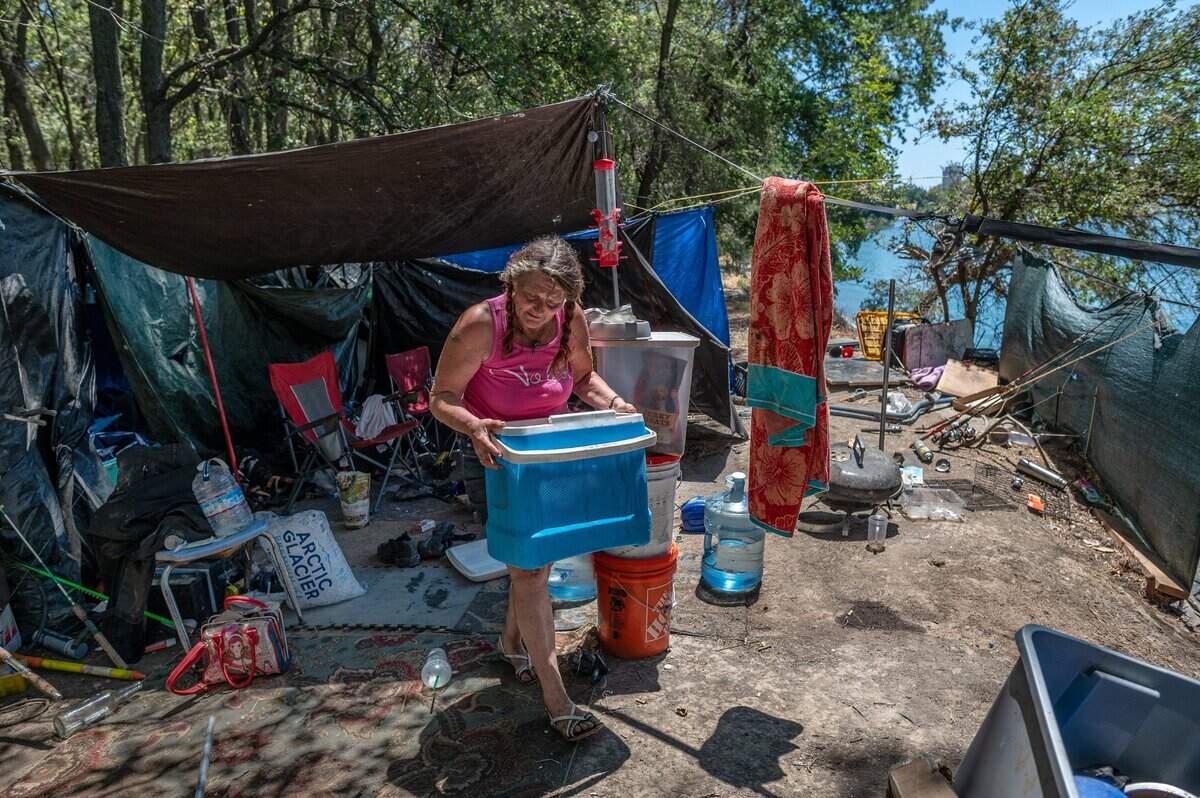
From her large blue tent, which she calls her house, she can see the glistening Sacramento River and the Capital City skyline. She can hear birds chirping and jet ski motors whizzing by.
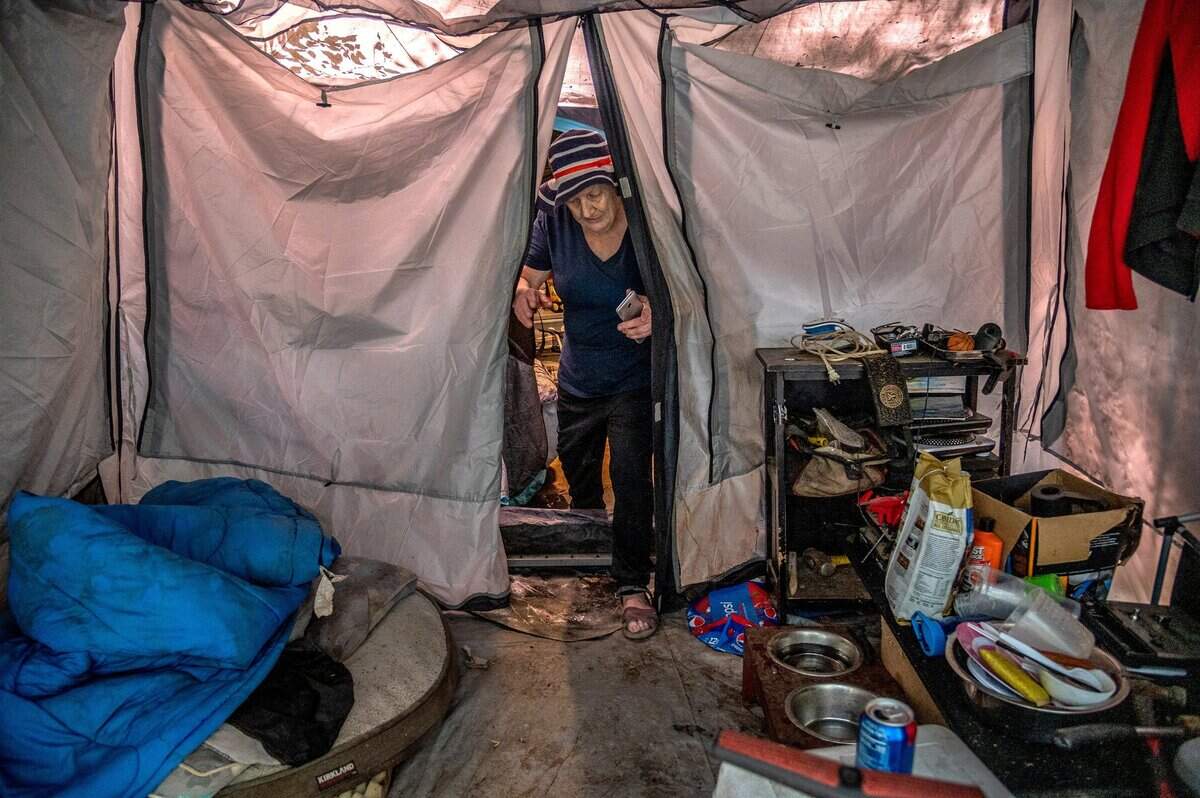
On the ground outside the tent’s entrance lie colorful hand-drawn signs that say “Let go and let God” and “Pray for your enemies and God will forgive you.” Inside, “The Steve Wilkos Show” plays on a flat-screen television. A red carpet covers the dirt floor. White tennis shoes are lined up in a row under the TV. A bed covered with a red plaid blanket is in the corner, and a Bible sits on the red wicker bedside table.
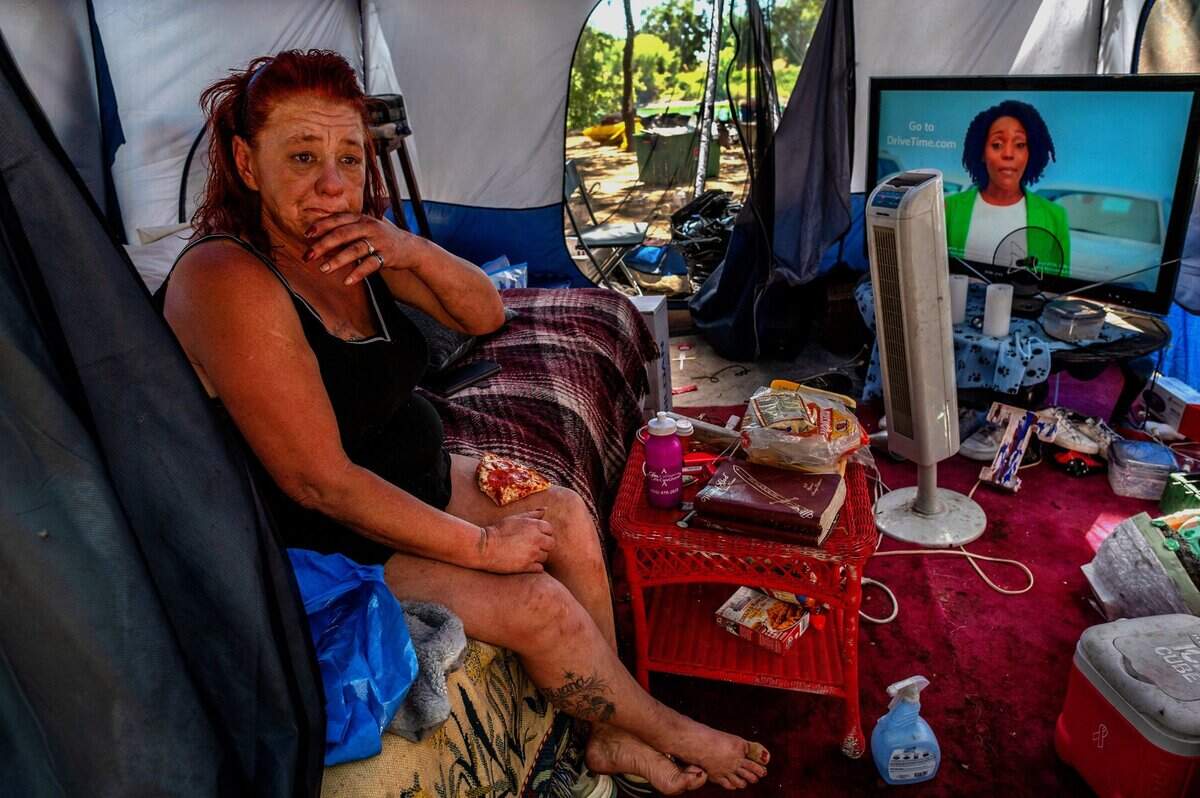
About 60 people live in a homeless encampment near Discovery Park along the Sacramento River, which residents call “the island.” Many are seniors, a particularly vulnerable group among the region’s homeless population.
It’s not the only Sacramento camp with a high number of seniors. According to a count conducted in January 2019, of the estimated 3,900 homeless people living outdoors countywide, 30% were older than 50 and 20% were 55 or older. But the island is one of Sacramento’s oldest, most established camps. Some men and women have lived there for more than 30 years.
And the future of the close-knit riverfront community is now uncertain.
On June 3, county park rangers visited the camp to deliver notices ordering everyone to leave in four days, declaring the camp a fire danger. Fire crews had informed the county they would not be able to get their vehicles and life-saving equipment to the area in the event of a fire, county spokeswoman Janna Haynes said.
“How are you going to separate a family like that?” said camp resident Anthony Pablo, 52, recalling how he felt when he heard the news.
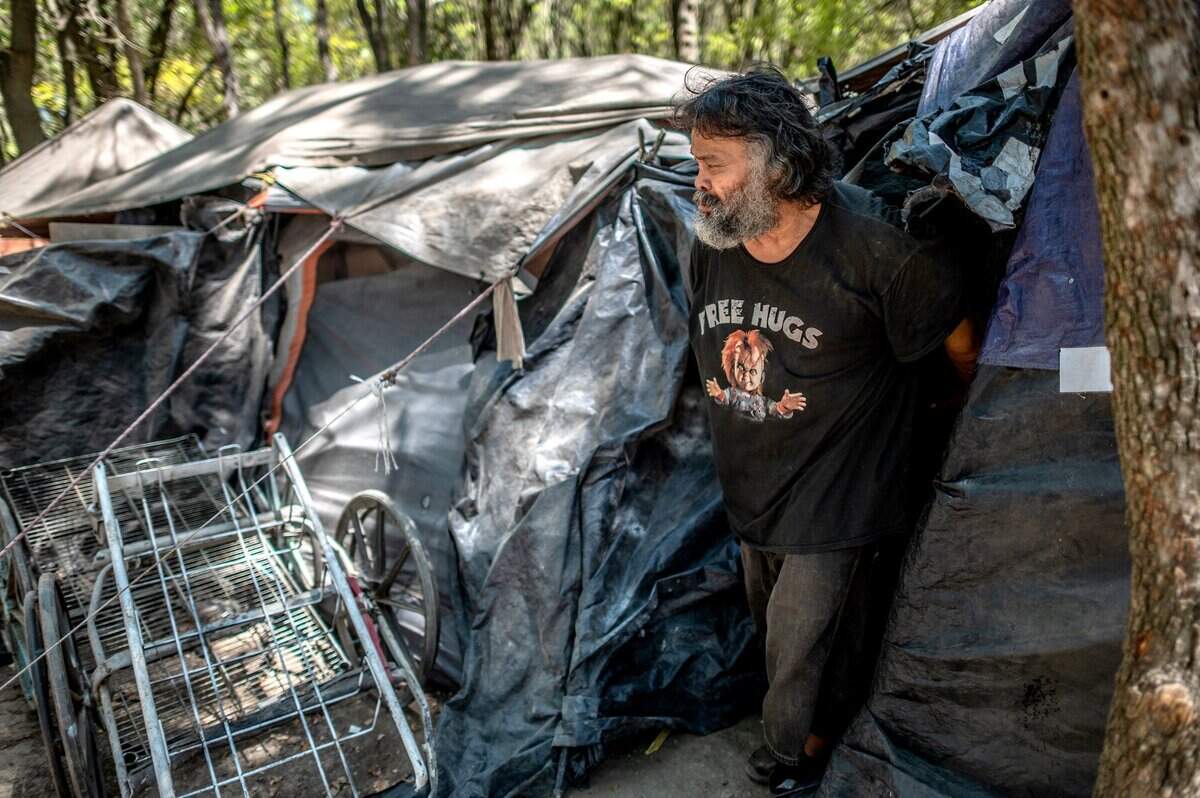
Across Sacramento, homeless men and women camp in tents on sidewalks, under freeways and along the Sacramento River bike trail. There are also hidden longtime large established encampments, such as this island, where people can live remotely as a family, away from the public eye.
The city of Sacramento continues to chip away at various approaches to helping the homeless and earlier this month approved the Comprehensive Siting Plan to Address Homelessness, identifying 20 spots for shelters for the homeless, tiny homes and sanctioned tent encampments. The idea is for people to cycle into permanent housing about every six months. And the first five spots will be in North Sacramento. The first does not open for another three months. The City Council plans to create a major $100 million affordable housing trust fund to spark the creation of thousands of housing units, but the effort was delayed by the coronavirus pandemic.
That leaves some camps and their residents exposed to the fire threat, forcing authorities to declare those camps unsafe and ordering everyone to leave. That’s what happened to a camp in Rio Linda last month, where Sacramento County bulldozed a wooded area because of fire risk.
What will happen to the homeless at the island?
A reprieve
James’ heart sank when rangers showed up in June. She walked up to talk to them.
“When the rangers came, I said, ‘I got this,’ ” said James, 52, the unofficial “mayor” of the camp. “It broke my heart, because they didn’t know what to do. I told them, ‘I got this.’ I was praying to God that I got this.”
Sacramento Mayor Darrell Steinberg and City Councilwoman Katie Valenzuela intervened, and city Fire Chief Gary Loesch gave approval for the notices to be rescinded.
“Defensive measures have been put in place, and Sacramento City Fire can effectively respond to a fire at the site with wildland fire equipment,” Capt. Keith Wade, fire department spokesman, wrote in an email.
The camp residents were relieved. But even though they don’t have to get out immediately, they fear they will still have to leave the island eventually. Nearly 60 fires have already started on the American River Parkway so far this year, most of which occurred at homeless encampments.
“I know that we can’t stay here forever,” James said. “It’s always going to be in our minds that maybe they’re gonna change their mind.”
The elders
Access to the island by outsiders is rare. The self-governed community is largely hidden to the rest of the world.
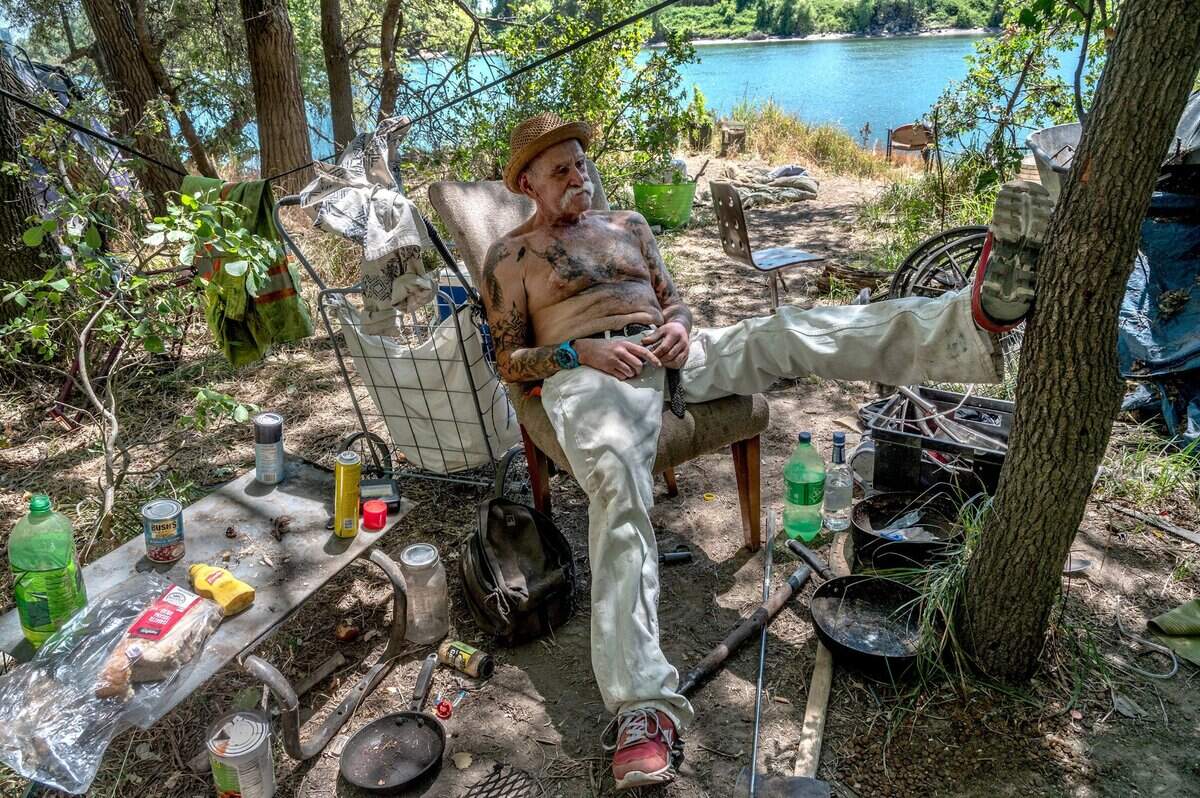
James’ tent is one of about 60 nestled under the trees in the encampment. Some tents are huge, more than 30 feet across, comprised of different “rooms,” with furniture and carpeting. Cables are draped between the trees, holding dog leashes and colorful beach towels. A bright orange hammock overlooks the river, where the River City Queen chugs by carrying tourists. Turkeys and deer occasionally wander by.
Arnold Hoblet, 55, has been living at the camp for 30 years. “There’s something out here that’s powerful,” he said. “I don’t really know any other way of life.”
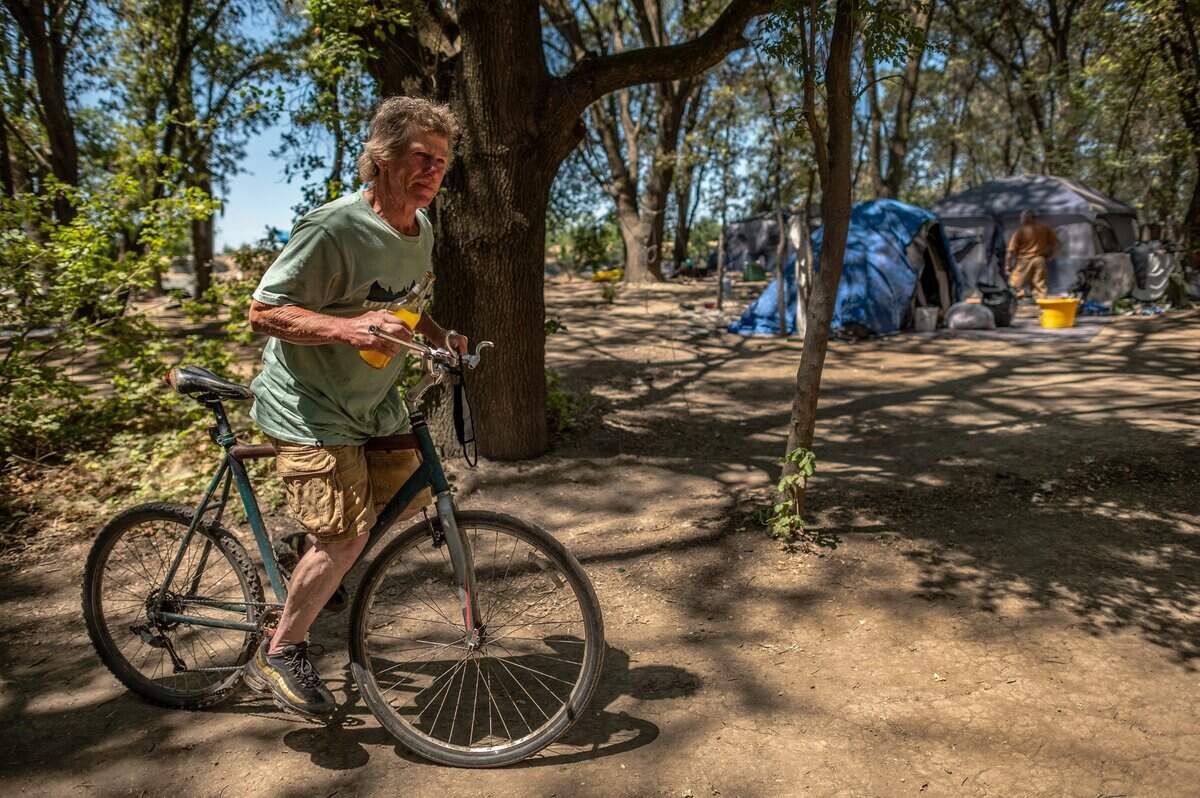
One of the rules in the camp is that everyone takes care of the seniors first. They call them the elders. Some are in their 60s and 70s.
“I’ve been stressed out trying to calm the elders down and say, ‘It’s OK, we’re gonna make it through this,’ ” James said.
Robert Burton, 58, goes by the nickname “Clownboy” and was living there with stage 4 liver cancer. He has since been moved to hospice care.
He spent his final days at the island waiting for housing.
It was elusive, though. His Social Security check of $800 per month was not enough to pay rent. The typical studio apartment in Sacramento rents for at least $1,100. He also had an eviction on his record, making it even more difficult to find housing.
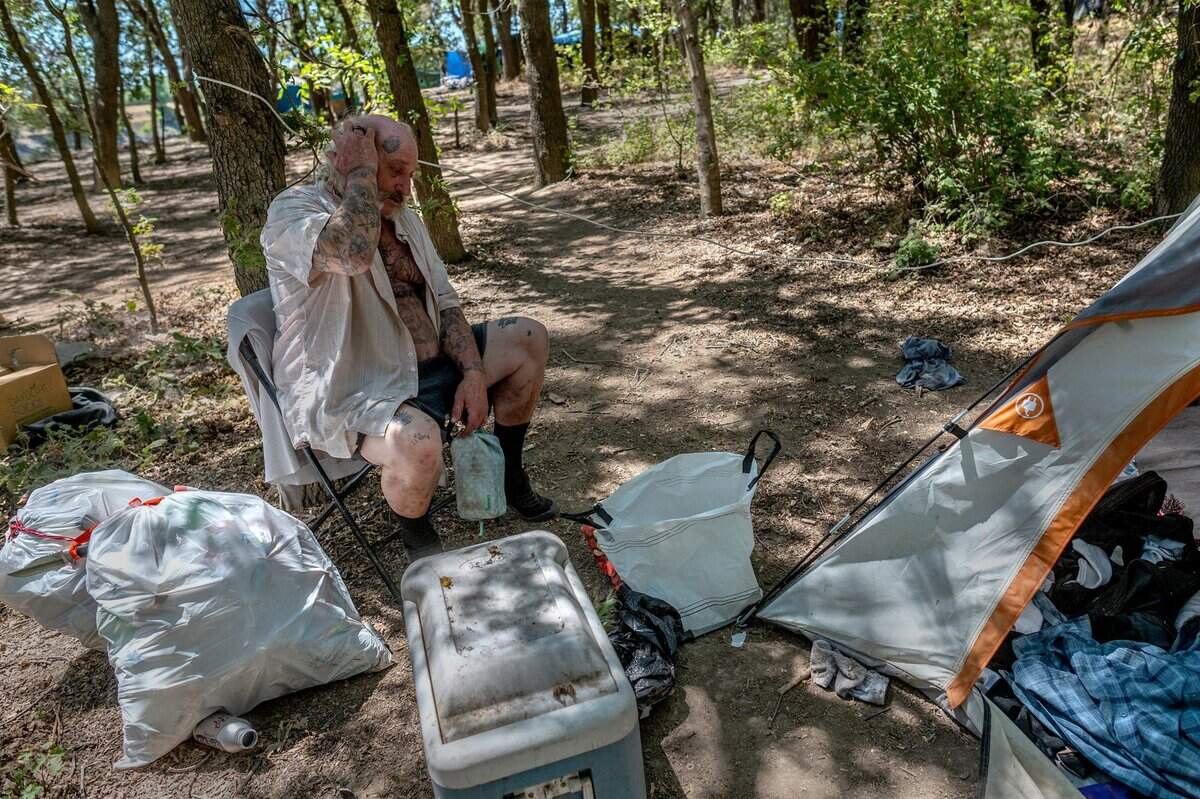
Before he was moved to hospice, he was staying in someone’s garage but was kicked out on the Fourth of July, so he came back to the island, he said.
“This is the one place I know how to survive,” Burton said at the time of his return.
Before leaving the island for good and going into hospice care, he sat outside his tent on a recent summer afternoon next to two trash bags of bottles he planned to recycle for money to buy groceries. Inside his small white tent were a pillow, blankets and a sketchbook.
Kevin Burke, 64, has been on the waiting list for a Housing Choice Voucher, previously called Section 8, for eight years, he said. On a recent afternoon, he stood outside his large tent, next to a glass table he made out of a tree. His two dogs — Fifi and Bobo — were barking and circling his feet.
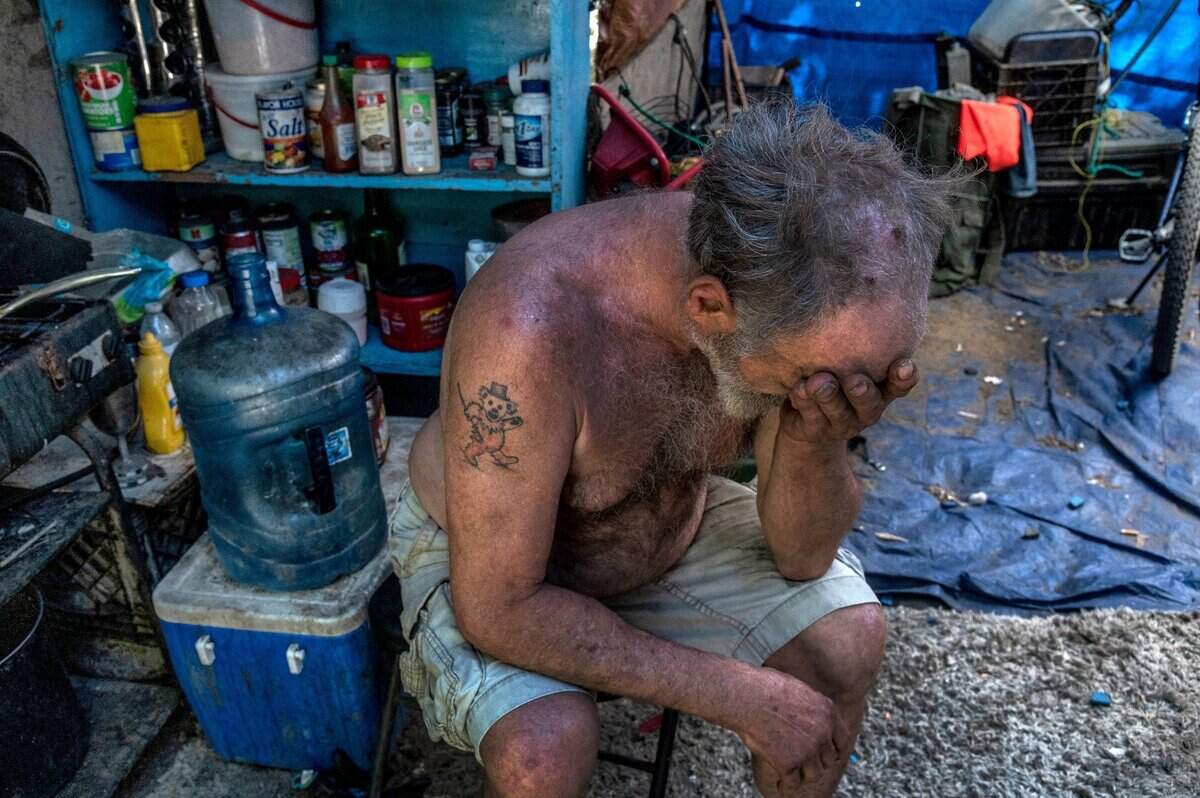
“Everyone thinks it’s easy living out here,” Burke said. “It’s not.”
Burke is almost completely blind, has lower back problems and has hepatitis C. The camp residents put reflectors on many trees to help him get around.
“They told me 10 years ago I’d be dead,” Burke said.
Catherine Roberts, 61, does not have medical issues but knows she will someday soon. She desperately wants an apartment for herself and her dogs, but her Social Security check isn’t enough to pay for one.
She used to work for Francis House Center, a nonprofit that serves the homeless. Then, when her landlord raised her rent from $500 to $1,050, she said, she became homeless.
“Before I do get sick, I would like to be in(side) and live life a little,” Roberts said, crying. “I’ve raised my kids; I’ve raised four foster kids. I’m just tired. I’m just tired.”
What can be done?
James is disappointed that officials have not housed more seniors, especially as Sacramento summer temperatures frequently hit triple digits.
“When it was hot out, elders didn’t have ... no ice and water,” James said. “I mean, they were sitting there going through it and it just breaks my heart that people don’t go out and seek the elders to get them indoors.”
The county’s department of human assistance is working to move the camp residents into shelters and connect them to services such as CalFresh and MediCal, said county spokeswoman Kim Nava.
So far, county officials have moved six people from the island into a county shelter, Nava said.
And Niki Jones, an activist for the homeless with the Sacramento Homeless Organizing Committee, said after the Rio Linda clearing that the county should provide those in homeless encampments with education and tools to prevent fires.
But those at the island don’t want shelter, they want housing. James wants the city and county officials to place them into housing they can afford and provide them with rental subsidies when needed.
“We just want housing,” James said. “Why can’t they put us in housing? We’re not wanting to be out here. We’re willing to go.”
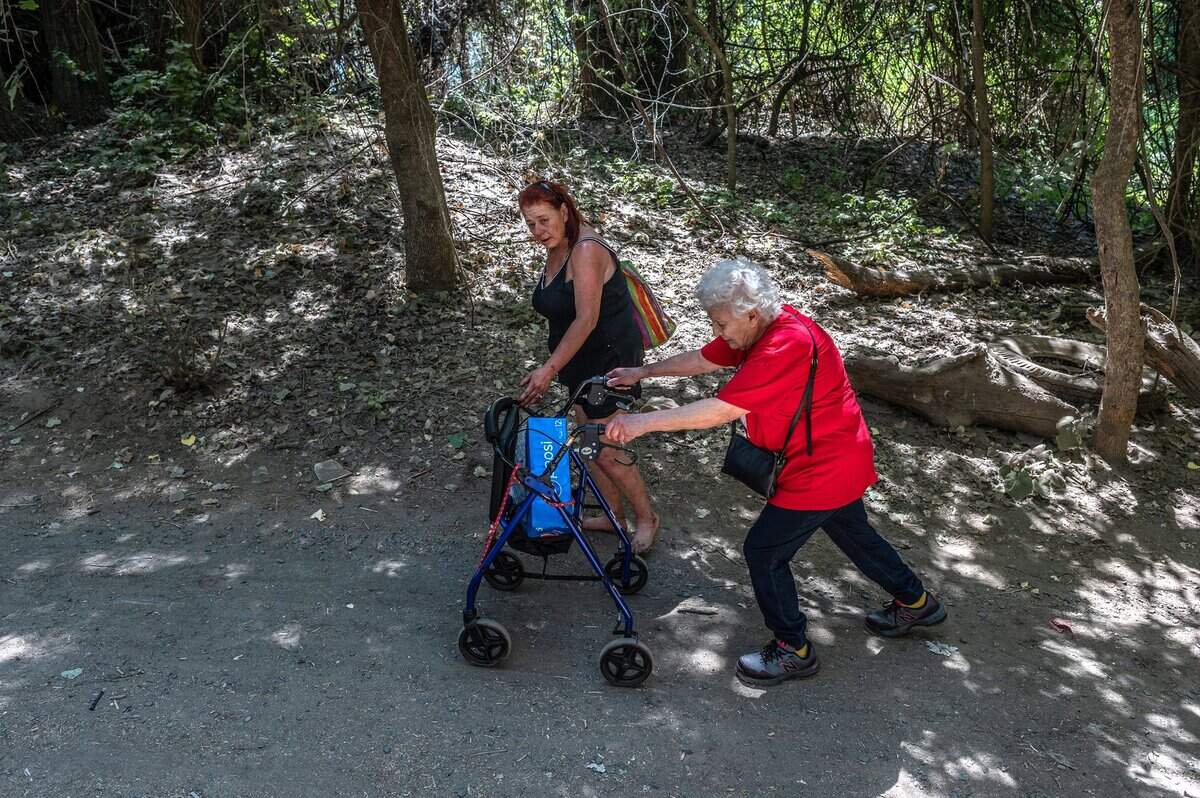
Mayor of the camp
In James’ daily routine, she awakens and checks on her fellow community members. She asks whether the seniors need new clothing or doctor’s appointments. If she has enough money, she cooks a meal for everyone to share, such as her popular pigs in a blanket.
“Anything that happens, they come to me,” James said. “I love it. I wouldn’t give it up for nothing.”
But sometimes, it can be overwhelming.
On a recent afternoon, James checked her bank account on her phone and learned she did not receive the Social Security check she was expecting. She was going to use it to buy water and food for the seniors. She burst into tears.
“Everybody’s depending on me,” she said, crying while sitting on her bed, rocking back and forth and waiting on hold on the phone.
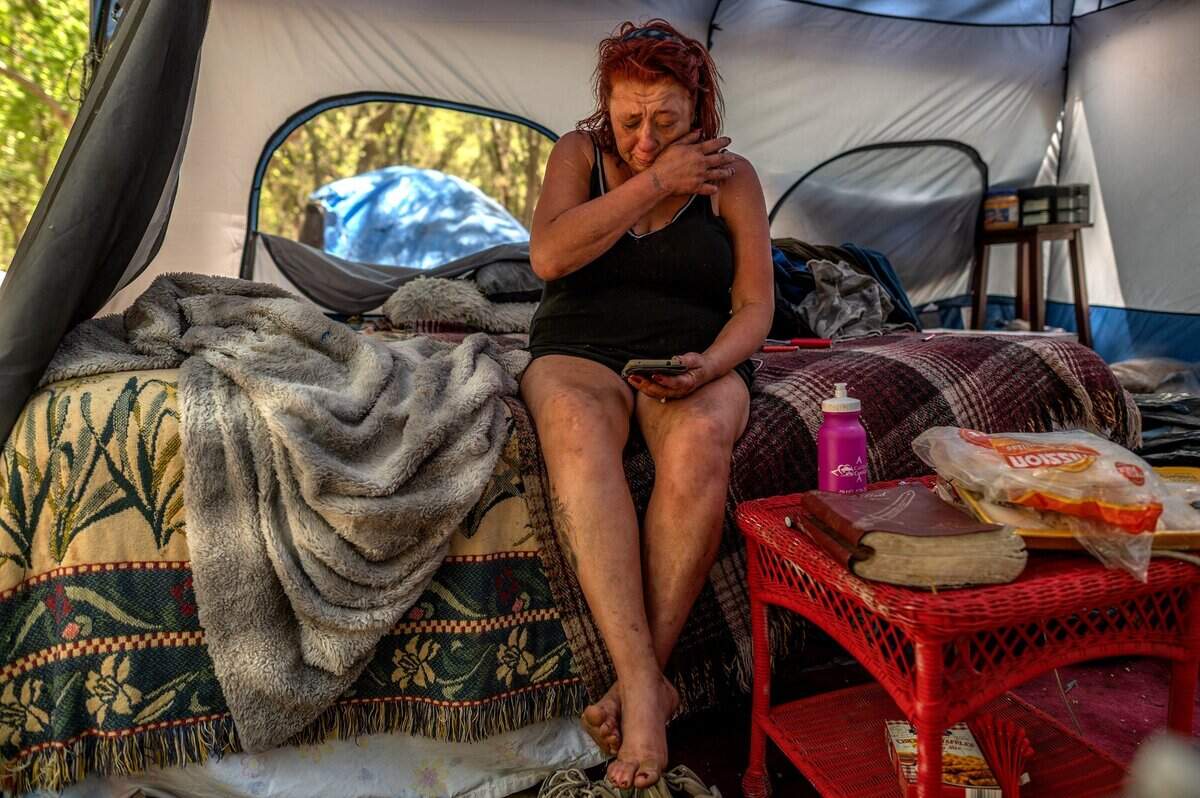
From her tent, she can hear when three pit bulls start barking to signal an outsider approaching. When that happens, she immediately peeks her head out so she can see who it is to make sure nobody dangerous is entering the island.
Throughout the day, a steady stream of people visits her tent.
“Twana’s my friend, my counselor, my everything put together,” said Shelly Santos, who sleeps in a tent next to James’ tent.
Mourning together
The week after they got the notices, the camp had another traumatic event: a death in the family.
The day after Michael McSwain, 60, died, James could barely speak through her tears.
“I was there when he died and took his last breath,” she said. “He was a good guy, he never told nobody no, he helped everybody.”
It’s not the first time the island has lost someone. A few years ago, Bobby Barker died. He was the unofficial mayor before James. A memorial is still set up in his honor under a tree. It displays a wooden cross that says “RIP BOBBY BARKER,” candles, flowers, dog toys and mugs filled with little trinkets.
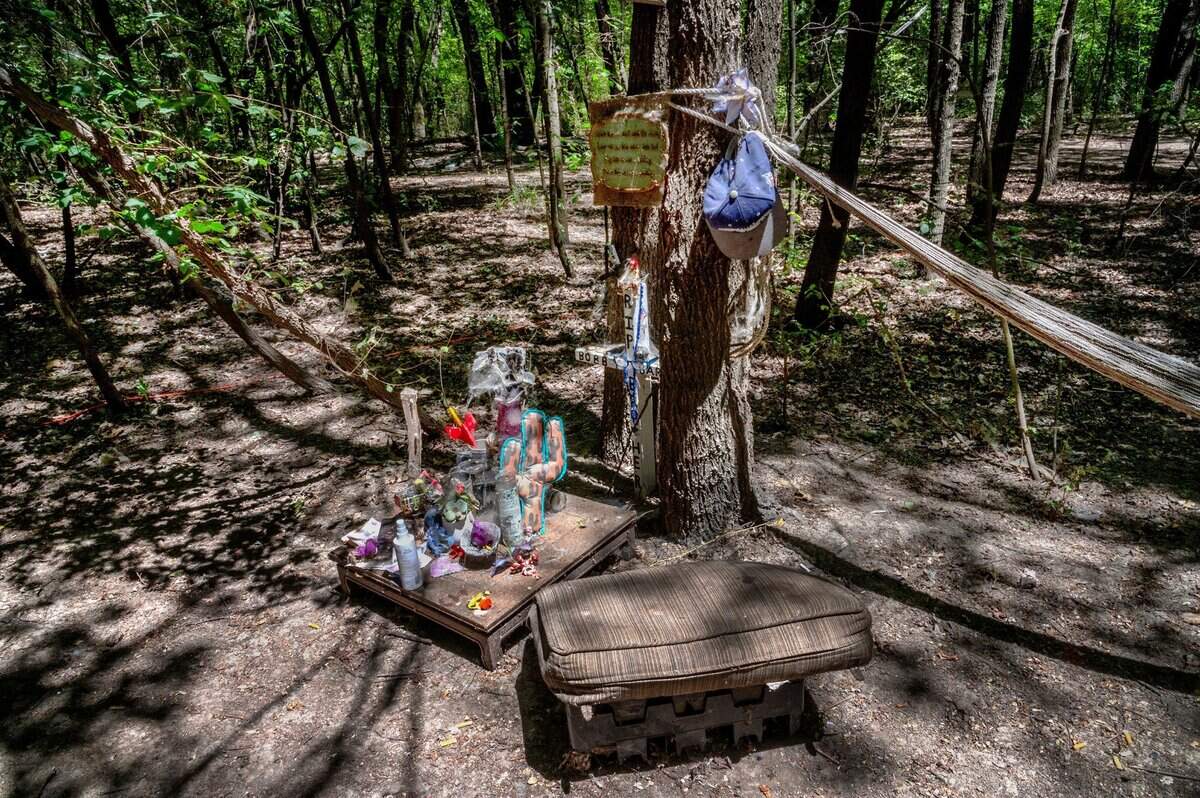
It’s not just people the community mourns.
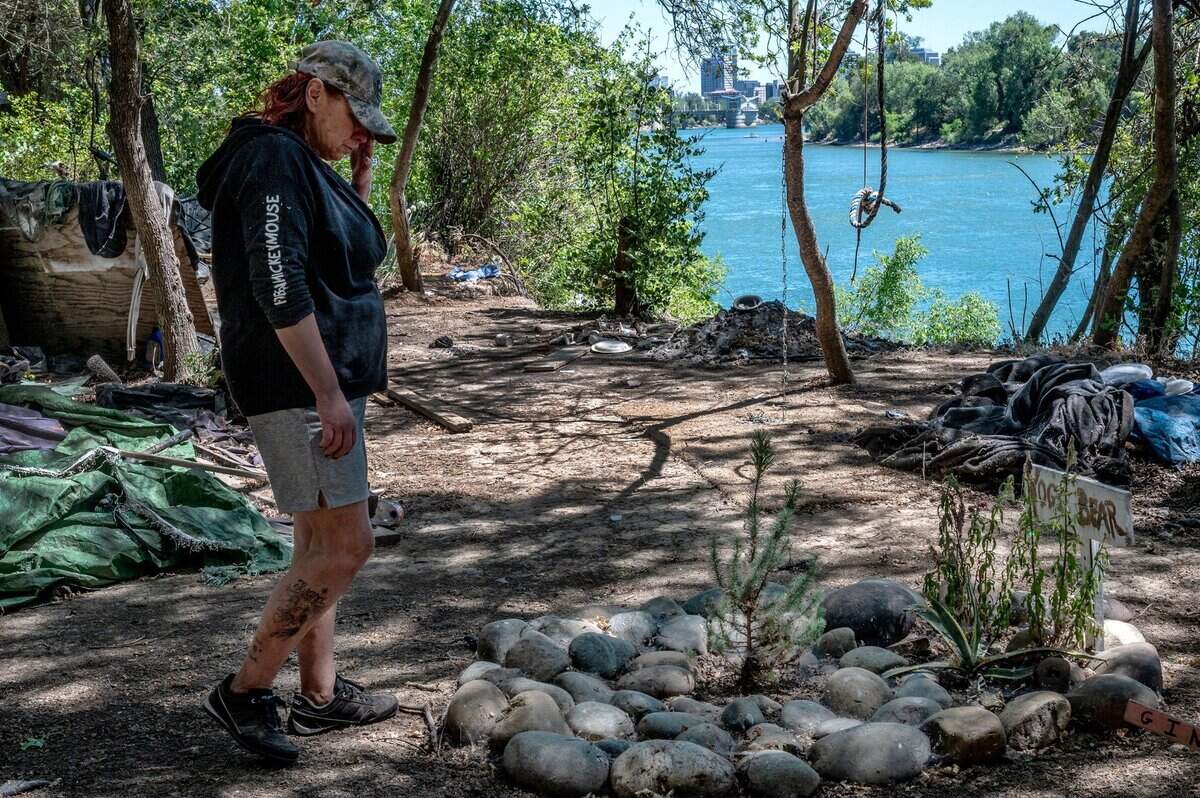
Along the riverfront is a row of gravesites where dogs are buried. Headstones display the names Yogi Bear, Ginger, Girlfriend, Ernie and Evelyn. Colorful pinwheels, watering cans filled with flowers and painted rocks with quotes are displayed on the graves.
James removed the dead leaves from her dog Yogi Bear’s gravesite.
After collecting herself, she returned to walking through the camp, doing her rounds.
“This is our home. This is our island,” she said, looking at the glistening river. “It’s peace.”
This story was originally published August 25, 2021 at 5:00 AM.