
Is your Sacramento neighborhood dangerous for pedestrians? How to advocate for safe streets
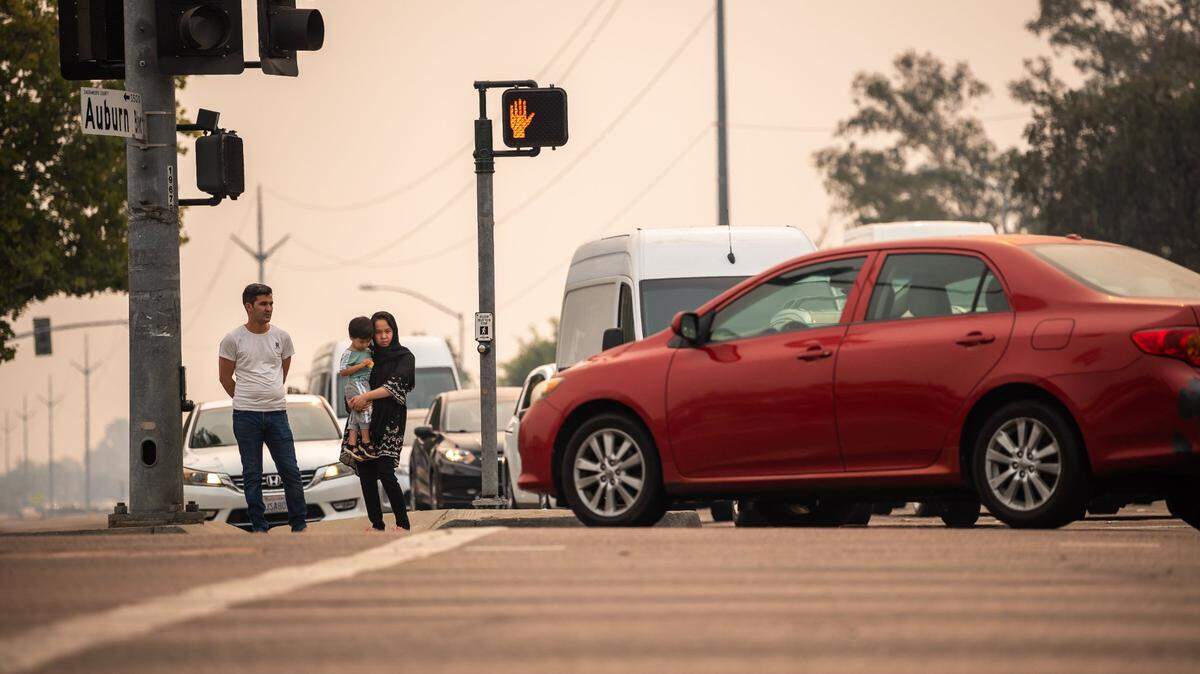
Black residents of Sacramento are getting injured and dying in traffic incidents at disproportionate rates. And pedestrian fatalities in general are trending upward in Sacramento County.
While getting the city or the county to make appropriate changes that would ensure safer streets often takes a lot of time and investment, there are some steps residents can take to raise awareness. Here’s how to request county and city officials to come take a look at dangerous streets.
Sacramento County
Sacramento County maintains more than 5,417 lane miles of road in the unincorporated parts of the county, according to Matt Robinson, Sacramento County public information officer.
The hub for traffic issues in the county is the Neighborhood Traffic Management Program, or NTMP. The county is addressing 23 NTMP projects in 2021. The best way to note any kind of traffic issue is to call 311, according to Robinson.
For residents to get neighborhood streets added to the NTMP, the key is that neighbors have to band together, Robinson added. In order to kick off a Department of Transportation traffic evaluation, at least 10 households on a street must sign a petition. Then, engineers gather data and make their recommendations. If engineers call for changes, the Board of Supervisors has to approve them and figure out funding. Finally, plans for the street and construction will be scheduled after funding has been secured.
Unlike neighborhood streets, main thoroughfares are not eligible for speed bumps or tables, but the NTMP allows for a variety of other tools to mitigate traffic issues. These include road narrowing, traffic circles, neighborhood entry features and raised crosswalks. The county can implement targeted California Highway Patrol enforcement, radar speed trailers, more speed signage, and centerline and edge striping.
Beyond residents reporting issues through 311 – which Robinson said pedestrians should call any time they notice an issue with any street – DOT monitors accidents to see whether an investigation into potential changes for the road is warranted, according to Robinson.
“Depending on the type of accident and frequency, engineers will investigate. For example, one fatal accident will trigger an investigation, while an investigation may be triggered if we have, for example, three cars sliding off a roadway at the same location,” Robinson said in an email.
The county also has a five-year plan – the current edition runs through 2024 – for improvements to roadways, bikeways, and pedestrian systems, but the problem is that those projects get tabled when there isn’t available funding through grants or federal dollars, Robinson said. Additionally, the county is working on an Active Transportation Plan to improve access for pedestrians and cyclists, according to Robinson. The county held workshops this year to gather input from residents for the plan, he added.
City of Sacramento
The City of Sacramento also emphasizes calling 311 whenever issues arise. If you’re outside the city but want to report an issue, call 916-264-5011. Residents can also request speed lumps, and the Department of Public Works will send a traffic investigations team to determine if the street meets criteria. If it does, residents who live on the street will vote on the speed lump.
The city conducts close to 1,000 traffic investigations per year to address safety concerns, according to the city’s website. These investigations can take between two and four weeks.
Traffic investigators look into school safety, speeding, crosswalks, stop signs, traffic operations, traffic signals, and traffic signs and markings, according to the city’s website. Traffic investigators are assigned to certain geographical areas:
- For City Council districts one and two, call Barbara McIntyre at 916-808-5993
- For City Council districts three and six, call Anthony Grace at 916-808-6830
- For City Council districts five and eight, call Justin Luna at 916-808-6798
- For City Council districts four and seven, call Eric Poon at 916-808-2688
LoAnna Hernandez is the citywide supervisor for the traffic investigators. Hernandez can be reached for traffic issues at 916-808-2005.