
Sacramento isn’t just a gateway to Tahoe or the Bay Area. Here’s what locals want you to know
More than 50 Sacramentans wrote to The Sacramento Bee’s California Utility Team in an attempt to convey some essential truth about the city.
The effort is part of the utility team’s drive to create a guide for newcomers to get to know Sacramento, or as we’re saying online, #KnowSacramento. All four of utility team members are transplants en route to the city.
But we aren’t the only ones. During the COVID-19 pandemic, Sacramento experienced the largest migration turnaround per capita compared to the 30 largest metro areas in the country.
Our questions for locals were simple: We asked the people who really know the city what others get wrong about it, and what they should know instead. Here’s what they had to say:
‘We stand on our own’
Themes emerged in locals’ responses: housing is unaffordable, but the American River Parkway cannot be missed. The city’s historical architecture and landscape are stunning, but so is the amount of change that has come to the area in recent years.
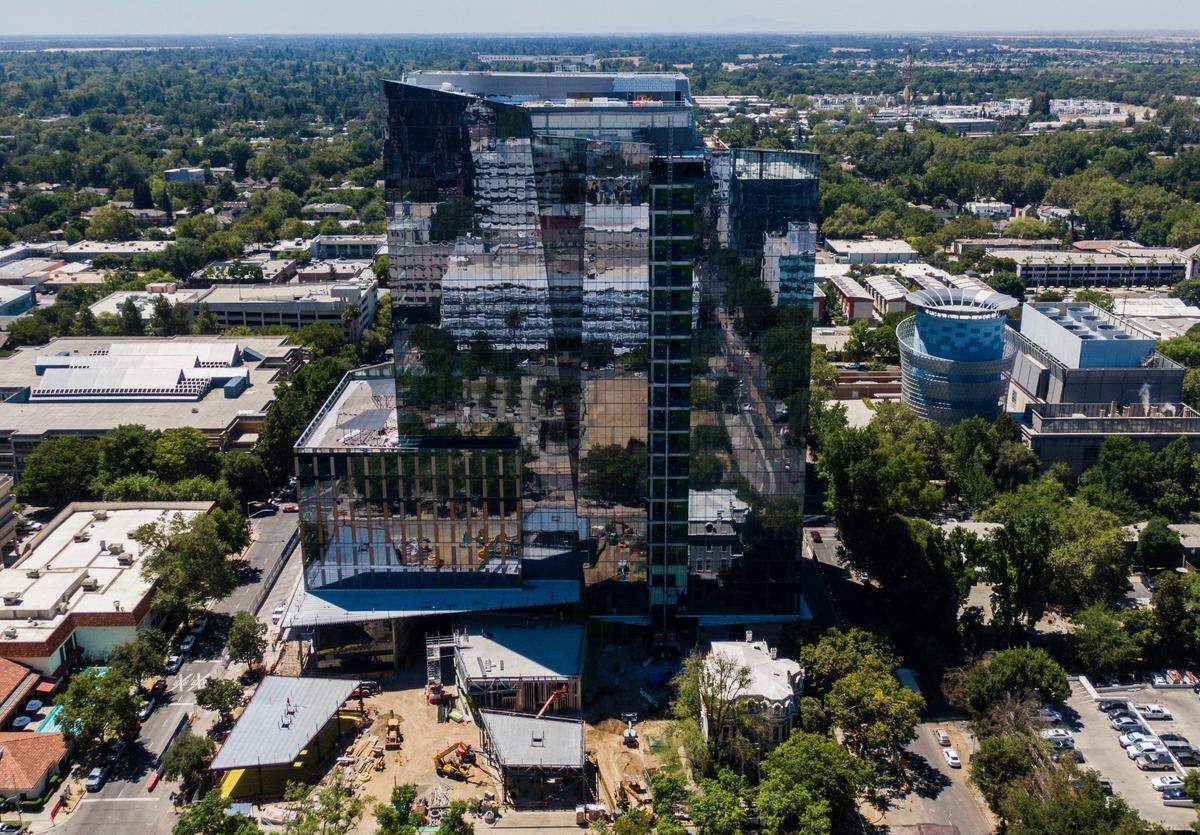
The city is definitely a city — but it’s “down to earth” and within driving distance of destinations that put it “in touch with the land,” said Josiah Gorter, a 7-year resident who calls South Natomas home.
”Driving distance” — that’s the crux of the matter.
Lake Tahoe is a little over 100 miles away. San Francisco is an 88-mile drive. Napa is even closer, just 61 miles. And mountain getaways can be found less than an hour away.
But Sacramento, readers told us again and again, is not a mere launching pad. It is not only a comfortable layover leading to better locales. It is not a simple sideshow to these other California destinations.
As reader David Sobon, a 45-year resident who lives in midtown, put it: “We stand on our own.”
‘Ever evolving’
This defiant attitude may be the result of a self-selection problem, reflective of the most outspoken Sacramentans rather than of Sacramento at large.
In reality, as one reader put it, the city “doesn’t yell or scream its heritage loudly.”
That heritage is rich: well before gold was ever discovered in Sacramento, the area was home to Indigenous tribes including the Nisenan people, the Foothills and Southern Maidu people and the Valley Miwok and Me-Wuk people, according to the Sacramento Native American Health Center.
“River City,” as it’s sometimes known, was founded in 1839 when John Sutter arrived near the confluence of the American and Sacramento rivers. Sutter established Sutter’s Fort, which exists today as a state park. The discovery of gold nearby turned Sutter’s outpost into a Gold Rush hub. The city was named California’s permanent capital at the 1879 Constitutional Convention.
Still, this little chip on the shoulder — wanting outsiders to know Sacramento holds its own — is revelatory.
Sacramento stands on its own, but readers couldn’t help but compare it to San Francisco and Los Angeles, to Austin, Texas, and Portland, Oregon. Respondents were adamant that Sacramento shouldn’t be dismissed as a “cow town” but said it has the feel of a Midwestern city transplanted to California.
“It’s like Austin in the middle of the California valley,” one reader noted.
Many readers associated Sacramento with other similar mid-size cities experiencing a renaissance of sorts, at least in terms of perception. The city is comparable size-wise to places like Portland (population: 654,741) or Kansas City, Missouri (population: 495,327).
Sacramento has worked hard to become the city it is today — but in other ways, it’s still finding itself, the responses showed.
Aristotle Ramirez, a resident since 1976, said Sacramento is “ever-evolving. It’s modern, yet at the same time retro.”
‘It’s a great city’
Sacramento is diverse, “a place where cross-cultural encounters are a part of everyday life” and mostly full of kind and accepting people. Its government ties give Sacramento a “culture of service,” said Jennifer Rubin, who lives in the Broadway neighborhood and grew up in Elk Grove. It is not boring, sleepy or a “provincial backwater.”
The “Side Door near Broadway, the many beer gardens that create musical park-like atmosphere, the live theaters like The Comedy Spot, Thistle Dew Theater, [STAB! Comedy Theater], even blues bands at the family-run Conscious Creamery...are a few of the diverse opportunities” said Melinda Lauten, a 46-year resident from River Park.
“It’s a great city to eat and drink your way through,” said Zachary Yeates, a resident of 32 years who lives in Hollywood Park.
Sacramento calls itself the Farm-to-Fork capital, it boasts a bursting brewery scene and it is loaded with independent coffee roasteries.
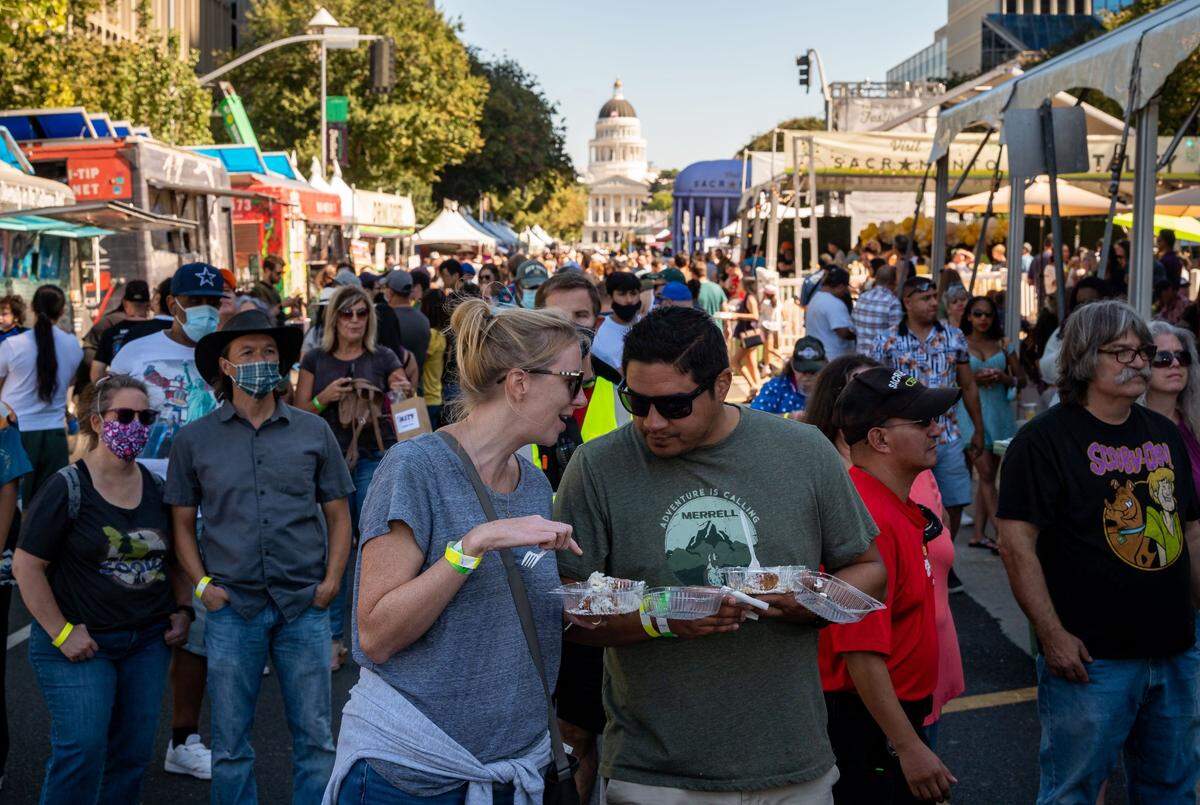
And in Sacramento, readers said, you can live in downtown without a car. In fact, the “flat elevation” makes walking and biking a “breeze,” according to Jody Tyrus, a 4-year resident. Walkable midtown and downtown areas filled with young professionals, making Sacramento a place where it’s easy to meet people, another reader said.
And sure, summers are hot, but the cooler dawn and dusk temperatures — and the tree shade that gives Sacramento its “City of Trees” nickname — “make it all worthwhile.”
‘Priced out of their own town’
There is a flipside, though. At the same time Sacramento community has become more diverse, it has also become more segregated and it is beset by a history of racial redlining.
And this racist history has lasting effects: summer heat is measurably worse in redlined parts of the city that the old Home Owners Loan Corporation deemed “undesirable.”
Sacramento just experienced its hottest summer on record due to climate change. Driving a car is still the norm, while walkable neighborhoods are becoming harder to afford.
Average rent in Sacramento reached $1,882 in February, a number that was higher than average rent in both Seattle and Portland. Readers repeatedly decried the city’s inability to live up to the ideal that housing is a human right.
“People that live here are being priced out of their own town,” said Jane Mishler, a Natomas resident who has lived in the area for nearly five years.
What’s next?
Locals, what else should we know? Newcomers, what questions do you have? Email us at utilityteam@sacbee.com.
With more people moving to the area, housing prices skyrocketing and the pandemic forcing tough questions about how communities can come together to solve problems, Sacramento has a lot on its plate. But, from what readers told us, the city is bursting with the kind of character that makes working through challenges worthwhile.
Sacramento, thank you for introducing yourself. We look forward to getting to know you better.
This story was originally published November 4, 2021 at 5:00 AM.