Oak Park senior’s home demolished in deal Sacramento brokered. It could have been worse
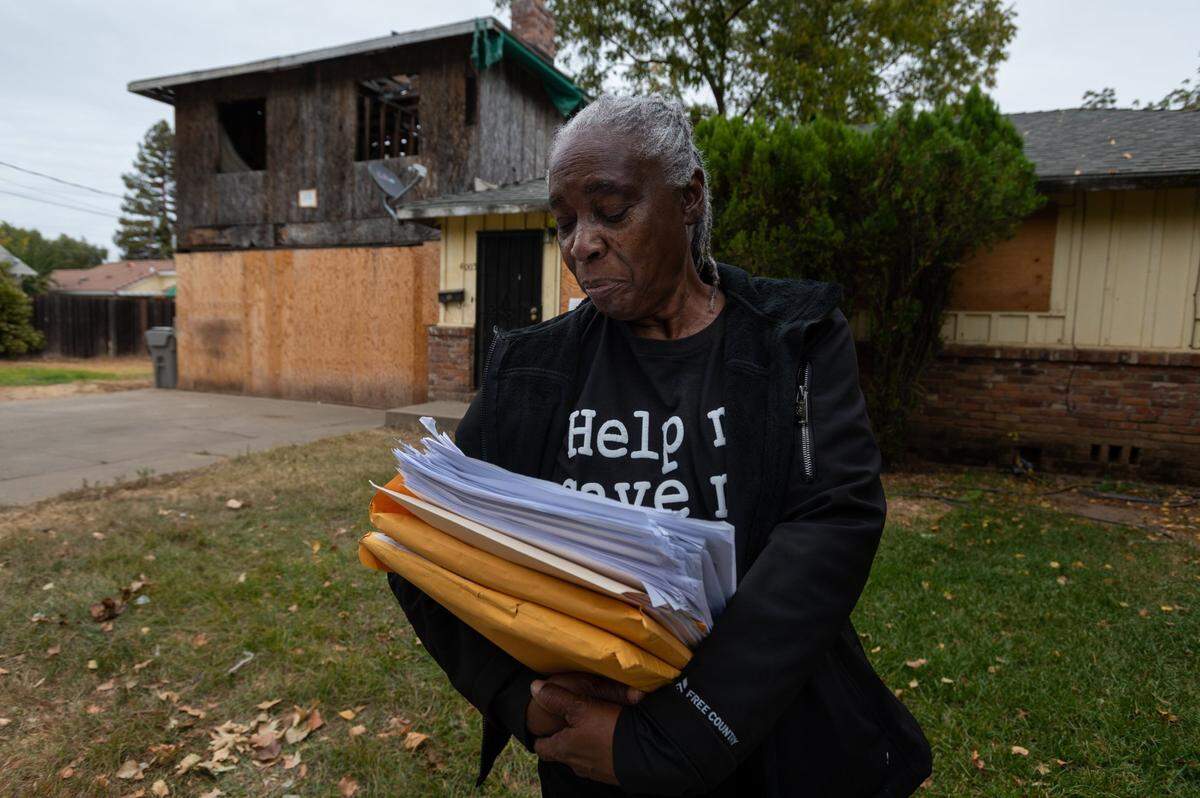
Every morning at 4 a.m., Wanda Clark, 71, wakes up on her sister’s couch and gets ready for her job cleaning downtown buildings. When she walks out the door into the darkness, she’s greeted with a painful sight — the lot where her house once sat.
It was demolished on Martin Luther King Jr. day, the result of a city-brokered deal that wiped away the debt she accumulated after a series of municipal code violations but still cost her her home.
“I lived somewhere for 26 years and this is all I have to show for it,” Clark said earlier this week, gesturing toward the dirt lot in Oak Park, in the shadow of St. Paul Baptist Church of Sacramento. “This is the most sad thing I’ve been through in my life. I’m 71 years old and now I’m homeless.”
She lost control of her home after a contractor left an unfinished addition on her house, causing the city to start citing her for code violations in 2012. She did not have the money for the repairs, so the city locked her and her five family members out in 2019.
Last year, the city sued her, asking for a judge to appoint a receiver to take “full and complete possession and control” of the property. The judge agreed.
In early October, the receiver put up a “for sale” sign.
The city has filed petitions asking judges to appoint receivers for 33 homeowners over the past five years, a Sacramento Bee analysis found, including a dozen filed during the COVID-19 pandemic.
It could have been even worse for Clark. She faced losing her property and while owing the receiver roughly $100,000 in fees.
A group of community activists rallied around her and called attention to her at an October news conference. That morning, City Manager Howard Chan called Sacramento NAACP President Betty Williams and said he would see what he could do to help.
Under a deal the city negotiated, Clark agreed to have her house demolished. In exchange, she gets to keep her lot, exit receivership and is off the hook for the fees the receiver had racked up.
The deal, not yet formally approved by the court, is a better outcome for Clark than what would have happened without the city’s intervention.
The receiver listed the 1,014-square-foot house for sale on Oct. 2 for $225,000 — up $150,000 from what Clark bought it for in 1995.
But if it was sold, the receiver told Clark she would “not see a penny” because the profit would have been used to pay the receivership fees, which would have increased by then, Clark said.
“I have equity in my house but I can’t get it,” Clark said, a defeated tone in her voice.
That’s the way Kendra Lewis, executive director of the Sacramento Housing Alliance, understood Clark’s predicament.
“The way the numbers were penciling out, she was going to owe the receiver, even if they sold it,” said Lewis, a member of the group of community advocates who sat in on the meetings.
Gerard Keena, Clark’s receiver, defended his handling of the case.
“As court-appointed receiver, I worked in good faith to resolve the matter for the benefit of all involved in the property and agreed to stay the auction of the property, with the parties ultimately entering into an agreement and the court ordering demolition,” Keena, president and receiver for the Bay Area Receivership Group, said in a statement.

Will other seniors in receivership get help?
During the pandemic, the city has also appointed receivers for at least two other senior couples — Linda and Bruce Siegrist and Mark and Karen Melton. Both are under receivership for their North Sacramento homes. They worry the receiver will sell or demolish their homes, and they will end up homeless.
Those fears only heightened when they heard about Clark’s demolition.
It’s possible the city could step in to help them, as well as other seniors already in receivership.
“All options currently are on the table,” city spokesman Tim Swanson said.
But after the city intervened for Clark, nobody contacted either couple to tell them their receivers would be dismissed or their fees waived, they said. The fees continue to accumulate, sometimes as high as $118 for a single phone call.
“Why shouldn’t (the city help them?)” Clark said. “We’re all in the same boat. We’re on a fixed income we are struggling just to maintain our lives.”
Linda Siegrist, 67, is a double amputee in a wheelchair who does not receive Social Security or disability income. The city filed a receivership petition for her and her husband Bruce, a veteran, even though they say they long ago fixed the code violations in the yard. The receiver has charged them at least $126,000 so far — money they do not have.
“Eventually I think they want to kick us out and sell the house,” Linda Siegrist told The Bee in the November.
The receiver is carrying out a court-approved rehabilitation plan for the house, Keena said. A sale is possible, if the court approves.
Mark Melton, 62, quit his job as a Regional Transit bus driver after the city filed a receivership petition against him and his disabled wife. The receiver towed trailers out of his yard, leaving boxes of sentimental items from deceased relatives to get soaked in the rain. The experience has caused him to sink into a depression. He has not left the house in three weeks.
“I’m not well at all,” Melton said Thursday. “This totally destroyed me.”
Changes could be coming
Clark got help in part because she lives in a historically Black neighborhood near a major development project that has sparked gentrification fears.
Her Oak Park house sits near the $1.1 billion UC Davis Aggie Square development, at Stockton Boulevard and Second Avenue. The university is building new classrooms, labs, retail space and student housing.
To help prevent homeowners and renters from being displaced, the city started a $5 million fund. It used that fund to pay Clark’s $100,000 receivership bill, city spokesman Swanson said.
In addition to working to prevent displacements of residents near Aggie Square, the city is engaging with community groups about a potential citywide program that would assist homeowners in need across the city, he said.
“The plan is to meet with (City Manager) Howard (Chan) and discuss all the things that went wrong with the Wanda process and what can we do to prevent that from happening again and put policy in place to make sure it doesn’t,” Williams said. “And he’s open to that.”
City Councilman Sean Loloee, who represents the neighborhoods where the Siegrists and Meltons live, said he will also bring a proposal to a council committee to create a new city fund to pay for repairs for senior homeowners to prevent receivership citywide.
Lewis of the Sacramento Housing Alliance hopes the council makes that change. She also is urging the city to limit its use of receivership to extremely rare cases, such as an out-of-town landlord badly neglecting the property and allowing it to be used as a drug house, Lewis said.
She was shocked at how difficult it was for Clark to exit receivership, even with the city’s help.
“It is like a disease,” Lewis said. “You have to go to radiation, like cancer. You can’t get rid of them once they latch on. That’s why it should be rare. This should not be something the average citizen should have to go through.”
Meanwhile, even though her house is demolished, Clark is still paying her mortgage, about $1,300 a month, for the next six years. She has never missed a mortgage payment.
Every morning, she keeps getting up and going to work.
She’s trying to save money to rebuild, though it feels a bit like a pipe dream. She has saved up about $20,000, not nearly enough to begin construction.
She hasn’t lost hope. The NAACP has started a fundraising page to help her.
“I will rebuild, even if it means just putting a tent here,” Clark said. “I am going to be living on this land.”
This story was originally published January 28, 2022 at 5:00 AM.