
Citing Bee investigation, CA lawmaker brings bill to rein in sheriff ‘welfare’ spending
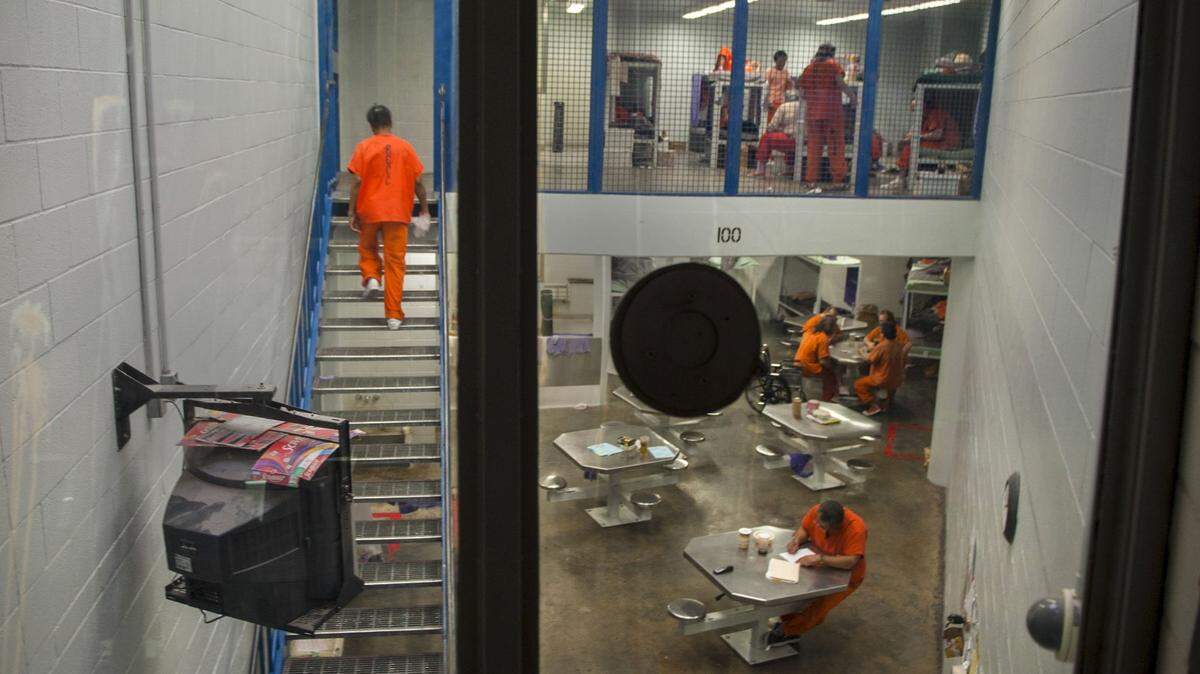
In a rebuke to county sheriffs, a California lawmaker has proposed a plan to help close a loophole that allows law enforcement to spend money from incarcerated people and their families on building maintenance, staff salaries and lodging at resort hotels.
Assemblymember Reggie Jones-Sawyer, D-Los Angeles, introduced legislation this month to overhaul rules for jail “inmate welfare funds.” The bill, AB 1782, requires that the fees charged to incarcerated people and their loved ones be used “solely” — rather than “primarily” — for rehabilitation programs, job training and other things that directly benefit people in county jails.
It would also strip a provision that has given sheriffs the authority to spend leftover welfare fund cash on salaries and building maintenance, two of the largest drains on the pool of cash.
“Hopefully this bill will get us greater responsibility and accountability of sheriffs in order to ensure a more successful re-entry of incarcerated people back into our communities.” Jones-Sawyer said in an interview.
The legislation would also rename the funding pool as the “incarcerated peoples’ welfare fund.”
Fees charged to phone calls go into the welfare funds. So do surcharges on items such as toothpaste, toilet paper and Ramen noodles purchased from the jail store.
While the fees are ostensibly for programs and services for incarcerated people, a Sacramento Bee investigation last summer revealed that the Sacramento County Sheriff’s Office spent much of the money on security cameras, body scanners and employees’ hotel stays on Lake Tahoe.
The Bee’s reporting spotlighted how sheriffs over the decades have amassed millions of dollars in fees and used the money to pay for projects that have historically come from their own budgets — not on the backs of incarcerated people and their loved ones.
In Sacramento County, Sheriff Scott Jones’ staff used the fund to purchase a $1.45 million camera system in 2018. It was the single most expensive purchase listed in financial records reviewed by The Bee.
The department also took more than $900,000 from the welfare fund to pay for radio leases, surveillance cameras, and inmate tracking software. Another $1 million went to parking lot improvements, $150,000 for perimeter fences, and more than $15 million for employee salaries since 2014.
Staff in recent years spent at least $12,000 for flights and lodging, apparently for conferences.
“When I read how they were using the money, it was almost as if they were using the money to augment budgets that they may have felt were cut,” Jones-Sawyer said. “It just felt wrong.”
‘Funds have yet to be repaid’
After The Bee’s report, the Sacramento County Board of Supervisors called on the local inspector general to look into the spending. No official report was ever produced, and the inspector general, Mark Evenson, has since resigned.
But the county’s finance department looked into some of the spending and in a memo corroborated The Bee’s reporting. The use of the money was technically legal under the broad discretion given to sheriffs, the memo said.
It also added another layer to some of the spending.
The perimeter fencing was for an alarm system that would “keep inmates from hurting themselves” on the razor and barbed wire, the finance department wrote. As for the parking lot improvements, the project was discontinued and the sheriff’s office was told to put money back into the inmate welfare fund.
As of the late-July memo, “the funds have yet to be repaid.”
Sacramento County’s inmate welfare fund discussion fell to the wayside until a board meeting this month when the sheriff’s office presented its annual report and spending plans.
With in-person jail visitation blocked for much of the pandemic, incarcerated people relied on phone calls to keep in touch with loved ones. More calls meant more fees. The county raked in $2.45 million from phone fees, records show. It was a similar story at the jail store, where the sheriff’s office collected more than $4 million in fees.
The overall inmate welfare fund has ballooned to $11 million, records show.
Sheriff’s officials plan to spend $860,000 of that to replace cameras in the jail recreation and medical areas. Chief Deputy Matthew Petersen said the cameras were clearly important for the welfare of the inmates because they would help resolve disputes and reduce violence.
In some years, more than nine out of every 10 dollars from Sacramento’s inmate welfare fund has gone toward personnel salaries, benefits, training and facility maintenance, The Bee reported previously. Salaries and maintenance accounted for between 66% and 93% of the money spent from the fund.
Meanwhile, programs that directly benefit inmates, such as the law library and inmate education, account for, at most, 31% of expenses. Most years, those programs cost less than $1 million.
The sheriff’s office refused to comment last year about the Lake Tahoe travel coming out of the inmate welfare fund rather than elsewhere in the $617 million budget. Facing criticism from the public and questions from supervisors this month, Petersen said the trip was for a staff conference.
“It was nothing excessive,” Petersen said. “Totally within the lines of training and travel within the county’s policies.”
The board of supervisors requested additional details about the guardrails on inmate welfare fund spending. Supervisor Patrick Kennedy said he wanted the board to evaluate whether the sheriff’s office was following the intent of the existing law, rather than just the letter of it.
“My belief is that the legislative intent of this program was that money was to serve actual inmates,” Kennedy said, “and not necessarily our staff going on any kind of trips.”
After settling a federal civil rights lawsuit in 2019, the sheriff’s office was ordered to improve treatment services and in-custody programming. But monitor’s reports have said the sheriff’s office still only provides inmates “a very limited range of activities to participate in when they are released from their cells.” Extreme isolation and horrific conditions persist.
The legislation is overdue and welcome, said Margot Mendelson, an attorney with the Prison Law Office.
“In many county jails, incarcerated people struggle even to access books and writing materials, let alone educational opportunities, supportive programming, or meaningful legal resources,” Mendelson said. “It is critical to ensure that welfare funds be directed solely to the benefit of incarcerated people.”
Bill would undo California tough-on-crime change
Jones-Sawyer’s new bill in some ways mirrors one that Gov. Gavin Newsom vetoed in 2020.
That measure, SB 555, also would have made the money be used “solely” for incarcerated people’s benefit. But the vetoed legislation would have also capped phone and commissary fees — something the powerful California State Sheriffs’ Association said could adversely affect in-custody programming.
Newsom echoed the sheriff’s concern in his veto letter but said he wanted to revisit the issue.
The governor’s office declined to comment for this story.
If the “solely” phrasing becomes law, it would return the welfare fund rules to a time before the tough-on-crime 1990s. The change in the money being “solely” for inmate welfare to “primarily” happened in a middle-of-the-night deal during state budget negotiations in 1993.
In a last-ditch effort to win back Republican votes, a Stockton lawmaker who said “inmates should pay for more of their upkeep” drafted the plan. Lawmakers bought in, and Gov. Pete Wilson signed the changes into law that summer. It’s remained largely the same ever since.
But scrutiny over sheriffs’ discretion of the fund has heightened in recent years.
Grand jurors have said officials in Orange County weren’t spending enough on in-custody services. Local watchdogs criticized the San Diego County Sheriff’s Office for using the money to buy toilets. And five years ago, the ACLU blasted Butte County officials for attempting to pull $650,000 from their inmate welfare fund to help pay for an entirely new jail.
Stricter rules are needed to stop sheriffs from accumulating the “slush funds,” said Danica Rodarmel, an attorney and justice consultant who for years has studied the collections. But Rodarmel said the changes should go further, otherwise sheriffs will still find a way to justify spending it on camera systems and parking lot upgrades.
“This is not the right way to be funding those things. Period,” Rodarmel said. “And rather than ensuring that this money is spent more responsibly, I’d love to see us just give it back.”
This story was originally published February 22, 2022 at 5:00 AM.