The war in Ukraine hit close to home at this Sacramento church. They had to act
Since Russia launched a full-scale invasion of Ukraine in the early morning hours of Feb. 24, the attacks have killed hundreds of civilians and displaced a quarter of Ukraine’s 40 million people.
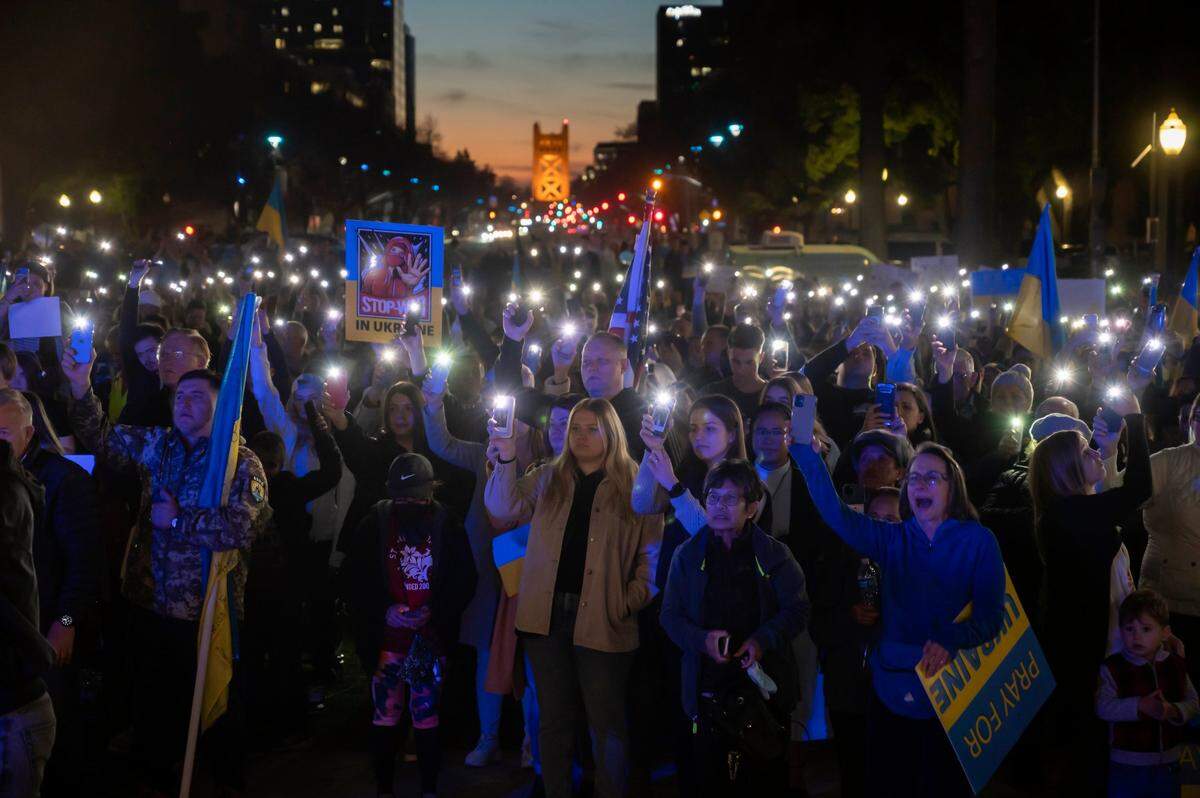
Most Americans have followed the events unfolding in the news — a frightening but far-flung war. But the Sacramento region is home to one of the largest Ukrainian communities in the U.S., and the area can expect more after President Joe Biden announced last week the U.S. would offer refuge.
For may Ukrainian people here, the violence doesn’t feel 6,000 miles away; it feels inescapable.
To try to regain some control over world historical events, one church in Sacramento is organizing an intercontinental grassroots volunteer network to evacuate Ukrainian refugees.
Orangevale’s House of Bread church, which serves a congregation of more than 1,000 people, the majority of them Ukrainian, had close relationships with pastors and community leaders still in Ukraine before the war began. In the past month, the church has raised more than $400,000 and purchased dozens of minivans, gas, mattresses and temporary shelter for thousands of civilians fleeing the war.
“If you would come into our church, you can tell that the atmosphere is trauma,” said House of Bread pastor Vlad Kotyakov. “Massively, people going through pain.”
Kotyakov leads the office that’s coordinating the church’s efforts in the U.S., Ukraine, Poland and Romania. Ukrainians desperately need money and supplies as they evacuate, and Kotyakov urged people who want to help to find trusted organizations on the ground and “send them money.”
He is contributing both time and funds: On the day he first spoke with The Bee, he had awakened for a 4 a.m. meeting to try to secure a donation of thousands of tents to send to Ukrainian refugees.
Caroleana Kvaterchuk, a Sacramento-based communications strategist who has volunteered to help House of Bread with publicity, explained that her parents immigrated to the U.S. from Ukraine.
“For all of us, we are feeling a heaviness, day in, day out,” she said. “Sleepless nights, constant tears. It’s this wave of uncertainty, we don’t know what’s gonna happen next. …Helping mobilize people is a small way that we feel like we can do something.”
Alina Khimich, the missionary
Khimich is an American citizen, but she and her husband had been planning to stay in Ukraine as Christian missionaries for at least five years. They had traveled back and forth from their Sacramento home to the central European country several times in 2021, and in December, they thought they were settling there for the foreseeable future.
Khimich started hearing reports in January that Russia might launch a serious attack against Ukraine. She grew concerned. She and her husband prepared emergency go-bags; they kept their car’s gas tank full all the time, in case they had to flee.
She felt a certain amount of dissonance in Lviv, a city in Western Ukraine. Ukrainians seemed to her as if they were living their lives normally, not aware that at any moment, war could break out. The night of Feb. 23, she took a walk and saw packed restaurants, filled with laughter.
Around 5:30 a.m. the next day, she woke up to her phone “blowing up.” Russia had launched a full invasion.
“For us, we knew we needed to get out,” she said.
She and her husband spent 30 minutes packing their things — and their 7-year-old daughter — and fled to the Romanian border in their small SUV, passing what looked like mile-long lines at gas stations along the way. From Romania, they drove to Budapest, Hungary, where they got a hotel room and bought plane tickets back to the U.S.
They ate some pizza; they were happy and relieved. But back in their hotel room that evening, she turned to her husband.
“We started seeing the news and how bad things were getting, and we’re here in a safe place, people are eating and sitting, everything’s normal here,” she said. “I don’t know, me personally, my heart just started breaking. I was just like, ‘I can’t. How can we just leave the people that we came to serve in Ukraine?’”
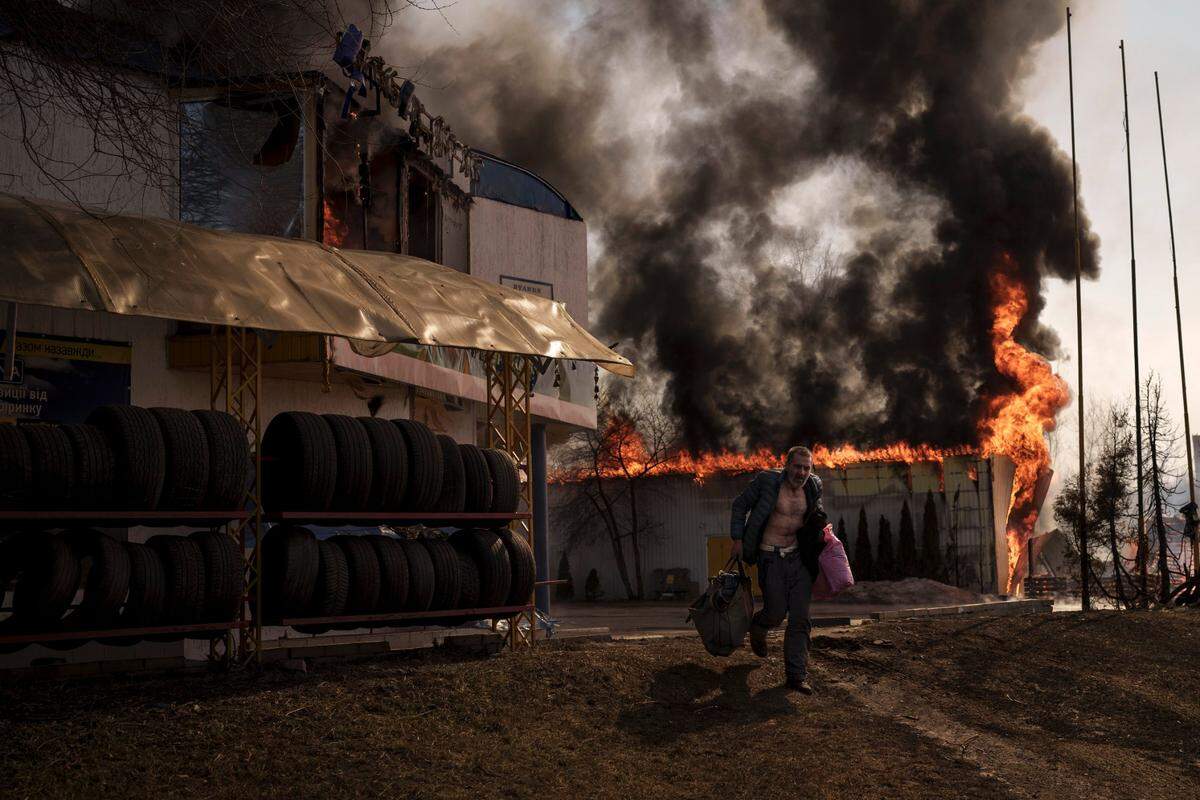
They canceled the plane tickets and drove to Warsaw, Poland, to figure out how to volunteer at the border crossing. They found an organization that was looking for Ukrainian-speaking volunteers and found a hotel room in Lublin, which was about two hours away from the border by car — everywhere closer was too full.
They made the two-hour drive every evening, arriving around 8 p.m. for the night shift and staying until 11 a.m. or noon the next day, 7-year-old in tow. One day, they all went to Ikea in Lublin and bought hundreds of stuffed animals and crammed them into trash bags to hand out to children at the border.
“It’s freezing cold,” she said. “These kids are tired. Some of them were at the border for a long time. So just to give them a little bit of joy in that moment.”
After a little more than two weeks, Khimich saw there were more Ukrainian-speaking volunteers, and she decided to travel back to Sacramento.
“We felt like we needed to be there,” she said. At one point, “There was a lady that was just kneeled down and crying, so I just came up to her like, Are you okay? She’s like, ‘No, I’m not okay. Everybody has somebody here; I’m completely alone. I don’t know what I’m doing.’ I just gave her a hug, ‘It’s gonna be OK.’”
Vlad Kotyakov, the sleepless pastor
Kotyakov has been coordinating the church’s efforts from California, working bizarre hours to accommodate calls to Western and Central Europe — Ukraine is nine hours ahead of California. He was in Phoenix, Ariz., when the war began, and he watched the news in shock. As he put it, “Since that day, our days became sleepless.”
He flew home and started raising money, tracking down supplies and training volunteers for trauma response.
The Biden administration just announced March 24 that the U.S. would accept 100,000 people fleeing the war in Ukraine, and Kotyakov expects some of them will begin coming to Sacramento. Because the capital region is home to one of the largest Ukrainian populations in the country — with 15,000 Ukrainian-born residents — he is certain that Sacramento will be a hub.
“We’re sending a message: Prepare your homes. Prepare rooms in your home. Prepare your heart,” he said. “Also, we’re sending out a message: Prepare to get some basic training in trauma — how to take care of these people when they show up here. All of them lost their homes, lost their families, a lot of them lost their husbands.”
He still has family in Ukraine, including a brother who is also a pastor. Asked how he was coping, he started to cry and couldn’t form words.
In a ragged voice, he said he was “basically going to sleep every night, thinking that this is just a dream.” He fell silent for 12 seconds, trying to compose himself. “I’ve never in my life, for sure never, cried this much.”
.JPG "UkraineRussiaWarCrimesHospitals (1).JPG")
Ruslan Kurdyumov, the activated engineer
Ruslan Kurdyumov first heard about the invasion from his sister, who texted him from Ukraine. “It was Wednesday evening; I turned on the news and watched all night and slept maybe two hours,” Kurdyumov said.
Kurdyumov works as a robotics engineer in the Bay Area now, but he used to be a member of House of Bread. He’s remained close to the head pastor – Ed Kislyanka – at his old church, and a week after the war began, he gave him a call.
“I felt paralyzed staring at my phone, worried about missing the next big development,” Kurdyumov said. “I told Ed I was ready to fly out for a month if he thought there was a role there for me to help.”
He soon flew to Poland. He volunteered at the Medyka border crossing and at a 66-bed refugee hotel shelter in Starachowice, where, the Ukrainian speaker said, refugees “are visibly relieved to talk to someone in their native language.” A lot of his work there is translating for people.
Answering questions by email from Poland, he described the busiest border crossing between Poland and Ukraine as “a maze,” and said every day has been hectic.
.JPG "RomaniaRussiaUkraineWar (1).JPG")
Once, he said, he went to bed at 4 a.m. in a guest house where he was staying, about an hour from the border. Five minutes later the doorbell awakened him, and he answered the door to find four shivering Ukrainians.
“They just crossed the border by car, and they found our guesthouse in the middle of the Polish forest,” he said. “We didn’t have room, but we did our best to make beds for them out of couch cushions.”
Another day, he was at a train station in Przmysl, 20 minutes from the border with Ukraine. “It was packed, but organized chaos,” he said. A woman asked him for help buying a ticket to Krzyz, and he waited to speak to the cashier with her. The train that was free for refugees but didn’t leave until 5 a.m. the next morning, the cashier told them.
“She had three young kids, one on her arm, and a huge suitcase,” Kurdyumov said. “She asked where her kids could sleep, in desperation. The cashier said there was a first class ticket on a train to Poznan that left in 15 minutes.”
Kurdyumov bought her the ticket for $33 and ran with her to the train; they just made it. “As I caught my breath and started to walk back, her son peeked out the window and waved goodbye to me.”
For now, Kurdyumov has left his life in California behind, he said, motivated by a simple Biblical tenet: “Do unto others as you would have them do unto you.”
This story was originally published March 30, 2022 at 5:00 AM.