
Sacramento mass shooting reveals how gangs have changed, from turf wars to Facebook feuds
The Honda Accord pulled up a bit after midnight on Aug. 11, 2005 and unleashed a hail of bullets on a gold sedan just outside of Sacramento. Three people were killed and two others wounded in the Power Inn Road shooting. A targeted gang attack was to blame.
That same day, less than a mile away, a gunbattle in a residential neighborhood left a man dead in a cul de sac. And nearby a week earlier, a man leaning out of a Buick was shot in the head.
It was a particularly violent summer in south Sacramento, part of an especially deadly year in a region gripped by gun violence. After years of somewhat less attention to gangs and fewer high-profile homicides, the region was again facing a reckoning over a long-simmering problem.
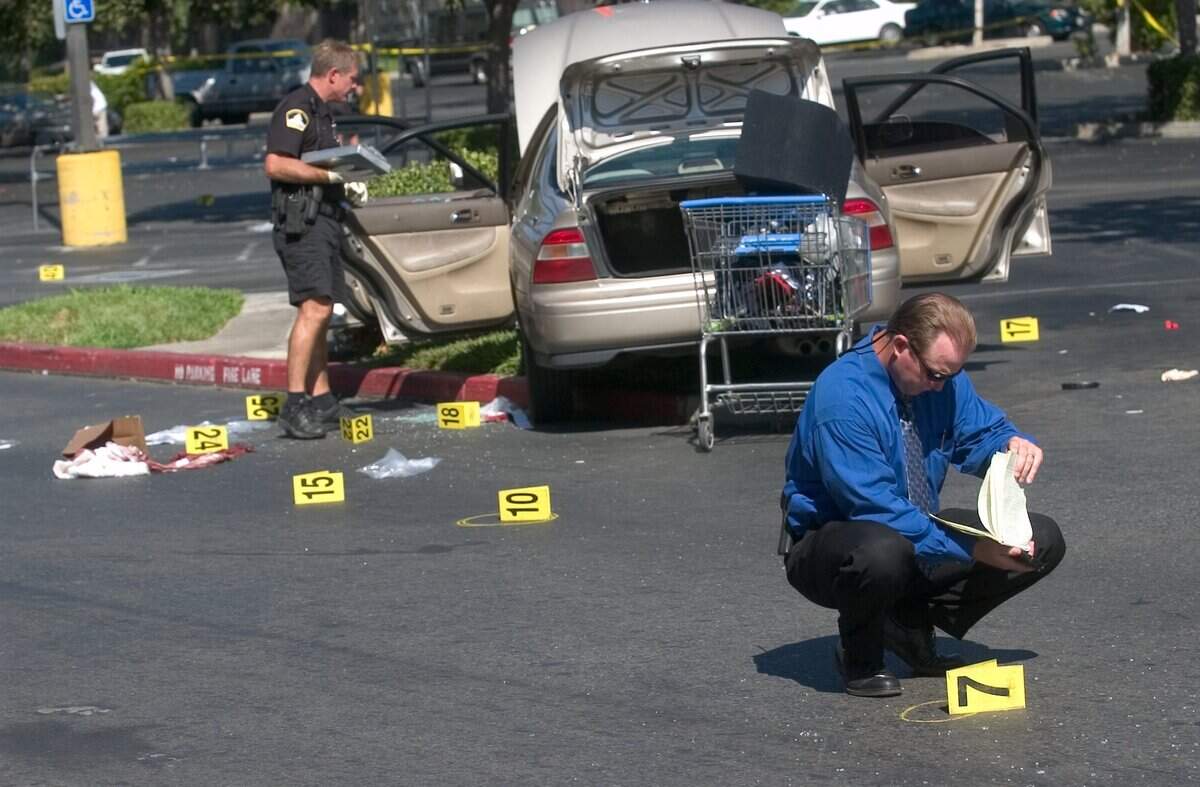
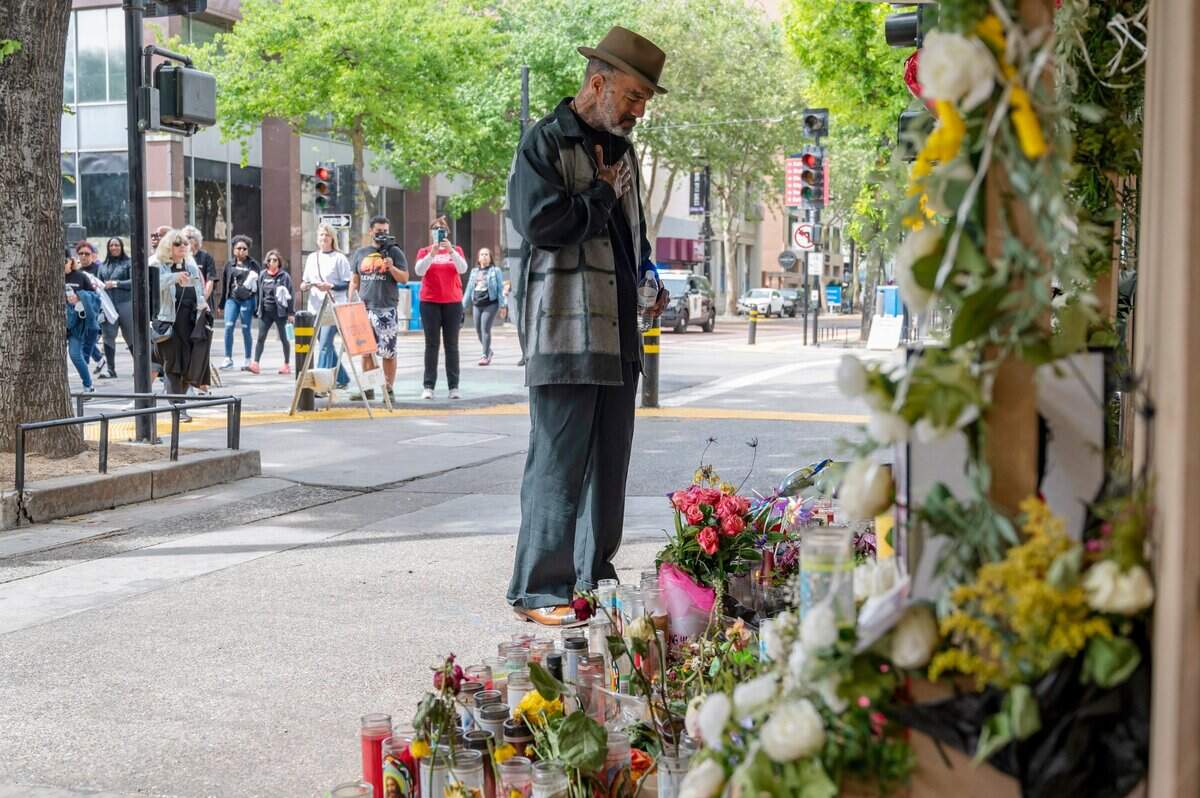
A decade and a half later, Sacramento gang violence — and the city’s response to it — emerged in a striking way again following the shootout on K Street that killed six and wounded 12. Police have yet to reveal what motivated the alleged shooters, though officials have said that “gang violence is at the center of this tragedy.”
For some, it feels like deja vu.
In reality, experts say, it’s a problem that never went away.
“Gang violence in general, from the public imagination, has really taken a back seat to other types of problems that have garnered far more attention,” said Pete Simi, a sociologist at Chapman University who studies gangs, extremism and violence. “Meanwhile, gang violence has been a problem during all of these years.”
However bad Sacramento’s gang tensions and violence writ large might seem today, experts say there have been significant changes from how things were two or three decades ago.
For starters, police believe Sacramento has fewer gang members now than in years past. During the violent summer of 2005, police estimated 4,000 “validated” gang members were in Sacramento — a common, yet fraught metric that law enforcement uses to keep tabs on gang activity. Perhaps most concerning at the time: About a quarter of those people were under 18.
About 3,000 people in Sacramento are believed to be affiliated with gangs as of 2020, police said.
Gang recruitment techniques have also changed thanks to the advent of social media. In some ways, gangs have less hierarchy and structure. And, experts say, what motivates today’s violence differs from the turf wars that once rocked pockets of Sacramento.
Aaron Cardoza, a former Sacramento gang member, is now president of the anti-gang violence program Brother 2 Brother. He said gang members used to fight over drugs, money or girls. The disputes are now more personal and can explode from a simple encounter at a concert, a mall or a nightclub, said Cardoza.
“It’s more of a human and another human disliking each other,” Cardoza said.
James Hernandez, a former police officer and criminal justice professor emeritus at California State University, Sacramento, said violence years ago used to stem from turf wars over street corners used for drug deals. Gang leaders would have to give the “green light” before a rival was targeted. Violence seemed more “controlled” by gangs back then, Hernandez said.
Today, easily-obtained weapons are used to settle “more personal, more emotional” disputes.
“Now, these kids are coming out (of prison), and there’s a whole different attitude,” Hernandez said. “This is heavy-duty stuff. It’s some really vicious stuff.”
Case in point: April 3, when rival gang members crossed paths near the corner of 9th and K streets. One man fired 28 rounds from a fully automatic Glock 19 handgun, investigators say. Others returned fire. Soon, more than 100 shell casings littered the streets, 18 people were shot, and bodies were lying outside a jewelry store in the heart of Sacramento.
“A lot of times there’s conflicts and things that happen, and it just smolders,” said Ray Lozada, a youth intervention worker in Sacramento’s schools. Lozada has spent 26 years with the county’s probation department, many of them working gang cases. He said, when someone says something on social media or a fight at the mall breaks out and goes viral, “it’s like the wind hitting it.”
“And poof, all of a sudden, you’ve got a fire.”

The prospect of more “fire” going into summer has gang experts, community leaders and those who work with vulnerable young people on edge. The city is no stranger to gang-related violence, but city officials’ flailing efforts to get ahead of the problem, especially in Sacramento’s most high-risk communities, is illuminating.
Major gang intervention plan stalled
In the years following the 2005 summer of bloodshed, Sacramento had something of a moonshot plan to solve its gang problem for good.
After years of locking people up, homicides were significantly lower than gang warfare in the 1980s and 1990s, data show. However, prison terms did little to stop the gang problem, Lozada said. For hard-core gang members, jail or prison isn’t the worst place in the world — it might even be safer than the street.
That’s why advocates and experts alike called for greater investments in communities most affected by gang violence,such as Del Paso Heights, Oak Park and Meadowview.
Give kids things to do and they won’t spend time mixing with the wrong crowd. Provide positive role models who could steer people away from the wrong side of the law.

Spend money up front and reap the savings — in dollars and lives.
Former Sacramento County Supervisor Roger Dickinson put forward a sweeping plan in 2008 that would have done that by injecting some $1.5 billion over 30 years through a quarter-cent tax increase to help dissuade young people from joining gangs. That kind of cash going toward community programs would have been a seismic shift, especially given the increased pressure to do something about gang violence that was occasionally gripping the capital.
“We wanted it to be positive and to reflect an investment in giving kids the opportunity and the occasion to develop in positive ways because that would be a counterpoint to the attraction of joining gangs,” Dickinson said in an interview for this story.
It fizzled before it got far, though. Feuds about how to spend the money and politics in an election year sank the proposal before it ever garnered enough support to land on the county or city ballot.
“That was it,” Dickinson recalled.
After the effort collapsed, The Bee’s editorial board wrote of the need for a focused and sustained early intervention effort. “There must be a regional approach,” the board wrote. “The question is: Who will lead it?”
In short, no one, Dickinson said. While the city and county have mounted valiant efforts to increase outreach and early intervention, the dedicated funding and consistency is hardly enough, he said. And it’s far short of what could have come from a set-in-stone tax.
“Had we begun investing a decade ago in a concerted, focused, targeted effort at youth development, I think we would be seeing real benefits from that investment now,” Dickinson said. “Where we are now 10, 12 years later, we’re essentially at square one.”
After decrease in violence, a homicide spike
Another gun violence crisis was brewing in 2017. Online feuds between two rappers led to a drive-by shooting. Homicides totaled more than a dozen by the end of summer, many of them unsolved.
In came Advance Peace, a Richmond-based program that works directly with the people — mostly men — who are already most likely to victimize others or be victims themselves.
The program partners those most prone to violence with mentors who would help teach coping and intervention strategies. Participants, called fellows, could earn up to $1,000 a month as they participated in the program and helped diffuse conflict.
Despite encouraging results in Richmond, the program was met with pushback in Sacramento.
Sacramento County District Attorney Anne Marie Schubert, who is now running for California attorney general, said in 2017 she had “many concerns” about the idea. The city, she said, already had “excellent youth mentoring and intervention services.”
Sacramento County Sheriff Scott Jones, who is now running for Congress, told The Bee at the time he had “fundamental objections” to the program and the idea of paying “people just to (not) commit crimes or shoot people.”
The program eventually moved forward. Through a mix of good luck and early intervention programs, youth homicides — a proxy for gang violence — plummeted. After the city saw seven youths killed in 2017, nobody under 18 was killed in the following two years.
For once, it seemed, there was solid progress being made on gang intervention. The police’s tally of Sacramento residents believed to be affiliated with gangs had fallen 3,000 in 2020, down by a thousand from the 2005 estimate.
Then came the shut-downs.
Police reported in July 2020 that gunfire-detection sensors were picking up a spike in shots. Brawls among people with suspected gang ties were happening more often, beefs being settled in rising numbers in city parks and private residences. Homicides were on the rise.
It wasn’t just a Sacramento problem. Homicide rates increased in major cities across the country, partly because the shut-down of schools and intervention programs left young people with ample free time.
Almost overnight, safe places to meet were hard to come by, families experienced greater social isolation and moving everything online hindered workers’ ability to actually meet with vulnerable young people.
At the same time those programs were tabled, influential gang leaders have increasingly used their pull on social media to recruit new members, not unlike what has happened with the rise of far-right groups, said Simi, the sociologist. “I don’t think gangs are any different in that respect than extremism or other types of maladies the pandemic helped produce,” Simi said.
Times have changed, but the reasons for joining a gang have stayed mostly the same.
There’s a sense of belonging and group identity as a young person. There’s protection.
And there’s a family connection that might not be felt at home, said Sam Lewis, executive director of the Anti-Recidivism Coalition.
Lewis’ group is a nonprofit with offices in Los Angeles and Sacramento that provides rehabilitative programs for incarcerated people and resources for people recently released from prison. Lewis said he got heavily involved with gangs and spent 24 years in a California prison before being released about a decade ago. In that time, he said he’s learned that while some people might age out of the lifestyle, intervening with marketable skills that can land people good jobs can make all the difference.
“When you have a person that, for whatever reason, they get involved, it’s (important) first to understand the why,” Lewis said. “And then once we understand the why, then we have to give them a pathway to show them, ‘I want to be part of something greater.’”
$1 million in grants not enough, critics say
Gang violence had reached a “crisis situation” in July 2020, Sacramento Mayor Darrell Steinberg said.
Forty-two people were killed that year, a tally that climbed to 57 the next — the most homicides in Sacramento since 2006.
Jason Corburn, a public health professor at the University of California, Berkeley, has studied gun violence in Sacramento as part of a four-year analysis of Advance Peace’s work. He said data show that a small number of “highly influential people” have driven the recent surge in Sacramento gun violence.
Although comparing today’s “crisis” to prior years can be helpful, Corburn said what’s happening now is “clearly very different.” Individual feuds more than organized gang warfare are driving the surges in violence, which strengthens the need to look at the problem more systematically.
“We still have the same or worse levels of poverty, inequality, racial segregation, lack of opportunity and unaddressed multi-generational trauma that is even worse in 2022 than 1992 in many ways. That’s often ignored.”
Julius Thibodeaux is the co-director of Movement 4 Life, formerly Advance Peace’s Sacramento chapter, and was in charge in 2020. He acknowledgedconditions were spiraling. They were evidence of the need to target better those who were armed and ready to fire.
“In addition to law enforcement and great prevention work, I think it’s important that we have to understand that we have to address the population that actually carries and uses guns,” Thibodeaux told the City Council that summer. “There’s no way around that.”

The council did not disagree, but it clearly was playing catch-up.
Councilman Rick Jennings II, who’s been the unofficial expert among Sacramento’s elected officials on gang violence intervention, grew frustrated with the piecemeal planning that had gone into the city’s response to a worsening problem. More than anything, he said, the city would need to spend more than the paltry $1 million a year it was granting at the time.
“To be quite frank, we’re going to need a much bigger investment if we are going to truly turn this problem around,” Jennings said that July. “We are outnumbered as far as the resources compared to the number of people who have grown up in this lifestyle.”
On intervention, ‘We need to get going now.’
The City Council returned to the issue in spring 2021 to talk about gang intervention funding. The debate was tense from the beginning amid confusion over who had applied for the money and concerns from the community and from the council over how it fit in with a region’s efforts to quell the violence.
“What’s missing for me is the entire comprehensive plan,” Jennings said at the May meeting.
Nicole Clavo, manager of the Sacramento Office of Violence Prevention, understood the frustrations. She started the job in 2020 and quickly saw how groups scramble for money that’s anything but guaranteed in communities bearing the brunt of the violence.
“Being that I only had a million dollar budget,” Clavo told the City Council, “I could only fund so many.”
Ultimately, the council agreed to give the $1 million to a half-dozen organizations. It was part of what would become a roughly $4.9 million spending plan for gang-related interventions — $1.7 million from the city’s budget and about $3.2 million from state and federal grants the city is administering.
“We need to get going now,” Steinberg said.
That was becoming abundantly clear on the streets.
A man and his 16-year-old son were fatally shot the following month and four others were wounded during a hail of gunfire along the Old Sacramento Waterfront. A month after that, a fight between two groups of people on K Street a couple blocks away ended in gunfire. Two people were wounded, and a 17-year-old was arrested.
In November, during one of the largest dragnets in recent Sacramento history reminiscent of the 1980s and 1990s, law enforcement arrested 16 people from the Oak Park Bloods.
And then on April 3, rival gang members crossed paths near the corner of 10th and K streets. The shootout would become one of the deadliest in Sacramento history.
For Jennings, it comes down to the dollars. The scope of the problem goes far beyond youth programs, he said in an interview. That’s clear by looking at the recent spate of violence.
Making a difference will require a much deeper plan — something he said leaders are still working to craft — and a lot more investment in young people, those who are older and gang-involved.
“I think we do a good job of investing in our youth,” Jennings said in an interview. “I think we do a poor job of investing in those who are already committed to that lifestyle, but do want to change, yet don’t see a way out.”
This story was originally published April 24, 2022 at 5:00 AM.