
Will turning state offices into housing help solve Sacramento’s affordability crisis?
A block-long warehouse in downtown Sacramento could help solve the capital city’s housing affordability crisis.
The beige state-owned building at 805 R St. was recently granted to Mutual Housing, a nonprofit builder of affordable housing that has proposed tearing down the warehouse and constructing a five-story building with about 240 lofts. The units will be affordable to low-income residents “with a preference given to artists,” Mutual Housing CEO Roberto Jiménez said.
Five blocks east, a 58-unit affordable housing building is under construction at 13th and O streets on another lot identified as excess state property. And a cluster of parcels at 16th and N streets – site of Simon’s Bar & Cafe – was named an affordable housing “opportunity site” by the state.
Sacramento and other California cities must contend with a severe shortage of housing options, especially homes affordable to low-income earners. As one solution, city and state officials are bullish on the idea of converting underused state land and offices into housing.
.JPG "SAC_PK_SIMONS_0032 (1).JPG")
Gov. Gavin Newsom issued an executive order in 2019 that directed state officials to find excess state properties that could be turned into housing, and several plots in the Sacramento region made the list.
The movement has taken on more momentum in recent months, as thousands of state workers remain on hybrid or work-from-home schedules, leaving some state offices empty, and hundreds of millions of dollars were set aside in this year’s state budget for housing. It’s also sparked a broader discussion in Sacramento about whether empty or under-utilized commercial and retail space, including state office towers, should be converted into housing, a practice housing policy experts call adaptive reuse.
“The pandemic has changed the way people think about a lot of things, especially the work-life balance and where we work from,” Sacramento Mayor Darrell Steinberg said. “And so for me, every opportunity we have to create more housing, especially workforce and affordable housing, as long as it’s quality, we have to say yes.”
So far, state officials have focused largely on identifying empty land and smaller vacant buildings for housing opportunities. However, Jason Kenney, deputy director of the real estate services division of the state Department of General Services, said the concept of converting state office towers downtown into housing is “absolutely not off the table.”
“I’d be willing to bet that we would absolutely have buildings in our portfolio in Sacramento that we will eventually say re-purposing them for housing is the appropriate path forward,” Kenney said.
Before the pandemic struck, roughly 100,000 people worked downtown. Commercial real estate figures show nearly half the office space downtown was owned or leased by state agencies. Even more space is becoming available in the central city for office-to-housing conversions. Office vacancy rates in Sacramento’s urban core have increased from 12.1% before the pandemic hit to 17.7% in the first quarter of this year, according to data from commercial real estate firm Colliers.
“I will always be consistent in encouraging workers – state workers, local government workers – at a minimum to mix it up and work downtown at least a few days a week,” the mayor said. “I also recognize and we all recognize that the past is the past.
“We don’t want anything to sit vacant and certainly we have opportunities to create something new,” he said.
Will state workers return to offices?
California state government offices in Sacramento emptied in 2020 when the COVID-19 pandemic hit, sending employees into home offices and remote work. Two years later, Newsom has directed state departments to embrace permanent telework, envisioning a future in which the state uses less office space and spends less on leases.
The Department of General Services has already reduced about 450,000 square feet of leased office space in Sacramento through consolidations, relocations and lease terminations across a dozen departments, according to figures provided by spokeswoman Monica Hassan.
Even though Newsom has expressed support for remote work, he has left each of the state’s 150-odd departments, agencies, boards, commissions and offices to decide how much remote work they’ll allow, leaving unclear how much office space the state will need.
Several large agencies, such as CalPERS and the Franchise Tax Board, have been requiring employees to report to the office one to three days per week, while smaller offices have been more likely to authorize full-time telework. Departments must finalize and submit telework plans to the Department of General Services this fall.
“It may be a little while before we can say, yes, these buildings aren’t needed as office space anymore,” Kenney said.
In addition to the three spots in Sacramento’s central city marked as potential housing sites, a former state armory near Woodlake Park in North Sacramento has been tapped for affordable housing. A 49-acre plot next to California State Prison, Sacramento in Folsom has also been identified as a housing opportunity site by the state’s Department of General Services.
Construction on the affordable housing building at 1322 O St. is well under way and is expected to be finished this winter, according to the Capitol Area Development Authority, which is developing the project with CFY Development. The apartments are described as “micro-units” of less than 300 square feet. The maximum incomes for the units ranges from $28,400 to $42,600
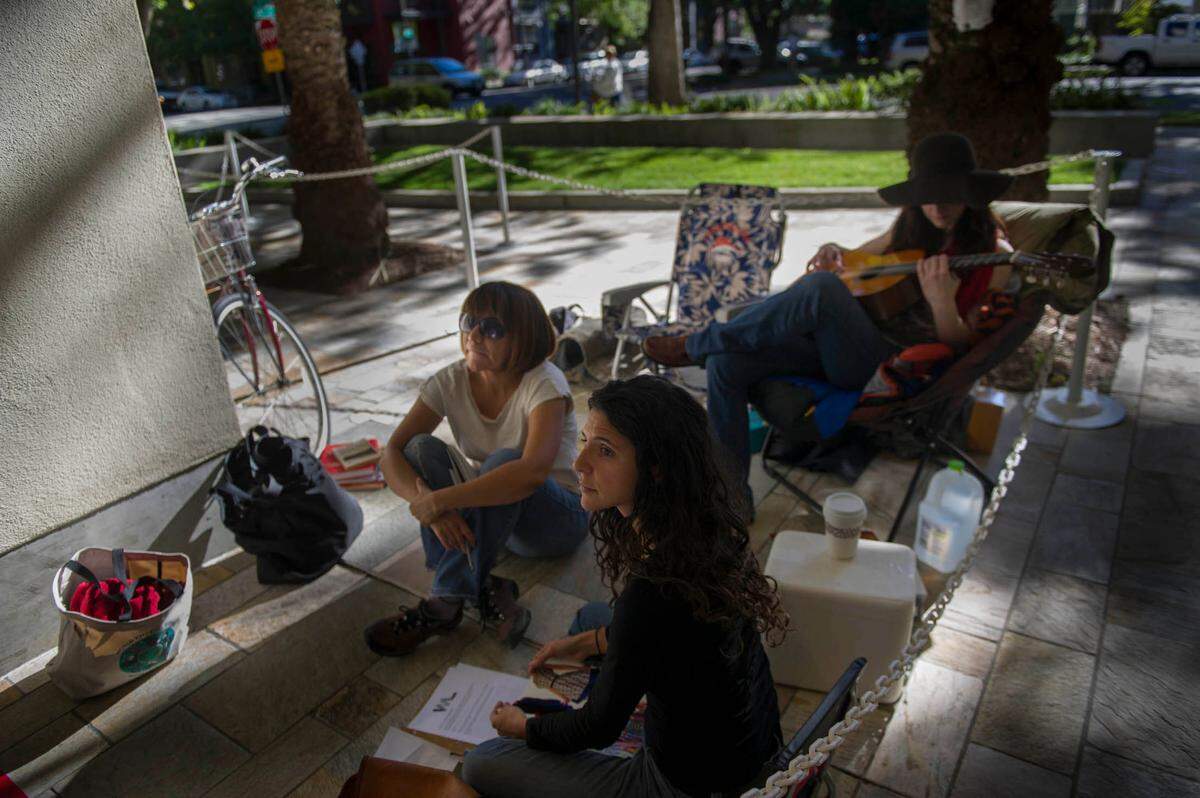
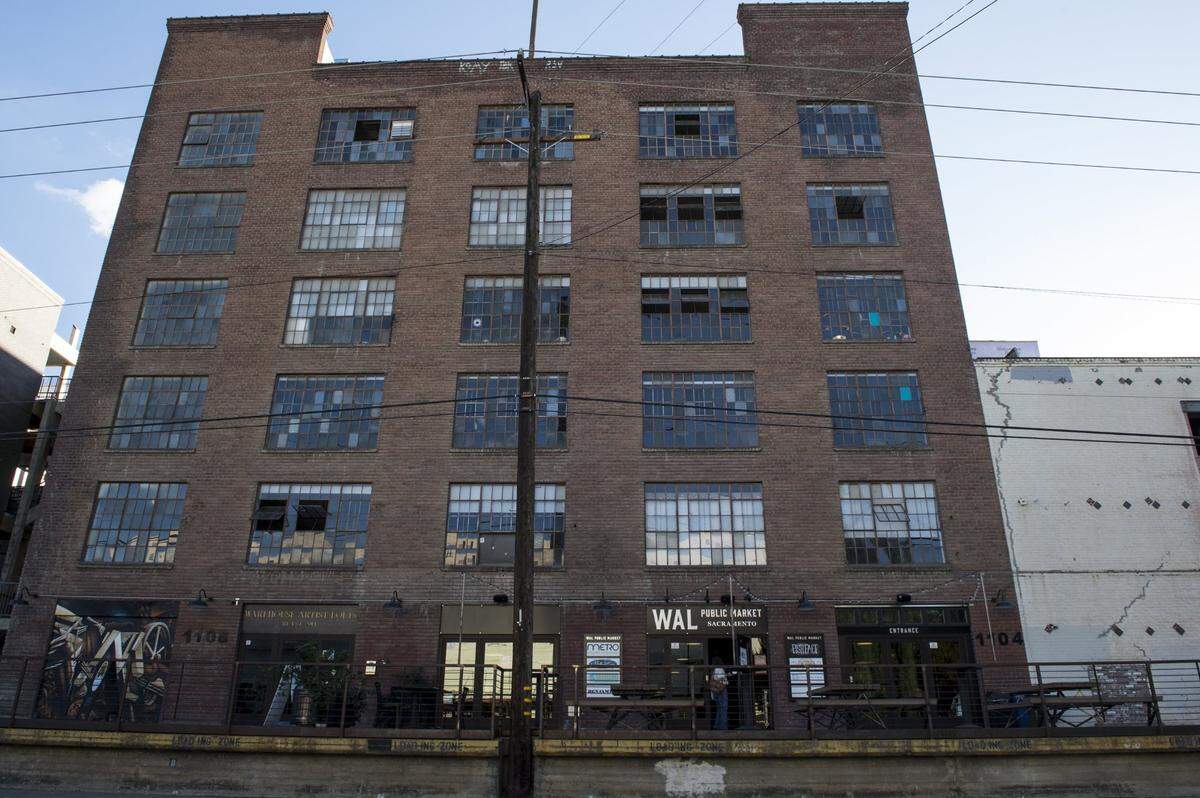
Like the Warehouse Artist Lofts a few blocks away, a preference will be given to artists for units in the R Street project by Mutual Housing, but anyone who meets the income requirements can apply for a loft. Hopeful residents camped on the sidewalk for a spot at WAL before it opened in 2015, and Jiménez expects the same level of demand for the new project.
“There will be a waiting list, of course,” he said. “The demand for housing is so high that as much affordable housing as we can build … it will be filled very quickly.”
Solutions to Sacramento’s housing crisis
Sacramento’s real estate market has been in a frenzy since the COVID-19 pandemic struck. The median home price has blown past $600,000, putting the dream of homeownership out of reach for many, especially young and first-time buyers.
At the same time, the region has not built enough housing to keep up with intense demand. A recent report by the North State Building Industry Association showed the number of new homes built in the region last year was “a fraction of the amount needed to begin catching up with years of underproduction.”
With not enough new housing being built, housing policy experts have increasingly focused on adaptive reuse as a way to increase housing production.
A study released last year by the Terner Center for Housing Innovation at the University of California, Berkeley showed just 157 units of housing were built on commercially-zoned land in the six-county Sacramento region between 2014 and 2019. By comparison, 28,011 units of housing were built on those plots in the Los Angeles region and 9,298 in the Bay Area.
Muhammad T. Alameldin, a policy associate at the Terner Center, said building housing in urban centers and other places zoned for commercial use “is a great tool to not only help solve the housing crisis, but also the climate crisis.” Replacing vacant state land or empty offices in the central city with housing promotes walkable neighborhoods and places fewer automobiles on the road.
“These are highly-desirable neighborhoods,” Alameldin said. “If California wants to reach its climate goals, it needs to lead on infill development.”
Challenges of adaptive reuse
There can be significant challenges to converting office buildings, especially large ones, into housing.
Office buildings tend to be old, with out of date seismic standards. The buildings are often wider than typical residential towers, making it difficult to lay out apartments in a way where they all have access to windows.
HVAC, plumbing and electrical systems are often centralized in office towers, and each floor may have only one set of restrooms. In residential buildings, each unit has its own set of utilities.
“If you find the right building, a developer can make it work,” said Dave Herrera, an executive vice president with Colliers who specializes in Sacramento’s central city. But, he said, in many cases it makes more financial sense to demolish commercial or office towers to make way for residences.
Ken Turton, president of Sacramento-based Turton Commercial Real Estate, said despite the challenges, “repurposing (vacant state and commercial office space) is a great and worthy endeavor.”
“I think they’re on the right track,” he said of the state and city. “This is the future of these old vacant, dormant state surplus properties that will never be occupied again.”
Kenney, the state real estate division official, said “not every building is amenable” to being converted into housing.
“I think adaptive reuse has more legs than people give it credit for, but I don’t disagree there are absolutely challenges,” he said. “You have to have the right building in the right area.”
This story was originally published June 10, 2022 at 5:00 AM.