‘Missed the point’: Sacramento County’s COVID-19 spending blasted again by grand jury
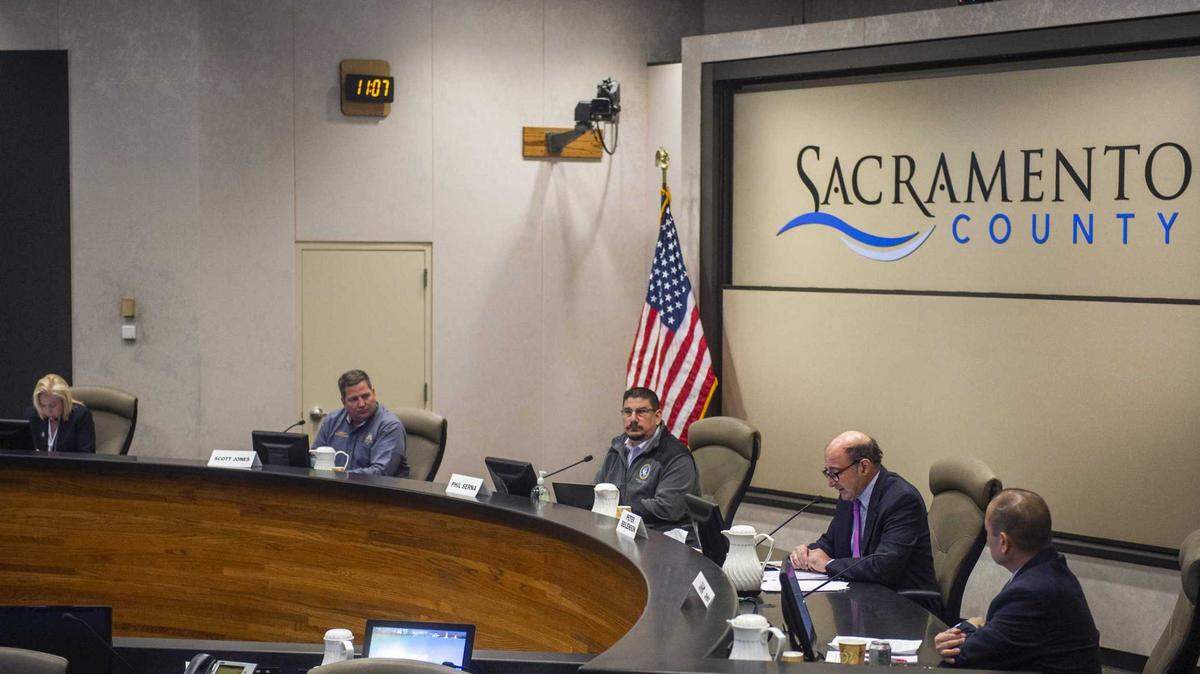
Sacramento County elected leaders “missed the point” of a recent grand jury investigation that concluded the Board of Supervisors “abandoned responsibility for COVID spending” during the height of the coronavirus pandemic, the grand jury wrote this week.
The grand jury earlier this year released a pair of scathing reports condemning supervisors’ handling of the early months of the COVID-19 crisis and calling for new policies to increase oversight and accountability.
The first report, published in February, said county leaders “undermined public confidence in government” in 2020 when they allocated a majority of $181 million in federal coronavirus aid toward the Sheriff’s Office.
That investigation “revealed that the County of Sacramento conducted no outreach, and made no CARES Act funding plan to support countywide COVID-19 relief activities,” the grand jury wrote in its report.
County officials have repeatedly defended the allocation of coronavirus relief funding, distributed by the Trump administration through a March 2020 law known as the CARES Act, as essentially an accounting maneuver that would give the county greater flexibility in the timing of spending those funds.
But the grand jury in February’s report expressed doubt, as well as serious concern about a lack of public transparency in the process.
That concern has continued following the Board of Supervisors’ formal response sent back to the grand jury in late April, the grand jury said this week, in which the supervisors rejected nearly all of the grand jury’s findings.
“The Board’s responses to the Grand Jury report reflects their continuing refusal to acknowledge or accept responsibility for any deficiencies of leadership, accountability or engagement during a countywide emergency,” the grand jury wrote in a status review document published Tuesday.
“The Board unfortunately cloaks itself in bureaucratic, misleading, and at times inaccurate statements.”
Judge Michael G. Bowman, the presiding judge for Sacramento Superior Court, said in a statement accompanying Tuesday’s review document that the Board of Supervisors “has opted to dodge and deflect” concerns about local leadership during the health crisis.
“The Board of Supervisors’ position that there is ‘nothing to see here’ reflects the precise leadership and accountability deficiencies outlined in the report,” Bowman wrote. “Sacramento County needs and deserves engaged, accountable leadership from Supervisors. This became clear during the pandemic.”
The grand jury also in April released a second report, saying the supervisors’ failure to request updates about the public health department’s COVID-19 response or funding needs at any time between March and mid-August of 2020, and failure to schedule any briefings by the public health officer in that period, reflected “executive disinterest.”
Supervisors have not yet formally responded to the second report and are still within the 90-day deadline to do so.
Supervisors ‘failed to provide a public forum’
The Board of Supervisors, under current board chair Don Nottoli, and Sheriff Scott Jones each responded in separate letters to the February grand jury report, as required by law.
In response to 10 findings addressed to the supervisors, the board wrote that it disagreed wholly with seven findings and partially with two.
Regarding the grand jury’s top-line finding, alleging supervisors “abdicated” responsibility and oversight for the county’s COVID-19 response, the board in its response pointed to the county’s proclamation of a local public health emergency in early March 2020 and its approval in April 2020 of a COVID-19 homelessness response plan.
“To be clear, and as the Grand Jury has reported, the County Office of Emergency Services, and the Office of Public Health were prepared and responsive, and homeless population COVID-19 containment efforts were effective,” the grand jury wrote in Tuesday’s status review.
“However, the Board failed to provide a public forum to explain what was going on between County government services and County residents given the unprecedentedly widespread impact of the pandemic.”
In response to the grand jury’s multiple findings concluding that the county gave little financial support to the local public health office, the supervisors repeatedly cited CARES Act guidance from the U.S. Department of the Treasury, saying county funding decisions were in line with federal regulations.
The Treasury regulations permitted use of CARES Act funding to pay salaries for public safety safety and health workers essential to local pandemic response, and said local governments could include all public health, law enforcement and public safety worker expenses in that category.
Supervisors agreed with only one grand jury finding: that the county did not distribute any CARES Act funding to any of the seven incorporated cities located within the county, noting that each of them received their own state and/or federal allocations.
The supervisors also declined to implement four of the grand jury’s five recommendations.
The board did implement the grand jury’s recommended action of adopting a “transparent and properly noticed budget allocation and approval process” for all county funding sources.
The grand jury called upon the board to appoint an independent audit by this month to determine if the county’s actions complied with federal CARES Act requirements.
County leaders rejected the recommended audit, saying all actions “were in compliance with federal requirements,” and that external auditors who examined the 2019-20 and 2020-21 county budgets found no issues with the county’s use of coronavirus relief funding.
The grand jury also recommended that the board develop a policy to ensure community input regarding supplemental emergency funding by the end of this year; a clearer policy directing the county CEO to give “specific direction and oversight” in response to community emergencies; and a policy that would require the CEO to give monthly updates on special funding.
The board in its response wrote that those three recommendations, all rejected, are effectively already covered by existing processes and in the course of regularly scheduled meetings.
The Board of Supervisors is not legally required to respond to Tuesday’s status review.
County blames ‘complex dynamics’ of COVID-19
The grand jury also claimed in February that the county had no “overarching” plan to address the pandemic.
“The complex dynamics of COVID-19 and the frequency of change pertaining to public health and guidance from regulatory agencies required the County of Sacramento to be extremely nimble in the provision of safety and other related plans to its departments,” county supervisors’ response read, in part.
Jones, in his response to the grand jury’s three findings pertaining specifically to the Sheriff’s Office, partially disagreed with two of them. The sheriff partially agreed with one: that the law enforcement agency chose not to enforce Gov. Gavin Newsom’s emergency orders regarding masks and business shutdowns.
Jones’ response acknowledged his office “adopted a role of education rather than enforcement, confident that criminal enforcement from peace officers would neither be necessary nor appropriate in most instances.”
The grand jury in Tuesday’s review did not take issue with the sheriff’s response.
New county CEO takes over
The five-month period involved in the grand jury’s February report came during the tenure of former county executive officer Navdeep Gill, who retired amid controversy in February 2021.
“A new County CEO,” Gill’s successor Ann Edwards, “initiated a 2022-2023 Community Engagement Plan to more adequately address allocation of relief funding received after 2020,” Tuesday’s review document continues.
“However, the Board seems to have missed the point of the Grand Jury report: County Executives and plans come and go, but Sacramento residents deserve its elected leaders to maintain watchful and engaged oversight of County government activities and services.”
This story was originally published June 7, 2022 at 1:30 PM.