
Can new development and the homeless coexist in Sacramento? This neighborhood is a test
Sacramento’s most pervasive crisis is living in the shadows of its grandest ambitions.
In a neighborhood north of downtown called the River District, new glass office towers fill the sky and hundreds of homes are being built for a wide range of income earners. Tents for those who have mostly been left out of the plans line the sidewalks in between.
One of the largest housing developments in the central city will dramatically transform North 16th Street, a one-way thoroughfare that for years has served as little more than a getaway route for downtown workers fleeing to their suburban sanctuaries.
Nearby, service providers recently helped dozens of homeless individuals find help and shelter, fearful the campers might get run over by fire trucks leaving a station about to open around the corner.
This is a neighborhood of dichotomies, where the about-to-haves and the still-have-nots are fighting for space. With all the promise, and especially now as more than $1 billion is being spent on the bold plans, are the River District’s possibilities limited by elusive solutions for those surviving on the street?
The neighborhood’s business advocacy group estimates between 1,500 and 2,000 homeless individuals live within the district’s 1.3 square miles, a number service providers in the area do not dispute. Violent crime and fires in tent settlements are frequent. Last week, an unarmed man believed to be homeless was shot by Sacramento police in the River District.
The River District

Map: NATHANIEL LEVINE | Map data: Esri, city of Sacramento
More than 700 shelter beds are in the district and several public and private homeless service providers have a presence there, including Loaves &Fishes, likely the region’s busiest and most well-known organization serving the unhoused. The organization serves an average of between 400 and 500 meals a day to homeless individuals.
“We need to find a way to coexist,” said Jenna Abbott, until recently the head of the River District Property and Business Improvement District.
That’s becoming difficult, Abbott said. She and other business leaders are critical of homeless service providers, saying those organizations provide temporary relief to the unhoused but don’t do enough to keep them from camping for extended periods of time and leaving garbage on neighborhood streets.
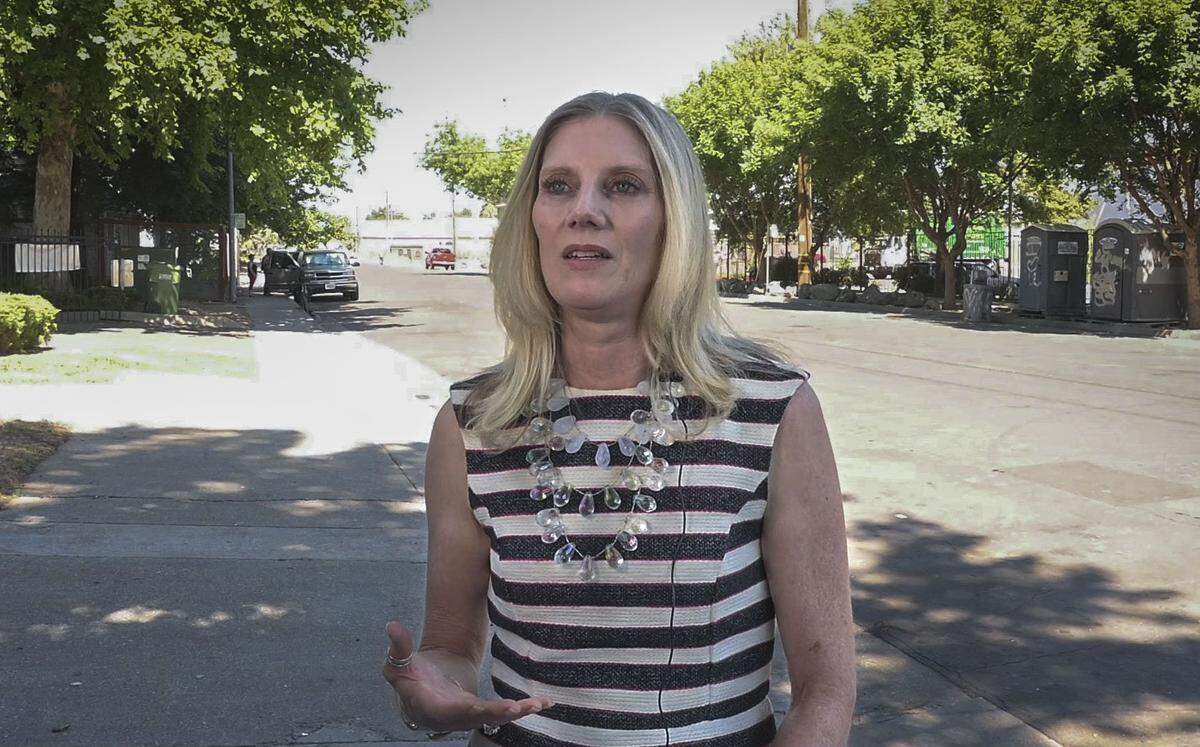
“What (homeless service agencies) turn into, unfortunately, is an attractive nuisance,” Abbott said. “Because if you have a service agency that provides a meal a couple times a day and will give you a tent and a sleeping bag, where are you likely to camp? Close to that service agency.”
Sacramento Mayor Darrell Steinberg said “we are seeing the beginning of positive transformation and I am bullish on the River District as a target for new, inclusive economic development.” And he said “there is a lot of legitimacy” to the concerns of business owners in the area.
“We have got to find a way to balance all the needs and desires,” Steinberg said. “And I think it’s appropriate that the River District leadership ask about what other parts of the city and county are doing to accommodate some of the social service needs. It is an example of too much concentration and it’s not healthy, it’s not fair.”
Homelessness in the River District
The River District and the adjacent American River Parkway have been the center of Sacramento’s homelessness crisis for decades.
Loaves & Fishes was founded in the area in 1983 because “this is where the greatest need exists and this is where our services have been most useful,” said the organization’s executive director, Angela Hassell.
“I feel we’ve always been reasonable in having discussions around our presence here and our guests’ presence in the neighborhood,” Hassell said. “I would say we are good neighbors to the community around us and obviously most importantly to the folks experiencing homelessness that are near us.”
Earlier this year, some nearby blocks were lined with dozens of tents. Abbott has a folder in her iPhone of photographs and videos of several fires that broke out in the camps.
However, in the past several weeks, following the outreach effort by the city and county, the blocks surrounding the Loaves & Fishes campus have been mostly clear of camps and debris. As dozens of guests of the facility arrived for meals and supplies on a recent afternoon, the neighborhood was quiet and clean.
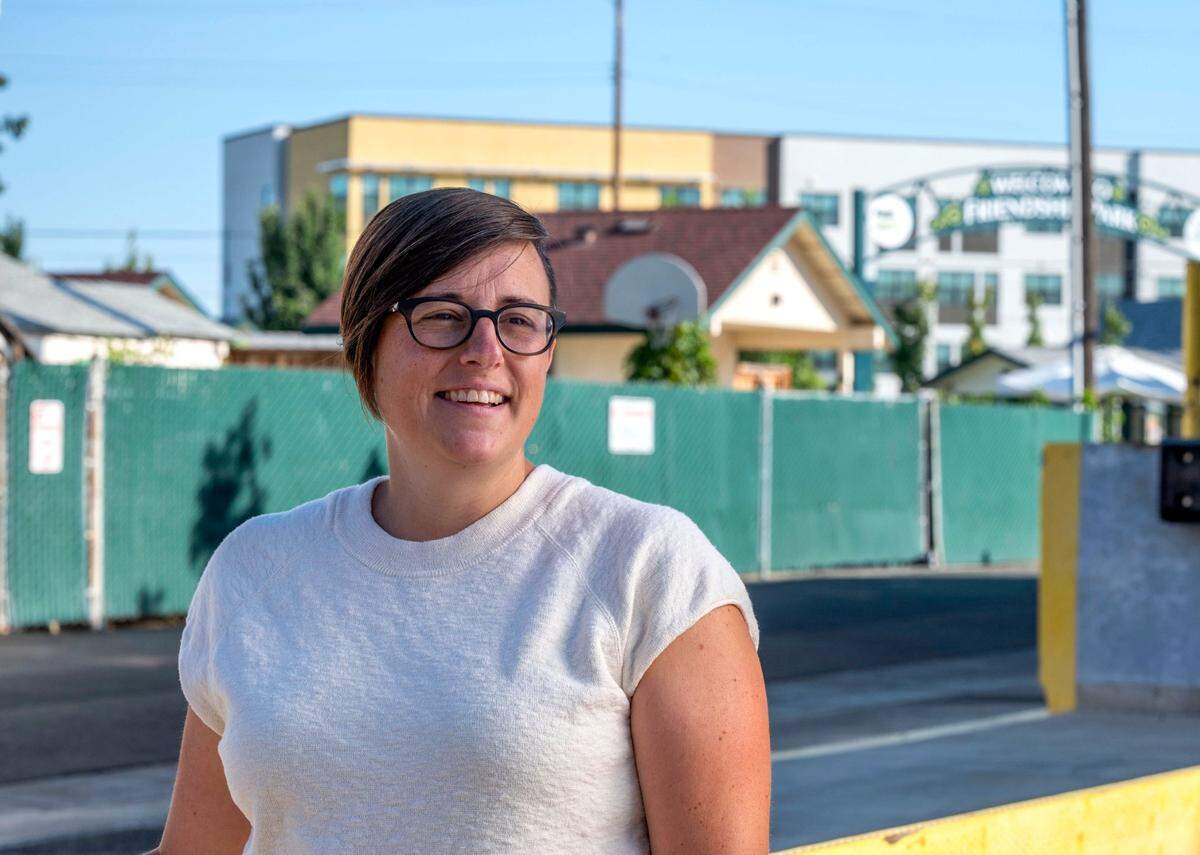
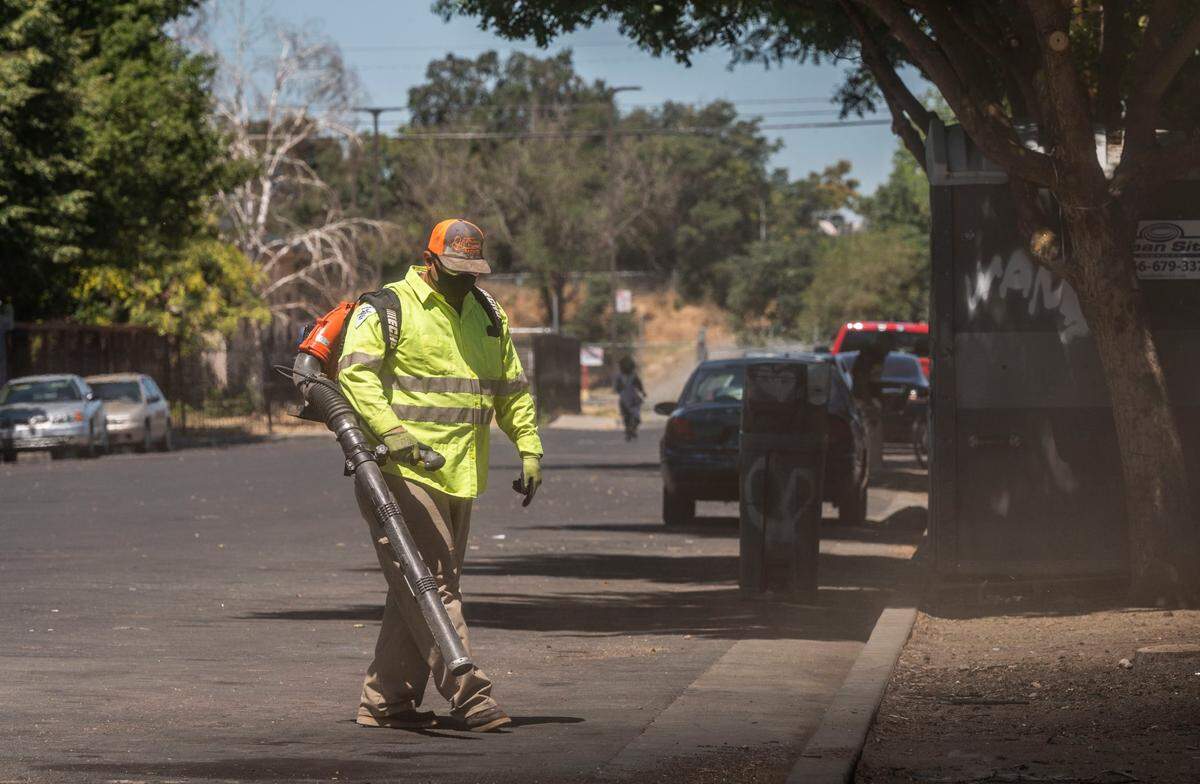
In addition to the outreach effort near the fire station by city and county service workers, both the River District and Loaves & Fishes have teams of workers who pick up trash and clean the streets.
“We help out with the surrounding area,” Hassell said. “We do the best we can.”
Hassell said the mission of Loaves & Fishes is “a little misunderstood.” It is not a shelter; instead, “our mission is meeting folks where they are today and helping them figure out what they need to get to tomorrow. And over time, those things accumulate to a path out of homeless.” That includes meals, supplies to help the homeless survive on the street and health services.
Will conditions improve?
Between May 25 and July 13, service providers who partner with the city of Sacramento’s Department of Community Response homeless outreach agency contacted 499 unhoused individuals in the River District, city spokesman Gregg Fishman said. Of those, 176 received services and 39 were given shelter.
“It’s a live example of what’s possible if we continue to do the right thing,” Steinberg said. “When you do the right thing, you’re not just benefiting the person who is suffering, but you help the surrounding community.”
Business owners in the neighborhood are skeptical that conditions will improve.
Mark Dutrow is the president of U.S. Glass on Richards Boulevard, the main commercial corridor of the River District. He said an employee was assaulted outside his office and the building was sprayed with graffiti in recent months. Private security teams funded by an assessment paid by businesses spend much of their time cleaning up used needles and human waste from sidewalks.
“People don’t feel safe,” he said. “It’s hard because I’m trying to look through the lens of wanting to be optimistic about the changes but we just exceeded homelessness in San Francisco and I don’t see that slowing down.”
A recent count of Sacramento County’s homeless population showed the figure was higher than San Francisco’s.
Dutrow said the neighborhood has been forced to carry an outsized burden of the region’s homelessness crisis because there are few residents there to advocate for themselves.; the neighborhood is mostly zoned for commercial, office and industrial use. He said he’s been told by the mayor and others that new policies to address homelessness can take years to yield improvement.
“We don’t have years,” he said. “I’m not going to stay here for years and deal with this.”
Building housing and offices
Sacramento spends considerable energy and money on redefining its central city. The River District has long been its lesser urban renewal canvas.
Far less glamorous than the nearby Railyards, where a professional soccer stadium, a hospital campus and the restoration of the historic rail shops have been the dreams of a generation of city planners. Far less trendy than midtown, with its restaurants, modern apartment buildings and tree lined boulevards. Far less grandiose than downtown, home to Golden 1 Center and the high rises of Capitol Mall.
But now it’s the River District’s turn.
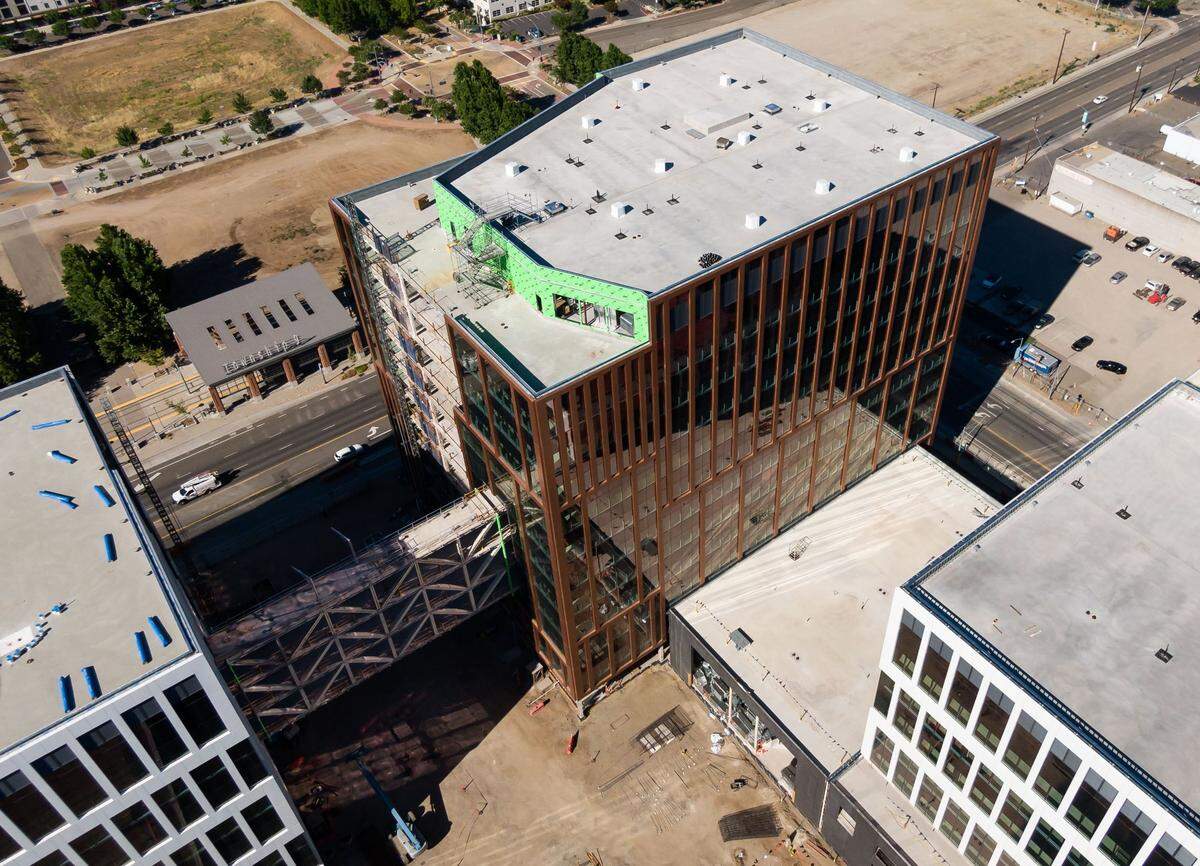
The largest project underway is a new $1 billion state office complex on Richards Boulevard, a complex of mid-rise office towers already visible from every corner of the River District. When it’s finished in 2024, it could hold more than 4,600 state workers, a major boost of daytime activity for a neighborhood in desperate need of energy.
Three major housing developments are also on the way.
Township 9, on the banks of the American River, already has a 180-unit affordable housing building. The neighborhood’s developer filed an application with the city of Sacramento earlier this year to add 542 units of market rate housing and, if the plans are approved, could break ground this fall.
Along 16th Street, bordering the blocks where outreach workers helped dozens of homeless campers, the Grower’s District will transform three blocks into about 525 residential units. It includes the transformation of a century-old produce terminal into two apartment buildings – one five stories and the other eight. The project received a key City Council approval this week.
The city’s most significant affordable housing community is also coming to the River District: Mirasol Village is replacing the former Twin Rivers public housing neighborhood. Some parts of the neighborhood are complete and when it’s finished, the $300 million development will have 487 mixed-income housing units.
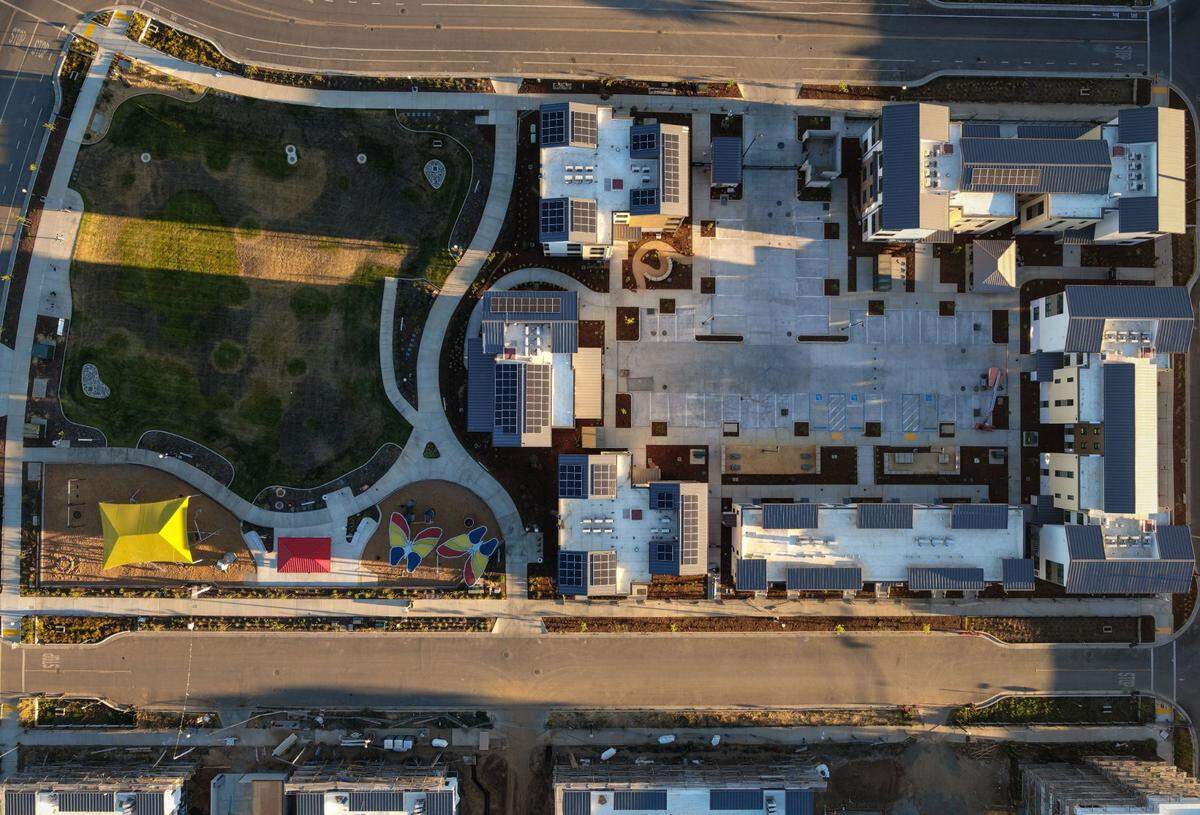
Combined, those developments could add thousands of new residents to the River District. That’s the sort of progress that has eluded the neighborhood for a generation. Homeless service providers are generally supportive of the change, as long as it comes with a balance.
“I’m never going to be opposed to housing,” Hassell of Loaves & Fishes said, “but I do think market rate housing is going to be difficult for this community to maintain because of the greater need for permanent supportive housing and affordable housing.
“We hear the complaints a lot: ‘I want to help, I want to have places for people to go but they can’t be here.’ That just kicks the can down the road, it just further traumatizes those folks who are homeless and sometimes pushes them further away from stability and a solution.”
This story was originally published July 24, 2022 at 5:00 AM.