Exclusive: How Sacramento cleared one of its biggest homeless camps after months of complaints
Sacramento leaders didn’t have good options when complaints piled up in their inboxes last year about a sprawling homeless encampment between apartment buildings and a busy shopping center on Fair Oaks Boulevard.
The city couldn’t simply clear the camp. A 2018 federal court ruling barred local governments from moving homeless people off of public property unless they could provide shelter, and the city didn’t have beds to offer.
But that explanation didn’t satisfy the business owners and neighbors who blamed the camp for thefts, vandalism and human waste.
“We are business owners … and have great worries for the safety of our employees leaving toward Howe Avenue in the evenings. There are illegal matters daily from drug deals, illegal fires, defecation and littering,” one group wrote to City Manager Howard Chan in November 2021.
That’s when a group of government employees and private citizens hatched a new idea: If the city could not clear a camp on public land, what if the local government turned the site over to business owners? The arrangement would allow the city to declare the site private property and legally clear the camp, the thinking went.
The idea stuck. Sacramento in April turned the site over to a group called the Howe/Fair Oaks Property Owners Association and cleared the camp, breaking apart a homeless community where dozens of people sought safety in numbers but resolving complaints from a neighborhood that lost its patience with what business owners referred to as a public nuisance.
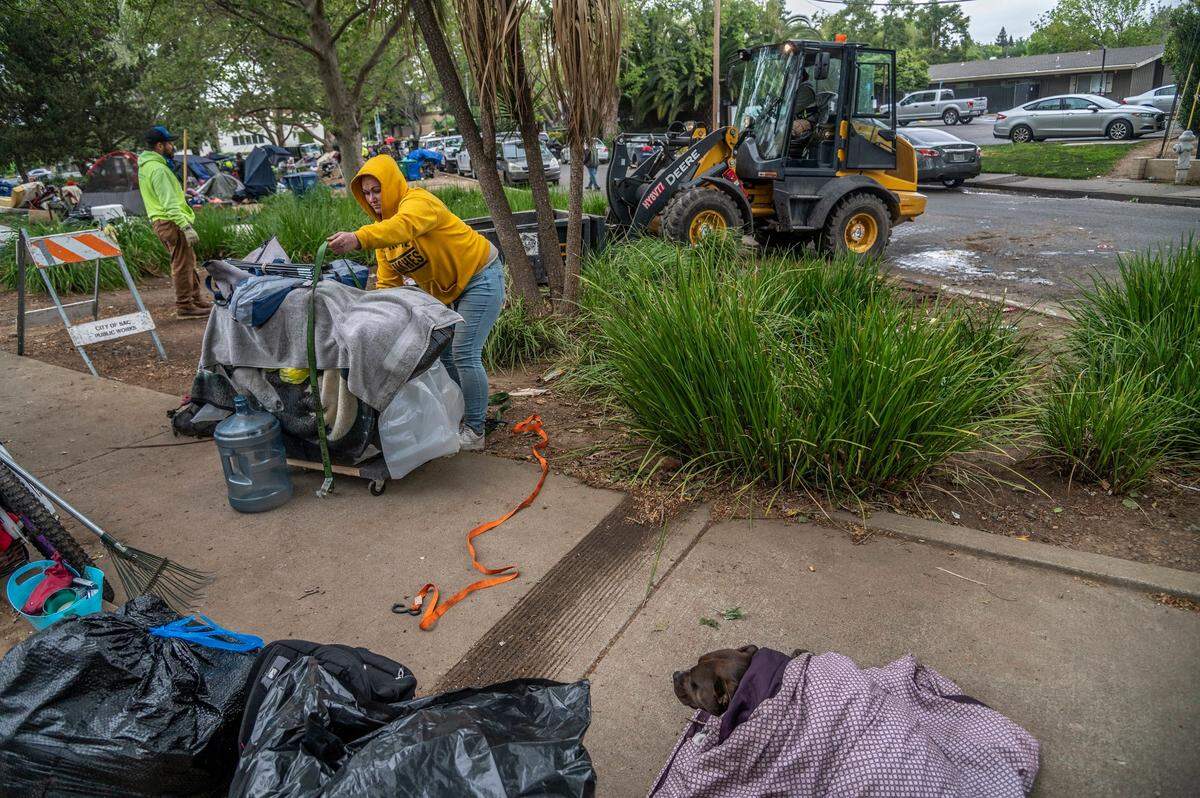
New documents obtained by The Sacramento Bee through the California Public Records Act show the months-long process that led up to that moment.
It involved dozens of visits to the site by Sacramento city employees offering services to people at the camp, urgent appeals from business owners, pressure from Sacramento County officials and a survey of the property that was meant to find out whether it contained sensitive infrastructure.
At one point, Sacramento County District Attorney Anne Marie Schubert, who was at the time running for state attorney general, sent a strongly worded message to Chan that raised the prospect of a lawsuit over the encampment.
The city responded to Schubert by saying it could not simply clear the camp as the district attorney suggested, but noted it was working through “required steps” to address homelessness and open up more shelter.
For over a year, a tight-knit homeless community existed on the lot.
Its residents called it “the hill.” They designated a spokeswoman. They had rules. Volunteers regularly delivered food and water. Bright street lights gave the occupants a sense of safety.
“We liked it there,” said Gwen Mayse, 61. “They really watched over everything, made sure nobody messes with you, especially if you’re a girl. I miss those people.”
She’s among the people who used to camp there and now live at new locations since the city cleared the Fair Oaks site and surrounded it with iron fencing.
People who live and work around the former encampment say the area feels safer today.
At a nearby dentist office, several homeless individuals frequently came in asking for water and to use the restroom, one employee said in an interview. Some were confrontational. One person came in and threatened staff, yelling and banging on the front window — witnessed by a patient who found a new dentist after that day, she said.
The situation has improved since the city cleared the camp, she said.
“It’s a lot safer now,” said the woman, who spoke on the condition that her name not be published because she was concerned about her safety. “We still have homeless (people) that walk by but they don’t really disturb the peace ... being that they’re not established so close, they don’t feel as at home so they’re not affecting anyone.”
Property owner tries to cut off water supply
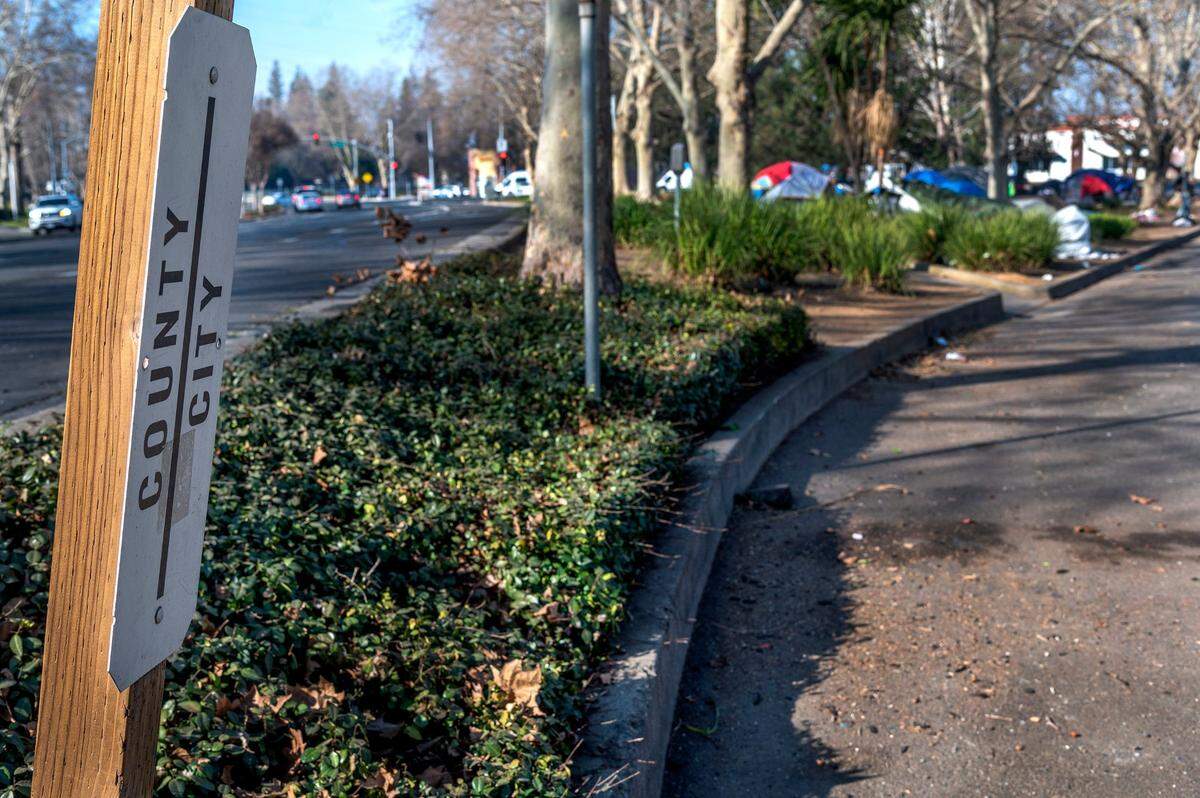
The camp dates to 2021. Five homeless people, sick of the crime and sexual assault that runs rampant on the American River Parkway, walked up a levee and set up camp in the grassy lot at Fair Oaks Boulevard and Howe Avenue.
To their surprise, law enforcement officers did not kick them out. For the next year, the camp grew, despite its visual location on a commercial street.
But behind the scenes, complaints from businesses and homeowners poured in to city and county officials. They raised concerns about crime, drug use and sanitation, according to records released to The Sacramento Bee.
In a September 2021 email, business owners wrote that they took matters into their own hands by attempting to deprive the camp of water.
“I want you to know that (I) installed a huge metal cage and bag to cover our backflow system which I believe was the homeless camp’s main source of water,” the business owner wrote to meeting participants in September 2021. “I added no trespassing and video surveillance signs ... Unfortunately sometime over the weekend, we had a shed break-in where ironically we stored our emergency water.”
One week later, another private citizen wrote to city and county officials with another suggestion:
“Who can I speak with in the City of Sacramento about buying that piece of land for private property,” wrote the citizen, whose name is redacted in the emails released to The Sacramento Bee.
Ryan Moore, the city’s public works director, responded on Oct. 5 that it would “not be a straightforward process.”
California law would require the council first to deem the lot as “surplus land,” then make it available to affordable housing developers before it could go to the open market — a year-long process at least, Moore wrote.

Sacramento mayor gets involved
In November, Chan forwarded Deputy City Manager Chris Conlin an email from a resident complaining about “illegal matters daily from drug deals, illegal fires, defecation and littering.”
“We are working on it,” Conlin replied to Chan. “A very problematic issue based on location” and limitations created by the 2018 federal court ruling on homeless camps known as Martin vs. Boise.
About two weeks later, Sacramento Mayor Darrell Steinberg got involved. At the time, he was trying to build a relationship with Sacramento County Supervisor Rich Desmond, whose district is adjacent to the lot.
“Rich Desmond just called,” Steinberg emailed Chan, Conlin and Department of Community Response Director Bridgette Dean on Dec. 1. “He is desperate for relief on Howe and Fair Oaks and said that a planned outreach for this week was canceled ... Can we address Fair Oaks and Howe quickly?”
The next day, following direction from the city manager’s office, Moore emailed his employees to try another strategy. He asked whether the lot contained critical infrastructure that the city would have an obligation to protect.
“The question is, do we have any utilities, fiber optic in particular, running under that parcel anywhere?” Moore emailed Dec. 2.
One employee responded that the site had underground conduits related to traffic signals and lighting, as well as several manholes and pull boxes.
Conlin replied: “Where’s an underground cable when you really need one?”
Five days before Christmas, city leaders returned to the idea of leasing the lot to private citizens.
Conlin wrote to Dean and Moore: “Would really help if we can find an interested party.”
District attorney intervenes
In late January, the District Attorney and Sheriff’s offices started circulating surveys to businesses and residences in the area asking for them to write down crimes they had seen at the camp. The same month, Schubert pressured the city directly, behind the scenes.
“I am asking you to intervene and expedite this nuisance and public safety issue,” Schubert wrote in an email to Chan Jan 12. “My office is concerned that this area constitutes a public nuisance and could be subject to litigation. Rather than taking that step, I much prefer an immediate resolution through collaboration between the City, the County and any assistance my office can provide.”
City Attorney Susana Alcala Wood defended the city’s position that clearing the camp as Schubert suggested would be illegal.
“As a municipal law practitioner with more than 32 years of enforcement experience, I can assure you that the state of the law no longer simply allows the city to declare an encampment as a nuisance subject to abatement by simply ‘moving people’ as you suggest,” Alcala Wood wrote to Schubert on Jan. 27. “It’s a much more complex analysis requiring a near surgical approach as many factors must be taken into consideration, and many legal steps followed. Rest assured that the City is moving through each of these required steps as it also works relentlessly to acquire and establish safe ground sites, shelters and permanent housing sites to assist the unhoused.”
On Feb. 14, Schubert sent Chan an eight-page follow up email. It included some of the 130 responses her office had received from the survey. They detailed vandalism and damage, needles, a naked man with an erect penis in a business doorway, and a man convicted of a felony with a gun in his backpack.
“The number of questionnaires that my office has received in such a short period of time is unprecedented,” Schubert wrote, urging the city to find exceptions to the federal court ruling on homeless camps and clear the site. She asked to meet with city officials the following week.
City leases lot before clearing camp
In March, a group of 18 property owners put forward a plan to buy the property.
“Last Monday, we had a very successful Zoom call with the 18 owners of the properties surrounding the intersection of Howe/Fair Oaks regarding the lease and have received a significant number of financial commitments to manage the property for a year,” real estate attorney Charles Trainor wrote Conlin in March. “We have a follow-up call this coming Monday morning at 11 a.m. Is there any chance we could have a draft of the lease before then, so that I can report to the owners that we have received it?”
The city wanted to start the lease before clearing the camps and fencing it, while the business owners wanted the opposite. The property owners got their way.
The lease term was not in effect when the city cleared it and installed the fence in April.
Advocates have questioned whether the city complied with the 2018 federal court ruling on homeless camps by removing the encampment before leasing the property.
“The question was what was the status of it when they moved people,” said Anthony Prince, an attorney for the Sacramento Homeless Union. “If it was still public property, they violated Martin v. Boise ... to convert public property and lease it into private hands is highly improper.”
In May, the city again used a similar approach. It leased a property to an adjacent auto shop at no cost, then cleared a camp there. In that instance, the business had sued the city, and the parcel had been slated for homeless tiny homes.
Neither lease went to the City Council for approval.
‘I miss those people’
Law enforcement officers have told Mayse to pack and move so many times she’s lost count.

She was surprised in April when she learned the city would clear the camp at Fair Oaks and Howe.
“I thought we were allowed to be there,” she said. “It was all right over there. We didn’t have no problems.”
She and her daughter Laurane Ivey, who suffers from seizures, packed up her four small dogs to go find somewhere else to live.
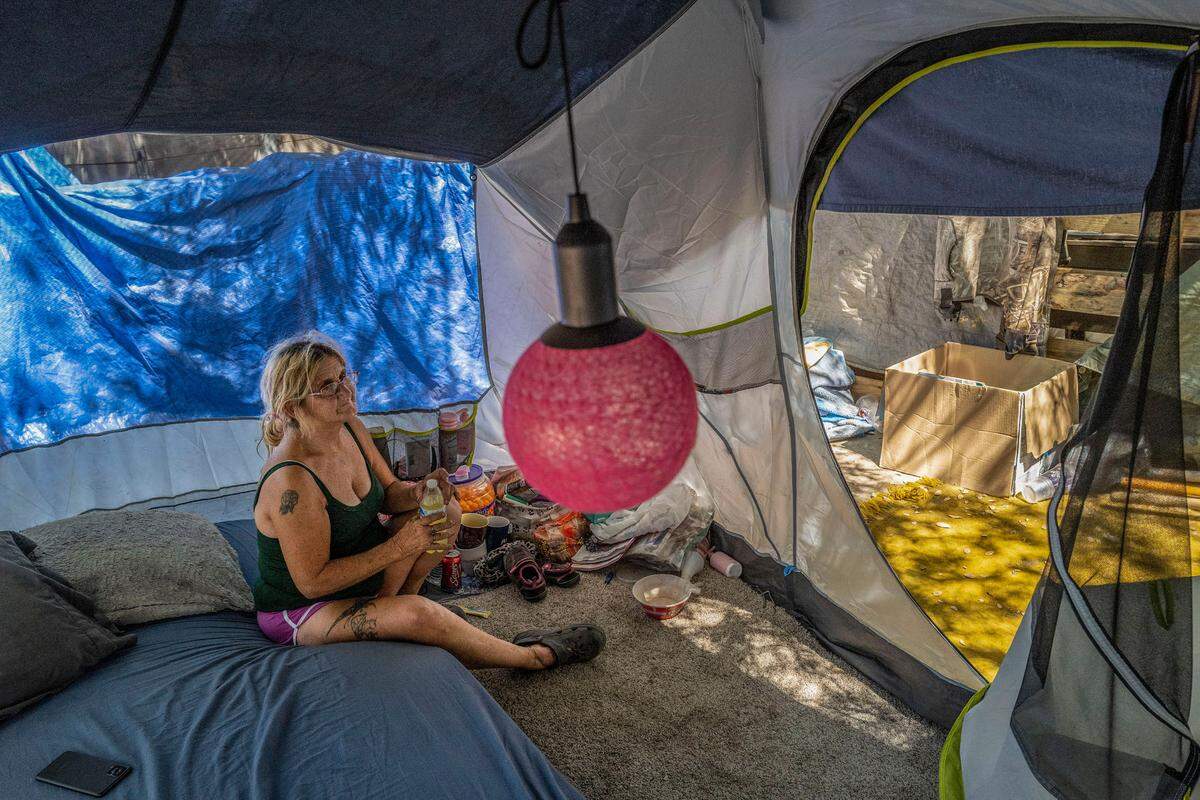
Now Mayse sleeps in her tidy gray and blue tent underneath a freeway overpass near Roseville Road. She sat on her mattress last week, placed on the ground with dark blue sheets on top of a beige carpet.
She finds getting water at her new location more difficult than when she lived on Fair Oaks Boulevard. It’s more secluded. Large gray rats are there, unlike the hill, she said. One scurried by as she spoke, ducking underneath the shower in a neighboring tent.
Mayse and her daughter together receive about $2,100 a month in Social Security. She earns a little more doing yard work. It’s not enough to find an apartment to rent, due to credit and eviction checks, she said.
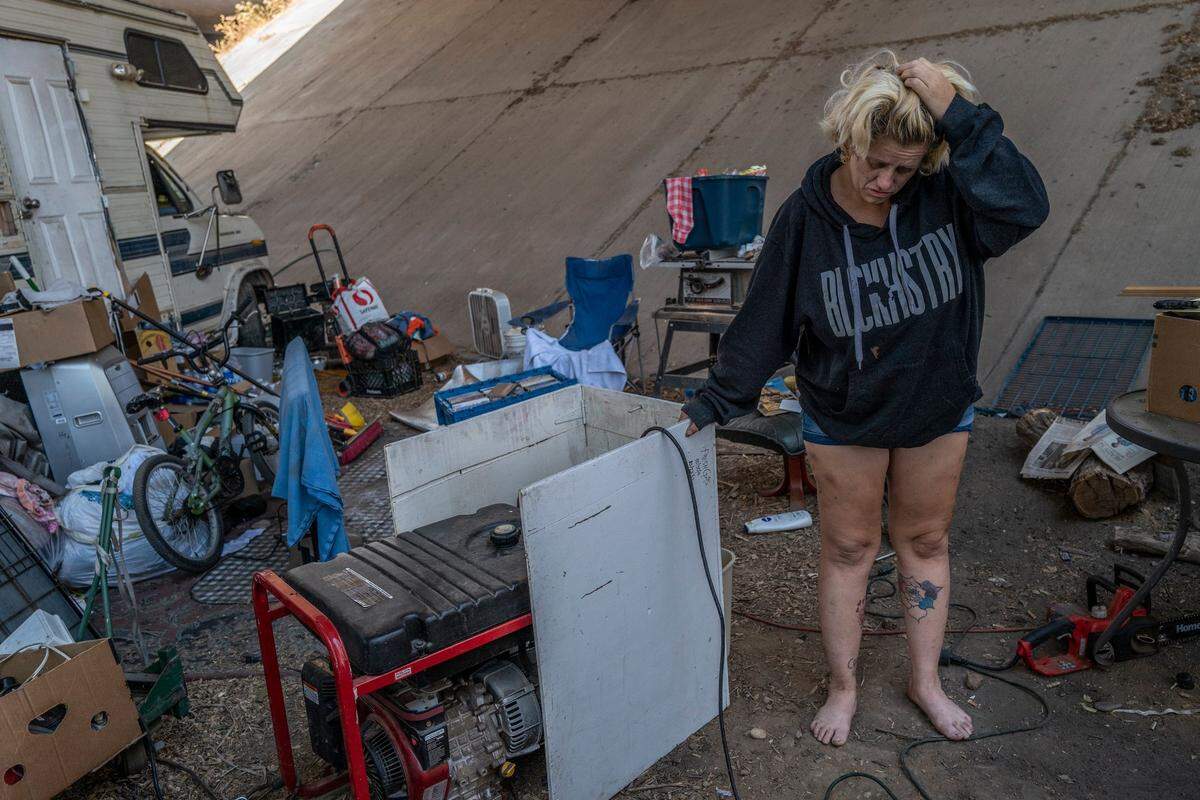
At least one former resident of the hill is now in housing in Carmichael, said Sister Rose Herrera, a homeless advocate.
But at least two are back on the American River Parkway — notorious for crime, sexual assaults, and a lack of bathrooms and drinking water.
Mayse is also hearing rumors of a sweep in her new location.
“We’re gonna have to find another spot again,” Mayse said. “We’re trying and trying to get indoors but it’s so hard to find a house.”

This story was originally published September 1, 2022 at 5:25 AM.