Exclusive: California cities took over their houses, then a private company drove them into debt
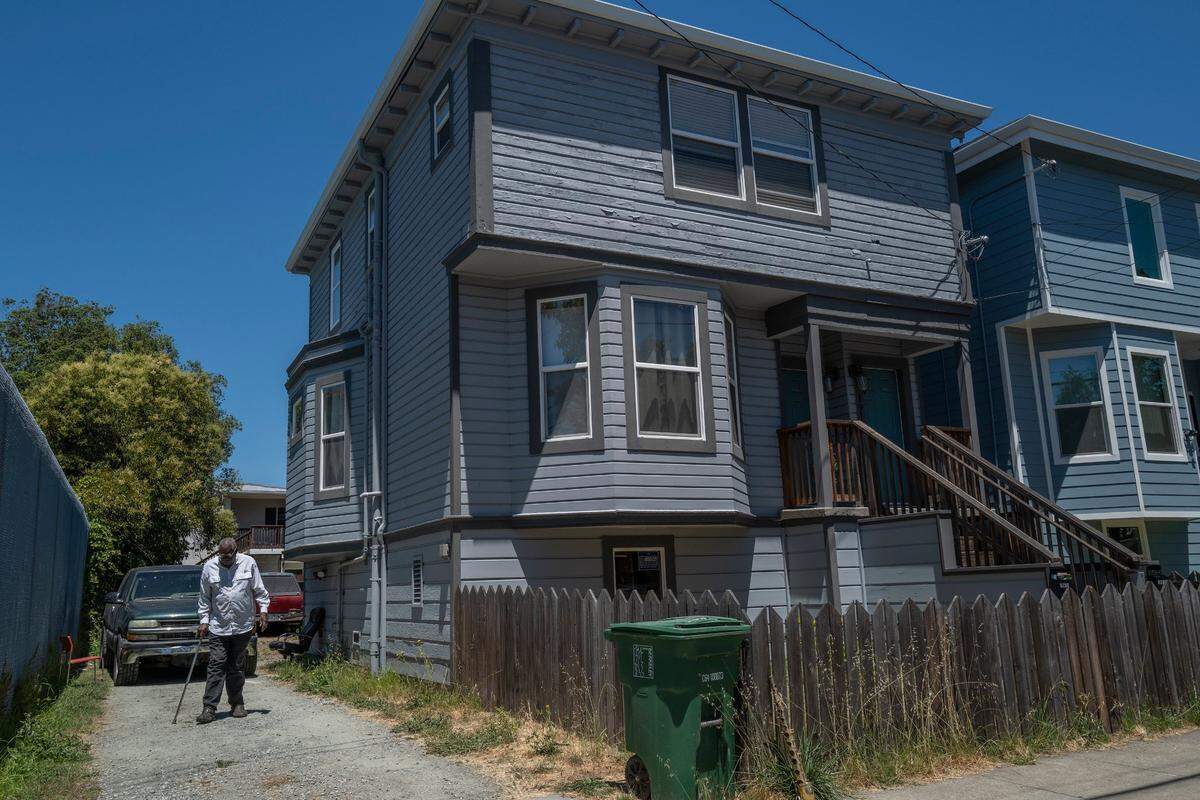
Leonard Powell lives in the Berkeley home where he raised six children and worked on a novel with his dying wife. But he barely recognizes the place.
Powell can see that his fireplace is gone, the Redwood wainscoting has been removed and new tiles cover the floor.
And he’s stuck with a $1 million bill for upgrades he didn’t want.
“I’m not denying the house needed work,” Powell said. “But it didn’t need all that.”
He lost control of his house after the city of Berkeley sued him for code violations and asked a judge to appoint a receiver to fix the problems. The company, the Bay Area Receivership Group, then made the decisions about what to renovate and how to do it.
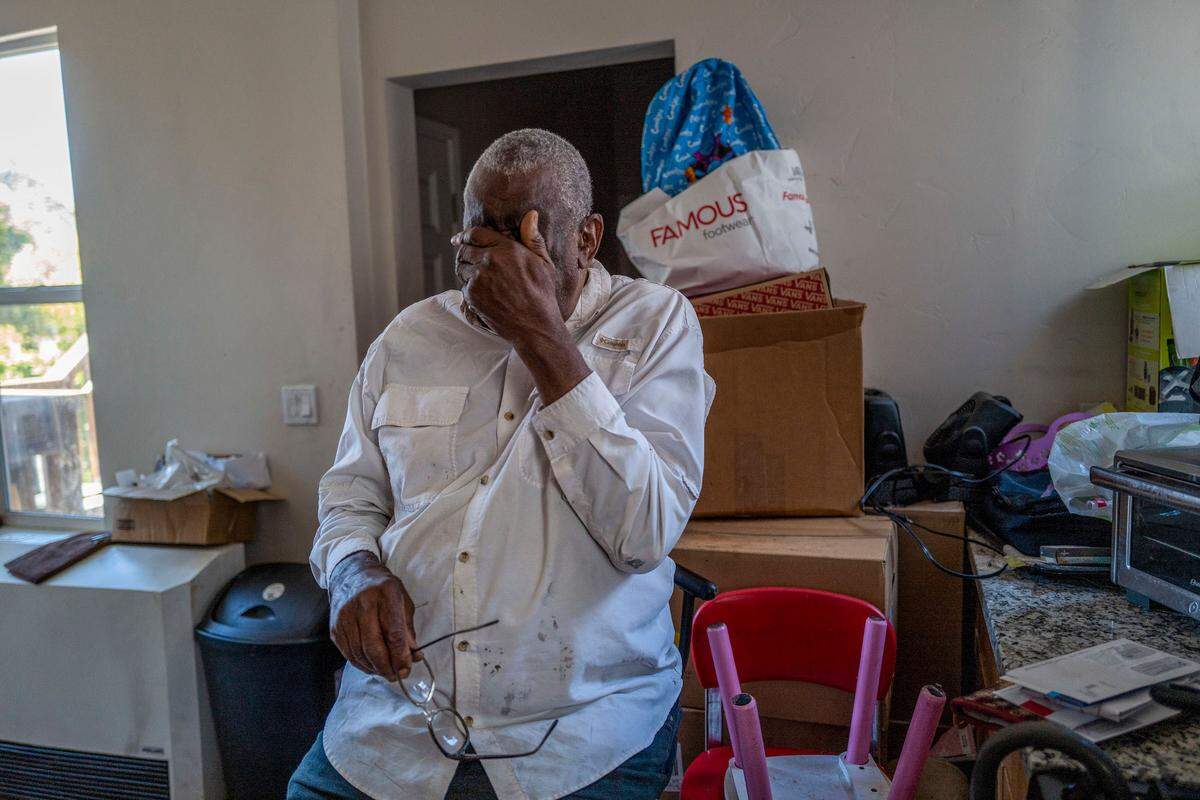
Powell isn’t only paying for home repairs.
Half of the money he owes comes from administrative and legal fees, which ballooned in part as he contested the receivership in court. That’s roughly $500,000 for charges like sending emails, answering phone calls and showing up to court.
The Bay Area Receivership Group operates around Northern California to repair blighted properties at the request of city governments, including Sacramento. The company is supposed to return homes to their owners after fixing the code violations, but its fees can grow so high that the homeowner cannot afford to pay them, according to people whose properties went into receivership. The situation can result in BARG selling the house to pay its own bill, and the homeowner receiving little to no profit.
The company is operating in a little-regulated field — and business is growing.
Records show BARG, a go-to for cities from Fresno to Santa Rosa, routinely charges fees that are not for actual work to fix code violations, but instead for administrative tasks, according to court records The Sacramento Bee reviewed. Those fees can be a normal part of doing business for a receiver, but records show BARG passes more administrative costs on to property owners than comparable companies.
“They bill, bill, bill and there’s no real thorough oversight,” said Stephen Schmid, an attorney for George Goulart, whom BARG in 2018 removed from the Petaluma house his father left him when he died.
The Bee identified 25 cases around Northern California in which the Bay Area Receivership Group took control of a home since 2017. Records in 13 of those cases showed detailed expenses that were passed on to homeowners. The final bill for administrative fees alone averaged $157,000 in those cases.
Two other firms operating in the same region, appointed from 2015 to 2020, charged far less — averages of $27,000 and $11,000. A third company, the California Receivership Group, charged an average of $76,000 in fees for the homes it took over.
To report this story, The Bee analyzed 114 cases across California from six different receivers. Of those, court records showed itemized final bills from cases handled by four different receivers — BARG’s Gerard F. Keena II, Dean Pucci, Dennis Lanni, and California Receivership Group’s Mark S. Adams.
All the cases used to calculate the findings involved single-family houses, duplexes, triplexes or fourplexes. For several cases, The Bee also reviewed hundreds of pages of monthly billing reports, which included itemized charges.
The Bay Area Receivership Group did not respond to requests for comment on The Bee’s findings.
Its leaders in previous news stories have said they’re out to turn a profit while resolving difficult code enforcement complaints that have festered for years.
“Obviously there’s a profit motive, but the people who love you most are the neighbors,” BARG receiver and president Gerard F. Keena II told the Press Democrat of Santa Rosa last year as construction on a condemned house there was ongoing ahead of a planned sale.
In another case, three neighbors of an Oakland house BARG boarded and sold in March said they were thankful the company cleaned up the property. They said it had become a haven for drug dealing and prostitution, as well as a junkyard of tires, propane tanks, forklifts and construction equipment — claims the homeowner denies. After BARG sold the house, the neighbors started planning a celebratory dinner.
“It was a nightmare for all the neighbors,” said one woman who declined to share her name due to fear of retaliation by the previous owner. “When it was sold, it was like ‘hallelujah.’”
In Powell’s case, the city identified multiple code violations, including broken windows, peeling paint, exposed wiring, lack of running water in a bathroom, and work done without city permits.
Records in Powell’s case show that for years, BARG went far beyond the work required to fix the city’s code violations, charging a half-million dollars in fees along the way.
For instance, BARG in March charged Powell $198 for one employee to spend an hour preparing a report detailing the previous month’s charges. In December it charged $102 for another employee, a project manager, to create a spreadsheet for outside attorney Nathaniel Marston. The attorney so far has billed $215,000 — charges that are passed on to Powell.
Powell’s home is in a neighborhood that for decades predominantly had Black homeowners like him. If he’s forced to sell the home and leave, he said it will mark another step in the neighborhood’s gentrification.
“When we moved here in 1974, there was only one Caucasian family on both sides of the street,” Powell said “Now there are only five Black families. … They put these receivers on me, and I didn’t know it was a trend of gentrification. I thought the city was trying to help me out.”
A ‘nuclear option’ for code enforcement
The receivership process is a “last resort” for cities working to address code enforcement problems.
It works like this: Cities, often responding to neighbors’ complaints, declare private properties a nuisance and sue the homeowner. City attorneys will ask a judge to place the house into receivership and recommend the name of a receiver to do so. When the judge agrees, control transfers to private companies that often have a great deal of discretion to decide how much work to do — and how much to charge for it.
It falls to judges, not to a specific state agency, to determine whether to approve the fees. Of the handful of cases for which The Bee reviewed each filing, no judge had rejected a fee.
While some receivers in the state would bill at a flat monthly amount, most, like BARG, allow their employees to charge hourly rates for all time spent on a case, even just a short email or phone call, said Richardson Griswold, a receiver based in San Diego.
“It’s become customary practice, at least in California, that receivers bill and incur charges in the same fashion as law firms do,” said Griswold, who has two active cases in North Sacramento. “Also it’s customary in health and safety receiverships that the judge at the outset of case will approve billing rates of the receiver and his or her team.”
Ryan Griffith, who works as in-house counsel for BARG, gave a presentation at a League of California Cities conference in May in which he taught city officials across the state how to use receivership to “resolve the issues presented with difficult nuisance properties.”
“I do call it the ‘nuclear option,’” Griffith said during a podcast interview earlier this year. “It’s the option of last resort … you really want to be careful because you know you can do it, but there’s obviously going to be some scrutiny over that.”
In one case, BARG charged enormous fees without doing any serious renovation work.
The company charged Linda and Bruce Siegrist of Sacramento three times more in fees than what it spent on doing work on the house.
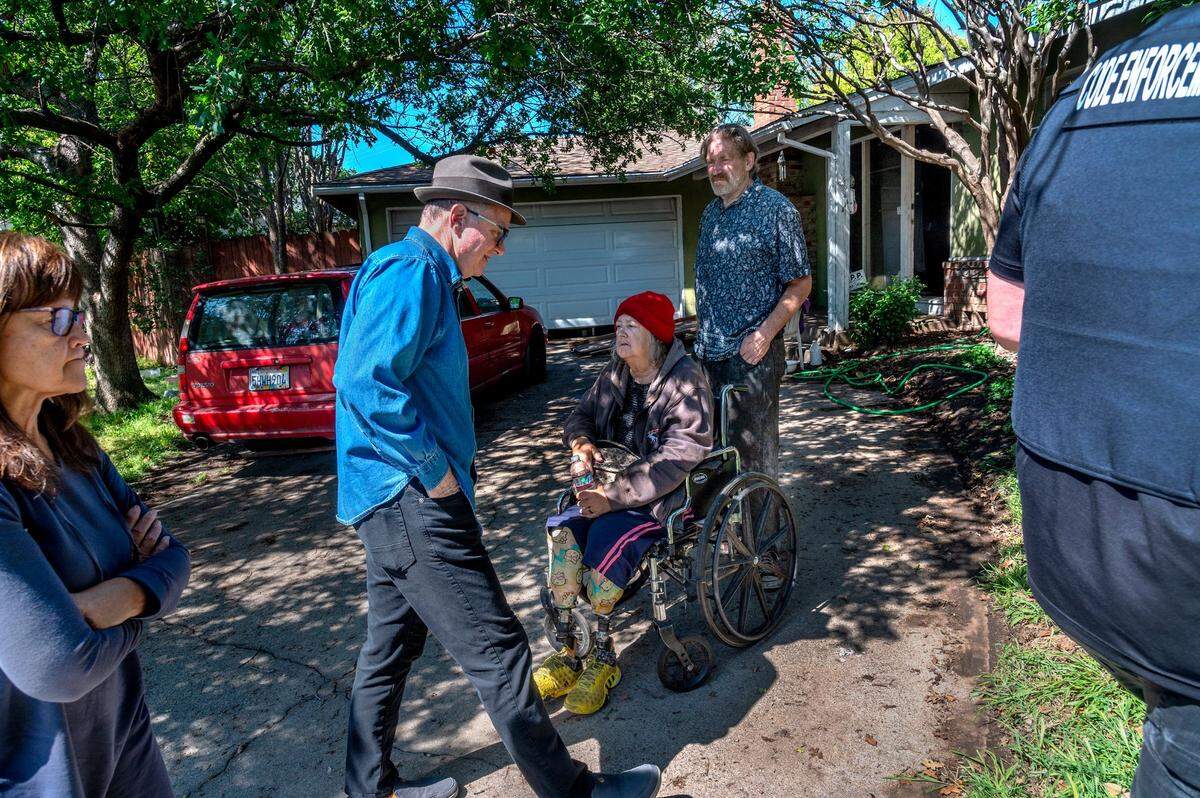
Linda Siegrist, a double amputee in a wheelchair, so far owes $189,000 to the company, including $142,000 in fees and expenses. Her North Sacramento house, which she grew up in, went into receivership in March 2021.
The company did not renovate her home, according to court documents and Siegrist. It threw away items from the front yard and inside the house, installed smoke detectors, trimmed several large trees and cut down some small trees, Siegrist said.
Most of the fees stem from phone calls, emails, “research,” and short drives that BARG employees made, according to her bills.
In late March, a Bee reporter observed BARG project manager Dan Collins drive from the firm’s Sacramento office to the Siegrists’ home to meet city animal control crews who were checking out the couple’s cats. For the 3-mile drive up Howe Avenue and back, Collins charged the Siegrists $200, according to a court document. The same day, he charged her an additional $250 to walk around the property with a code enforcement officer for less than an hour, and write notes.
On June 13, the firm charged the Siegrists $1,677 for one of the firm’s in-house attorneys to spend six hours drafting court documents. Siegrist hired a paralegal to fight the receivership in court, which has added to the amount BARG bills her, as the firm responds to the paralegal’s filings.
BARG in March also charged Siegrist $742 for employees to read articles about another Sacramento resident in receivership “for insight into media’s potential handling of any press regarding this case,” in addition to other tasks, according to a monthly report that BARG mailed Siegrist.
Wanda Clark of Sacramento blamed the company’s billing practices for driving her out of her Oak Park home.
The city in 2012 cited her for code violations stemming from unfinished construction from when Clark had hired a contractor to build an addition onto her house. The contractor left the project unfinished. The rotting structure posed a risk of collapse, which was a code violation, but Clark still lived in the original house. That part of the house did not have visible code enforcement issues.
The city sued her in 2021, and BARG took over the home through receivership, accumulating $107,000 in fees.
In June 2021, BARG field agent Dalton Hepworth charged Clark $742 to travel from his Bay Area office to Sacramento to inspect the house and drive back, court documents show. Collins charged her $200 each of the seven times he drove 11 miles from the Sacramento office to her house.
“Every time he comes to visit, that’s a cost to you” said Clark. “Everything he does is a cost to you.”
The city earlier this year used taxpayer money to pay BARG’s fees, relieving Clark of that debt. However, the company demolished her home, leaving Clark a vacant lot. She does not have the money to rebuild.
“All I ever wanted to do was keep my house,” said Clark, 72. She now sleeps on her sister’s couch.

Marketing a renovated home
According to state law, court-appointed receivers are supposed to fix code violations issued by cities. Typically, cities give the homeowner years to fix the violations, as neighbors complain frequently, before suing the homeowner and asking a judge to appoint a receiver.
A spokesman for the city of Sacramento called receiverships a “last option.”
“The city’s preference is not to use the receivership process with any property owner,” city spokesman Tim Swanson said in an email. “Ideally, health and safety violations would be addressed immediately by the property owner to alleviate any risk to residents and to the neighborhood. Receiverships are typically the last option to address a dangerous and substandard property where all other options to remedy health and safety violations have been exhausted.”
Code violations are typically visible from the street, and can include things such as overgrown grass, broken down cars and boarded-up windows, or even squatters or drug dealers living in an abandoned property.
State law says: “The receiver shall be discharged when the conditions cited in the notice of violation have been remedied ...”
But cities can choose to expand the scope. When they submit court paperwork to ask for a receiver, city attorneys in San Jose and Fresno have included language to make the property “decent, safe and sanitary.” San Francisco and Elk Grove write that the nuisance must be abated.
Sacramento and Garden Grove go a step further — “decent, safe, sanitary and marketable.”
Once a city asks a judge to appoint a receiver and the judge agrees, the receivers themselves also have the ability to expand the scope, sometimes doing their own inspections and going beyond the code violations.
While Powell and his family stayed in a hotel for about three months, BARG not only fixed the code violations, along with fixing the foundation and mold it had discovered, but did a top-to-bottom remodel — new appliances, new cabinets, new hardwood and tile flooring, a new toilet, and new shower.
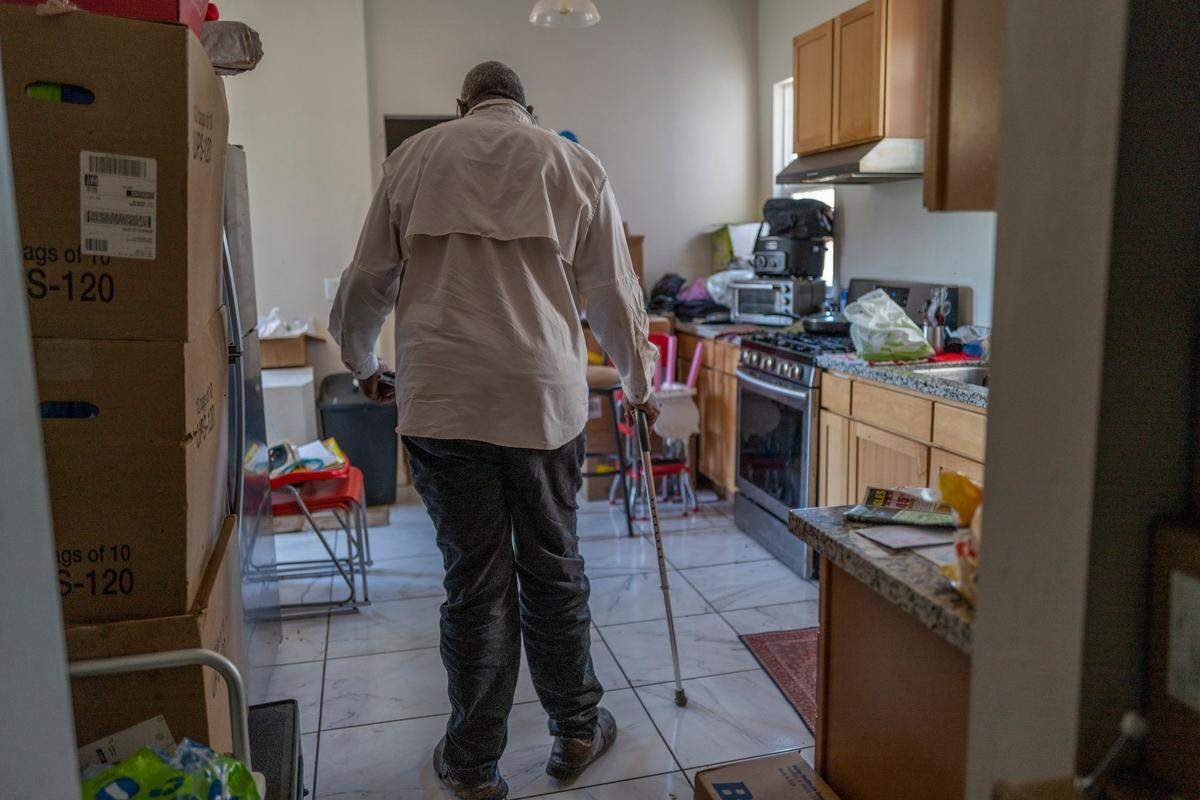
Powell, 80, is an Army veteran and needs a cane to walk. Last month, he sat on his stool with his cane by his side in his new kitchen.
“I feel like I’ve been taken advantage of because I didn’t know and had no one to advocate for me,” he said. “Nobody told me what my rights were.”
In Siegrist’s and Clark’s cases, BARG hired Pinnacle Construction, to renovate properties in receivership. Collins, BARG’s project manager, has an ownership interest in Pinnacle, according to court documents BARG filed. In 2019, BARG selected Sterling Realty Group to list an Elk Grove house for sale — another firm where Collins works as a broker.
The city’s violations for the Siegrist house were all outdoors — an inoperable vehicle in the driveway, junk and debris in the front yard, blocked exits, overgrown brush and cat feces. But when the court appointed BARG, the company submitted a plan for Pinnacle, the lowest bidder, to perform an $84,000 renovation — adding a wall, increasing the bathroom size, installing a new toilet and hanging vanity, replacing a water heater, and installing all new hardwood floors throughout the house.
Following a Bee story about Siegrist in January, BARG abandoned plans to renovate the house. The city cleared the code violations on April 11, but the Siegrists still owe the company for its fees and work, a bill they say they cannot afford without selling the house or another house they planned to pass on to their daughter and grandchildren.
“I don’t want to give them a cent,” Siegrist, 68, said. “They’re crooks.”

What’s next
Last week, the Berkeley City Council agreed to pay Powell a $95,000 settlement. He still owes over $1 million and counting to BARG.
The city of Sacramento does not plan to pay the Siegrists’ $189,000 BARG bill as it did for Clark, Swanson said, partly because the Siegrists have other assets, including a house in East Sacramento. That “makes her situation different from Clark’s,” Swanson said.
That house, near McKinley Park, is the one the couple was planning to gift to their daughter and grandchildren.
Cities and judges continue to appoint BARG to new cases. The firm was last appointed in March to homeowners in Vallejo and Fremont.
Swanson said the city would closely monitor the Siegrist case and another case BARG is handling in the city. He pointed out receivers have a so-called fiduciary duty.
“The city has issues with any receiver that violates its fiduciary duty,” said Swanson. “A receiver is a fiduciary who, as an officer and representative of the court, acts for the benefit of all persons interested in the property and that includes the property owner.”
Councilman Jay Schenirer, who represents the Oak Park street where Clark’s house was demolished, said if The Bee’s findings are accurate, the city auditor should perform an audit, and the city should stop using BARG.
“If that is all correct then absolutely it would be enough to ask our auditor to take a look at and see if we need to make changes,” said Schenirer, whose term expires in December.
When The Bee first reported on Siegrist in January, Councilman Sean Loloee, who represents her neighborhood, said he would bring an item to the council’s Law & Legislation Committee urgently to create a fund for seniors to pay for home repairs to avoid receivership. Nine months later, that has not happened. Loloee met with the Siegrists but then stopped calling them back, Siegrist said.
Through a spokeswoman, Loloee said he is now deferring to the city manager and city attorney on receivership-related matters.
Clark, Powell and Siegrist want Sacramento and other cities to sever ties with BARG. In addition, state lawmakers should amend the receivership law to add oversight and ensure companies cannot take advantage of homeowners, Powell said.
“If your goal is to not make anybody homeless and your goal is to help these people, then those are the kind of companies you should have,” Clark said. “Not someone who is looking out for their own interest.”

This story was originally published September 25, 2022 at 5:30 AM.