
Sacramento creates nighttime manager position to focus on downtown vibrancy, safety
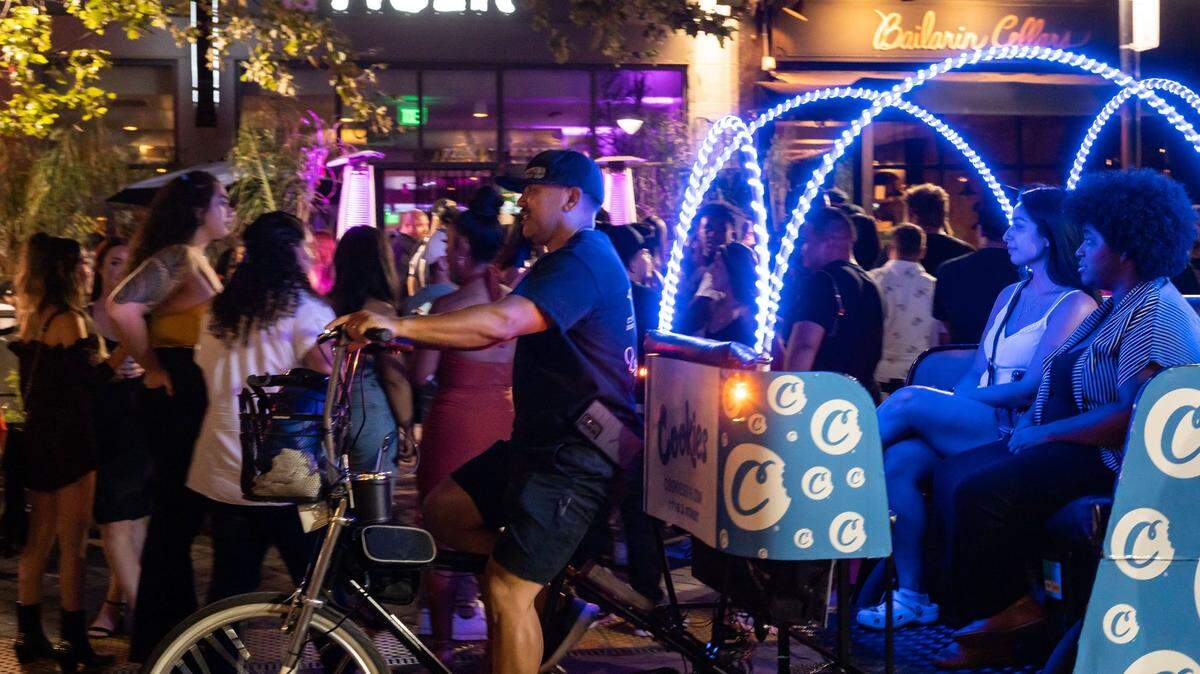
Borrowing from Europe, Sacramento has hired its first nighttime economy manager. But unlike Berlin and Amsterdam, manager Tina Lee-Vogt must deal with a particular concern while attempting to rebuild the city’s downtown entertainment district: .crime and gun violence.
Lee-Vogt’s appointment follows April’s mass shooting downtown that left six people dead. That mass shooting, along with other crime incidents and a booming unhoused population, have scared some visitors away.
Lee-Vogt will be “coordinator, collaborator, mediator, policymaker and the single point of contact for Sacramento’s nighttime economy,” city officials said at a Monday news conference. announcing her appointment.
The new nighttime economy manager told The Bee she will emphasize training for security guards at bars and nightclubs and improving security procedures at entertainment venues.
At the news conference, Sacramento Mayor Darrell Steinberg acknowledged the city has gone through tough times with downtown gun violence and crime. Additionally, he expressed concern that empty office buildings —the result of many state workers continuing to work from home — have also hurt both daytime and nighttime viability.
“What we’re really here to say to you today and to the public is that we do not have our head in the sand, ”Steinberg said. “Or dismiss the challenges that we face in our city and especially in our central city.”
The mayor spoke specifically about the events of April 3 and the fear it generated after six fatalities and 12 injuries in the mass 2 a.m. shooting in downtown Sacramento on K Street.
The incident unfolded after individuals from two rival gangs fired guns at each other, injuring innocent bystanders.
The mayor said those last few hours before bars close at 2 a.m. will need the special attention of the nighttime economy manager to develop crime-prevention strategies in conjunction with the police department.
“And so some of the focus is going to be on those early morning hours as well,” he said, “because that’s where we’ve had our biggest crime problems.”
Current police presence
The city issued a news release in connection with the news conference noting that police officers in the entertainment unit are now working until 3 a.m., focusing on hotspots in downtown and midtown.
The release also said and that the department has increased the amount of overtime for officers focusing on areas around entertainment venues.
Steinberg said part of Lee-Vogt’s job might be changing perceptions.
The mayor said people may ask if it’s safe to come downtown, but said the area is still lively on weekends. He said those who visit on a Friday or Saturday night know how vibrant Sacramento can be with full restaurants and theaters.
Steinberg said downtown remains the hub of the entire region and must flourish.
“It’s the center of our drive to build a more cosmopolitan economy,” he said, “around food, around the creative economy, around sport, around entertainment, around just hanging out and having a good time.”
Lee-Vogt said that ensuring the city has a vibrant nightlife will involve many issues beyond safety.
She said she wants to analyze the city’s noise ordinance relative to entertainment venues to see if it meets the needs of venues as well as nearby residents and streamline the approval process for new nighttime businesses that can now take months.
Studies, noise and the work ahead
Lee-Vogt is a long-time city employee who has experience in the night life arena. She had been in charge of issuing entertainment permits as well as heading the city’s efforts on protecting tenants rights.
The new job, she said, allows her to concentrate full-time on the night economy but her exact plan is still in the works, long on vision, but short on specific details.
The mayor suggested she make a report to the city in a month to reveal more specifics.
Lee-Vogt said an immediate priority will be an economic study analyzing just how much money is generated by the city’s nighttime economy. She said the city has issued 80 entertainment licenses, 60 in downtown and midtown, and she plans to talk to venue operators to see what the city can do better and expand revenue.
“Gathering information from stakeholders is going to be important so I can develop a strategic plan to determine the best approach to move forward,” she said.
Much of it may be tricky, such as working to encourage entertainment venues while dealing with residential tenants tired of nearby noise.
“How do we have harmonious living?” she asked. “So we don’t want businesses to close down, but we also want to make sure that folks, when they move in, can enjoy their living space. So it’s really trying to figure out what’s the best way to implement a program, so that we can address the issue of sound management so that it’s not an impact for the neighbors, but also realizing that if you move next to a club, you’ve moved next to a club.”
A European concept
Night mayors, as they are called in Europe, first developed around the early 2000’s.
The idea was to encourage vibrant 24-hour cities, and have a special manager, charged with helping simulate the creative economy, said Will Straw, a professor of Urban Media Studies at McGill University in Montreal.
Straw said successful night mayors/managers have been able to “cut through bureaucratic red tape” among city agencies and become “an advocate for a spectrum of restaurants, clubs and so on,” helping them with hours, operations and licensing.
He said the concept has been spreading across the U.S as cities attempt to rebuild and expand their nighttime economy, coming out of COVID-19 restrictions. He noticed that both Philadelphia and New Orleans have created night mayor/manager positions in the last several months.
But Straw said what’s unique about the U.S. version of the nighttime position is that there is also an emphasis on crime prevention, something that is usually not an issue in Europe. It also makes the position more complicated, he said, and more difficult to achieve results. .
Crime and people’s perception of whether they could become a victim visiting Sacramento’s downtown at night was a key undercurrent at Monday’s news conference..
Sacramento Police Chief Kathy Lester pledged at the news conference that her department would work with the nighttime economy manager and community organizations as part of partnerships to create safer streets.
In a separate interview with The Bee, Mayor Steinberg said, “We’re going to continue to take big steps to ensure people’s safety.”
He said what those steps will be is part of the plan the nighttime economy manager will develop.
“We want a robust nightlife, including until 2 a.m,” Steinberg said. “That’s part of what makes a vibrant central city. “
This story was originally published October 4, 2022 at 10:56 AM.