
A pellet gun, a troubled 19-year-old and a police shooting lead to anguish in Sacramento court
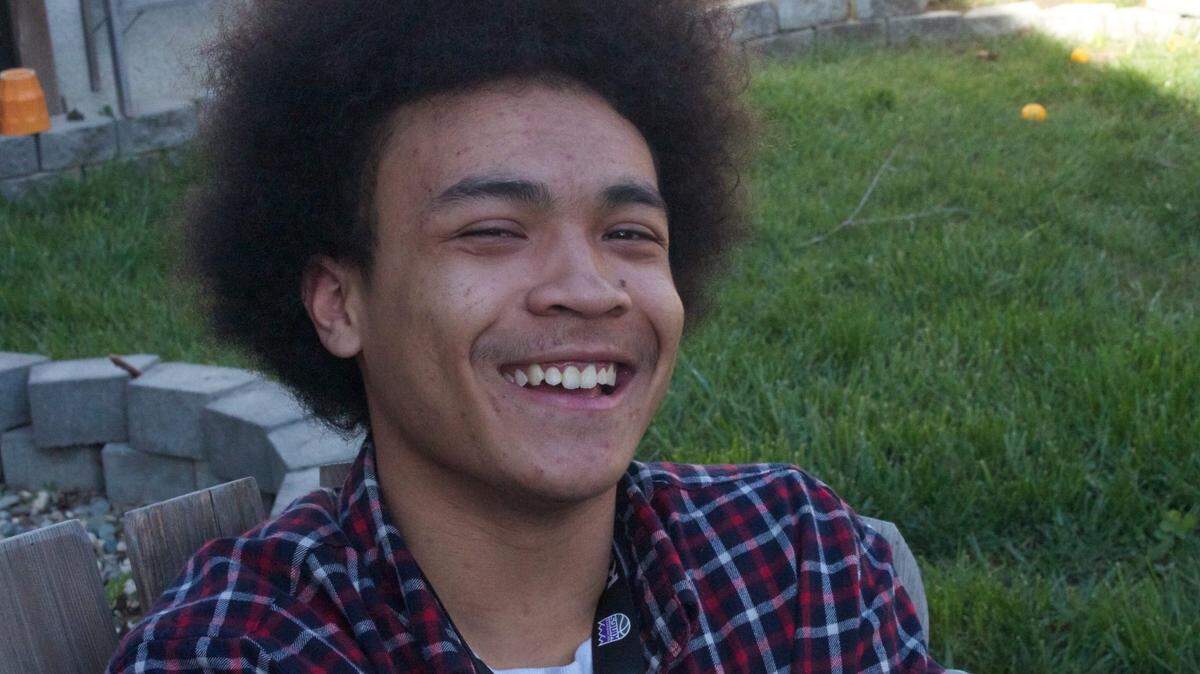
Darell Richards’ mother recalls that day in 2018 when two Sacramento police officers showed up at her door.
“It was 3 p.m.,” Khoua “Christine” Vang said Thursday as she took the witness stand in her lawsuit against the city. “Two officers, in not uniforms but regular clothes, came knocking on my door.
“They asked me, ‘Are you Mrs. Vang?’ They said, ‘May we come in?’ They had something to tell me.”
The officers’ message was that her 19-year-old son had been carrying a gun and was shot to death by two police officers, an incident that is the subject of a wrongful death lawsuit by Vang and Richards’ father, Ted Richards Jr., that is expected to go to a jury of four men and four women in Sacramento federal court on Monday.
Testimony in the trial began Oct. 13, and has elicited two very different versions of what happened in the backyard of a home at 2017 First Ave. around 3 a.m. on Sept. 6, 2018.
Attorneys for Richards’ parents contend police violated basic departmental policies and shot Richards — who was carrying a pellet gun, was suspected to be schizophrenic and may have been suicidal — as he raised his hands to surrender.
The city maintains Richards led police on a chase from near the Tower Cafe on Broadway to the backyard, where he was under a stairway and pointed the replica handgun — which was made to resemble a Sig Sauer firearm — at an officer, forcing two officers to make the split-second decision to open fire and kill him in self defense.
The suit originally named the city, former Chief Daniel Hahn, Lt. Sameer Sood and the two officers who shot Richards - Todd Edgerton and Patrick Cox.
Hahn, who appeared in court Wednesday only briefly for testimony, was dropped from the suit Thursday after the plaintiffs rested their case following testimony from their final witness, Richards’ father.
“I was very proud of him,” Richards said as he looked at a photo of his son in a necktie and recalled how he was debating whether to get a job or join the Army at the time he was killed.
But family members have testified that toward the end of his life something changed in Darell Richards, that he became paranoid, developed a “thousand-yard stare,” and began sleeping with his tennis shoes on.
“He was always saying nothing was wrong,” Ted Richards testified. “He was denying everything. He was putting up a wall.”
Darell Richards started having trouble with a 14-year-old brother, including two physical incidents that led his mother to seek a temporary restraining order against her son at the urging of Child Protective Services, she said.
He spent a brief time in the Sacramento County Jail, and his sister became convinced he may have schizophrenia, something she relayed to her mother, who Googled symptoms for the disorder and agreed that might be the case.
The family was trying to get him help, and Vang said she remained close to him despite the restraining order. The last time she saw him was the night before he was killed, she said.
“Me and my youngest son took him grocery shopping,” she said. “My son needed me. I thought he was on drugs, maybe crazy, but when I found out he was maybe sick with schizophrenia I needed to help him. He needed me.”
The night of Sept. 5, police got calls around 11:30 p.m. about a man wearing a medical mask — long before COVID-19 made such sights common — and pointing a gun at people near Broadway and 16th streets.
Patrol Officer Joe Tippets responded to the call and saw Richards carrying a gun, and Richards dropped the backpack and bag he had with him and took off running, Tippets said.
Tippets pursued him in his vehicle, but lost sight of him as he jumped over a fence at a home on 20th Street. Tippets continued down the street to try to set up a perimeter, he testified, but didn’t chase him over the fence.
“Not safe,” Tippets testified.
Soon, police had summoned SWAT officers, a K-9 team and a California Highway Patrol airplane and had cordoned off a one-block section of the neighborhood to keep the suspect from getting away.
By then, testimony shows, police would have had an idea of who they were looking for. A search of the backpack turned up a jail bracelet with his photo on it, an Aladdin Bail Bonds receipt, a high school diploma, resumes, Army recruitment brochures and hundreds of pages of papers and receipts.
Among those items was a receipt from Big 5 Sporting Goods for a Sig Sauer replica pellet gun purchased hours before, but testimony indicates no one told the officers who shot Richards about that.
They also found a document that has been alternately described as a possible suicide note or piece of homework.
The document, printed with the title “Catching up with loved ones,” gave the assignment to list five important people in an individual’s life and write what would be left unsaid if they or the individual died, testimony showed.
Sacramento District Attorney’s investigator Hanspeter Merten, who was a patrol sergeant working graveyard shift at the time, said he retrieved the bags after Richards dumped them and found the document.
“Mom. If I were to die I would let my mom know I’m in a better place and not to be too depressed,” Merten testified that it said.
“I think I referred to it as a writing about death,” Merten testified. “I don’t remember ever saying this was a suicide note.”
Merten added that at a briefing by Lt. Sood, the commander on scene who met with officers before a yard-to-yard search began for Richards, he never heard anyone discuss it as a suicide note.
Edgerton, one of the officers who fired the shots that killed Richards, testified that he thought it “appeared to be a goodbye note to the family” but that he did not consider it evidence that Richards was planning suicide. He also said no one showed him the pellet gun receipt.
Cox, the other officer who shot Richards, also said he had not seen the receipt for the $99.99 .177-caliber air pistol before the shooting.
Police tried using a K-9 team find Richards in the backyard, but the dog did not detect him.
By then, it was about 3 a.m., and Richards had been hiding for about three hours when officers entered the backyard, heard a noise and spotted Richards reclining under a stairwell near a clutter of barbecues and backyard items.
Offier Barry Tiner, who had a 1,000-lumen flashlight on the barrel of his rifle, spotted Richards and shouted “Show me your hands!” twice, according to testimony. Cox shouted, “Drop the gun.”
“He pointed the gun at me,” Tiner said.
Both Edgerton and Cox said they saw Richards point the gun at Tiner and they fired.
“Because he aimed a gun at us,” Edgerton said. “We gave him voice commands to drop the gun.”
The attorneys for the Richards family — Melissa Nold, Adante Pointer and Patrick Buelna — have maintained in court filings and questioning in court that police knew Richards had mental problems, might be suicidal and likely was carrying a pellet gun, but that officers failed to follow policies that could have de-escalated the situation.
They have questioned whether Richards was in fact raising his hands in surrender when he was shot, pointing to a bullet wound to his right palm.
Roger Clark, a 27-year veteran of the Los Angeles County Sheriff’s Department who was hired as an expert by the plaintiffs, testified that there were a number of failures by police during the incident, including the fact that Edgerton’s body-worn camera had been deactivated at the time of the shooting, something Edgerton said may have been caused by his rifle sling hitting the control button.
Tiner’s camera also did not record the shooting, and following the incident Sacramento police revised the placement of body-worn cameras to try to prevent them from accidentally being turned off.
Clark said the most notable failure came when police did not call in the crisis negotiation team and use the information about Richards they already had from his backpack.
He said police could have tried calling Richards’ cell phone or calling his family to try and talk him out, and that once they knew the likely identity of the suspect they could have tracked his background using a patrol car computer.
“It’s as fast as ordering a McDonald’s hamburger,” Clark said.
The fact that officers went into a dark backyard rather than wait for daylight or summon a helicopter with a spotlight also was a failure, he said.
“There has to be an absolutely necessity for (going into a backyard at night) because it’s so dangerous,” Clark said, adding that “I totally disagree with going in in the dark.”
Clark also said Sacramento police policies require that a negotiating team be called in such incidents.
“There’s no leeway,” he said.
The city disputes that claim, with police saying a negotiation team can’t be brought into a situation if the whereabouts of the suspect are unknown, and Deputy City Attorney Matthew Day, who is representing Sacramento along with Deputy City Attorney Sean Richmond, went after Clark’s background during cross examination.
Day noted that Clark has been retired since 1993, had never been on a SWAT team and had applied to be a captain three times with LASD but was never selected.
“So, you’ve been consulting longer than you’ve been a police officer, right?” Day asked.
He added that 98 percent of Clark’s business comes from representing plaintiffs against police, and had Clark recount a 1970 case that he said was Clark’s only personal use of force involving firing at a suspect.
In that case, Clark said he was in plainclothes and was chasing a suspect on foot for failure to appear on a heroin charge. Clark said he rounded a corner and saw the suspect pointing a gun at him, pull the trigger and have the pistol misfire.
As the suspect tried to unjam the handgun, Clark said he warned him to drop the firearm.
“I knew he was trying to kill me,” Clark said. “I said, ‘Drop it, drop it.’ He said, ‘F--- you,’ and I shot him.”
Testimony in the trial before U.S. District Judge John A. Mendez is expected to conclude Monday, with closing arguments to follow before the jury gets the case.
Whatever the jury decides, Vang testified that she wants other families spared the pain she has endured, anguish that has driven her from the courtroom several times in tears in recent days as photos of her son flash on computer screens or witnesses recall his fondness for barbecuing or watching Dallas cowboys football games with his father.
On Thursday, as she concluded her second day of testimony, Nold asked Vang why she had sued the city after the death of her eldest son.
“For truth and accountability,” she said. “So no other family will be sitting in this courtroom going through what I’m going through.”
This story was originally published October 21, 2022 at 6:30 AM.