
What is ‘dry heat’? Here are the reasons behind Sacramento’s scorching summers
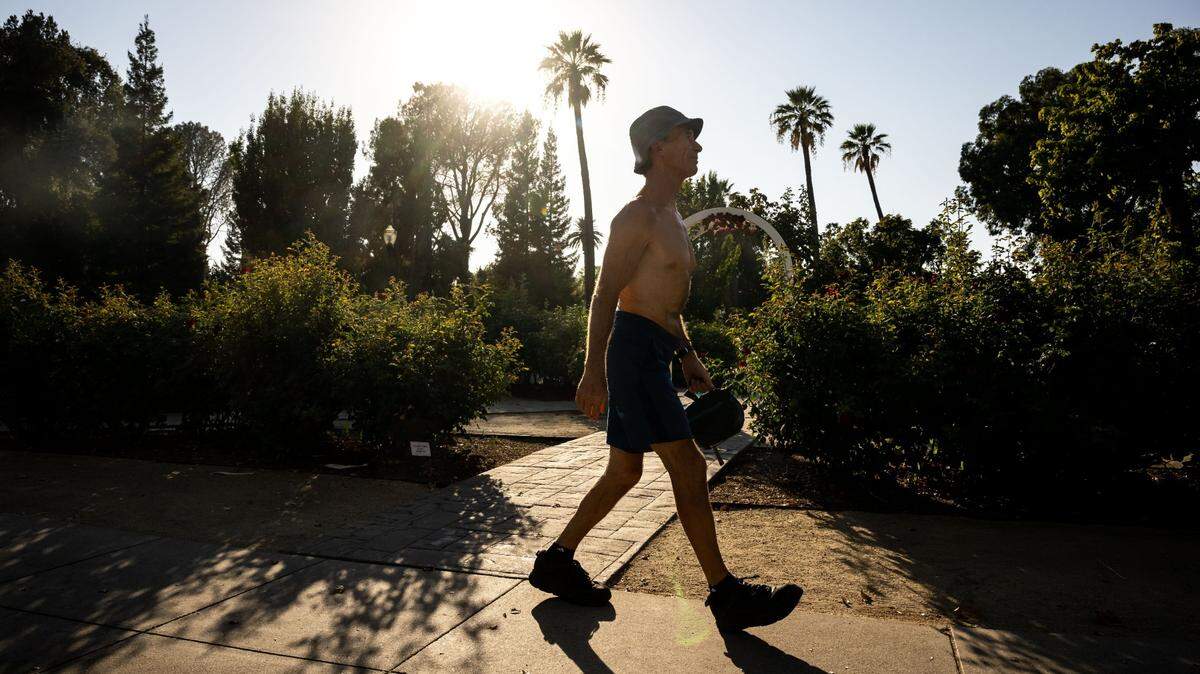
Stepping outside on a Sacramento summer day can feel like you’re opening the oven door, as a blast of fervent hot air smothers you and broils your skin.
It’s a fury the inland city seems to be known for — the airless, dry heat.
The Bee spoke to an atmospheric scientist who broke down the science behind the popular caveat for the scorching sun: “But it’s a dry heat.”
What does it mean to have a dry heat?
Is Sacramento heat actually dry this summer?
Early summer weather predictions hinted toward a potential for more humidity, following the downpours in the winter and spring.
However, Faloona said he can’t see how the winter rains from six months ago could have any bearing on humidity currently.
“In principle, yes, if your soil is wet, then there’ll be more evaporation and it will be more humid,” he said. “... But that’s not really what happens because we don’t get rain for months on end here in California and so all the soil moisture in the Central Valley is really driven by irrigation.”
Faloona said that humidity is standard this summer.
“In my experience, it’s been a drier heat, which is kind of normal because we don’t get a big influence usually of that monsoon circulation,” Faloona said.
The North American monsoon is a seasonal occurrence when the summer heat causes high pressure over the U.S. Southwest and brings moist, southerly winds from the Pacific Ocean and Gulf of California, according to a NOAA blog. Northwestern Mexico, Arizona and New Mexico regions are typically effected, seeing more precipitation at this time.
In the summertime, Faloona said dewpoint in Sacramento typically ranges around 50 to 55 degrees, but this can change depending on the strength of the monsoonal flow.
Forecasts for dewpoint temperatures in the Sacramento area for the remainder of July range in the 50s. The highest temperature expected is Thursday with 61 degrees at 2 p.m. According to NWS, this dewpoint temperature is considered sticky and muggy.
Why does Sacramento have dry heat?
Sacramento’s not the only California city with dry heat.
Faloona said, for the most part, cities such as San Jose and Los Angeles also have it, too. But since they are closer to the ocean, they get a cold sea breeze so it’s relatively cool. The wind from the ocean typically blows west to east, he said, and as you go inland it’ll get hotter and drier.
With the cooler wind, Faloona added that the dew points don’t usually get above 50 to 55 degrees, which stays within NWS’ “dry and comfortable” general comfort levels.
On the East Coast the ocean water from the Gulf Stream is warmer and its water vapors will make a more humid environment.
Looking at Raleigh in North Carolina, for example, dew point temperature forecasts for the week range in the 70s.
Sacramento’s Delta breeze
Sacramento’s heat isn’t so relentless as it feels, thanks to its famous Delta breeze.
The Delta breeze is a sea breeze that comes from the Bay Area through the Carquinez Straits and into the Sacramento region.
A pressure difference in the warm air inland and the cool sea breeze reels the Delta breeze into the area, Faloona said.
“Usually when temperatures approach 100 degrees — between 90 and 100 degrees — in the late afternoon, that’s enough to kick in the Delta breeze,” Bill Patzert, a climatologist who retired from NASA’s Jet Propulsion Laboratory in Pasadena, previously told The Bee. “The irony is that the hotter it is, the stronger the breeze.”
With the breeze, temperatures are able to cool down three to six degrees, Patzert said.
This story was originally published July 27, 2023 at 5:30 AM.