
What is the Delta breeze and why do Sacramentans love it so much? Bee Curious answers
As a villainous summer heat bakes the capital city, an invisible, cooling savior trails close behind.
Better known as the Delta breeze, this “local hero” glides in, a brisk blanket caressing sweat-studded skin in a dry heat.
But what exactly is this breeze Sacramentans love to rave about?
“Nature’s air conditioner,” one Sacramento resident called it. “A slice of heaven,” another said.
It’s more than that, even, embedded in the culture of scorching Sacramento summers. A reader asked Bee Curious, a community-driven series in which our journalists answer questions about the Sacramento region, to detail this hero’s cause, range and seasonality.
What is the Delta breeze?
The Delta breeze is a cold, moist sea breeze, experts said, that comes to parts of Sacramento from the San Francisco Bay Area.
Air currents from the Bay and North Bay-Napa area drift through the Carquinez Strait, said Ian Faloona, an atmospheric scientist and professor at the University of California, Davis. Then, they come inland, feeding both the Sacramento and the San Joaquin valleys.
It’s a localized effect caused by the difference in land and ocean temperatures nearly 100 miles away.
“During the day, the land surface heats up faster than the water surface. Therefore, the air above the land is warmer than the air above the ocean,” according to the U.S. National Oceanic and Atmospheric Administration website.
Warm air is lighter than cool air, and will rise above the land as a result, the NOAA said. The colder marine air will then flow over the land, replacing the warm air that rose.
“Sacramento heats up everyday,” said Bill Patzert, a climatologist who retired from NASA’s Jet Propulsion Laboratory in Pasadena after nearly 35 years. Patzert, who lives in Sierra Madre in Los Angeles County, is also known as the “Prophet of California climate” for his expertise in oceanography, weather and climate patterns.
What creates the breeze
1. Hot air rises in the Valley.
2. Cool air from the ocean rushes in to fill its place through the Carquinez Strait.

Map: NATHANIEL LEVINE | Sources: Bill Patzert, NASA Jet Propulsion Laboratory; California Dept. of Water Resources
“And just at the hottest part of the day, all of a sudden, you’ll get this natural air conditioning that really originates in the San Francisco Bay,” he said.
It doesn’t only feel like a rush of air, though. “It just feels like a cool release,” said Dave Dawson, a resident of Natomas.
Faloona emphasized that what people experience as the “Delta breeze” is the rapid decline in temperatures.
“It’s more abrupt and probably more noticeable to people because the day was hotter and the evening’s just as cold as it normally is,” he said.
“It’s Sacramento’s meteorological blessing,” Patzert said.
When will the Delta breeze ‘kick in’?
The Delta breeze typically blows into Sacramento in the afternoon and early evening in the warmer seasons, according to climate and weather experts.
This includes late spring to early fall, said Hannah Chandler-Cooley, a meteorologist with the National Weather Service in Sacramento. She added that the cool gusts have coasted through Sacramento as early as April.
“Usually when temperatures approach 100 degrees — between 90 and 100 degrees — in the late afternoon, that’s enough to kick in the Delta breeze,” Patzert said. “The irony is that the hotter it is, the stronger the breeze.”
Once the breeze comes in, temperatures can cool down three to six degrees, Patzert said.
According to past forecasts, the Delta breeze can bring gusts up to double digits in certain areas. Chandler-Cooley said weaker breezes can be around 20 to 25 miles per hour, whereas stronger winds have gusts up to about 35 miles per hour.
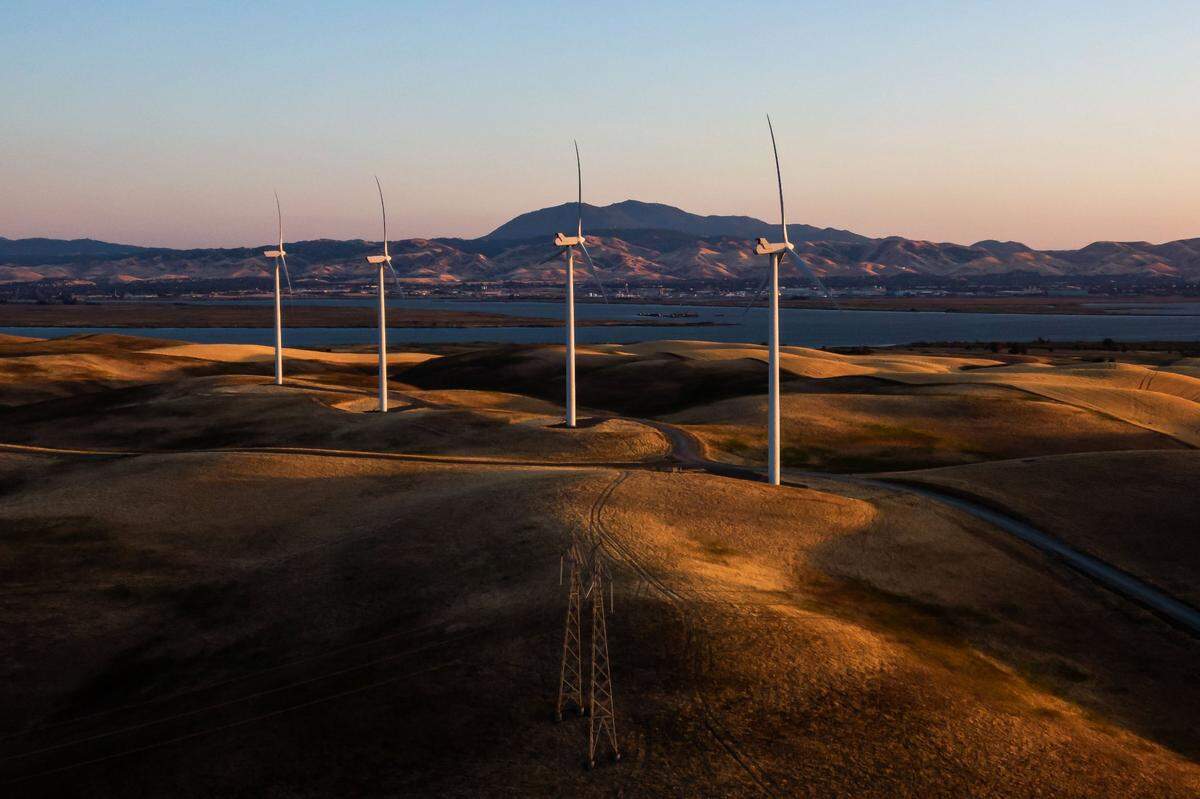
How far does the Delta breeze reach?
You might not feel the Delta breeze’s cool embrace, depending on your proximity to the river delta.
“It’s often strongest right around the Travis area in Solano County and often strongest there in western Solano County,” Chandler-Cooley said, “and it’ll spread east to northeast into western Sacramento and also south into almost the Lodi-Stockton area.”
As you go farther north, south or inland, the breeze will die down.
“What happens is, in the daytime, this cool, moister air that’s flowing in is also getting heated up because it’s in contact with the Earth, and the Earth is really hot,” Faloona said. Since Sacramento is closer to the Bay Area, the breeze is able to preserve its coolness when it arrives in the city.
Summer lows in the Central Valley

Map: NATHANIEL LEVINE | Source: National Weather Service
“But as it continues onto Chico and Redding, and Fresno and Bakersfield, it just keeps getting hotter and hotter,” Faloona said. “You lose the signature at some point once you’ve crossed enough scorching Central Valley land.”
Often, you can see exactly where the breeze is by looking at the drops in temperature in the Sacramento area compared to warmer temperatures farther into the valley, Chandler-Cooley said.
Because the breeze comes from a reaction between hot air and cold air, it also depends on the temperatures inland.
“Sometimes, it doesn’t reach Sacramento, if it’s not hot enough,” Patzert said. But usually in the summertime, it will get to most of the Sacramento urban area, close to the river, he said.
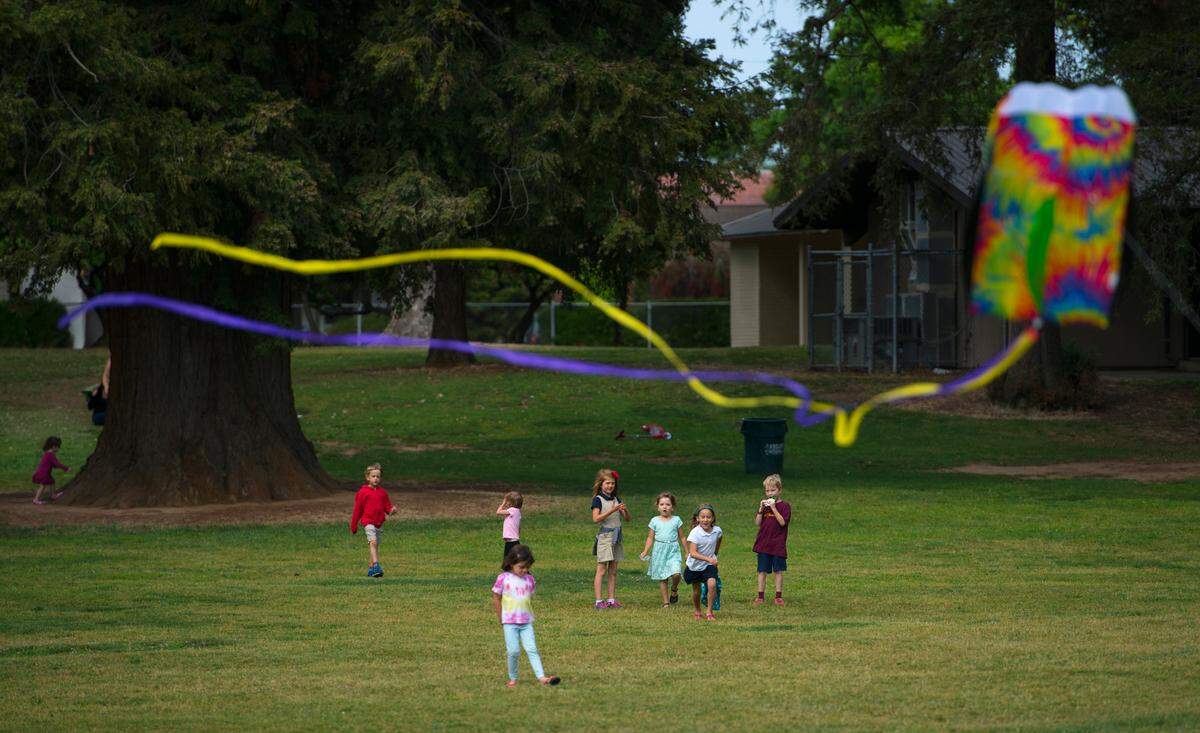
Will the Delta breeze survive climate change?
Climate change is already steering the world towards hotter temperatures — with the Earth heating about two degrees in the last century. Heat waves also are growing more intense and sea levels are rising quickly, according to NASA.
A climate change assessment for the Sacramento Valley region from 2018 projects that the area will likely see daily maximum temperatures rise by the end of the 21st century, and will confront more frequent and hotter waves.
But this won’t weaken or stop the Delta breeze from blowing into Sacramento, experts said.
The ocean has a much higher heat capacity, Faloona said, so its temperatures will warm much slower than land surface temperatures.
And because the Delta breeze, as a sea breeze, is generated from the difference in the hot temperature on land and colder marine temperatures, it will still come into the valley — even with global warming, for now.
“Heat waves in Sacramento stimulate the Delta breeze,” Patzert said. “The Delta breeze is not going to disappear anytime soon.”
Patzert added that the cool, moist air from the Delta can also slow down some aspects of global warming, most notably, wildfires.
Extreme heat and dry conditions can put the Sacramento Valley and parts of the Bay Area under the threat of fires. But unlike the average wind, the Delta breeze dampens the increase in temperatures and lessens the risk of wildfires in areas within its proximity, Patzert said.
.JPG "SAC_HA_101121_WindFlag2 (1).JPG")
What happens to the Delta when sea levels rise?
According to the climate change report, the increase in global temperatures will lead to ice melting and ocean water expanding, also known as thermal expansion, ultimately causing heightened sea levels.
Researchers anticipate the sea level in the San Francisco Bay Area will rise between 2.5 and 4 feet by the end of the century.
“Areas around the Sacramento-San Joaquin Delta will have more flood potential,” researchers said in the report. “Higher sea level will also push salty ocean waters into the fresher waters of the Sacramento-San Joaquin Delta.”
The Delta is the “heart of California’s water system,” as it provides water to two-thirds of the state, including Southern California, Silicon Valley and Santa Barbara, according to the California Department of Water Resources.
With rising sea levels, the saltwater intrusion would make the Delta waters too saline, rendering it no longer useful, Patzert said.
Despite the detrimental effect to the water supply, the Delta breeze could remain. If salt water enters the Delta, Patzert said he thinks it will make the temperatures cooler and reinforce the breeze.
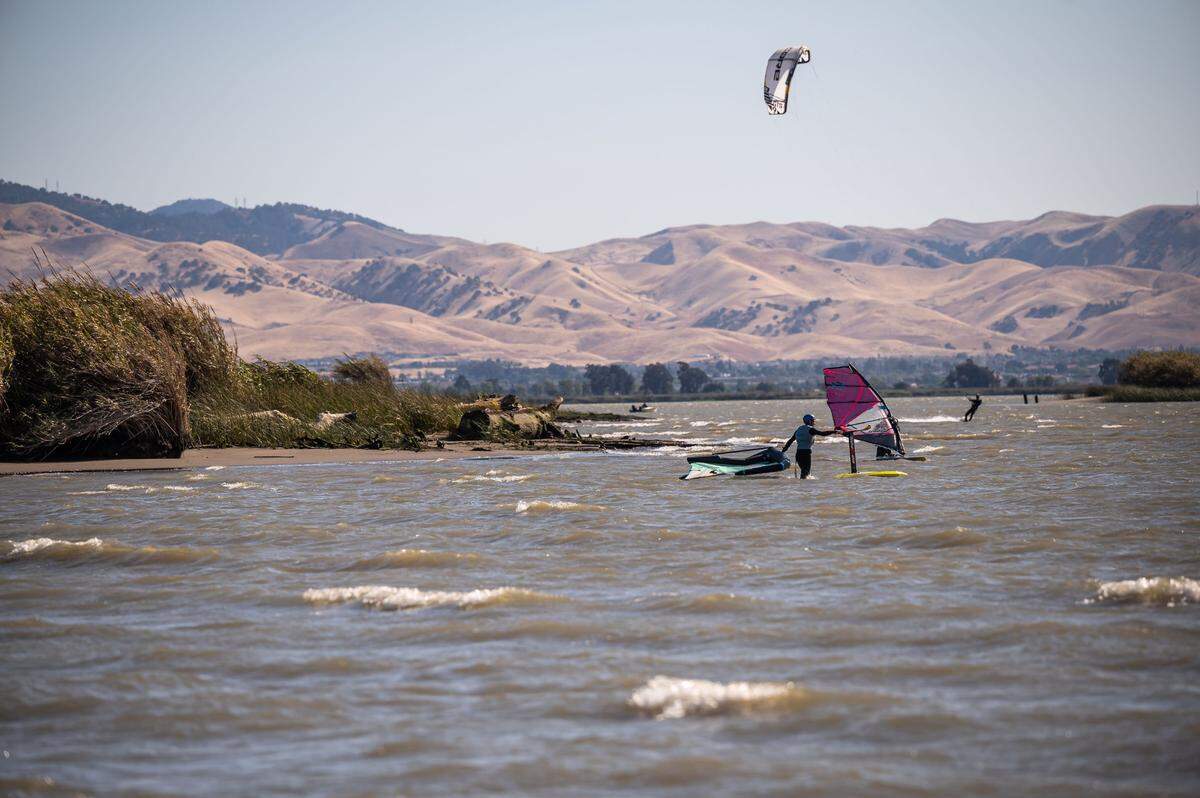
Can you feel the breeze?
Wherever the Delta breeze may blow, Sacramentans continue to sing its praises.
“It’s sort of ubiquitous,” said Amanda Snow from Natomas. “Everyone talks about it all the time.”
In response to a Facebook post on a Sacramento community page, residents called it “nature’s air conditioner,” “a slice of heaven,” “the only thing that saves us in the summer.”
“The Delta breeze is your local hero,” said Patzert.
A recent transplant to the capital city, Natomas resident Dave Dawson, raved about the breeze as “another thing to love about California.” Dawson moved from Indianapolis to Sacramento in 2020 and left behind the freezing, hot and humid climate of the Midwest. But while the heat is inescapable in Sacramento, Dawson said the Delta breeze makes even the hottest days pleasant.
For some residents, the breeze is more than just a breeze. Snow has lived in Sacramento for about six years. While recently working on a two-month project, building benches and a pergola in her backyard, Snow was sweating under the sun. Suddenly, the breeze drifted in — so smoothly that she didn’t notice at first.
She said she took a moment to embrace the breeze — how it felt on her skin, how it fluttered through her long hair, how it dried off her sweat and how it felt to breathe in the cool air.
“I think one thing people forget to appreciate about the breeze is the way it moves things and the way it sounds,” Snow said.
When the Delta breeze enters the city, Snow can watch the silver and dark green leaves of her pineapple guava tree shimmer, as it vibrates and wriggles back and forth with the wind. When it brushes past her clumping bamboos, she can listen to the soft, papery, crispy crinkles camouflaging the sounds of the city.
Have a question of your own? Email beecurious@sacbee.com.
This story was originally published May 27, 2022 at 5:00 AM.