Sacramento towed Camp Resolution residents’ trailers. Now they’re about to lose their tents
Chastity May did not have the perfect situation while she waited for housing, but she was making it work.
A two-year resident of Camp Resolution in North Sacramento, she and her three dogs lived in a trailer at the city-owned lot with an SUV for transportation to the store and medical appointments.
Medical providers came to the camp regularly to treat May for bipolar disorder and PTSD. She had a generator for cooking and AC, volunteers regularly dropped off food and water, and she knew all her neighbors.
Before dozens of city employees and contractors cleared the lot Monday, they offered May a shelter bed, an option that would allow her to skip to the front of the line of 2,700 other people waiting. But May wouldn’t have been able to bring two of her beloved dogs, Gracie and King, so she declined.
“First, (code enforcement) told me they were gonna tag (my trailer) and we had some time to get it out,” May, 50, said Wednesday outside her tent, describing events that occurred inside the gates, an area police blocked the media from. “Then, the police came in and told me they override code enforcement and they’re going to destroy the trailer right now and that I better get what I can and hurry up because I’m trespassing and they can arrest me.”
May set up a small tent near the now-vacant lot, on a patch of dirt near the bike trail, her dogs giving her frequent kisses.
On Wednesday morning, city park rangers stuck a bright green sticker on her tent, ordering her to move again — immediately. Rangers did not suggest a location where she could go.
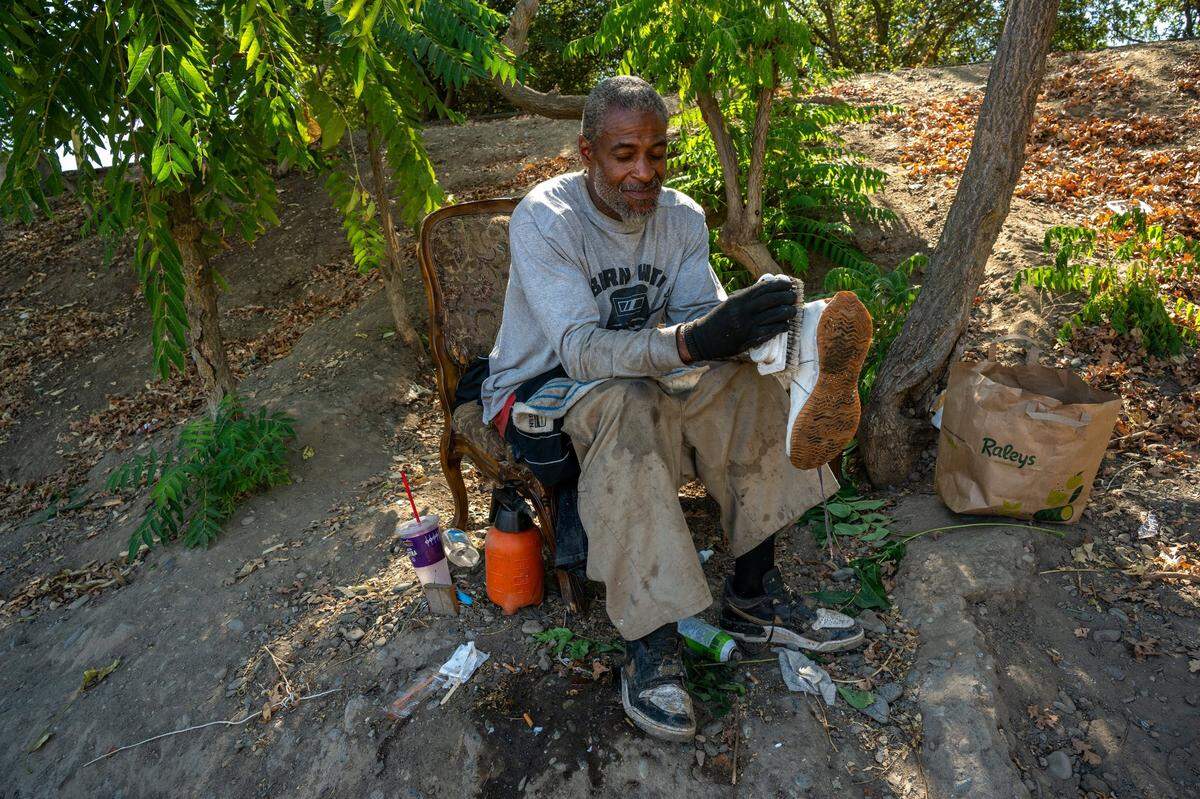
Paris Brazil, 47, sat on a wooden chair near May’s tent cleaning off a pair of white sneakers with a scrub brush. He lost many belongings when the city towed his trailer and pickup truck from Camp Resolution Monday, he said, including the only photos he had of his deceased mother.
“It’s inhumane,” said Brazil, who suffers from severe back pain. “They only gave me four minutes to grab things. I lost clothing, dog food. I tried to grab my shoes, but they’re mismatched.”
The city of Sacramento and nonprofit Hope Cooperative did not offer Brazil a shelter bed because they determined his pitbull Django was aggressive — an assessment Brazil disagrees with.
“He’s trained, I’ve had him since he was a puppy,” Brazil said.
Django once saved Brazil’s wife when a man was assaulting her, taking a bullet in the process, he said.
It’s unlikely the city will open a shelter with more relaxed pet rules in the near future.
“The city is not considering opening a shelter that allows more than one per person,” said Jennifer Singer, a city spokeswoman.
City rangers stuck notices on Brazil’s tent as well as May’s. In the space to write the date they have to move by, the rangers wrote, “now.”
Before the U.S. Supreme Court in June issued the Grants Pass decision, Sacramento officers would typically write 48 hours on the notices as the deadline. Now, they often write “now” or “immediately.” That’s contrary to what Gov. Gavin Newsom suggested in July, when he issued an executive order for cities to clear camps from state property. The bike trail near the site, at Colfax Street and Arden Way, is city property.

More than 9,000 vehicles towed
Brazil and May’s vehicles were four of the 47 the city towed from inside Camp Resolution Monday, Singer said.
In the last two years, the city has towed more than 9,000 vehicles, according to a Sacramento Bee analysis using city data, as well as information the Bee obtained from a California Public Records Act request. The city cites a section of the state vehicle code that states a vehicle cannot be parked in the same place for more than 72 hours and has to be registered. While not all of the 9,000 vehicles belonged to homeless people, the majority did.

For many homeless people, getting a vehicle back after the city tows them can be a challenge. They often don’t have the vehicles registered or can’t afford the hundreds of dollars tow companies charge to get the vehicle out.
Trailers provide several important survival features that tents don’t, such as a door with a lock to deter sexual assaults and other crimes and some protection from heat and cold. They’re also easier to attach a generator, which can provide electricity for medical devices, air conditioning and heat, and cooking.
For those reasons, in December 2021 Mayor Darrell Steinberg proposed the council bar the city from towing homeless vehicles unless a shelter bed is available. It failed 5-4, but has not come back for a re-vote even though the council has had four new members since then.
Sixteen of the trailers the city towed from Camp Resolution earlier this week are city property, originally sent from the state during COVID, which the city sent to the camp.
The city is assessing the state of those trailers, and may not reuse them, said city spokesman Tim Swanson. They’re currently sitting in a city parking lot in Natomas, where they sat for over two years before the city sent them to Camp Resolution.
The city has not yet decided what to do with the now-empty lot, Singer said.
The end of a saga
Monday’s closure marked the end of a long saga. The city calls Camp Resolution a failed experiment while activists and one councilwoman say the low-cost model could be replicated across the city.
Camp Resolution came to be after The Bee reported the city had paid $617,0000 to pave and fence a city lot for a homeless shelter that never opened even though it was in a 2021 siting plan. A handful of homeless women broke in and started camping on the lot. Instead of clearing them off the property, as the city had in the past, the city got on board. It signed a lease with Safe Ground Sacramento, a nonprofit run by civil rights attorney Mark Merin.
Unlike other shelters, which cost several million dollars a year to run, the site did not cost the city anything. Due to vapor contamination, a state agency allowed people to live at the site in trailers, but not in tents on the ground. The type of contamination that’s present is not harmful to people in vehicles because they’re raised off the ground, the California State Water Resources Control Board has said.

Things went smoothly for over a year. But in an April letter, the city said there were people sleeping in tents and that the camp would close in May. The city then backed off on that plan after residents begged the City Council for more time, and people stopped camping on the dirt. On May 15, the homeless union sued the city, seeking a judge order barring the city from closing the camp until all residents obtained permanent housing, which Sacramento Superior Judge Jill H. Talley denied.
Meanwhile, in July, Merin, the lease holder, sent a notice to the city of plans for lease termination, which was effective Monday.
Merin has said that although the lease is ending, it would be up to the city whether to clear the residents off the site. The city posted notices at the site earlier this month stating the residents were in violation of a state law against trespassing.
Meanwhile, the siting plan that birthed Camp Resolution contains several other city-owned vacant lots nearby — including one at the corner of Eleanor and Traction avenues, one mile away. That site does not have any issues with contamination, said Blair Robertson, spokesman for the State Water Resources Control Board.
Councilwoman Katie Valenzuela has said she wants more Safe Grounds to open, but it’s unclear if the council will vote to do so. There are items on the homeless crisis on the open session agenda of Tuesday’s council meeting.
This story was originally published August 29, 2024 at 3:29 PM.
CORRECTION: This story has been updated to correctly identify which city spokesperson said the city may not reuse the trailers.