
B.L. Kennedy dead at 70: The provocative poet helped pioneer Sacramento’s poetry scene
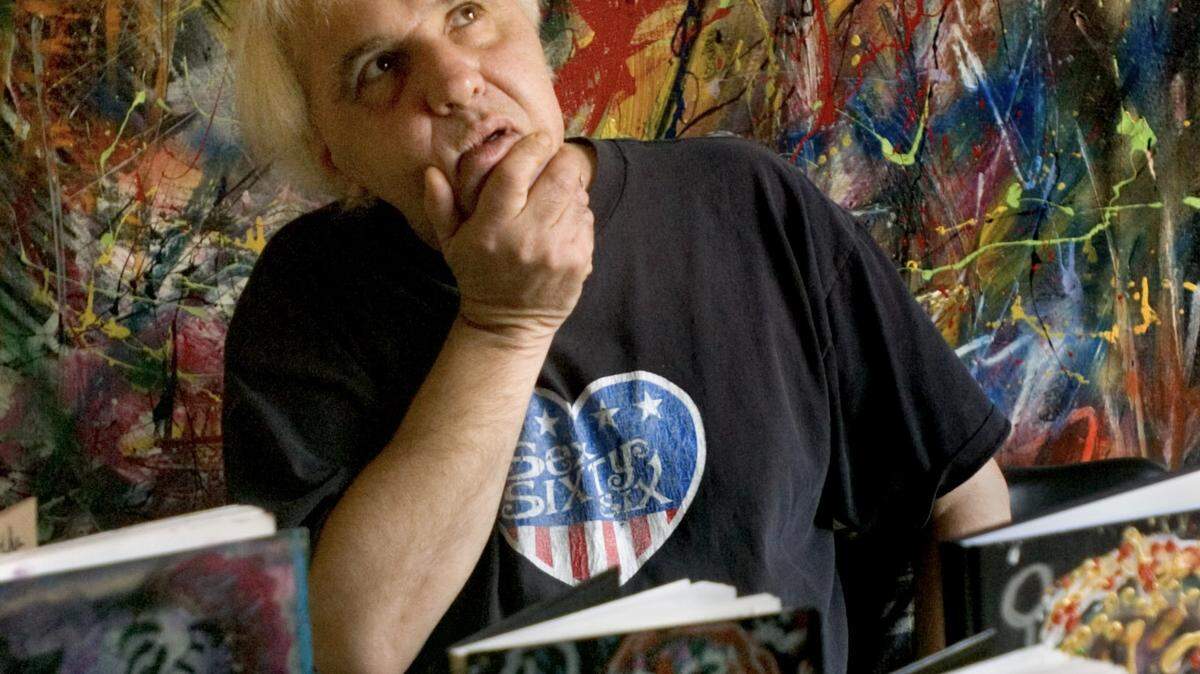
B.L. Kennedy shared some advice once with a poet he mentored: “If they get it, they get it. If they don’t, don’t worry about it.”
Kennedy, a longtime Sacramento poet, died Oct. 21 at age 70 at Sutter Roseville Medical Center, of undisclosed causes following an extended period of poor health.
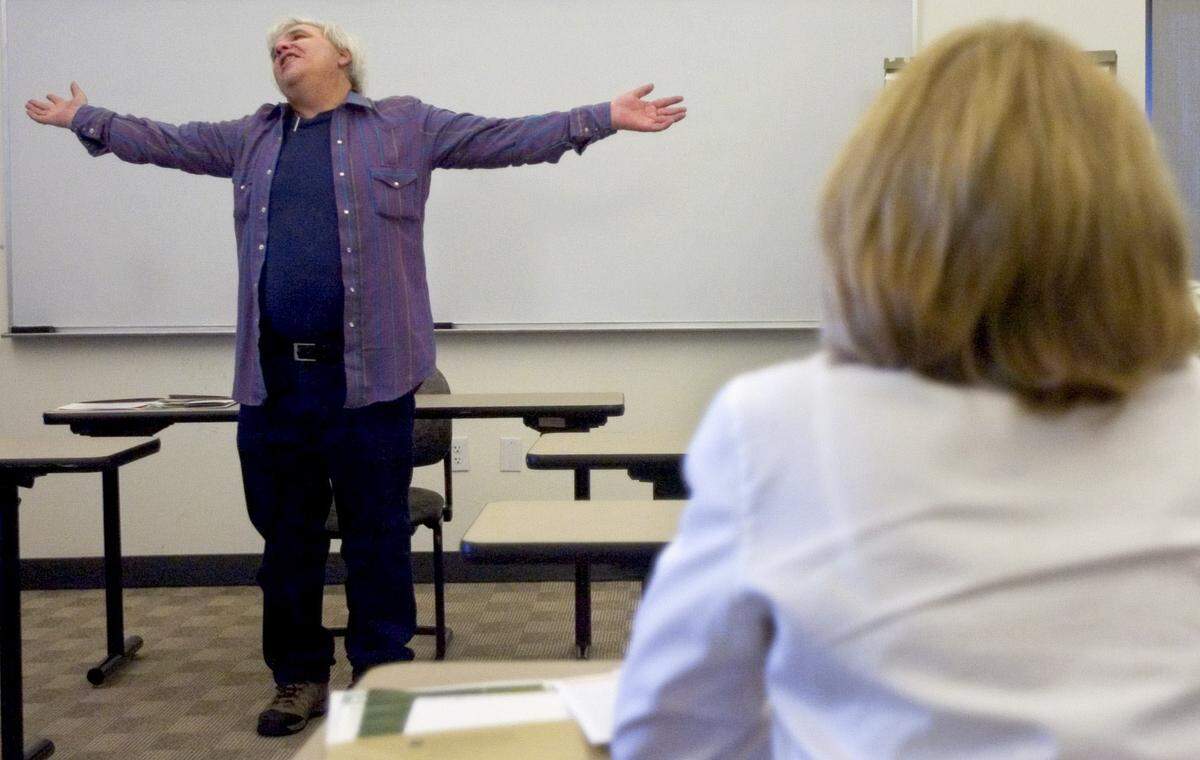
The Bronx-born Kennedy was unabashedly polarizing as a poet and performer, known to speak powerfully from the stage but also able to clear a room with his profanity. Kennedy didn’t let the pushback his behavior could draw or poor physical health that plagued him much of his life stop him from accomplishing much as a local poet – or helping others coming up.
“I noticed he was really outrageous on stage,” said Bill Carr, a teacher and poet Kennedy mentored in the 1990s. “And before, I would be very shy about delivering my own style. But he kind of convinced me, like, go and do whatever you do.”
A lengthy 2006 feature by Jonathan Kiefer in Sacramento News & Review told of Kennedy’s early years, how he was born around, though not definitively on, Oct. 31, 1953, to parents who neglected to get him a birth certificate. He went by Bari Lewis Kennedy with friends for much of his life and B.L. Kennedy as a poet. His first name at birth was Barry, according to friends Charlene Ungstad and Linda Borla.
Kennedy moved to Sacramento in 1976 to attend community college. He later earned two degrees from Sacramento State before decamping to Colorado for a time to study poetry with instructors like Allen Ginsberg at the Naropa Institute.
“His raw sort of approach to poetry comes from his connection with the Beat poets,” said Rhony Bhopla, a friend and mentee. “He knew a lot of them.”
Sacramento and midtown more specifically remained Kennedy’s base of operations for much of his life, with him telling Kiefer, “As an outsider, I have more pride in my city than some people who’ve lived here all their lives.”
Kennedy made a mark on the city by encouraging then-Mayor Anne Rudin to declare Oct. 26, 1986 as Sacramento Poetry Day in perpetuity.
“That’s all really due to Bari’s vision,” longtime friend and Sacramento Poetry Center president Patrick Grizzell said in a phone interview on Oct. 25.
Grizzell explained that Kennedy had had the idea prior to this to create an anthology of local poetry. Grizzell brought the idea to the board of the Sacramento Poetry Center, which was initially apprehensive about working with Kennedy. Still, with Grizzell’s championing, the board signed off on the anthology, which became “Landing Signals,” published by the center in 1985.
“Bari was a wild card, we’re not going to sugar coat the guy,” Grizzell told the crowd during an event for this year’s Sacramento Poetry Day on Oct. 26, five days after Kennedy’s death, at the Crocker Art Museum. “But he was brilliant and driven and if you wanted to do a thing, he did that thing.”
Kennedy also organized a series of poetry marathons around the mid-1980s that ran as long as a week straight at a Java City coffee house in the central city. Borla, an English professor at Cypress College and longtime friend of Kennedy’s said he’d been trying to get into the Guinness Book of World Records.
“They did set a record,” Borla said. “It’s just that Guinness, for some reason, didn’t do poetry marathon records, so they would revive that every few years.”
In the mid-2000s, Kennedy worked with his former partner Linda Thorell to produce the documentary, “I Began to Speak” about Sacramento’s poetry history.
Borla said Kennedy could mesmerize a room as a poet.
“We have a lot of fine poets in Sacramento, but Bari — they talk about movie stars this way, that they’re just people who have a little something extra,” Borla said. “He had it.”
That didn’t always mean an abundance of opportunities for Kennedy, though. Kiefer wrote in 2006 that Kennedy’s reputation might have kept him from becoming poet laureate of Sacramento.
Art Luna, who owned Luna’s Cafe and Juice Bar in midtown for more than 40 years before selling the business last year, said Kennedy was an excellent host of poetry readings, though he also told hosts at one point not to feature Kennedy.
“He had a side of his personality that… I don’t know if it was disdain for the audience or what but he – I mean, just he was so crude,” Luna said.
Kennedy could empty a room in five minutes with obscenities, Luna said. There was a sexual side to Kennedy’s work, too, with Borla saying that he wrote a series of poems about his genitalia.
Some people could tolerate Kennedy’s off-color moments, but not everyone. Luna said Kennedy did a line drawing on the inside door of the men’s bathroom at his cafe of a naked woman. While Luna didn’t find the drawing vulgar and let it remain for many years, he said a woman he employed eventually saw it, became upset and defaced it.
Some of Kennedy’s behavior might have been tied to demons he battled, including heavy drinking, smoking and, according to Borla, cardiac issues that dated to having rheumatic fever in childhood. Kennedy cut back his vices after having quadruple bypass surgery at 34, which rendered him disabled the rest of his life, Borla said. Friends like Grizzell, though, still had to sometimes admonish Kennedy about his drinking or smoking.
“My life was more boringly tumultuous than Bari’s was,” said Ungstad, who dated Kennedy for a time in the 1980s, forged a close long-term friendship thereafter and was with him when he died. “His was interestingly tumultuous. He was always doing interesting things and he had a lot of interesting friends and he just – he just wanted people to be creative.”
Kennedy wasn’t close with family who remained on the East Coast, according to Borla and Ungstad. He was single at the end of his life, with one prior marriage and no children.
But there was another side to Kennedy. Borla said Kennedy invested much time in encouraging people or mentoring them and was known for his generosity. “Hardly anybody ever visited Bari’s house who didn’t leave without a gift of a book or two and three or four,” Borla said.
Bhopla was sitting in the front row at the Sacramento Poetry Day event on Oct. 26 at Crocker Art Museum and enthusiastically raised her hand when Grizzell asked if anyone was familiar with Kennedy.
Following the event, Bhopla said she’d become “instant friends” with Kennedy over their shared love of poetry after they met at Luna’s Cafe in the mid-1990s. He mentored her, with Bhopla saying Kennedy was always a gentleman. She said they were both erotic poets and collaborated creatively.
Bhopla parsed between Kennedy’s personas in public, where he could be brash and in private, where friends knew him to be more introspective and soft-spoken.
“B.L. Kennedy was different from Bari,” Bhopla said.
No memorial service has been planned as of this writing.