Stanislaus County dairy, poultry farms struggle with bird flu. But production continues
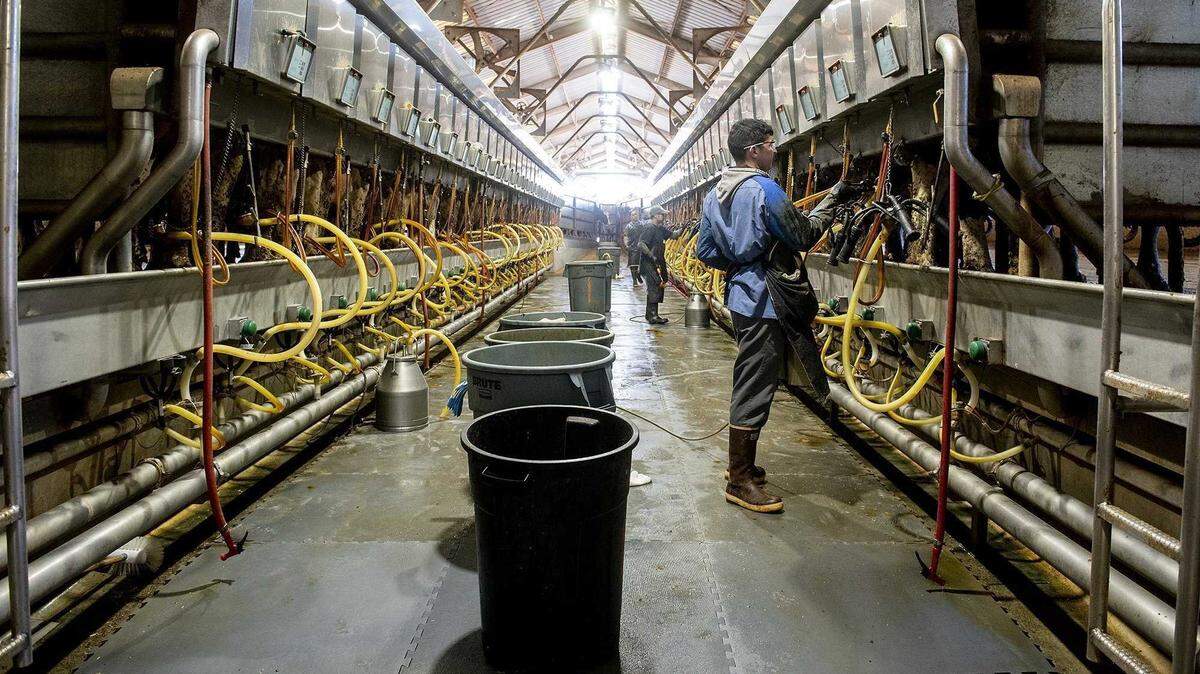
The bird flu is spreading on hundreds of dairy farms this season in the Central Valley.
More than 100 dairies are under quarantine in Stanislaus County because of cows infected with the H5N1 virus, which in rare cases is transmitted to people. Stanislaus County health officials on Monday reported a single case of bird flu in a county resident who had contact with infected dairy cattle.
In response to this strain of avian flu, the state has established quarantines at 680 infected dairy farms in California, most of them in the Central Valley. In all but one of the 37 human cases in the state, the person was exposed to dairy cattle. State and county health agencies are not seeing the illness spread person-to-person.
Avian flu is more known for threatening devastation to commercial poultry. In Stanislaus County, eight poultry farms have been stricken by destructive outbreaks of bird flu since the virus was first detected here in mid-November, said Linda Pinfold, agricultural commissioner for the county.
When birds at a poultry farm test positive, it’s a death sentence for the entire flock, Pinfold said, meaning the flock is destroyed humanely and the poultry barns are thoroughly cleaned and disinfected.
The H5N1 virus is carried by wild birds, causing outbreaks in dozens of animal species in the United States since 2022. “We have migratory birds that come into the county every year,” Pinfold said. “When they came in last year, we saw a spike (of bird flu) in the wintertime.”
The virus is usually not lethal for cows. Under state protocols, sick dairy cows are isolated and given care, bringing 98% of them back to health. While the COVID-19 virus was known for binding with receptors in the human nose, experts say the H5N1 virus seems to attach to receptors in cow udders.
Infected cows produce less milk and shed the virus into what they produce. Pinfold said pasteurization eliminates the virus and bacteria in the milk, so it’s safe to drink.
“It’s safe to drink pasteurized milk, but people run a high risk if they drink raw milk,” Pinfold warned. Bird flu prompted a Dec. 14 state recall of raw milk from the Valley Milk Simply Bottled dairy farm near Modesto.
State officials suspect the virus has been spread among dairies in California by contaminated equipment, employees or service providers moving from farm to farm and cattle trailers that weren’t disinfected.
If animals test positive for bird flu at a dairy, cows that appear sick are separated and the California Department of Food and Agriculture assists the dairy with biosecurity measures to keep the virus from spreading to other dairy herds and poultry farms.
What being under quarantine means for a dairy
When a dairy is under quarantine, the operation does not grind to a halt. But dairy cattle may not be moved onto or from the farm. In addition, the state requires enhanced biosecurity practices such as posting signs in English and Spanish, dip baths for disinfecting boots, hand-washing, isolation of sick animals and use of personal protective gear by workers.
A quarantine is lifted if the dairy’s creamery samples are negative over a 21-day period. Dairies released from quarantine are tested weekly.
“(The bird flu) has been a challenge for our dairy industry, but they have been responding to it very fast. They are doing their best working through it and providing good pasteurized milk for people to drink,” Pinfold said.
Milk and poultry were the county’s second- and third-leading farm commodities in 2023, with a combined value of $1.16 billion. The county has a wide variety of poultry farms, including turkeys, chicken raised for meat, egg layers and ducks.
Virus detected in poultry flocks large and small
In previous weeks, the state has reported several large bird flu outbreaks among commercial egg-layer flocks, including one of 721,000 birds in Stanislaus and three flocks in Merced County totaling 2.8 million birds.
Poultry farms have strict measures for keeping the highly infectious H5N1 and other pathogens away from their vulnerable flocks. The bird flu virus spreads through direct or indirect contact with infected wild or domestic birds, but the fast-spreading germ also can get into poultry houses on the hands, shoes, clothes or feet of workers. Another source may be the fur of rodents or other small animals that were exposed to infected birds or cattle.
The state has for weeks restricted movements among poultry farms in Stanislaus, Merced, San Joaquin, Fresno, Sacramento and Tulare counties.
On Dec. 24, the USDA reported an infected commercial egg farm with 627,800 birds in San Joaquin County. Large poultry farms have not been the only focus of bird flu outbreaks. On Dec. 9, the CDFA detected the virus in a backyard flock in Stanislaus County.
Consumers paying more for eggs
According to a USDA report, bird flu outbreaks and fires were responsible for the death of 36.8 million egg-laying birds in a dozen states including California in 2024. Almost 40% of those losses have occurred since Nov. 1, at a time when demand for eggs is highest.
Egg prices have risen appreciably, and some grocery stores have begun to struggle with a choppier supply chain. The USDA projected that large-volume buyers like supermarkets would see egg prices hit $3.95 a dozen in the fourth quarter of this year, up from $1.82 a year ago.
“It really is abnormal,” said Daniel Sumner, professor of agricultural economics at UC Davis. “It really is high. But it’s a consequence of this disease.”
This story was originally published December 27, 2024 at 2:55 PM with the headline "Stanislaus County dairy, poultry farms struggle with bird flu. But production continues."