
Where are the bees? California farmers combat rise in hive theft, threatening almond crop
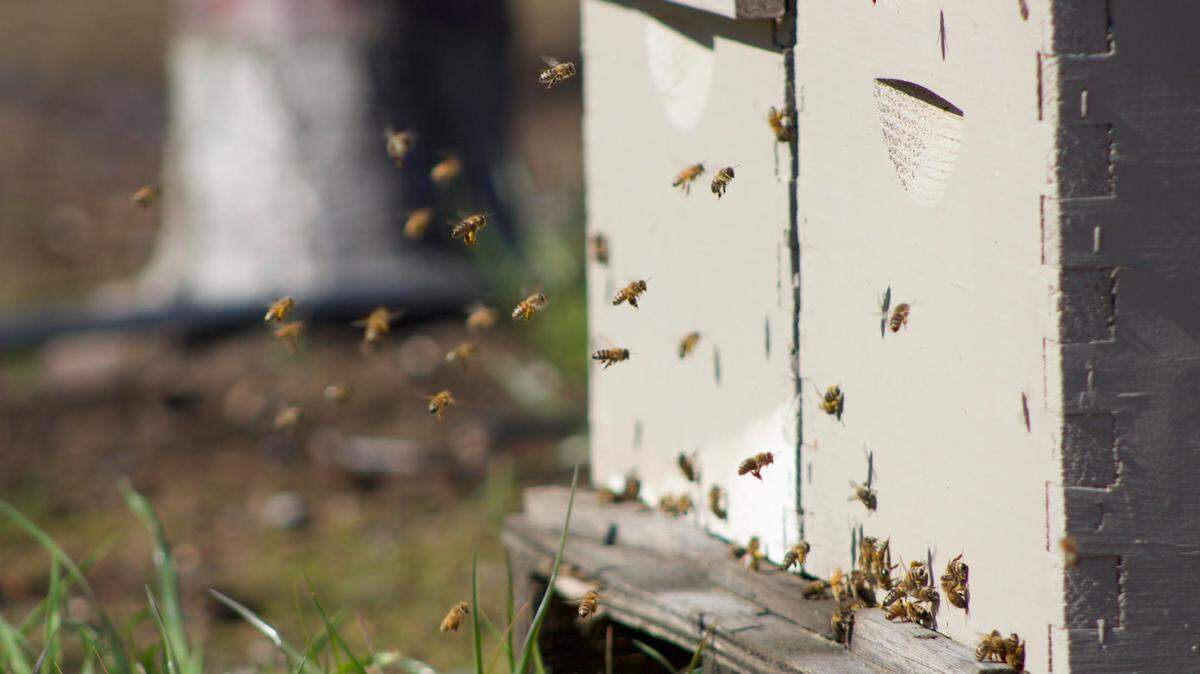
A nationwide shortage of honeybees has coincided with a rise in beehive thefts as growers throughout the Central Valley prepare for almond bloom, a pivotal time for the health of the nut, which is one of California’s most lucrative crops.
Beehive thefts in California have reached record highs in recent years, building on what’s nearly a decade-long trend, leaving beekeepers collectively short thousands of hives and millions of dollars.
Now the uptick in stolen bees has met a rise in dying bees, leaving what the state beekeepers association has described as a shortage of bees necessary to fuel one of California’s largest agricultural industries.
“We are anticipating there will not be sufficient hives for the 2025 almond pollination season,” said Ryan Burris, California State Beekeepers Association president, in a news release. “On top of this issue, hive theft reports are coming in daily.”
Get the Yuba-Sutter Weekly newsletter in your inbox
Available now: Sign up here to receive news and other happenings reported from Sutter County, with stories that matter to readers north of Sacramento. Email tips to jgoodrick@sacbee.com.
The cause of the unusual volume of bee deaths is unclear and may stem from a combination of factors ranging from pests, pesticides, viruses, housing conditions, climate and more.
“It’s not exactly clear if one thing is more responsible than the others or if finally all of these things together are having a massive effect on honeybees,” said Rowdy Jay Freeman, a hive theft investigator and beekeeper.
Surging beehive thefts
Freeman, a Butte County deputy, has become a de facto expert in the nexus between beekeeping and apiarian crime.
No statewide tracking of beehive theft existed, he said, when he took his first investigation into one such incident in 2013. He began keeping those stats on his own, creating a log that shows hive thefts reaching all-time highs each of the past two years.
“Hive theft investigations are so difficult and convoluted,” Freeman said. “They aren’t like any other kind of theft investigation.”
Beehive thefts spiked nearly a decade ago, with more than 2,700 hives stolen between 2016 and 2017, according to Freeman’s count.
But after two men were arrested — one who was convicted and one who died — in relation to a string of thefts during those years, the number of reports fell and stabilized between 300 to 640 reported thefts per year, until rising again a few years ago.
Nearly 1,100 hives were reported stolen in 2022, followed by almost 2,300 in 2023 and a record of 3,492 in 2024, according to Freeman.
“It’s a couple separate groups of people who are primarily stealing the big numbers and there are probably some smaller guys in between,” Freeman said. “But that’s millions of dollars of beehives.”
It takes north of 2 million hives, according to past estimates, of which more than half are hauled into the state, to produce California’s almonds. Beekeepers rent their hives to growers for upward of $225 apiece during almond bloom, with farmers renting hundreds of hives or more, depending on their acreage, to spread throughout their orchards.
Sarbdeep Atwal, whose family has farmed in the Yuba-Sutter area since the 1970s, said that hives have rented for as much as $280 this bloom, and he’s heard of some farmers paying up to $300.
His Placer County beekeeper this month brought him hives from Idaho for his 500 acres of almond orchards in Yuba County. So far, his orchards were on pace with the adage of reaching 15-25% bloom by Valentine’s Day.
Pollination and timing
The almond bloom requires a delicate balance. Farmers plan to have bees released before their trees bloom in February and March, so they are ready to pollinate immediately. The flowers may have only a handful of days to pollinate. Different varieties in an orchard may bloom at different times. The wrong weather at the wrong time can doom an orchard.
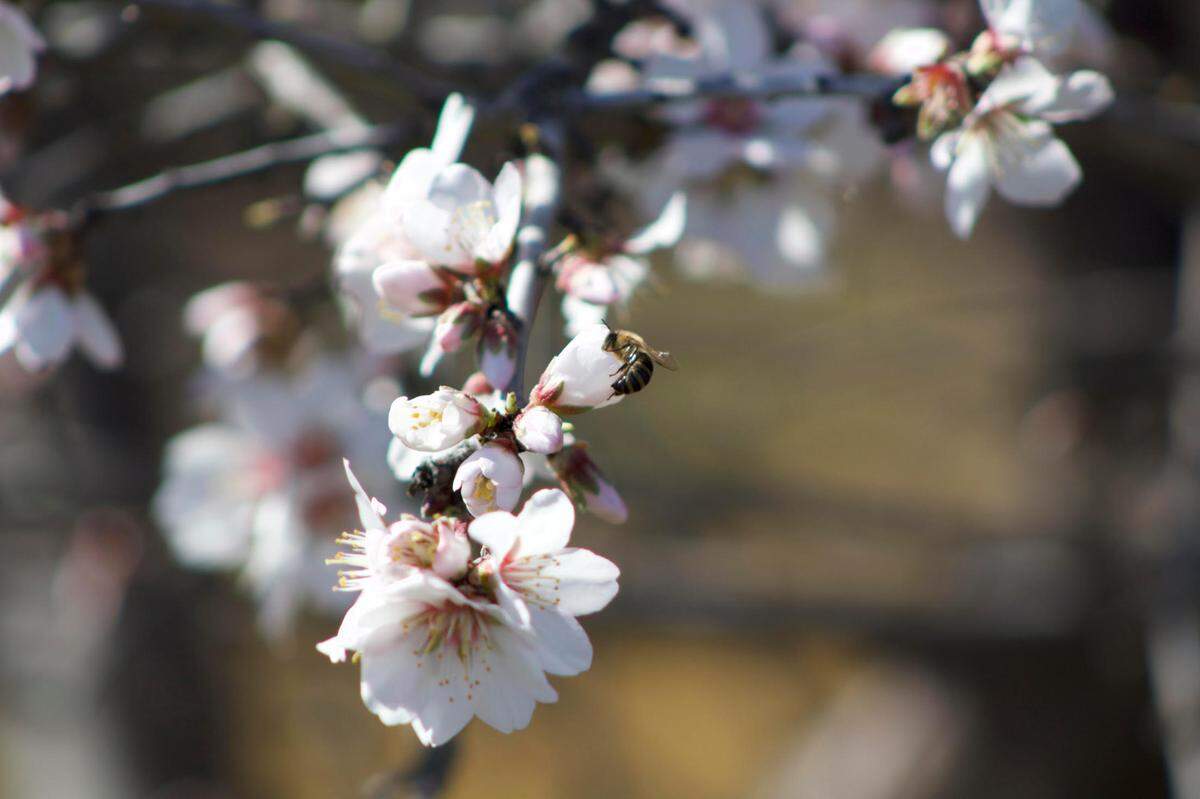
“Bees are one of the most important beings in the world, in my opinion,” Atwal said. “It’s known, because they’re so vital to the habitat, they’re vital to the food source.”
Atwal said he hasn’t had hives stolen from his orchards, which aligns with other farmers in the area. The Yuba County Sheriff’s Office has had just two reported hive thefts dating back to 2019, valued at $1,000 and $13,000, respectively, said Katy Goodson, sheriff’s office spokesperson.
“The thefts that are happening, it’s not just a person that lives in the area, it’s another commercial beekeeper or somebody that’s tied to them,” Atwal said. “It’s a sophisticated theft operation in my opinion.”
Local beekeepers tend to their bees and hives while placed in orchards as contracted by growers. Hives that are stolen from an orchard hurt the grower who needs them for pollination, but the direct loss falls on those who own the bees.
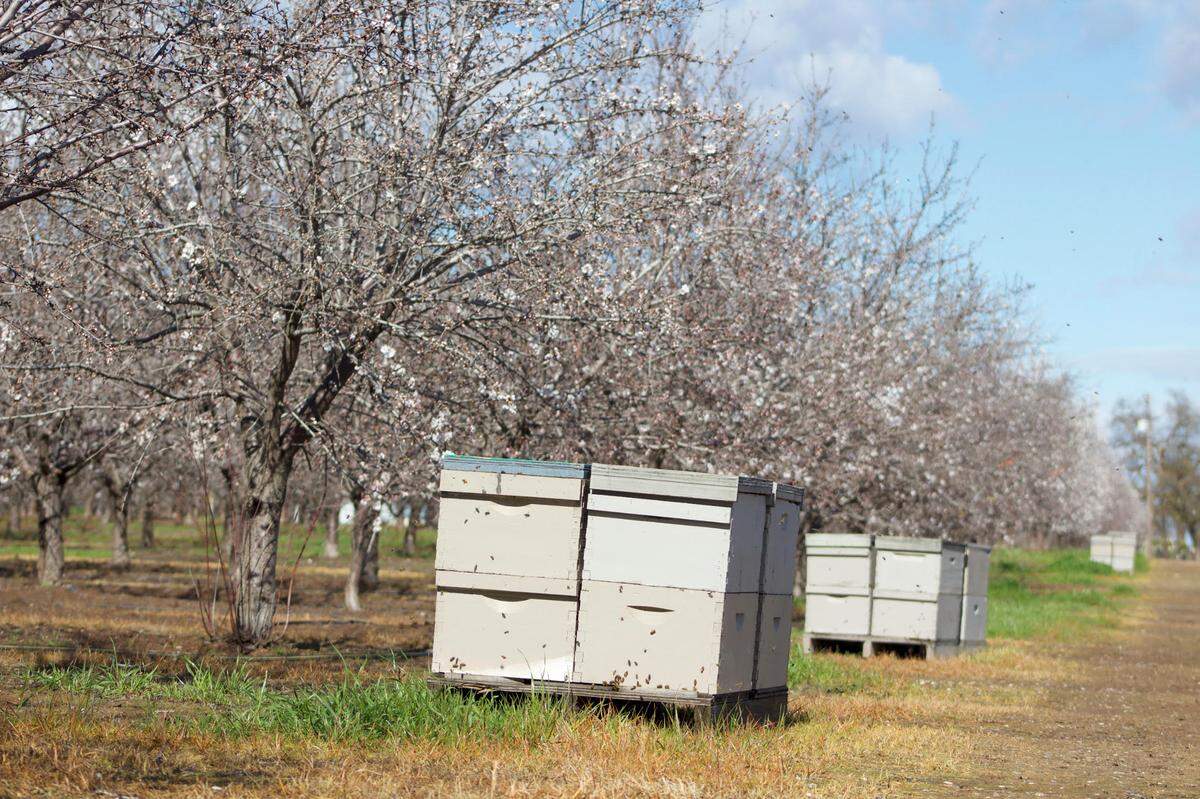
One such beekeeper, Pete Kenney, has plied his trade in the almond and prune orchards of Yuba-Sutter area for more than 40 years. He said his hives have not bee stolen, short of a one-off occasion here and there. He and his workers check on his hives nearly every day this time of year.
“When bees are in high demand, that’s when it seems like the theft rears its ugly head,” Kenney said.
But, with fewer than 300 hives reported stolen so far this year, by Freeman’s count, theft hasn’t been the only cause of lost bees.
What’s behind the shortage
Philip Russell, of Strachan Apiaries in Sutter County, said that he expects most almond growers will find bees for this year’s bloom, but that signs of the shortage have arisen, and affected his own colonies, to an extent.
“I’ve received more calls this year than I ever have before, for people needing bees,” Russell said.
The San Joaquin Valley portion of the Central Valley, south of Sacramento, has more orchards and, generally, more hive theft than areas north of the capital. That area also attracts a lot of out-of-state hives to meet its demand.
“You’ve got farmers right now looking for anything,” Russell said. “They don’t really care the strength of (the hives), as long as they can get some bees in their orchard for the pollination.”
California’s relatively mild winter hurt colony size for some beekeepers, Russell said, as the relative warmth kept bees flying outside longer, during months with fewer food sources to forage.
“That time of year, if the bees are flying, they’re dying,” he added.
For some beekeepers in the South who truck in hives to supplement almond bloom, weather events throughout the past year may have killed bees or stripped beekeepers there of the resources to rebuild, Russell said.
“It’s kind of a perfect storm of everything involved,” he added.
Beekeepers often reach contracts with growers before the calendar turns, meaning the prices are set before the full size of the colonies is known, Russell said. They also may make exceptions for longtime customers.
This year’s shortage hasn’t affected prices for most growers yet, but may have consequences later.
“It’s going to take the beekeeping industry quite a while to recover from this,” Freeman said.
Tracking bees and thieves
Although Russell hasn’t had his own hives ripped off en masse, nearly 500 sent from a beekeeper in Montana and under his care were taken from his property years ago, during the the first spike in reported thefts.
“Every single one of his hives were stolen in one foggy night,” Russell said.
Out-of-state beekeepers may bear additional risk of theft, partially because of the distance. Entrusted to a broker and out of sight, their hives possibly aren’t checked as frequently as a beekeeper would watch their own.
Then there’s the matter of law enforcement. With the Central Valley and its almond orchards encompassing more than a dozen counties, jurisdictional issues may arise, but no state task force tackles hive thefts, Freeman said. On a local level, the investigations are complicated and often unlike other theft cases sheriff’s offices typically pursue.
In response to the rising crime and limited resources to investigate, the state beekeepers association has partnered with the Pipkin Detective Agency, a private firm that specializes in agricultural crime, which has donated 50 hours toward investigating hive thefts.
That partnership comes in response, in part, to the lack of law enforcement resources dedicated to investigating the rise in thefts. The hope is for the agency to fill the gaps that form between the limitations of local law enforcement and the statewide nature of the crimes.
When suspects are caught with stolen hives, proving they were the ones who committed the theft is difficult.
“Even when we know as a beekeeping industry that we caught the people who are responsible for this,” Russell said, “we don’t seem to get the follow through with the judicial system to make sure it’s enforced and somebody’s made an example out of so we can curb those kinds of thefts.”
He expects the rising demand for bees spurred by the nationwide shortage to cause the rise in thefts to grow worse this year.
“There are going to be some desperate people out there, and desperate people make bad decisions sometimes,” Russell said.