
Salmon return to North Yuba River for first time in almost a century as restoration continues
Years of human activity along branches of the Yuba River dating back to the Gold Rush have changed the river’s flow and ecology. But several projects, recent and ongoing, have sought to return parts of the river closer to natural conditions.
Salmon swam the North Yuba River this year for the first time in the better part of a century as part of a multi-agency effort to restore the spring-run Chinook species to its historical spawning grounds upstream in the mountains.
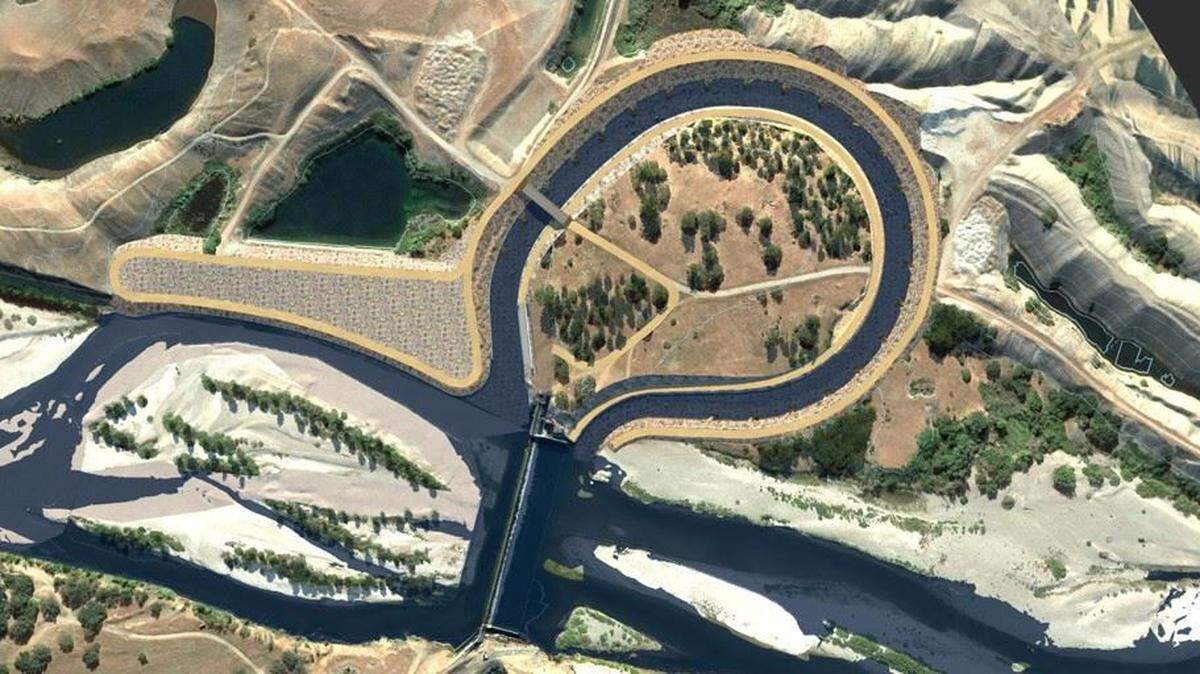
Another river project moved forward last week — but remains about a year away from the start of construction, with more red tape in the way — as Yuba Water Agency directors approved environmental work for a “Nature-Like Fishway” that bypasses a dam that’s blocked several fish species on the lower Yuba River for decades.
Get the Yuba-Sutter Weekly newsletter in your inbox
Available now: Sign up here to receive news and other happenings reported from Sutter County, with stories that matter to readers north of Sacramento. Email tips to jgoodrick@sacbee.com.
Meanwhile, recently completed work on the river has begun to show signs of delivering on its goals of creating safe habitat for young salmon to grow and spawn on their journey to the Pacific Ocean.
To divert from a dam
The planned fishway would function as an extension of the river built around Daguerre Dam, creating a path for salmon and other fish to enter more than 10 miles of water currently blocked by the dam, which was built in 1910 and has only limited upstream access via fish ladder.
The project costs about $75 million, with a $30 million grant — that must be spent by 2026 — from California Department of Fish and Wildlife and the rest covered by Yuba Water Agency.
Plans for the fishway also include building a new fish screen, which filters river water into — and keeps fish out of — a diversion and canal system for farmers to use for irrigation. The current design incorporates a series of rocks to effectively block fish from passing through. The new design would function more as a porous wall.
“That’s what keeps the fish in the river and not in the canal system,” said Willie Whittlesey, Yuba Water Agency general manager.
Depending on the timing of construction, among other weather and rain-related variables, farmers south of the river may have their water access affected. But any changes to water delivery would be communicated and worked through with irrigators in advance, Whittlesey said.
Anglers north of the dam have raised concerns that the new passage may also clear a path for predators to return to the waters. Meetings with California Department of Fish and Wildlife, National Marine Fisheries Service and Yuba Water Agency to address those concerns are being scheduled in the coming weeks.
“The goal is to make the Yuba River— to restore it to a nature-like condition in that location,” Whittlesey said. “That’s exactly what we want to do. But in doing so there are going to be potential changes based on this unrestricted passage.”
Once permitting and contracting are completed, it’s expected to take about two years to build the fishway, meaning it could be finished sometime in 2028.
Restoring the North Yuba River
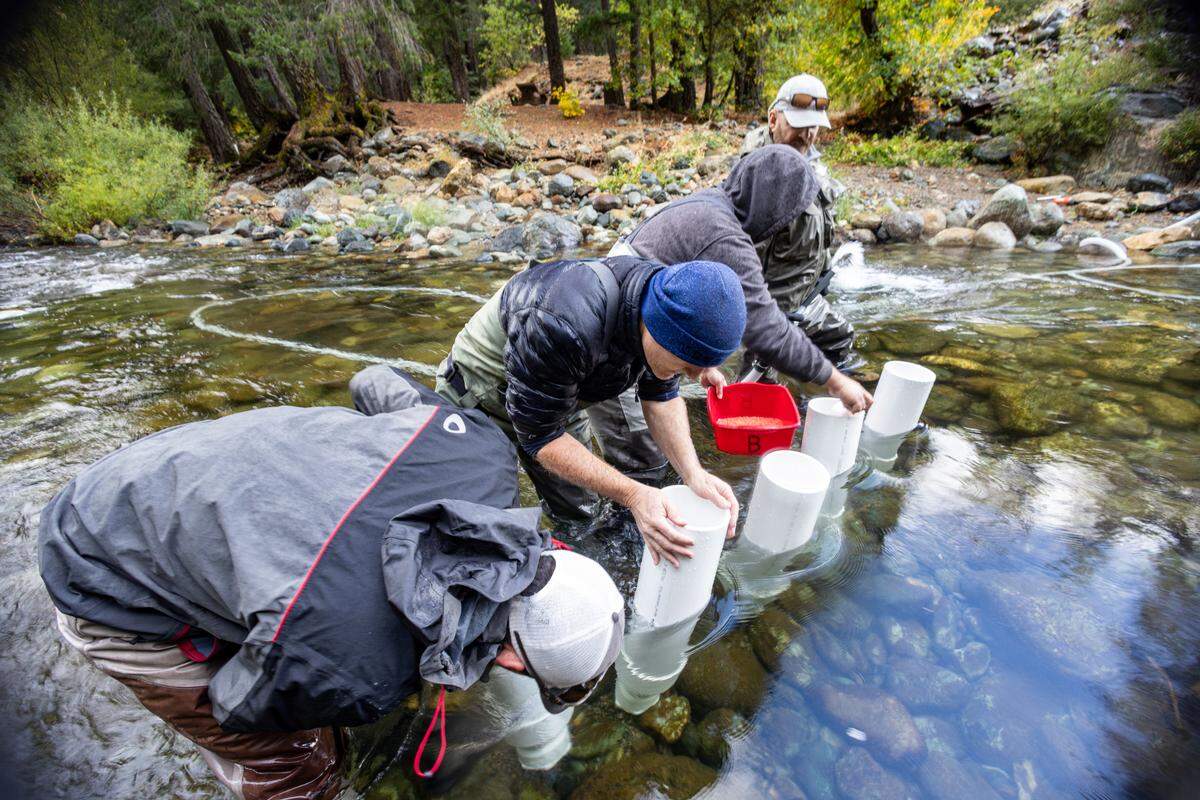
Spring-run Chinook salmon returned to the cool waters of the North Yuba River first as eggs, fertilized at Feather River Fish Hatchery in Oroville and embedded in October in the river’s gravel, similar to how adult salmon spawn, according to a news release.
Workers began finding the wild salmon, caught downstream in rotary screw traps, earlier this month. The salmon were reintroduced in a 12-mile stretch of the river that feeds into New Bullards Bar Dam, but the department is trucking the young salmon to the lower Yuba River downstream of Englebright Dam.
The fish had been kept from that part of the north branch, running down from the Sierra Mountains, since Englebright Dam was built in 1941 and New Bullards Bar Dam in the 1960s.
“The North Yuba represents a really unique location for us,” said Colin Purdy, CDFW fisheries environmental program manager, in the news release. “Between the mainstem and its tributaries there is somewhere around 40 to 50 miles of habitat that is ideal for spring-run Chinook salmon for holding, spawning and rearing.”
“If we can develop this pilot effort into a full reintroduction program, we would be able to more than double the amount of available salmon habitat in the Yuba River watershed,” Purdy added. “And that’s a huge win for spring-run Chinook salmon.”
Yuba Water Agency will fund $750,000 annually for the reintroduction program, managed by CDFW and the National Marine Fisheries Service.
Showing signs of progress
The large-scale Hallwood Side Channel project, finished in late 2023, cleaned up and protected a stretch of the lower Yuba River west of Daguerre Dam, which is downstream of where the reintroduced salmon are being trucked.
The project covered about 2.5 miles downriver of the dam, east of Marysville, and was designed to give salmon a safe place to eat and grow, while also improving local flood protection.
“That type of habitat has been lacking due to problems that we’ve seen since the 1850s and the hydraulic mining of the Yuba River,” Whittlesey said, “and all of the sediment and debris that’s been deposited in the lower Yuba River system.”
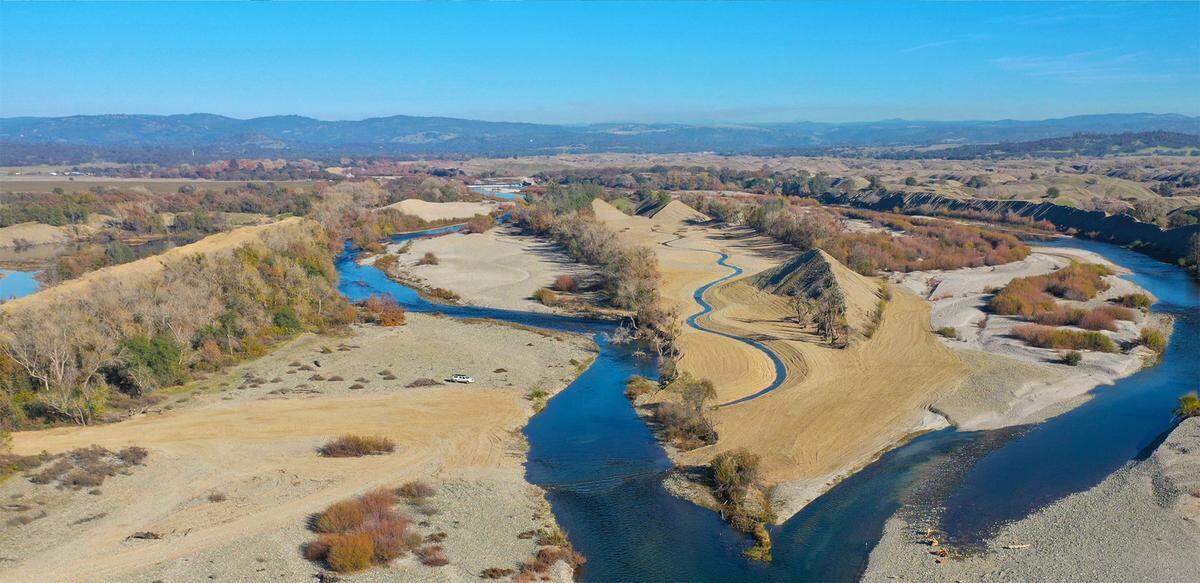
Hydraulic mining, which washed away land and debris with pressurized water to reach gold, pushed tremendous amounts of sediment into the lower Yuba River during the early 1900s, much of which settled and reshaped its flow.
The project, which cost about $12 million, was made possible by an estimated $90 million of in-kind rock and sediment removal by Teichert, a construction materials company based along the river that helped remove roughly 3 million cubic yards of sediment from surrounding flood plains and what’s known as a middle training wall, a giant sediment barrier that ran through the heart of the channel.
Since finishing the project, preliminary findings have shown that salmon have taken to the area — an early pit stop to the Pacific Ocean — for feeding and growing, as planned, and have also spawned there.
“It has shown that competitors … have been completely eliminated from the restored area and adult salmon are spawning at the sight, which was unexpected, but great to see,” Whittlesey said. “It means that it’s sustaining multiple life stages of the salmon.”