
Former CapRadio board chair exchanged HR services for on-air messages about her firm
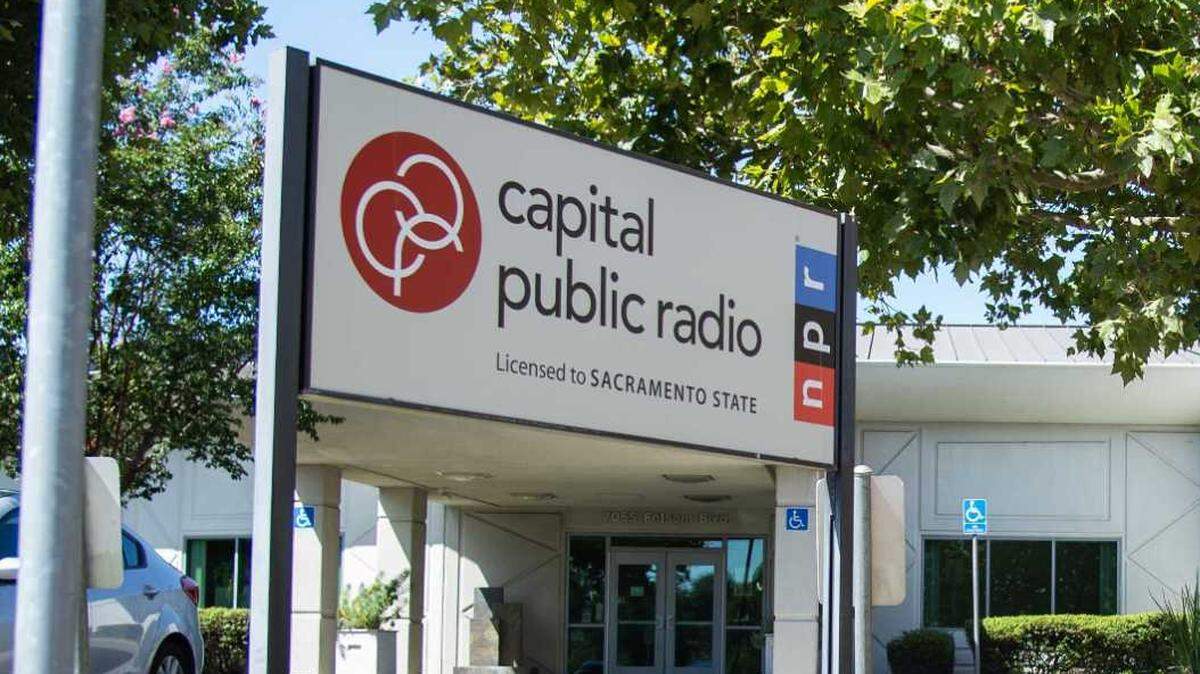
Another CapRadio board member had business dealings with the station at the same time as they served on the board.
Former board chair Kim Silvers, who was owner and founder of Silvers HR, LLC, exchanged human resources services for on-air announcements of her business, according to documents obtained by The Sacramento Bee.
Silvers marks the fifth board member that has been found to have entered into contracts with the station — one more than previously known. Her contracts were not mentioned in last year’s forensic examination, according to documents retrieved through a California Public Records Act request.
Sacramento State President Luke Wood ordered a forensic examination, the second review following a 2023 audit by the California State University system under Wood’s predecessor President Robert Nelsen, in hopes to unearth answers about financial mismanagement and ethical concerns besieging the radio station, an auxiliary of the university.
That second report, first released in August, flagged four former board members who had personal interests in businesses contracted by the station. It also found CapRadio’s former general manager Jun Reina controlled a credit card under which nearly half a million dollars was spent, without receipts or documentation, that showed lavish expenses with no apparent business purpose.
Silvers’ business should be familiar to CapRadio listeners who have heard on-air messages describing services provided by the company, called underwriting in the radio industry. “A single source for all human resources needs. Information and workshop listings at Silvers-H-R-dot-com,” read one underwriting message in 2012, the documents showed.
Silvers, who sold the company and retired in March 2023, said in an emailed response to The Bee that she considered the HR consulting services to be a gift and offered them at a “deep discount.” The company never gained a client or additional revenue as a result of the announcements, she said.
“I did not personally or professionally benefit from this work,” Silvers said. She resigned from the board in 2023, one of 14 members who resigned on the same day.
CapRadio documents describe the arrangements as in-kind donations or trade agreements. The former is a service or physical items gifted by a donor and the latter is an exchange of services.
Chris Bruno, CapRadio’s chief marketing and revenue officer, said the station received HR consulting services in exchange for on-air underwriting — also known as trade agreements.
Of a 23 member board, the finding that five members may have personally benefited or brought business to their workplace raises questions about the station’s culture, which allowed for such behavior to remain unchallenged. It also raises questions about the oversight Sacramento State and the California State University system offered to stem any potential ethical improprieties.
“How stupid do you have to be (for this to happen) over and over and over?” said Edward Queen, a professor at Emory University’s Ethical Center, asked about the apparent culture at the station.
Three experts said these contracts appeared problematic. But whether the trade agreement on its face does present an ethical concern is unclear because the full scope of services offered by Silvers HR is not publicly known, said one of the experts, Philip Cochran, a professor at Indiana University who specializes in business ethics.
“This is not black and white,” Cochran said. “But one thing is clear: It doesn’t look good.”
Silver’s HR contracts were not the only omission in the forensic examination of CapRadio finances.
Local accounting firm CliftonLarsonAllen that conducted the second audit mistakenly named a former board member for having a conflict of interest — despite the fact he was not on the board at the time of the scrutinized contracts. After The Bee reported the board member’s identity, and that of the four others whose names were initially redacted, the firm temporarily removed the audit from public view. The university paid about $140,000 to commission the report, including the cost of the correction.
The university requested CliftonLarsonAllen to probe all board members, seeking to leverage accountants’ expertise and access to databases “not available within Sacramento State in the hopes of verifying identified concerns and flushing out unknown ones with board members,” university spokesperson Lanaya Lewis said.
Lewis also noted the records documenting the services provided and received by Silvers HR are limited, but indicated further action may be warranted based on The Bee’s findings.
“If a conflict occurred, Sacramento State and CapRadio will partner to address,” Lewis said.
Jenny Dominguez, the accountant hired by CliftonLarsonAllen to complete the forensic examination, did not respond to a request for comment.
The contract
At least as early as 2011, Silvers had sought underwriting at the station. In February 2011, she bought 121 spots worth $5,000 for “tax deductible underwriting,” according to the documents.
This agreement remained the same up until 2014, when Silvers joined the board. The station then agreed to a “trade agreement valued at $5000 of on-air underwriting in exchange for Silvers HR services,” the documents say.
Silvers wrote that Reina, the former general manager, suggested their “on call services” could be set up as an “in-kind arrangement” when the station was tight on revenue.
“I wanted to help and agreed,” Silvers said.
These agreements continued until 2023, though the value of the announcements varied per year, according to the documents. The total amount of underwriting was $103,868 for 10 years and about 1,228 spots, according to The Bee’s analysis.
Silvers HR, as at least part of its trade agreement, provided posters and training to managers, according to invoices.
But Silvers also reportedly played a part in more sensitive and highly confidential employee matters.
She was involved in helping the station terminate at least one employee, according to a person with direct knowledge of the firing. They requested anonymity to avoid reprisal while discussing sensitive personnel decisions and to preserve the ability to conduct future business dealings in the industry.
While Silvers served as vice chair on the board, she denied her participation in personnel matters despite her reported involvement with firing at least one employee, according to an email reviewed by The Bee.
The email, separate from Silvers’ involvement with the termination, was written by then-CapRadio reporter Bob Moffitt. He wrote a scathing rebuke of the station’s newsroom management in an email sent to the entire board and Reina.
“I see your interest in having your impressions shared with others by sending this to the entire board,” Silvers responded to Moffitt, according to the email. “However, this is an internal matter for station management to address. The board does not get involved in station personnel, operations or editorial matters.”
The role of Silvers in sensitive employee discussions becomes muddy when her position as an HR representative and a board member clash, said Ann Skeet, the senior director of leadership ethics at the Markkula Center for Applied Ethics at Santa Clara University.
“It is not best practice, in my point of view,” she said.
The nonprofit sector often has board members who provide services to the organization, with the best of intentions, Skeet said. It does not happen all the time, and when it does, it reflects badly on the field, she said.
Silvers did not respond to a request for comment on her potential involvement with the termination.
Bruno, CapRadio’s chief marketing and revenue officer, said that many “talented and upstanding members of the community” served on the station’s board who then “offered services to support the organization similar to practices at other nonprofits.”
The current board is trained and educated “on all aspects of their role as a nonprofit auxiliary board and matters related to conflicts of interest” under the new management and administration at CapRadio and Sacramento State, Bruno said.
Silvers also was in executive positions on the board during a high stakes time for CapRadio. She became vice chair in 2019 and ascended to the role of board chair in 2022 for about a year.
During this time, CapRadio went through a series of changes. Former station general manager Rick Eytcheson stepped down in 2020, and Reina took over the role that same year. The nonprofit planned to move into two expensive buildings in downtown Sacramento from its current headquarters on the university’s campus. That plan ultimately collapsed as the station’s dire financial circumstances went public and more than a dozen employees were let go.
What else do experts say?
Three experts, presented with The Bee’s findings, said entering into this agreement is bad practice.
A conflict of interest atop a nonprofit’s board is not always wrong — but it can become problematic if the ethical impropriety is not cleared, Queen said, the faculty member with Emory University.
The board member could recuse themself from a vote on the contract or the board could decide the relationship with the business is tenuous and poses no conflict, experts said. Ethical concerns arise when a person’s secondary interest influences their primary interest — in this case, the fiduciary obligation to CapRadio, Queen said.
“There could well be problems here, I cannot say there are for sure. If this is the best deal for the money, then it’s not unethical,” Cochran said. “But it still smells.”
The service agreement with Silvers HR did not come up in front of the board for a vote.
A contract must be worth more than $100,000 to trigger a vote, according to CapRadio’s bylaws, which also disallow “self-dealing transactions.”
CapRadio still has an agreement with Silvers HR, which was sold to Larkin Benefit Administration in 2023, for HR services in exchange for on-air announcements until December 2025, according to documents provided by Bruno.
Out of the five total board members whose services posed potential ethical conflicts, only one contract came up for a vote and was approved, according to a Bee review of CapRadio board meeting minutes. Former board member Katherine Bardis-Miry’s contract was discussed with the board, during which she said she recused herself, arrived late to meetings or did not attend them.
Three of the former board members’ contracts were coordinated by Reina, the ex-general manager.
“The old CapRadio did not retain thorough documentation for compliance purposes related to our prior trade agreements with Silvers HR,” Bruno said. “We now have standard contracts and procurement and recordkeeping practices in place.”
This story was originally published March 10, 2025 at 6:00 AM.