
This Sacramento pool shaped Land Park, memories of residents in the early 1900s
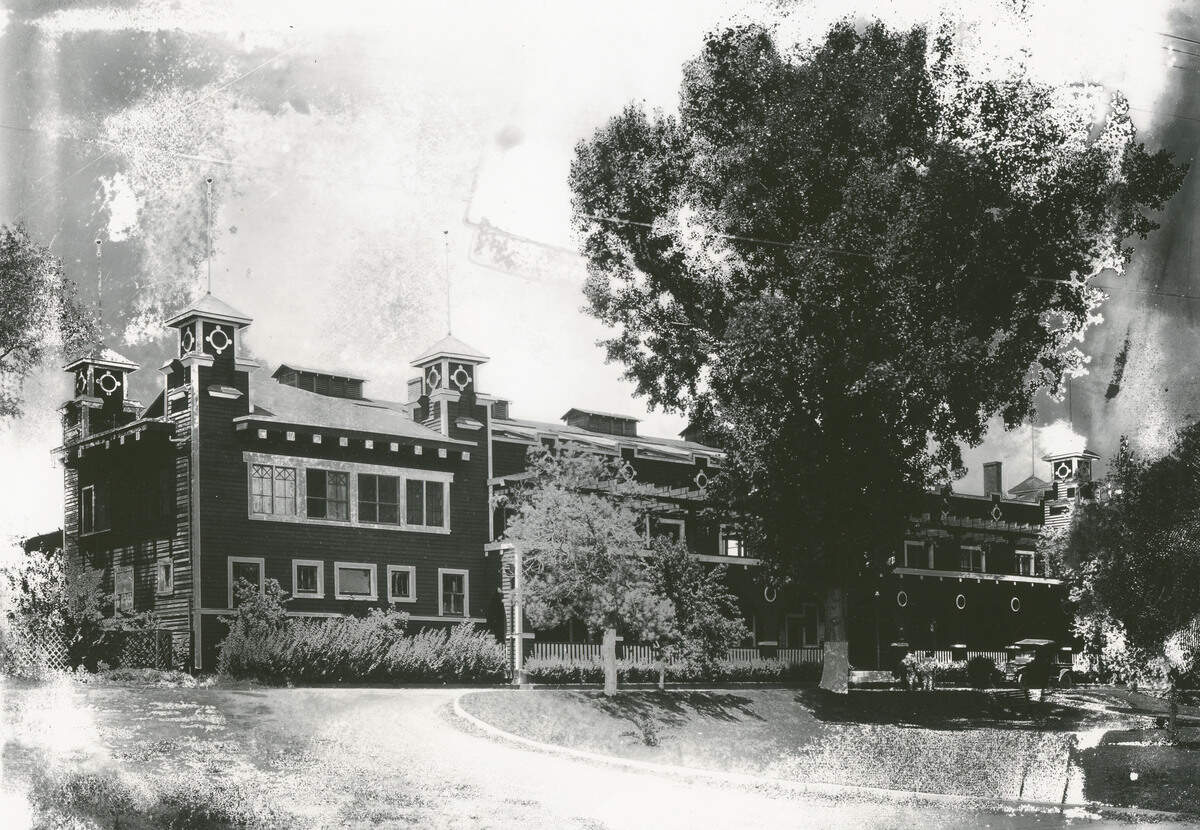
Most people who drive by Congregation B’nai Israel on Riverside Boulevard might not know that decades ago, the land was used wholly differently.
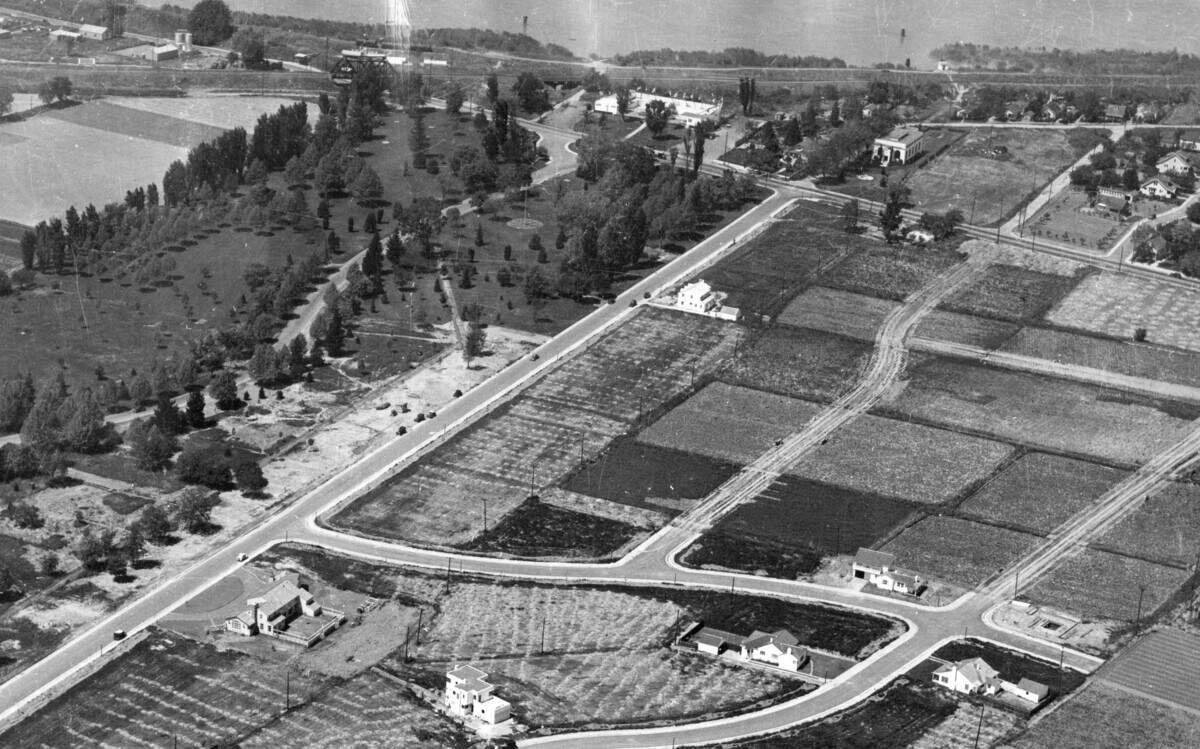
Today, the southern portion of the property comprises a parking lot and buildings formerly used by Brookfield School until its relocation in 2014. Interstate 5 spans the western edge of the temple’s property, with the Sacramento River on the other side of the highway.
There was a time, though, that this land was a neighborhood pool, known first as Riverside Baths when it opened in 1909 and later as the Land Park Plunge before it closed in 1955.
The pool belongs to a different era of Sacramento history, when people rode streetcars or trains to recreational amenities. Though the Riverside Baths have been long gone, older Sacramentans hold strong memories of how the pool was a place where some children played and learned to swim while others were barred entry because of their race.
Where was the Land Park Plunge?
Imagery: Google Maps; Sanborn Fire Insurance Co. Map: Nathaniel Levine
A ‘product of the streetcar era’
When Riverside Baths opened, both Sacramento and the area surrounding the pool were much different, with the city having about 45,000 residents, as opposed to more than 500,000 today. The park for what is now the city’s Land Park neighborhood was still several years from being built. Occasional farm or vacation houses dotted the area around Riverside Boulevard.
It seems quaint to think of now, given Sacramento’s sprawl being one of its defining features, but the pool opened more or less at the southern terminus of the city.
Riverside Baths opened just shy of Sutterville Road, with scant development south of there at the time. The pool had its own spur track from the Sacramento Southern Railroad, with a sign for the pool still visible along riverfront tracks in recent decades. People could also take the 10th Street streetcar line from downtown to get to the pools.
“What these things were, they were the product of the streetcar era,” said John Martini, a retired park ranger and author of “Sutro’s Glass Palace: The Story of Sutro Baths,” which chronicles the landmark baths that were near Ocean Beach in San Francisco.
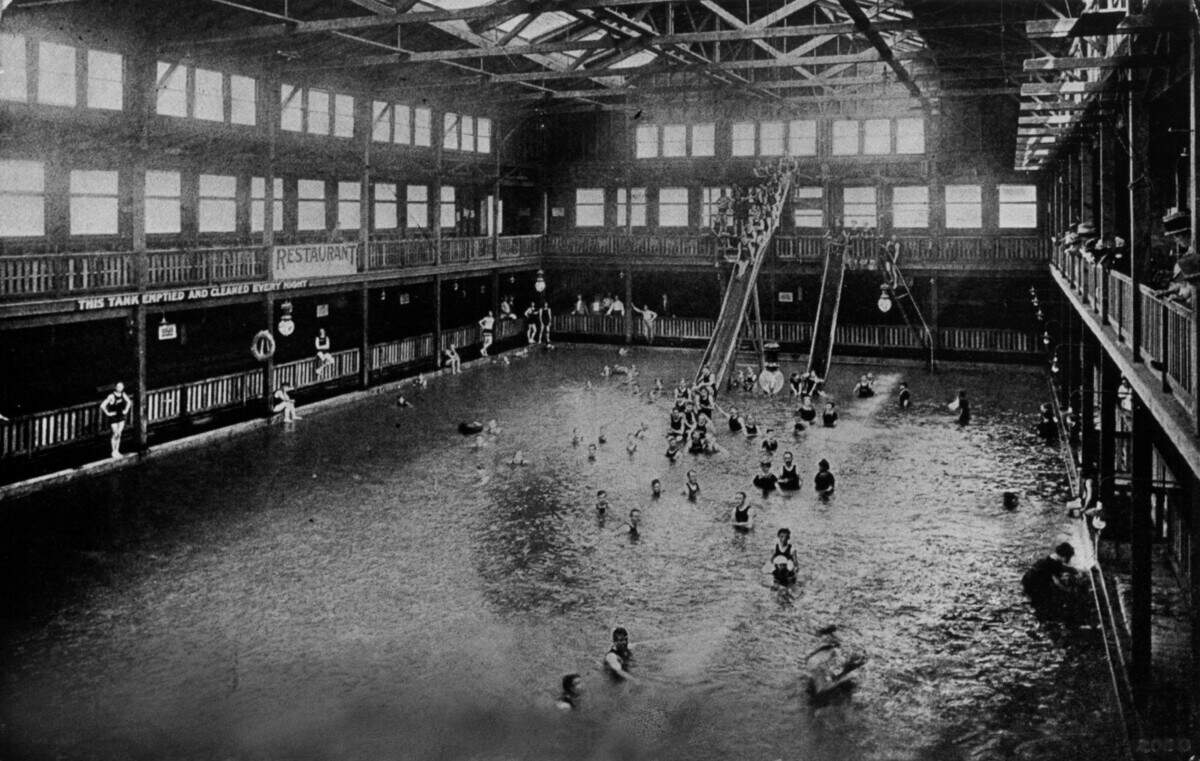
For those in Sacramento seeking an escape and willing to ride to the far end of a streetcar line to do it, they got a spacious, wooden indoor facility in the early years of Riverside Baths. This came in an era where pools at individual homes were unheard of. It also allowed people to avoid having to brave unsafe swimming conditions in the Sacramento or American rivers.
A 2022 Facebook post by the Center for Sacramento History showed people in the pool, others waiting to use two slides and onlookers along two tiers.
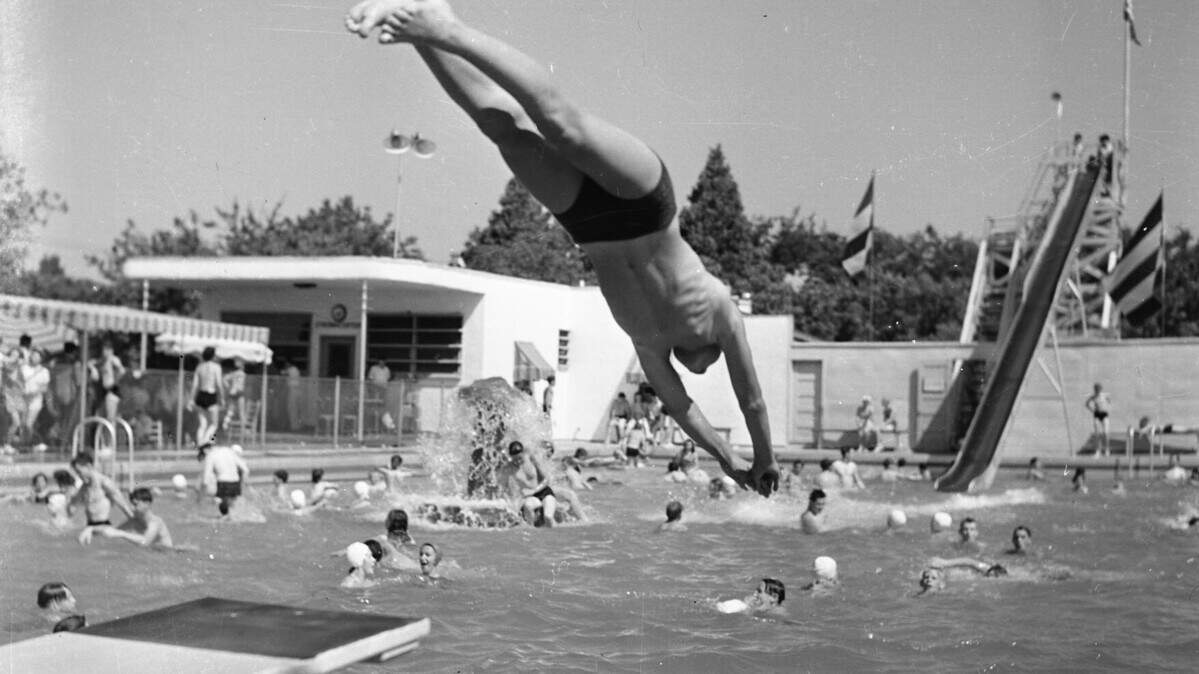
The pool was renovated in the 1930s, with the old wooden facility torn down. The baths reopened as what the Sacramento Union deemed an “open air plunge” on May 6, 1937. A million gallons of water flowed through the pools daily from a 2,400-foot artesian well, with water naturally heated to 82 degrees. The pool was drained nightly.
The name of the pool became Land Park Plunge in 1947.
“I remember there was a big fountain in the middle of it,” said Linda Brandenburger, 87, a retired attorney. “That was a place where you could swim from the edge of the pool to the fountain in the middle and it had a little ledge around it and we could sit on it.”
Brandenburger remembered the pool’s diving board.
“I never had the courage,” Brandenburger said. “My brothers did. They thought that was great fun.”
Douglas Schwilk, a retired dermatologist who now lives in Fair Oaks, grew up in Land Park. He estimated he went to Land Park Plunge maybe five times.
“It was a big pool,” Schwilk said. “It had a big, nice slide going into it and then a nice grassy area around it.”
The pool had uses beyond recreation. Marcia Basque, who is 85, grew up in Land Park and now lives in Arizona, remembered taking swimming lessons with her sister at Land Park Plunge from Sherm Chavoor around 1951. A few years later, Chavoor founded Arden Hills Swimming and Tennis Club, where he would train future Olympians like Mark Spitz.
Basque said Chavoor “helped me a lot in becoming a better swimmer. So I just remember enjoying going to take swimming lessons from him.”
Others who used the Riverside pool included California Lieutenant Governor Ellis Patterson and champion diver Mickey Riley, according to contemporary news coverage. Then there was heavyweight champion boxer Max Baer, who is listed in the 1940 U.S. census as living diagonally across Riverside Boulevard from the baths, where he’d already become a regular. Soon, he would build a house nearby at 1999 8th Ave.
Baer enjoyed loading his Pontiac with students from Holy Spirit School, which some of his children attended, according to his daughter Maudie Goodwin, 81, who lives in Sacramento. Goodwin said her dad would take kids by the carload to the Land Park pool.
“He loved children,” Goodwin said. “He just wanted them to be able to have a life and see what every kid should be able to see.”
Those who didn’t go to the pool
Not everyone went to Riverside Baths or Land Park Plunge.
Some people avoided the pool by choice. Robert Jarvis, 85, who grew up on Teneighth Way, said his family didn’t go to the pool. “I never saw my mother in a bathing suit,” Jarvis said. “She was very much averse to the water because her father had died of a heart attack… in a lake in front of her.”
Others couldn’t go because of their skin color, with the pool segregated for decades.
“Of course by law we cannot refuse admittance to anyone because of color, but we can say to the Chinese, Japanese, Hindu or (African-American person) when they apply for admission that it will cost them $100 to swim in the baths,” pool manager Walter Dyreborg – himself a Danish immigrant – told The Sacramento Bee in 1921, when a 12-year-old Hawaiian girl wasn’t allowed into the baths.
Dyreborg added, “Public spirit is in back of us in this respect, I believe, and we shall continue to do as we have in the past.”
Exclusionary practices went on for decades at the pool, through different management. The racism wasn’t unique to Sacramento. Martini said racial exclusion was very common for pools of the day, with Sutro Baths appearing to have not allowed people of all races until just before its closing in 1953.
“You probably wouldn’t find it in big municipal pools, but definitely in the privately-operated ones,” Martini said.
Some who swam at the Land Park pool as children say they weren’t aware of the pool’s management being discriminatory.
“I had no idea that was going on over there,” Basque said. “I wouldn’t condone it at all today and I’m sorry to hear that happened.”
But a little while later during her interview, Basque said that she thought back more and said that she might have known Black people couldn’t use the pool. She said she never witnessed anyone being turned away from it.
Other people who weren’t white experienced the pool’s racism firsthand. Barbara Hom, who is 82 and lives in South Land Park, remembered riding past the Riverside pool with her mother and suggesting they go swimming only for her mother to reply that she couldn’t because they were of Chinese descent.
“When you’re a kid, you just think, ‘Okay, that’s the way it is,’” she said.
Her husband of 59 years, Sam Hom also faced exclusion from the pool, being warned off by his parents to not even try.
“It was a beautiful pool,” he said. “I could see the diving board, but I never tried to get in because they told us we’re not allowed.”
Instead, Sam Hom swam at Clunie Pool in McKinley Park, a public pool where people of all races were welcome.
Others fought exclusion from the Land Park pool.
Brandenburger remembered her classmate from what was then California Junior High, Hazel Jackson, a friendly African-American girl who smiled a lot. “I don’t remember thinking that Hazel would have been the one who blew the whistle on Land Park Plunge,” Brandenburger said. “I didn’t learn about that until much, much later.”
What happened was that when Jackson, 14, tried to go to a class picnic at the pool on May 23, 1952 and was turned away because of her race. She filed suit.
Represented by legendary local civil rights attorney Nathaniel Colley, Jackson won a settlement of $250 and an injunction from judge J. O. Moncur several weeks later preventing the pool from barring her, as The Bee reported on July 15, 1952.
The victory would be short-lived, with the pool closing for what it said were repairs in 1955. Pool owner Sam Gordon opened the first Sam’s Hof Brau restaurant at 17th and J streets that same year. As for the pool, it never reopened, with Gordon selling to B’nai Israel for $65,000 in February 1958.
The legacy of the Riverside pool
Out at the western end of San Francisco, the ruins of Sutro Baths – which burned down in 1966, while the defunct pool was in the process of being demolished – remain an easily-accessible and popular site. The ruins sit near the beach, a surreal site in an otherwise well-developed and increasingly affluent city.
“I like to say that San Francisco is a very young city and these ruins are only 90 years old, but… they’re our ruins,” Martini said. “And people just really, really like them.”
On the other hand, one would not know from walking along Riverside Boulevard past Congregation B’nai Israel that a pool had ever occupied part of the grounds. And to some extent, it’s understandable to people like Christopher Smith, curator of history for the Center for Sacramento History.
“I would just say cities change, things change, facilities change,” Smith said. “And it’s something that existed and that some people still probably remember.”
He added, “I would just say that it was part of our cultural landscape of recreation in the city.”
Martini frequently gets asked about the prospect of rebuilding Sutro Baths. He tells people that it’s like holding onto something whose time has passed. He also explains to people that those baths never made money.
“Sometimes, things exist better in the memory than to actually recreate them,” Martini said.
So it was for Brandenburger, she admitted, with the old Riverside pool.
“When we talk about it, I think it grows a little bigger in my mind,” she said.