
Sacramento considers historic status for last bowling alley in city limits
When fire forced the closure of AMF Land Park Lanes in early 2024, it signaled the end of an era in Sacramento.
This was the last operating bowling alley in city limits.
“Bowling alleys sort of took a decline as the 20th century progressed,” said Sean de Courcy, the city’s preservation director. “There used to be dozens and dozens of bowling alleys in the city and now there’s just the one that has just closed.”
On July 22, the City Council is set to decide the fate of the old bowling alley, which operated for decades at 5850 Freeport Blvd. The council will consider a draft ordinance that would place the bowling alley on the local historic register and prevent its demolition by former operator Lucky Strike Entertainment.
A decision to add the former bowling alley to the historic registry would demonstrate the city’s commitment to preservation, which has become a greater priority in recent years. It’s also a chance to decide how and if a once-prominent bowling alley will be commemorated.
What AMF Land Park Lanes meant to people
AMF Land Park Lanes had its grand opening as Land Park Bowl on Nov. 5, 1960, with an advertisement in the Sacramento Bee noting “32 custom built lanes by Brunswick with automatic Pinsetters” as well as a cocktail lounge and coffee shop.
The bowling alley opened in an important and developing stretch of town, with Freeport Boulevard starting to be dotted with examples of mid-century modern architecture. Across the street was the then-Sacramento Municipal Airport, the city’s main airport at the time.
Land Park Bowl’s construction coincided with a period of growth for the sport. The Atlantic noted in 2014 that the U.S. went from having 6,600 bowling alleys in 1955 to 11,000 eight years later. There are around 3,000 bowling alleys in the U.S. today, based on different estimates online.
The Land Park alley meant different things to different people. Richard Alcala, who is in his late 60s, grew up on 38th Avenue near the alley and used to bowl there with friends when he was growing up. He has been active in a Facebook group dedicated to preserving the alley.
“It’s part of our culture of Sacramento and our history and they’re doing away with so much of our history,” Alcala said.
Alcala was at the alley one day in 1972 when a plane overshot a runway across the street, careened across Freeport Boulevard and crashed into Farrell’s Ice Cream Parlour, killing 22 people, many of them children. It remains one of the deadliest tragedies in city history. Alcala still remembers the stark silence after an initial explosion.
On May 21, when the city’s preservation commission reviewed the plight of the bowling alley, Joe Pick, a retired Sacramento Metropolitan Fire employee and executive director of the Firefighters Burn Institute, noted that some of the first people to respond to the disaster came from the bowling alley.
“It has a historical significance to us as firefighters,” Pick told the commission.
At different points, teams or leagues representing, Black, Nisei Japanese and LGBTQ+ bowlers competed at the alley.
Cameron Yee is vice president of River City Bowlers, which bills itself as “Sacramento’s oldest and largest LGBT bowling league” and competed at the Land Park alley.
The league launched in 1977. The league quickly outgrew its initial home, the former Alhambra Bowl and moved to Land Park, according to Tom Lane, an original member.
When Yee joined in the 1980s, there were 150 people competing across 30 teams. While the numbers had dwindled to 48 people and 12 teams in the league’s most recent season, the organization was still sad when the 2024 fire forced them to relocate.
“It was a very friendly atmosphere and through the years, a lot of the people that worked at the bowling alley ended up joining our league,” Yee said.
Aaron Tabaka, who works in the pro shop at Country Club Lanes, said he grew up at the Land Park alley. His parents, who are of Chinese and Japanese descent, bowled in a league on Friday nights that took up at least half the lanes. Some bowlers from Land Park now come to Country Club Lanes.
“The hard part, though, is… a lot of the community out there, they’re a little bit older, so them having to get on a freeway to come out this way, like we did lose a lot of bowlers,” Tabaka said. “But they have kind of funneled through here.”
Other extant lanes in the Sacramento area include Capitol Bowl in West Sacramento, Fireside Lanes in Citrus Heights and Bowlero in an unincorporated part of Sacramento County.
Former Sacramento Kings owner Gregg Lukenbill, who is involved with the Sacramento Historical Society, addressed the city’s preservation commission on May 21 before it voted 6-0 to forward a draft ordinance to City Council listing the former bowling alley site as a historic venue.
“This is the last bowling alley in Sacramento of its kind and I am begging you to move this on to the City Council tonight so that we can move this forward in terms of some level of preservation,” Lukenbill told the commission.
What could happen to AMF Land Park Lanes
Cecily Talbert Barclay, a San Francisco-based attorney who spoke on behalf of Lucky Strike at the May 21 meeting, declined to be interviewed for this story. She stressed to the commission that repairing the bowling alley following the fire wasn’t financially feasible for her client.
“It was a very insignificant amount of insurance that would not cover doing the repairs,” she told the commission.
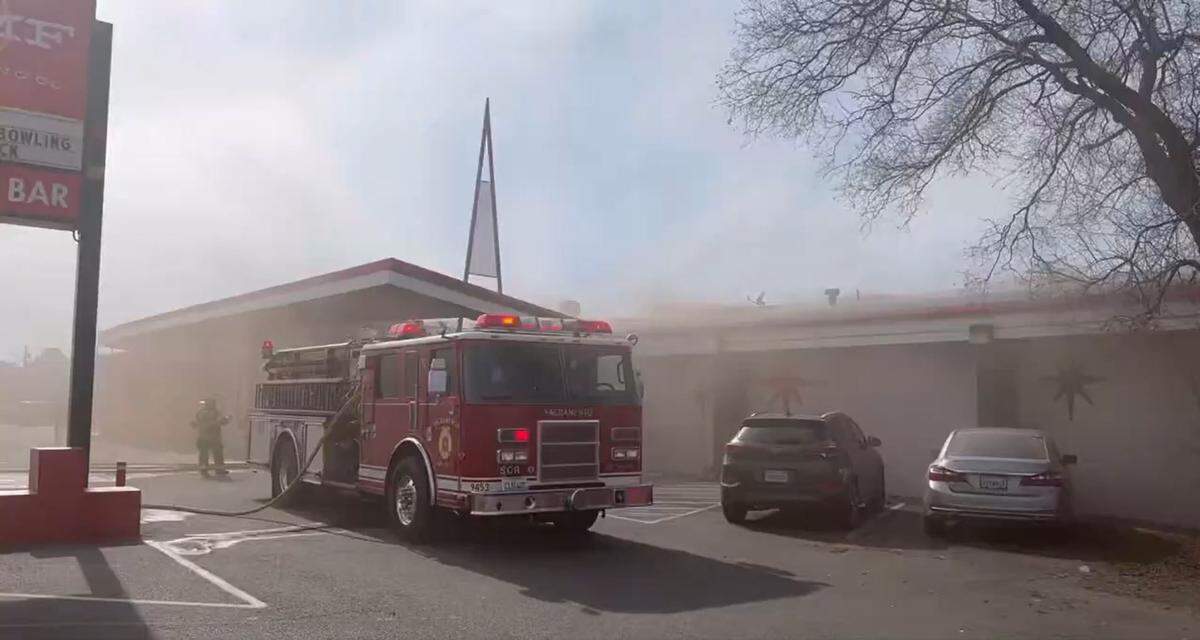
The building was damaged both by fire and by the water from putting the fire out, which impacted the lanes, according to de Courcy.
Lucky Strike has been reluctant to sell the building, with Lukenbill, Pick and others travelling to Arlington, Texas in July 2024 in an unsuccessful attempt to purchase the alley for around $2 million, Lukenbill told The Bee. Barclay’s client applied for a demolition permit for the alley, which triggered the review by the city, de Courcy explained.
There have been differing assessments as to whether the bowling alley is historic. An October 2024 report by SWCA environmental consultants commissioned by Lucky Strike under a previous company name, Bowlero Corporation, stated that the building wasn’t eligible for listing on state or local historic registries “due to a lack of historical significance.”
In turn, Lukenbill commissioned a report by Brunzell Historical that determined that the alley qualified for local listing. Kara Brunzell, a Napa-based architectural historian and owner of the firm, said that the building was notable for both its cultural and its mid-century modern architecture.
“It’s got that whimsical folded-plate roof and then that space age kind of sculpture at the door near the entrance that pierces the roof,” Brunzell said. “So it has those really dramatic features that were designed to draw your eye when you’re driving past.”
Even if City Council ultimately places AMF Land Park Lanes on the local historic register, that doesn’t necessarily mean its owners would be compelled to operate it for bowling, per city preservation guidelines. “The interior could be modified and it could still continue to tell its story,” de Courcy said.
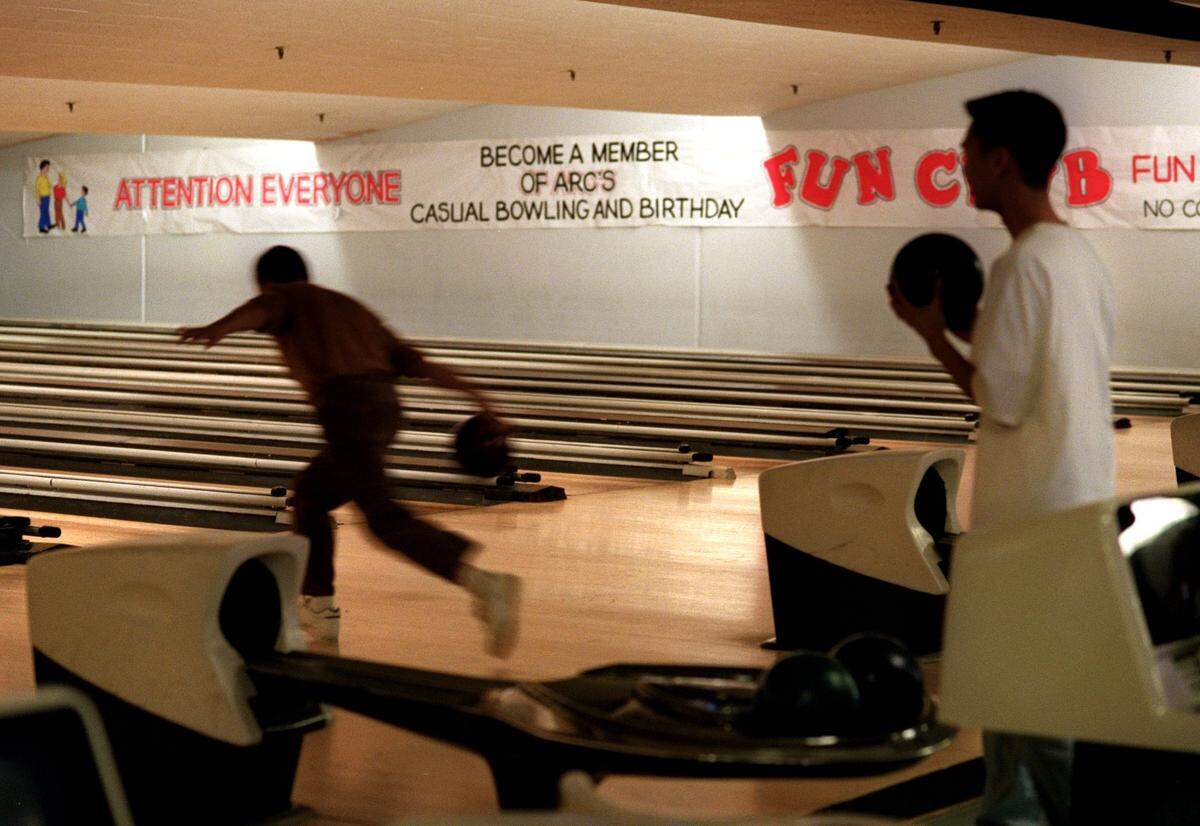
That leaves a lot of potential for what the alley might become if it isn’t demolished.
Lukenbill, a longtime local developer, converted a former school in Curtis Park into Sierra 2 Community Center. He told The Bee that he believed the old bowling alley could also become a community center.
“I’ve had numerous Land Park people very excited about the prospects of salvaging that place,” Lukenbill said.
Pick is also interested in having the building become a community center. He told The Bee that it could be an outreach center and museum for local fire firefighters, that 4-6 lanes might be kept for free bowling and that the center could even promote a new bowling alley by Lucky Strike in Elk Grove.
What has happened to other bowling alleys that closed
Some of Sacramento’s former bowling alleys are long-departed, such as the city’s first bowling alley, an outdoor site written of by the Sacramento Union in 1941. The site was located at the southwest corner of 21st and Q streets where The Sacramento Bee’s parking garage once stood. Also gone is Alhambra Bowl which burned down in 1984, two years after closing.
Other former Sacramento bowling alleys have found second lives, with at least three turning into churches.
The former Sunset Lanes at 7710 Stockton Blvd. in south Sacramento is now a church. Another church also operated where Alpine Valley Bowl once was located at 2326 Florin Road, though the building is currently vacant and available for lease.
Across from the State Capitol at 1415 L Street is an office high-rise built in the early 2000s. The building that it took the place of had once housed Capitol Bowl. After that alley closed in the 1960s, the building was refurbished into Christ Unity Church.
“People come up to me and say, ‘I haven’t been in this place since when I bowled’ – whenever that was,” Rev. Phillip Pierson told The Bee in 1983.
Architect Sooky Lee, who also designed Pancake Circus, redesigned Capitol Bowl. Lee, 96, no longer gives interviews. His son Brian Lee, also an architect, was around 12 at the time of the project and remembered the skylight his father put in to help bring light into the building.
“A bowling alley… being a clear-span structure was kind of ideal for a space that would have unencumbered views for the congregation,” Lee said.
The church, which is known today as Unity of Sacramento, now operates out of a former Safeway in east Sacramento, according to pastor Kevin Ross. He wasn’t fazed to hear how his church had gotten its L Street location.
“We were the new thing at the time,” Ross said. “And so it does not surprise me at all that the congregation sought to convert a bowling alley into a church and turn that place of fun into a palace of prayer.”
There are other possible land uses for former bowling alleys, too.
The building that once housed Cardinal Bowling Lanes at 1721 Del Paso Blvd. was recently on the market for around $550,000.
As late as 1995, Cardinal’s eight lanes could be rented for $1.50 per game, with $0.50 for shoe rental, according to The Bee. Those lanes are gone, with the empty building advertised as a potential restaurant, brewery, retail space or mixed-use development. At different points in its history, the building has also operated as a piano store and restaurant, according to its listing.
For Pick, the fear with the former AMF Land Park Lanes is the building being demolished and nothing being done with the land for decades thereafter.
“In the meantime, community just has this empty lot where they once had a community,” Pick said.