
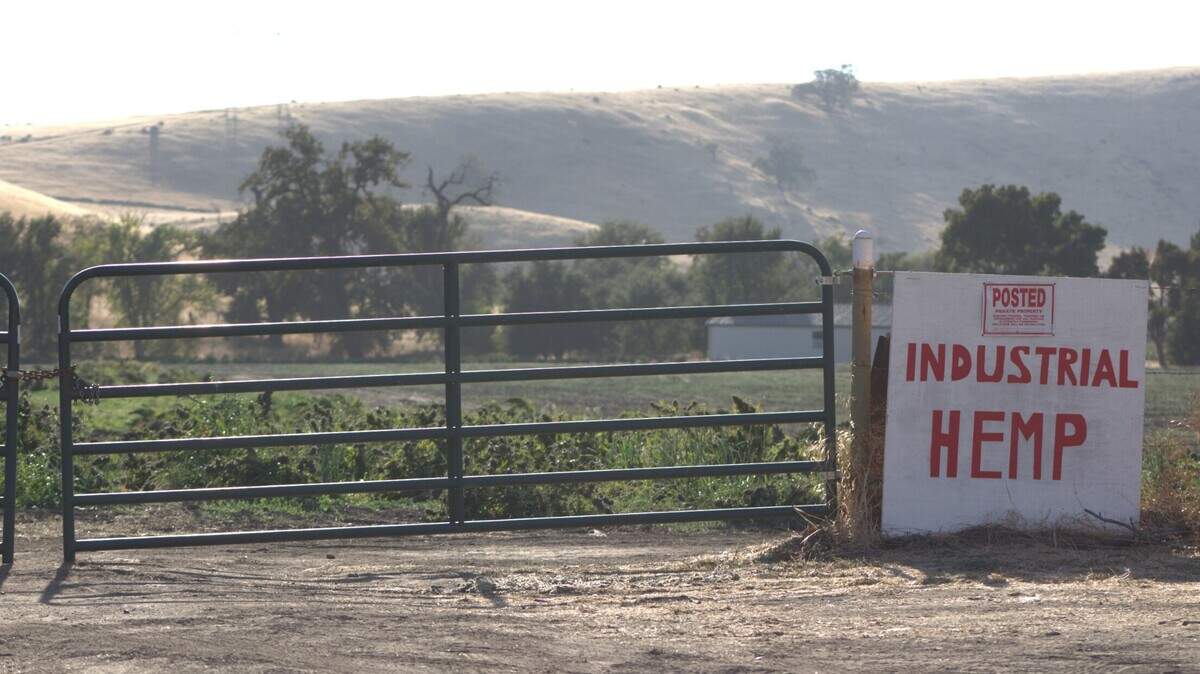
Sutter County hemp farming is back. But what is its long-term fate here?
Maria Bravo took her turn to speak and did so in Spanish.
As she addressed the crowd through the public comment microphone Tuesday, more than 20 people stood up from the audience seated before Sutter County supervisors. More people stood lining the walls of the packed meeting chambers.
“These employees that stand in front of you are dependent on their job, working on the hemp,” said Bravo, a farm labor contractor. “They are good citizens. They get paid. They have homes. They have children. Their hard earnings support and pay taxes to Sutter County.”
Following the public hearing attended by about 100 people, supervisors voted unanimously to allow industrial hemp farming this year under stricter conditions, changing an emergency ordinance that had effectively banned cultivation and processing of the crop into December.
Among the crowd were dozens who identified themselves as local hemp workers, farmers and others with farm-adjacent businesses. But several spoke out against the decision supervisors ultimately made, including high-ranking county officials Sheriff Brandon Barnes and Agricultural Commissioner Lisa Herbert.
Herbert wrote a letter to supervisors detailing her concerns about hemp farming, including past instances of a death threat made against her and a grower who she said once tried putting cash into the assistant ag commissioner’s pocket as a bribe. She said her workers have also faced intimidation when inspecting and testing hemp fields. The Yuba-Sutter Farm Bureau wrote a letter opposing hemp, too.
“It’s a very difficult decision for us to come out against industrial hemp knowing that we are here to protect agriculture,” Herbert said at the meeting. “But there’s a lot of things that are glaring. It’s an entire industry, it’s not just one grower.”
What’s allowed now?
Some residents and county departments have taken issue with the fledgling industry in the years since 2019 when hemp farming was first allowed in Sutter County. A renewed backlash began late last summer, as the smell from a nearby field stunk up the small unincorporated town of Sutter. Meanwhile, the county continued losing money regulating growers.
With the emergency ordinance expiring around mid-December, farmers will have time to apply for licenses ahead of the upcoming season, but the long-term fate of industrial hemp farming in the county remains uncertain.
Supervisors have gone back and forth on hemp farming for the past several months, leading to a moratorium on its production and processing enacted in December. By late January supervisors had voted to extend the temporary ban throughout the year.
The vote Tuesday updated that emergency ordinance to allow for hemp farming this year under stricter guidelines.
“This is quite a complex issue that we’ve been dealing with for the past five months,” said Steve Smith, county administrator.
The approved changes to the ordinance add a 2.5-mile buffer zone around cities and “sensitive receptors,” such as schools, churches and hospitals. A quarter-mile distance is now required between hemp operations and offsite residences. Under the new rules, the county banned growing indoors or in “hoophouses,” and licensed growers may not use outdoor lights between 10 p.m. and 6 a.m., unless they’re out of sight from neighboring properties.
The underlying ordinance called for much shorter buffer distances, and had lower licensing costs, which county officials have said led to more than $400,000 in losses since first allowing hemp in 2019.
Supervisors added more last minute adjustments while approving the revisions. They doubled the recommended licensing cost from $7,500 to $15,000, and added a request from the agricultural commissioner to conduct a “comprehensive public report” on this year’s hemp farming. They also asked for sheriff’s deputies to accompany county workers when conducting inspections at hemp farms, with the cost of the escort billed to the growers.
“If we don’t go forward with the exemptions … we’re punishing the people who are trying to do it right,” said Supervisor Jeff Stephens. “And I’m not for that.”
Words from the public
Armando Sandoval, a first-generation Mexican immigrant, was one of about 30 people to speak before supervisors voted.
He said that in 2019 he began working with Luke Wilson and Tyler Tamagni, local hemp farmers who collaborated with county officials in recent months to draft the compromises supervisors approved. Sandoval, a Sutter County resident, said he was promoted and earned a year-round position, rather than a seasonal job, which he said has supported his four children.
“This job is helping me achieve my American dream,” he said.
Tamagni drew a line between his operations and that of other hemp farmers accused of bad practices and violations.
“We are law-abiding, community-oriented farmers and we deserve to be treated with the same respect and fairness as any other grower in Sutter County,” he said. “It would be unthinkable to shut down an almond industry over one bad actor committing insurance fraud, but that’s exactly what’s happening to responsible hemp farmers like us, punished not for what we’ve done but for what others have done under the same crop name.”
Those who spoke in favor of hemp talked about the industry’s future potential, economic benefits, the rights of farmers and even what the plant contributes to soil health. Those who spoke against the crop were wary of its association with the marijuana industry, the possibility of crime and potential hazards related to the strong smell it emanates.
Supervisor Mike Ziegenmeyer, who had been strongly against the ordinances allowing hemp grows after a number of complaints from his district, but supported the new revisions, said hemp growers should prepare to put the matter on a ballot.
“We’re going to let the people vote on this, because that’s where this should go,” he said. “It shouldn’t go to the five supervisors, it should go to a vote of the people.”