
Our ‘greatest living poet’ returns to Wheatland. Why Bob Dylan resonates still
Bob Dylan sat on a piano bench with his back to the crowd, holding a guitar as the band followed his lead.
From a video of the opening number shot from the audience, many people in the crowd didn’t seem to realize that this legend co-headlining last summer’s Wheatland show had begun playing.
Early evening sun and sweltering heat filled the outdoor amphitheater. People milled to and from the seated section as the band’s arrangement took shape.
After a couple of minutes Dylan, wearing all black except for a white stocking cap, put down the guitar, faced the piano keys and began singing “Highway 61,” at which point the crowd stirred.
It was an unassuming and characteristically unpredictable start for a performer whom writers, critics and fans alike have spent the better part of a century struggling to pin down, proving the troubadour, if nothing else, immune to definition.
“If you like him you like him, if you don’t you don’t,” said Bert Angelisi, owner of Yuba City record store Sound Attitude. “He doesn’t care, which is, I think, a great way to be in life. Everybody’s not for everybody.”
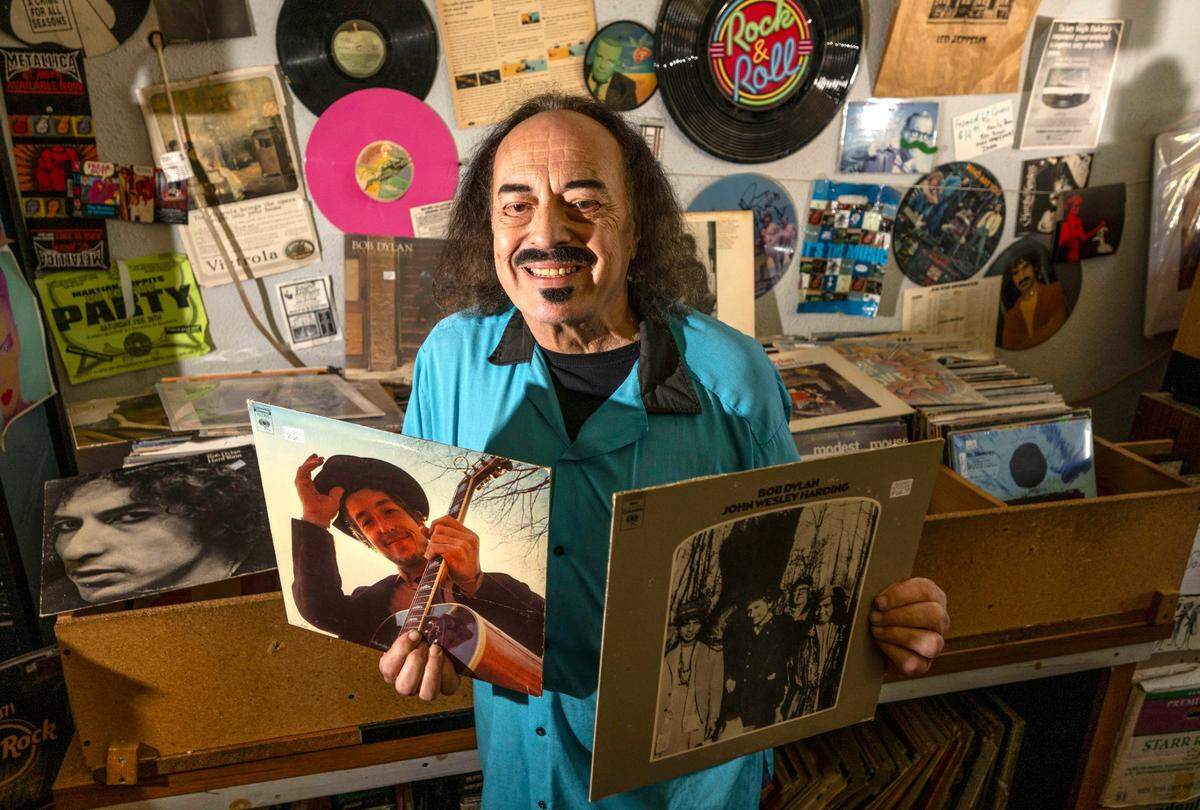
But for many people, and for a very long time, Dylan has been for them. His mercurial, enigmatic nature. His vivid, time-defying songs. His ever-evolving and unique performances. Because of all that, understanding the makeup of who’s among “them,” perhaps now more than ever, has become as hard to identify as the man himself.
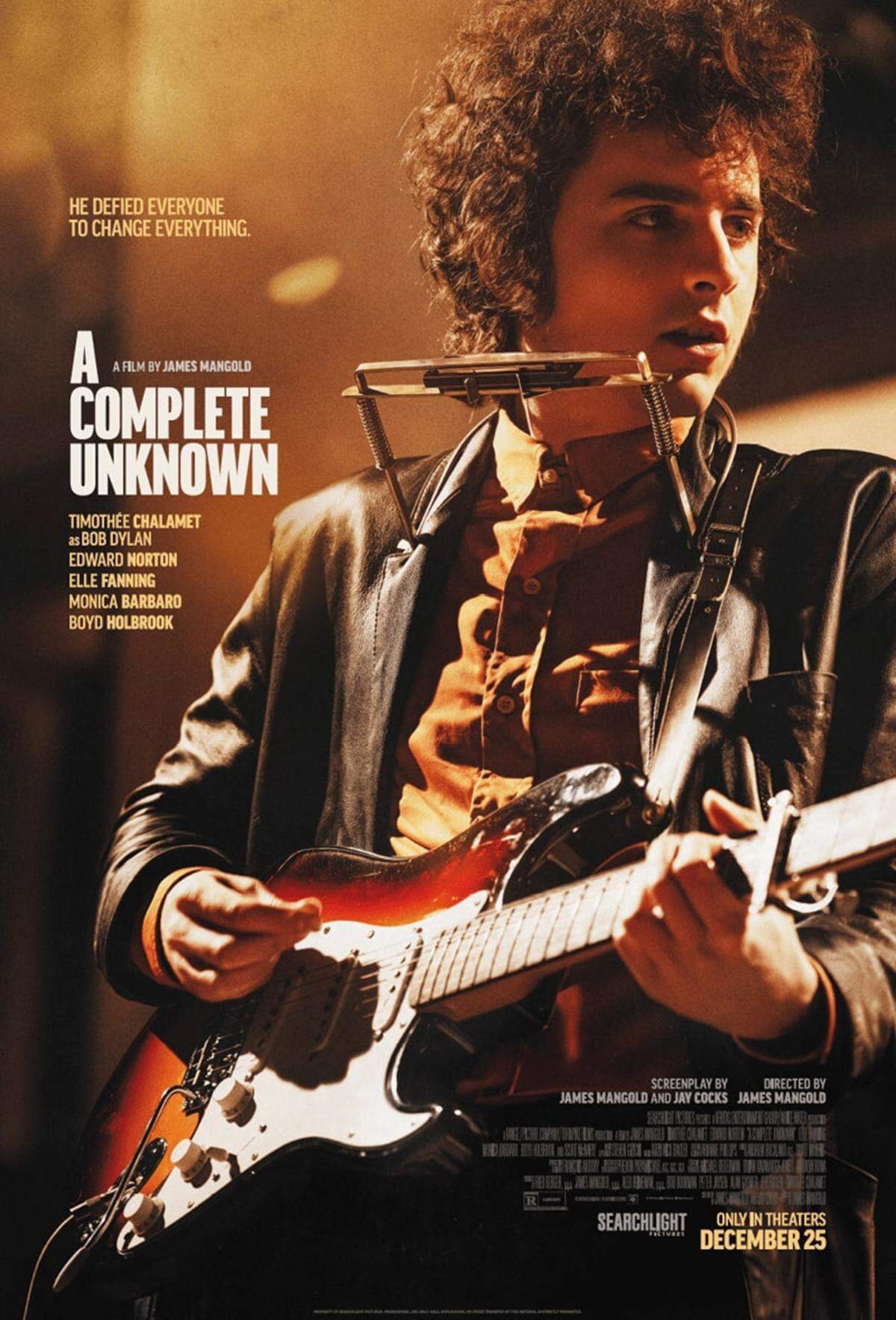
On the heels of steady touring and the success of an Oscar-nominated biopic, “A Complete Unknown,” starring Timothée Chalamet, Dylan’s mystery and appeal — which has increasingly proved timeless — has reached another generation whose parents and grandparents — like Angelisi — fans, fiends or otherwise, understand the phenomenon well.
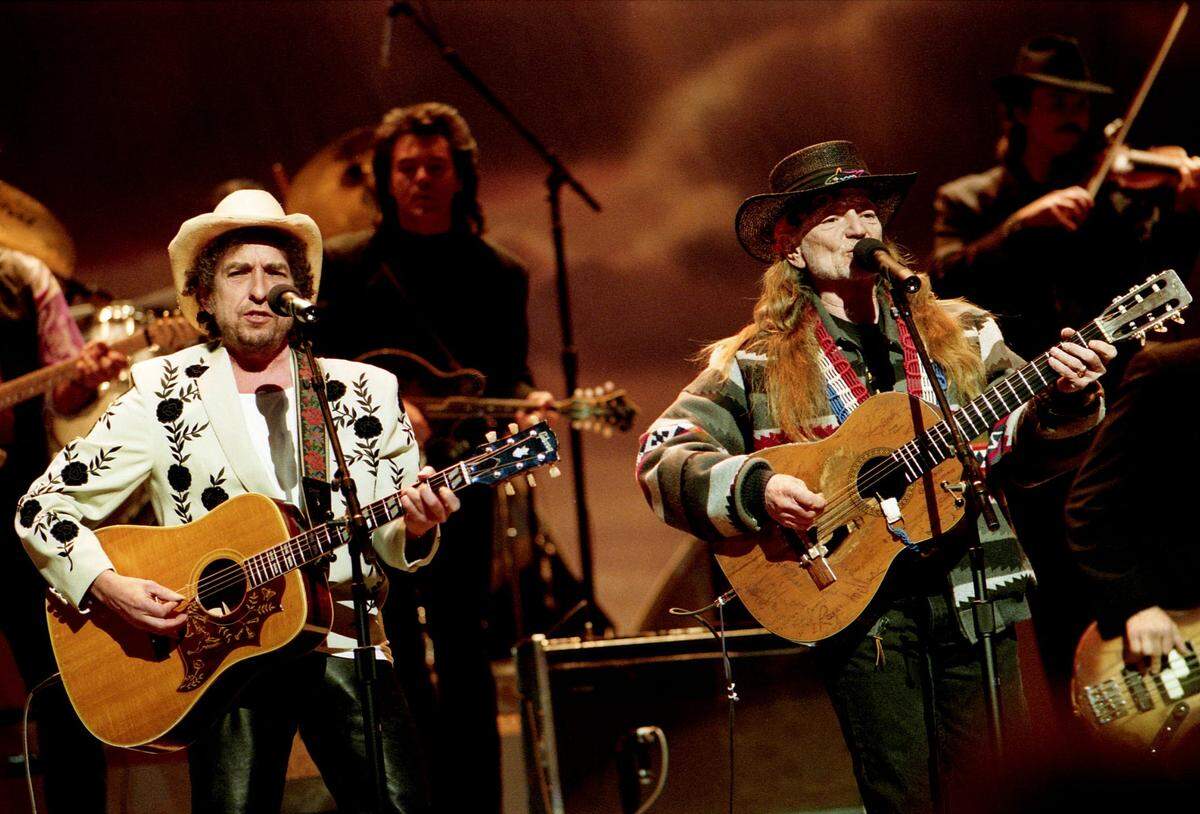
Earlier this week Dylan, a couple weeks shy of his 84th birthday, returned to the road, capping a leg of his own tour this spring and signing on for more than 30 stops of the Outlaw Music Festival circuit, in which he and Willie Nelson, 91, stand atop the ticket. The tour, celebrating its 10th anniversary, returns to the Toyota Amphitheatre in Wheatland Sunday, May 18, with tickets ranging from about $37 to $310.
“Anyone who’s got any sense of what’s going on in culture, this is the chance,” said Howard Sounes, author of “Down the Highway: The Life of Bob Dylan.” “This is like the last chance to see the greatest living poet in the world. Go and see him, my God. This is a chance to see a genius on stage, before he, you know, in the last few years of his life.”
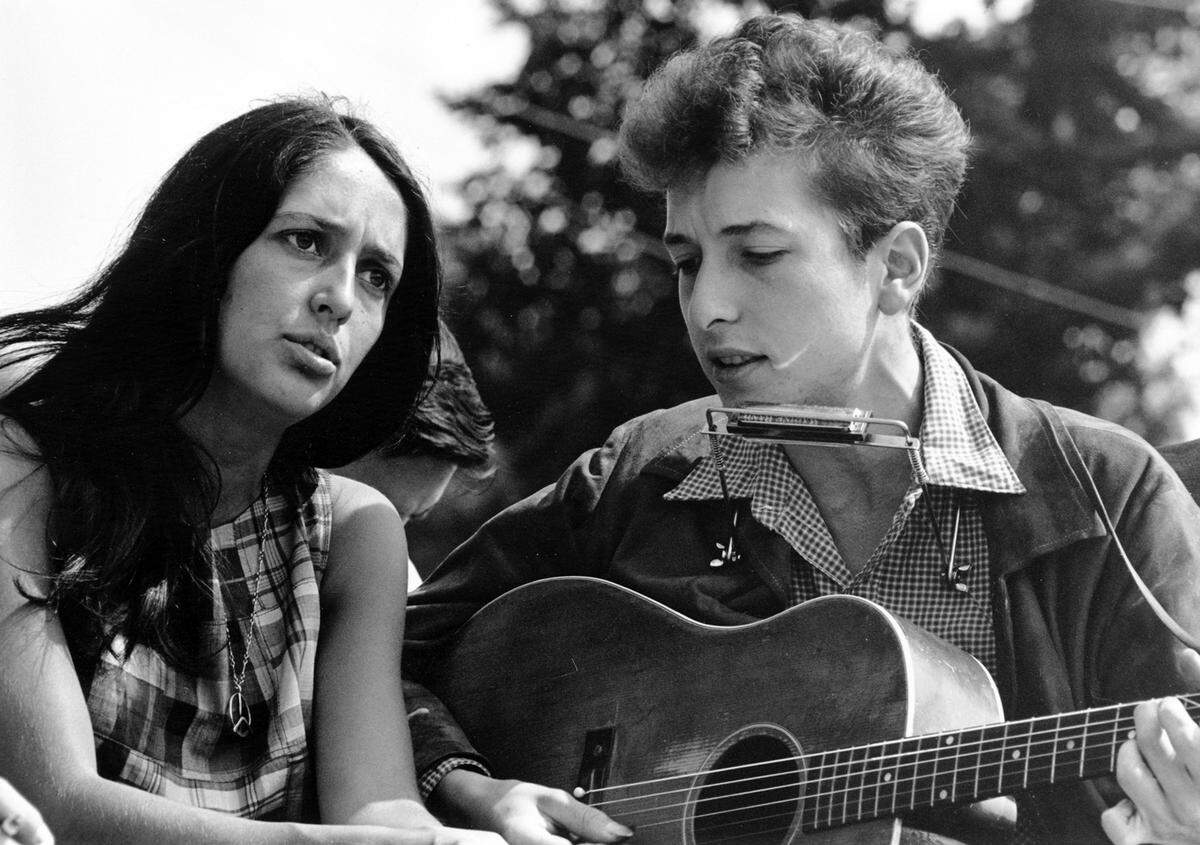
People young and old have gravitated to Dylan’s songs since he rose to fame in the early 1960s, rambling from small-town Minnesota to Greenwich Village in New York City, where he ascended from the city’s folk scene to the national stage relatively quickly.
Dylan modernized folk music for a broader audience and evolved through several iterations and styles, with nods to others, while remaining distinctly his own. All the while he’s continued the troubadour quality of folk tradition: spending his time on the road and speaking to the people of his time, whichever time that may be.
To young people he voiced a progressive will for change and protest, a description Dylan has consistently challenged, despite the insistence of others. To those older than Dylan, he showed a level of depth beyond his years, drawing inspiration from artists and writers who came before him, often channeling parts and pieces of their music into a modern framework.
His journey began 60 years ago. Somehow, more than 600 songwriting credits later, what was a modern framework then has held up to evolving standards of modernity.
That leaves one central question and, characteristic of Dylan himself, two ways to view it.
Why is it that people of all ages have continued to resonate with Dylan’s music through decades of cultural change? Conversely, how is it that Dylan made music so malleable yet constant enough to withstand the currents of time?
It often starts with the words.
The songwriter and poet
“Then they’ll kill him with self-confidence/After poisoning him with words” — “Desolation Row”’ (1965)
Dylan, a self-sung “man of contradiction,” occupies a rare place in American pop culture. His longevity puts him in rarefied air. But what separates Dylan from his peers who remain, is his specific level of popularity.
Dylan is mainstream and Dylan is niche and both are true.
People come to his music in different ways, and at different times — in history and in their lives.
Angelisi, now in his 70s, was young when he first embraced Dylan’s music. He grew up in the Bay Area about a decade behind Dylan. He knew of Dylan’s music, but not until he was a bit older, hearing the memorable refrain from “Rainy Day Women # 12 & 35,” did his interest pique.
“Mainly it’s because we were potheads, and he kept singing that chorus, ‘Everybody must get stoned,’” Angelisi said. “Like, ‘OK, let’s try this guy out.’”
Almost 60 years later, Angelisi has tickets to see Dylan perform in Wheatland. He’s going with one of his daughters, who’s 39, his 5-year-old grandson and others.
“I said, ‘you better get with it because these guys are senior citizens and you’re not going to get many chances, so you better do it,’” he said.
Many point to Dylan’s songwriting and lyricism when explaining his appeal. He, somewhat reluctantly, accepted the Nobel Prize in Literature, after all. Which makes it ironic, and also telling, that even Dylan’s more crude lyrics have enraptured fans over the years.
It’s not quite the songwriting equivalent of the Midas touch, but it’s similar.
“He’s a songwriter who is up there with the great writers in literature,” said Sounes, the Dylan biographer. “Up there with Shakespeare and Dickens and all the greatest writers, (W.B.) Yeats and T.S. Eliot. He’s one of those guys.”
“But he’s also a really quirky, interesting guy,” he added. “He’s a bit mysterious.”
The folk music that influenced Dylan’s early career came before his time but spoke to him nonetheless, not unlike how his early music has resonated with subsequent generations.
That folk tradition reflects the feelings of the present through the prism of the past. In that, it speaks to the future — a folk song sung later reflects the nature of that time, too.
It’s similar to a time capsule, but apparently less straightforward to explain. When done well, the resulting song embodies ideas and themes that are universal.
“The working process is really strange, unusual,” Sounes said. “It’s almost like magic, the songs come to him like magic. And the people he works with find him completely inexplicable, really.”
Some, including Dylan later in life, have staked his place among not just the greatest writers, but the greatest storytellers in history.
“In his Nobel lecture he compares himself explicitly to Shakespeare and Homer,” Sounes said. “I mean, who would have the guts to compare themself with Shakespeare or Homer? You would have to be really stupid, or really brilliant, and I think he’s the latter, really.”
The intrigue of the Dylan enigma
“I’m a man of contradictions, I’m a man of many moods/ I contain multitudes” —“I Contain Multitudes” (2020)
Of course, everything written or said about Dylan comes with the caveat that he would very likely disagree. And he would often, if not always, make his case with conviction, if not persuasion.
Dylan’s unknowability adds to the intrigue. This never-ending feedback loop perpetuates a global community, and economy, centered around the enigma that is Dylan.
Dylan’s life is full of true — meaning real — contradictions.
“Bob Dylan tells you what it’s like to be a human being,” Sounes said.
Dylan earned the reputation of a recluse despite a lifetime of routinely touring the country and performing before thousands of people. His songs evoke a distinctly American ethos yet resonate globally. Raised in a caring Jewish family, he rerouted his career with a born-again Christian phase. He wrote music accompanying the country’s protests, but consistently rejected the label of protest music.
He always resented being called the voice, or spokesman, of his generation.
“That’s the thing that journalists love because as journalists we all love a kind of a moniker or a label,” Sounes said. “We love that kind of thing because it helps us do our job. But, of course, you know, he hates it because it was never true, and he was never politically active.”
As music’s place in popular culture increasingly commercialized throughout his career, Dylan found mainstream success while cutting against convention, and consequently grew his own myth.
‘Kind of a beautiful thing’
“The man said, ‘Get out of here, I’ll tear you limb from limb’/I said, ‘You know, they refused Jesus, too, ‘ he said, ‘You’re not him’” — “Bob Dylan’s 115th Dream” (1965)
Chris Holmes owns Sound Annex, another Yuba City record store, where sometimes something sort of beautiful happens. Teenagers walk into his store looking for certain genres characteristic of budding musical interest: shoegaze, heavy metal, hip-hop.
“But it’s really kind of a beautiful thing when you have a kid who’s maybe 15 or 16, and they come and they go, ‘Hey, do you have Bob Dylan?’” Holmes said. “It’s like they don’t know what album they want, but they want Bob Dylan.”
Holmes, 40, opened up shop a few years ago. Among other jobs he held previously was at Sound Attitude, working for Angelisi, with whom Holmes said he remains close and credits with his start in the business. The first record Holmes sold at Sound Attitude was one of Dylan’s.
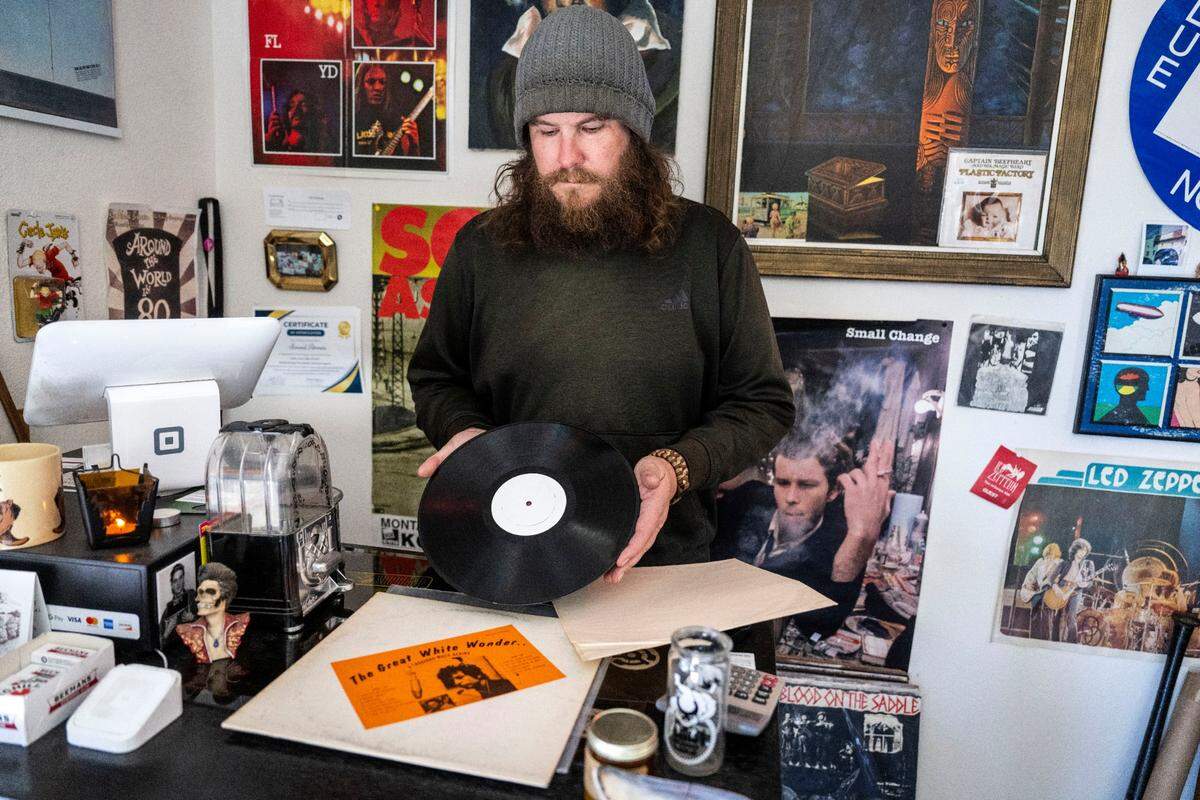
“What’s fantastic is you can still listen to Bob Dylan records, from the first ones all the way through current releases, and it’s so unique that … maybe your taste will evolve as a result of hearing that,” Holmes said. “It’s like whenever somebody says something profound to you and it puts you in your thoughts. Bob puts a lot of listeners in their thoughts. He’s trying to get you to think.”
As proprietor of Flagging Down the Double E’s, a Substack site and newsletter dedicated to past Dylan concerts — named after a fairly obscure lyric — Ray Padgett has thought a lot about Dylan. He has also grown very familiar with the fan community.
“I’d say most of the energy of Dylan fandom at this point is coming from 20-somethings,” Padgett said. “A lot of that is due to the movie (‘A Complete Unknown’).”
Padgett, 38 and no longer in the category of “young Bob Dylan fans,” discovered Dylan as a high schooler in the early 2000s. His dad had some of Dylan’s older records, but his fandom sparked while attending a live performance March 5, 2004, at the Aragon Ballroom in Chicago.
Specific shows, and their precise dates, hold special meaning for many Dylan fans.
Freewheelin’ internet
“Their minds are filled with big ideas/ Images and distorted facts” — “Idiot Wind” (1975)
From early in Dylan’s career, recordings of his music would be leaked, shared and sold as bootlegs at an almost cartoonish rate. A kin to that culture, as technology evolved, the internet became the quasi-marketplace for acquiring music outside of record stores.
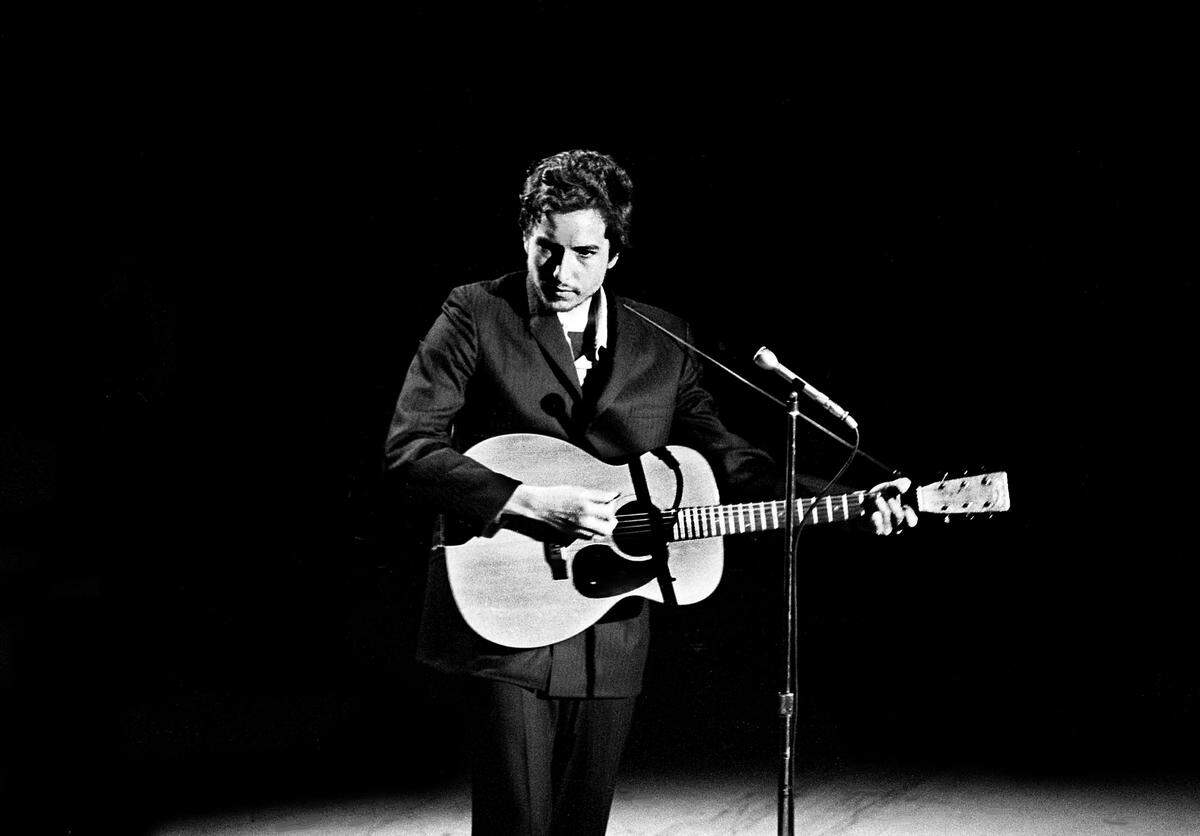
Padgett entered the world of CD-R swaps, meaning Dylan fans would communicate on forums and mail each other audio discs of live performances.
“This was the era when the internet was fast enough to find other people to trade music with but not actually fast enough to download the music itself,” Padgett said, “at least not in lossless quality.”
Not only did Dylan’s music reach a new generation of Millennials, but the ostensibly underground culture of collecting and sharing his music also translated to modern times.
Through those swaps, Padgett began cataloging past performances and learning the intricacies of Dylan as a live performer, particularly during his roughly three-decade run fans dubbed the “Never Ending Tour.”
During long stretches of that time, setlists varied drastically from show to show. Through an online fan forum at the time, users wagered in what was called the Dylan pool, betting which songs he would play next, with weighted scoring for each song based on its popularity.
Diehards had plenty to follow. These weren’t the never-ending reunion tours mounted by some of Dylan’s peers. Instead, each show stood apart, and the moments between each song held suspense, paid off with surprise.
Which would play next? How would Dylan play it? Who’s leading the pool?
The demographics of Dylan fandom encompass a broader spectrum than some may imagine, Padgett said, although the stereotype of “white-haired Boomers” at concerts holds true. Having known the fanbase for decades, he said that more young people have recently been at shows and in the community.
“The guy is in his 80s and having this round of fresh enthusiasm from young people,” he said. “I don’t know that many of his peers can say that.”
But, why?
“The fact that he’s sort of an odd duck, a weirdo,” Padgett said. “It appealed to me when I was in my 20s. The fact that this isn’t just some guy singing the ‘60s greatest hits for an audience as old as he is, but who is just following his own muse and refusing to do what people want him to do.”
The performer
”Take me on a trip upon your magic swirling ship/My senses have been stripped/My hands can’t feel to grip” — “Mr. Tambourine Man” (1965)
The brilliance of Dylan’s songwriting has near consensus, but his idiosyncratic stage presence, from the way he sings to the way he directs his band, may have converted as many new fans as his words. Even if some still lament his distinct hoarse voice and, at times, indifference to showmanship.
“I think younger people, especially, are appreciating the whole of Bob Dylan,” Padgett said. “Every part of it, not just isolating this one little sliver that is the written word and ignoring the rest like maybe was slightly more common back in the day.”
The way Dylan performs is not how he’s always performed.
His style blends methodical rehearsal and freeform improvisation. Remember, this is a man of contradiction.
“He basically rehearses them very hard so they sort of have this hive mind, but he doesn’t want to rehearse the literal songs to death so they lose what makes them special on stage,” Padgett said.
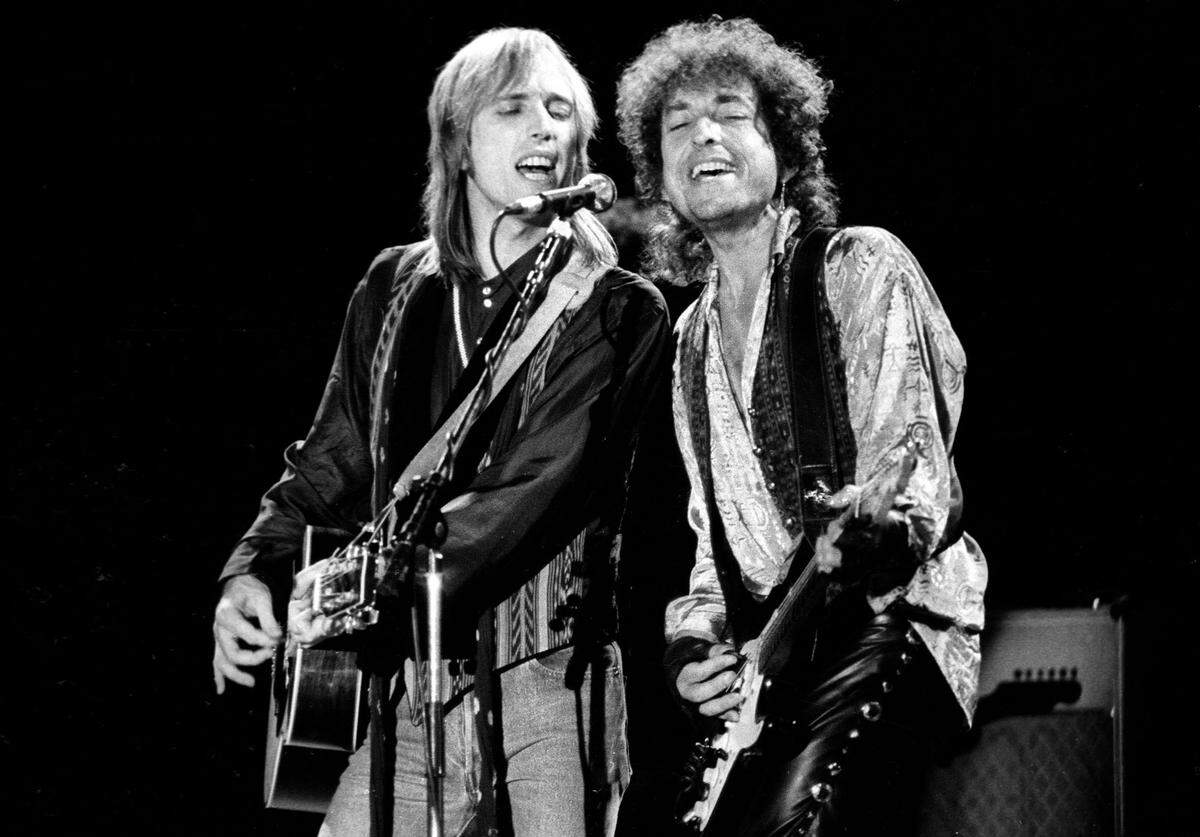
The thought of Dylan in concert may conjure an acoustic guitar and harmonica. He still plays those instruments, but now on stage, he’s mostly positioned behind a piano. He and his musicians don’t assume the stature common to other bands: facing and playing to the crowd, perhaps with performative flair.
Dylan’s style makes that impractical, maybe even impossible. To see each subtle cue, band members form a semi-circle around the piano, positioning themselves with sightlines to their leader, anticipating his progressions and picking up on his arrangement for a given song on a given night.
In other words, many shows surprise them, too.
“They’ll be looking at his fingers on the piano very closely, they’ll be looking at his mouth on the microphone very closely,” Padgett said. “I joke that some of them look like they don’t blink the entire show because they’re watching him that closely.”
The days of constantly changing setlists are gone. Dylan has kept his shows much more consistent since returning to the road in 2021 for the Rough and Rowdy Ways World Tour. But the way he performed each song could change significantly from night to night.
Rather than waiting for which song would come next, fans began to anticipate how he would play it.
“He’ll pat his hand down like, ‘quiet down,’ or sort of point at someone to do a part,” Padgett said. “They’re subtle gestures but he’s like a conductor conducting these guys and every night is different. They have to follow him extremely closely.”
Traveling through time
“I waited for you on the running boards/Near the cypress trees, while the springtime turned/Slowly into autumn” — “Idiot Wind” (1975)
In the audience, waiting for Dylan’s set to begin, Evan Kennedy still gets nervous.
A longtime fan and Bay Area poet, Kennedy, 42, was first drawn to Dylan’s lyrics.
“He has a great ear for the musicality of English,” he said.
But as someone who’s now seen Dylan perform more than 120 times, he’s also drawn to the sensory experience the living icon creates in concert, and has a ticket to the Wheatland show.
Kennedy noted the nuances of Dylan’s phrasing, the way he accentuates some vowels, such as when singing “Idiot Wind” and other syllables that are otherwise less prevalent. The pace of a performance, whether sung faster or slower, is another variable that changes the complexion of a song when tweaked.
“He’s reinventing the delivery of the line and reinvigorating the language in his live performances,” Kennedy said. “It becomes such a vital thing, despite having played certain songs hundreds of times.”
Sounes, in his Dylan biography, wrote about how the sound of a popular phrase such as “don’t think twice, it’s all right,” may vary depending on whether it was “snarled, sung with resignation, or delivered with an ambiguous mixture of bitterness and regret.”
One intonation may express sadness, another comeuppance. The line could sound like it’s coming from a bitter ex — or an understanding one.
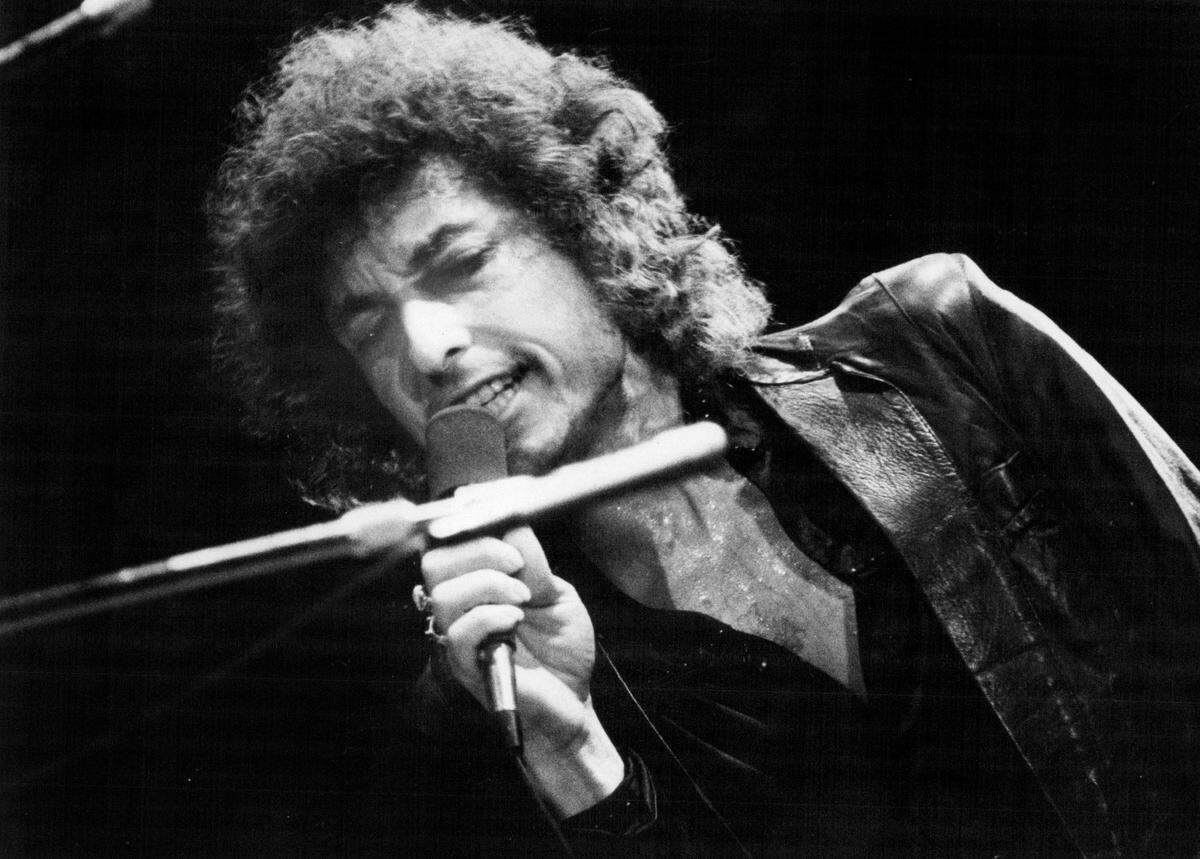
“It’s almost like his phrasing, his delivery, can do the same sort of thing that a change of key does to music,” Kennedy said. “If you go from the happiness of a major chord to the sadness of a minor chord.”
Dylan’s songwriting manipulates time in a way that other forms of storytelling struggle to capture.
He evoked age-old conflicts and caricatures of outlaw criminals in a way that resonated with people living through modern wars and transgressions. The imagery likely holds for future conflicts and indiscretions, too.
He sang “even the president of the United States sometimes must have to stand naked,” as Sounes pointed out, about 60 years ago, with artistic truth and ambiguity that pertains to every president since and in perpetuity.
Narratively, the songs “Tangled Up in Blue” and “Simple Twist of Fate,” among many others, lyrically traverse stretches of time and memory from different character perspectives. For some, the performances also create a distinct, even strange, sense of time.
Kennedy felt that when watching Dylan perform “Visions of Johanna” on Feb. 22, 2002, in Dallas, and later connected that to a 2010 performance of the same song in Oakland.
“It was almost like time was suspended,” he said. “It was almost a mystical experience. He was performing the passage of time by performing the song. It was almost like a portal was opening that makes all the times I hear that song live simultaneously.”
Dylan’s performances of his words, and the fact that he keeps performing them, transcends time and truth and generations of fans across the world.
“He has said that the songs he writes are meant to be performed, and meant to be performed on stage,” Padgett said. “It’s not just that they’re meant to be recorded on an album once and moved on from. They’re meant to live and breathe on these stages. I think that’s what he knows, I think that’s what he loves.”
Staying on stage
“Inside the museums, infinity goes up on trial/Voices echo this is what salvation must be like after a while” — “Visions of Johanna” (1966)
Ron Botelho, 71, attended last year’s Wheatland show. The performance, to his eye, was not great. But it was memorable, and worthwhile in its own way. With comped tickets from a relative who works with the tour, he’s also attending the upcoming show.
“I still felt like it was almost a badge of honor to see a bad show by him,” Botelho said. “That’s such a legendary thing, you know. And you come home and you think about it a lot, it’s pretty interesting.”
Botelho, a bass player who now lives in Marysville, had lived in Los Angeles where he was a member of the band Blood on The Saddle, and played punk music for about 40 years, until he was 62.
“I literally had to leave Hollywood and move away to get away from it, otherwise I would still be playing,” he said.
Vinnie Pantaleoni, born in Yuba City, played bass for Steel Breeze, a band known for its 1982 hit “You Don’t Want Me Anymore.” Now 70, he still performs with a Sacramento-based country band, and he said he’ll continue as long as he can.
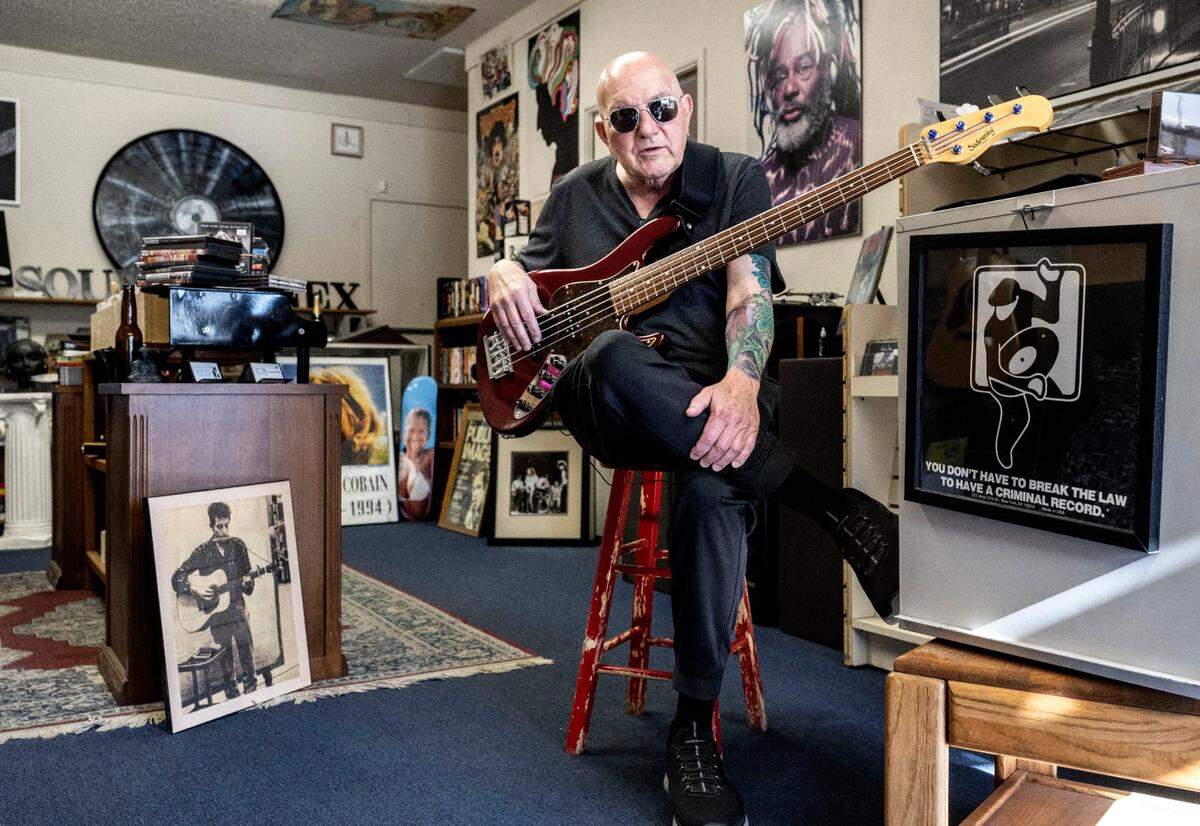
“It’s in my blood,” he said. “It’s in my blood.”
Dylan, on the other hand, amassed a fortune throughout his career, and enough experience to fill several lifetimes. Which begs the question: Why does he still play?
For a man of so much mystery and intrigue, talent and success, adoration and disagreeability, his continued touring well into his 80s may be the point of speculation most easily understood.
“It’s in his blood,” Pantaleoni surmised.
Dylan’s a walking contradiction, impossible to define, just like everyone else. But more than that, he’s a guy with some songs to share. And he’s still around to share them.
This story was originally published May 15, 2025 at 5:00 AM.