Sacramento County supervisors create new behavioral health board, dissolve others
AI-generated summary reviewed by our newsroom.
- Supervisors create a new Behavioral Health Commission, dissolving two boards.
- New commission prioritizes combined focus on mental health and substance abuse.
- Commission’s 21 members include experts, residents with lived experiences, and officials.
Residents with experiences living with mental illness and substance abuse will sit on a new commission, advising the Sacramento County Board of Supervisors on how to improve behavioral health policy, programs and procedures in the region.
On Tuesday afternoon, the county established the Behavioral Health Commission, which will start work in the next 90 days. In creating the commission, the Board of Supervisors unanimously approved the dissolution of the county’s Mental Health Board and Alcohol and Drug Advisory Board. The tasks of the two groups will be delegated to the new commission.
The former boards consulted with community members and sent recommendations to the Board of Supervisors on each respective topic. The new Behavioral Health Commission seeks to prioritize mental health and substance abuse treatment side by side, the county resolution stated.
Last week, supervisors took into record the Mental Health Board’s recommendations on handling non-criminal crisis calls to align with the Sacramento County Sheriff’s Office’s policy responding to mental health calls. In February, deputies stopped responding to non-criminal mental health calls following a federal court ruling.
The Mental Health Board urged the Board of Supervisors to improve response to these calls and increase emergency staffing, calling on them to take “immediate action.”
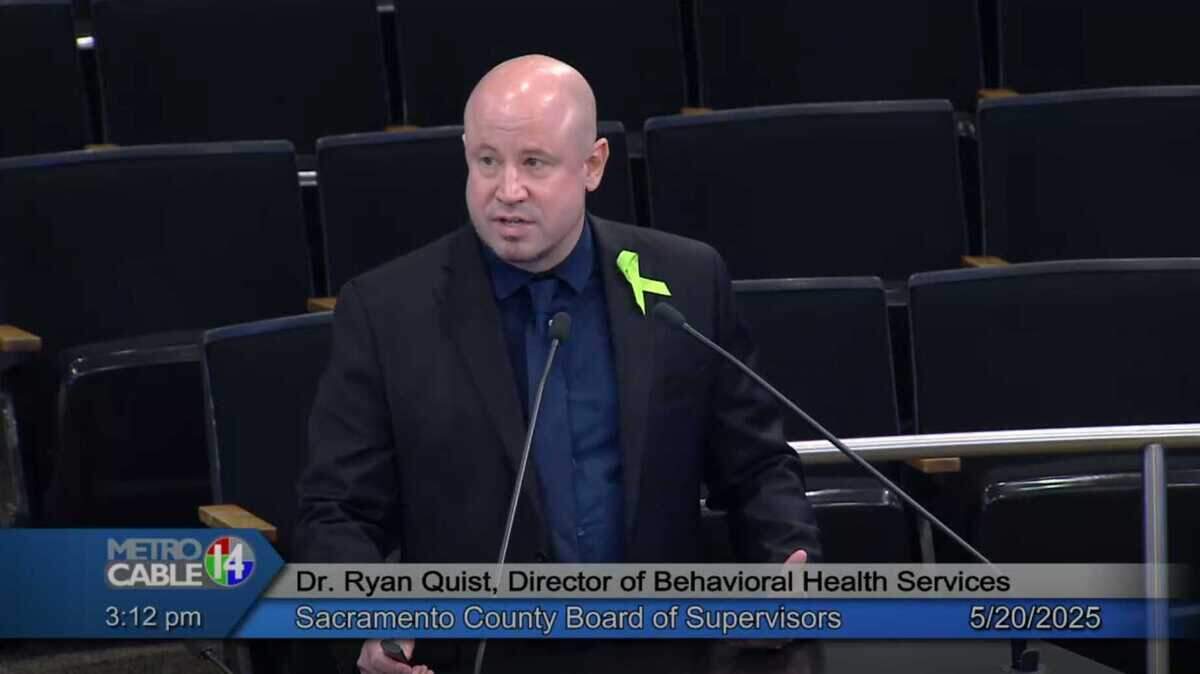
Ryan Quist, behavioral health director for Sacramento County, said the Mental Health Board and Alcohol and Drug Advisory Board will have 60 days to disband.
Tim Lutz, the director of county health services, said the handling of non-criminal crisis calls will “continue to be built up and enhanced.”
Supervisors were in strong support of the creation of the commission. Supervisor Richard Desmond said the Behavioral Health Commission will create “more forums where we can be working together.”
“I think that will lead to a much more successful result for people, because I do think we operate, tend to operate in silos, far too often,” Desmond said. “With complicated issues like this, we need to be talking more together, and have more forums where we can be working together.”
The Behavioral Health Commission will have 21 members, including a supervisor, five residents with a background in mental illness or substance abuse, five residents who have a family member with a mental illness or substance disorder and 10 “public interest representatives,” Quist said. During the meeting, Supervisor Phil Serna suggested the inclusion of the county’s homeless services director.
Each member may be required to disclose how their experience is relevant to the board’s requirements, Quist said. The county is working on a “compromise” for those concerned about sharing their mental illness or history of drug use, Quist added.
“We are proposing that we would require individuals to self identify which of the seats they qualify for as a part of the application process,” Quist said. “We’re not going to background check or verify what they’re self identifying, but they do need to self identify.”
One in 7 California adults experience mental illness with 1 in 26 living with a serious condition affecting daily activity, according to the California Health Care Foundation.
John Durbin, who said he’s been involved with the Alcohol and Drug Advisory Board for more than 20 years, said the creation of the commission “makes a lot of sense.” Durbin also serves as the clinical quality and training manager for WellSpace Health, which supported the decision.
“What I’ve gotten to see over the last 21 years is that the problems of mental health and substance use disorder and crisis services are all inextricably intertwined,” Durbin said. “Both in terms of the challenges we face, but also in the terms of the solutions we can find together as well.”