
Does a proposed effort to aid Yuba River fish clear a way for predators, too?
AI-generated summary reviewed by our newsroom.
- A $100M fishway project aims to reopen upstream Yuba River habitat to salmon.
- Anglers fear predator fish access could jeopardize protected wild trout fisheries.
- Wildlife officials predict improved migration for salmon, steelhead and sturgeon.
People who know the lower Yuba River see its waters differently.
A conservationist may look for the salmon redds, noting the prevalence of eggs or lack thereof. Engineers see how the weather, snowpack and dam releases affect the river’s depth and flow. Farmers who irrigate from its diversion canals want water when they need it.
For anglers who fish the river, the relationship to the water is intimate in a different way. That’s not to say they care or know more than wildlife and water workers. But they know the water, and the fish within it, differently.
Changes to the intricate variables dictating the river’s flow and ecosystem cause ripple effects throughout the broader system and watershed. To that point, a new project opening access for fish to swim freely to a dammed section of the river protected from predators for decades has caused debate among those who know the river best.
“This is a valuable resource that we don’t want to lose,” said Frank Rinella, a Yuba River angler with the conservation arm of Gold Country Fly Fishers.
“We want to protect it.”
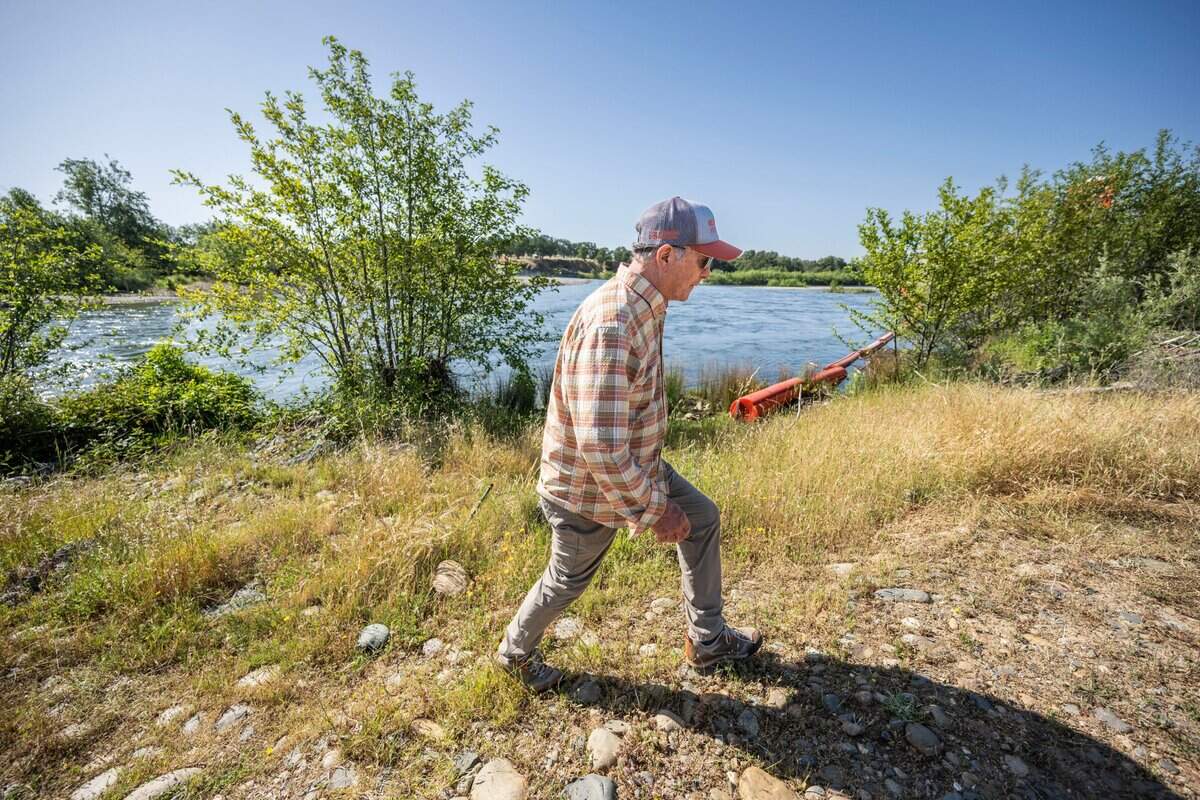
A roughly $100 million project shared by Yuba Water Agency, the California Department of Fish and Wildlife and the National Marine Fisheries Service aims to address declining salmon populations and improve conditions for all species inhabiting the river. But anglers who fish the river fear what could happen to their vaunted trout fishery once its gate opens.
“Our goal is to make the Yuba River as nature-like as possible,” said Willie Whittlesey, Yuba Water Agency general manager. “That’s what we’ve designed and that’s what we’re set out to achieve.”
Building a ‘nature-like fishway’
One facet of the project plans to repopulate spring-run Chinook salmon in a stretch of the North Yuba River, returning the state- and federally-designated threatened species to its native spawning grounds out of reach for decades, as Englebright and New Bullards Bar dams have blocked the fish’s upstream path into the mountains.
But elsewhere in the watershed, on the lower Yuba River at Daguerre Point Dam, exists the point of contention.
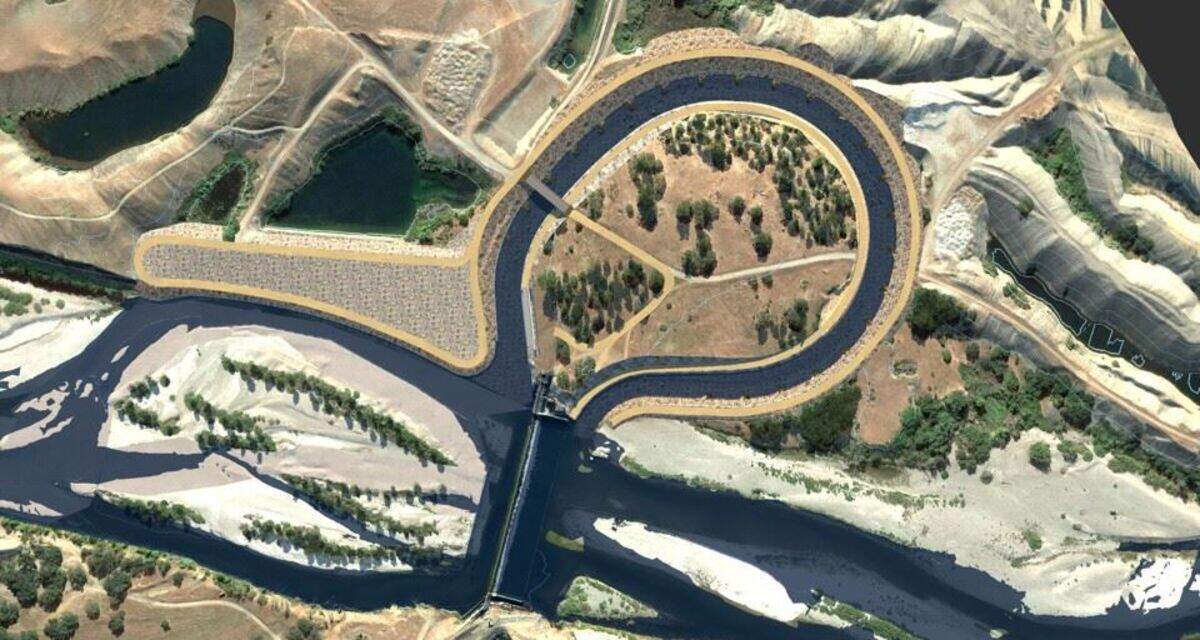
What officials have called a “nature-like fishway” stands as the center piece of the Yuba River Resilience Initiative, with its two-year construction slated to begin in 2026. The designed waterway would effectively act as a channel bypassing Daguerre Point Dam, allowing more fish species to pass up and down the river.
Currently a fish ladder straddles each side of the dam, allowing some fish, such as salmon, rainbow and steelhead trout, to hop the wall, unlocking about 12 miles of the river that dead-ends at the imposing wall of Englebright Dam.
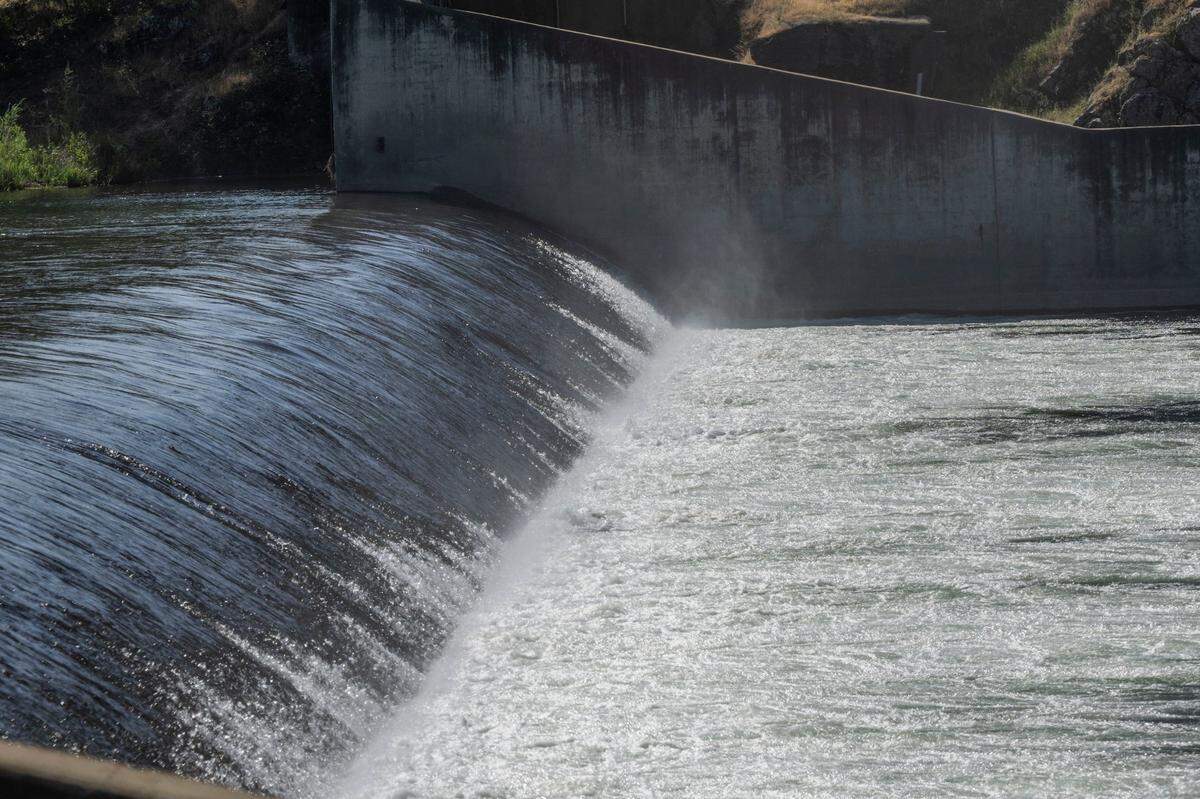
Predators to those fish, such as striped bass and American shad, are currently blocked from those waters by Daguerre Point Dam, a much smaller but still obstructive sediment dam operated by the U.S. Army Corps of Engineers, which also operates Englebright.
Built in 1910 to manage debris pulled into the river from Gold Rush-era hydraulic mining, the dam roughly cuts in half the 24 miles of river.
“There’s a huge amount of gravel that’s spread out and been slowly migrating downstream out of the Sierras since the gold mining era,” said Colin Purdy, CDFW fisheries environmental program manager.
The fishway would clear a path for virtually all fish species to move past the dam. But stakeholders disagree about the consequences of that free passage into salmon and trout habitat currently protected from predators.
Anglers worry the predators will endanger one of the last havens for wild, resident rainbow trout and salmon that spawn there.
But state wildlife officials have said they don’t expect introduction of downstream fish species to affect the existing ones, and that it may even allow the trout fisheries to improve their numbers.
‘Destination fly fishery’
Peter Burnes had his eyes to the sky as a bald eagle glided above the lower Yuba River near Daguerre Point Dam.
“Hopefully he’s hunting for some striped bass,” he said of the bird.
Burnes, Rinella and Wilton Fryer, all conservation-minded anglers and members of Gold Country Fly Fishers, have plenty of ire for striped bass.
They’re among a culture and economy of anglers who prize the 10-plus mile stretch of the lower Yuba River upstream of Daguerre Point Dam for its world-class, catch-and-release fly fishing of resident rainbow trout, many of which are steelhead — large trout that migrate to the ocean and back.
“This is a destination fly fishery on the planet,” Burnes said.
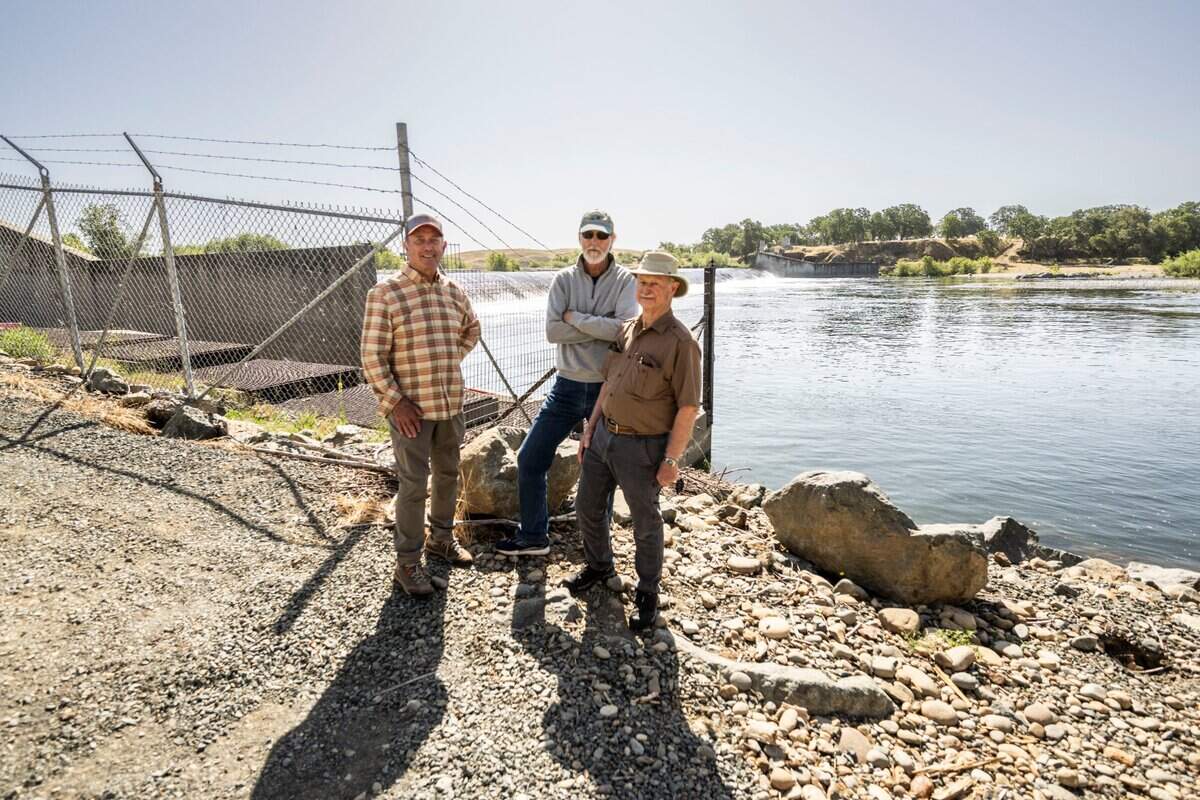
Daguerre Point Dam’s existing fish ladders allow some salmon and steelhead past the dam while migrating back upstream, but have limitations and become gated off in winter months when river flows reach a certain threshold.
“Unfortunately, the fish ladders put in were not well designed,” Purdy said. “They move a very small amount of water. They don’t actually attract fish, because they’re moving such a small amount of water through them.”
Wildlife officials expect the fishway to improve migration for salmon and trout, which already use the ladders, and other species unable to use them. But anglers worry that the fishway will allow predators, particularly striped bass, to disrupt the steelhead haven that exists upstream.
“It’s world renowned, the Yuba River, for the wild fish,” Rinella said. “Very unique. The wild steelhead are just known all over, and wild fish are hard to come by now. Most of the areas have hatchery fish. Wild fish for a fisherman are stronger, more intense, harder to catch.”
“Wild” salmon and trout exist in that portion of the river, Rinella said, although some hatchery fish may also cross into that section. Salmon fishing is not allowed anywhere on the Yuba River, but catch-and-release steelhead fishing is permitted with proper tags and record keeping.
“These fish here are wild,” Rinella said. “They’re the last of a breed, and they’re native.”
To the ocean and back
Salmon and steelhead are anadromous fish. Born in fresh water, they travel to the ocean and return to the river system.
Salmon stay in the river system until about a year old, then migrate to the ocean for a few years and return to the rivers where they spawn. A cycle of salmon journey to the ocean each year while a crop leaves the salt water to return to the fresh water rivers.
Historically, spring-run Chinook salmon, named for the time of year they return to the rivers, traveled from the ocean upstream of the Yuba River Watershed, high into the Sierra Nevada, and spawned in the North Yuba River, hence the initiative to reintroduce salmon to that stretch of water.
A steelhead may journey multiple ocean trips but salmon complete one circuit and live the rest of their lives in fresh water.
Steelhead now, and for the better part of a century, hit a dead end at Englebright Dam when migrating up the lower Yuba River, leaving them with about 12 miles of river upstream of Daguerre Point Dam protected from predators like striped bass.
Striped bass, also called stripers, are not native to the river system, and, along with American shad (another nonnative species), are predators to salmon and trout in the lower Yuba River. Stripers were brought into the rivers as sport fish in the late 1800s and became a thriving species by the early 1900s.
“At the time, no one thought that would be a problem,” Fryer said. “They really didn’t.”
Wildlife officials have said that the fishway access would likely spread the population of stripers throughout the full lower Yuba River, which is exactly what anglers fear. But officials have said more roaming space for stripers would water down the overall predation risk despite opening the door to currently protected waters.
“What we’re trying to do is support and maintain that fishery while expanding opportunities for other native fish to utilize that habitat,” Purdy said.
The reason for the fishway
The wildlife workers and officials who designed the fishway project attest to its net-positive effects on all fish species in the lower Yuba River. Additionally, the process of reintroducing salmon to the river’s north fork and building a modernized fish screen at one of Daguerre Point Dam’s three water diversions, included in the broader initiative, all stand to help fish populations, officials have said.
“It is decreasing that kind of artificially-manipulated environment we have in the Central Valley in California,” Purdy said. “It is one of the most heavily manipulated environments we have probably in the world.”
State wildlife biologists expect the fishway to improve migration upstream and downstream for salmon, steelhead and sturgeon, among other benefits to those species. They may also study whether the fishway increases survival rates for young fish, Purdy said, which may help them reach the ocean and boost their species headcount when returning as adults.
In addition to salmon and trout, sturgeon would have more spawning space for habitat and reproduction, officials said. Meanwhile, they expect the trout numbers — including steelhead in the 12-mile section upstream of the fishway — either to remain the same or increase due to better conditions for developing young trout.
Striped bass congregate at structures, including Daguerre Point Dam, with many roaming the plunge pool on its downstream side. Wildlife biologists expect fewer stripers to haunt that area once able to reach upstream, which they said would decrease predation.
“We’re really removing a pinch point and creating an artery around this pinch point for predators, which is good,” Purdy said.
Water temperatures and migration patterns also factor into the risk associated with striped bass, in a complicated pattern that wildlife experts have said reduces the threat of stripers significantly affecting the trout fishery. Striper migration into the Yuba River peaks in July, with some movement occurring in the months before and after.
“They don’t seem to overlap in time with juvenile fish which is a positive thing,” Purdy said of striper migration.
Officials contest that the cooler water temperatures upstream affect the metabolism of stripers, causing them to eat and prey less.
“We don’t expect striped bass to want to reside much in that cooler habitat we have upstream,” Purdy said. “They might move in. I would expect they move right back out again.”
But some anglers have disagreed with that analysis, pointing to the adaptive qualities of striped bass, which have assimilated to California rivers for more than a century after being transplanted from the East Coast.
‘River-changing’ effects?
Fishing guide Tom Benzing has known the lower Yuba River for nearly 30 years and shares the concerns of other anglers about what stripers may do to the salmon and steelhead upstream of the dam.
“It sounds like a great idea,” he said, “but because the stripers would be up in there, too, the impact on the juvenile salmon and trout could be river-changing, for sure.”
Twenty-five years ago the river was full of redds, nests burrowed into the gravel bed where salmon lay eggs, but that’s no longer the case.
“Now they’re very few and far between,” he said. “Some years you’re hard pressed to even find some spawning salmon.”
The stripers and American shad can’t climb the fish ladders designed to shepherd salmon and trout above Daguerre Point Dam, but neither can sturgeon, another species of concern that wildlife officials hope will benefit from the new fishway.
“The sturgeon all come and they mill down in here,” Rinella said, pointing to the white water foaming beneath the sediment dam. “They won’t go up this front (of the dam), and type of ladder, so they just stay there. They can’t go up any further.”
Green sturgeon are federally recognized as a threatened species, and white sturgeon are under consideration for that classification in California, marking both species — which continue to face poaching threats — as priorities for protection.
“This is a sturgeon project, not a salmon project,” Fryer, an angler, said of the fishway.
Purdy said his team of wildlife workers recently saw the same phenomenon of sturgeon gathering at the foot of Daguerre Point Dam.
“They’re just sitting there wondering if they can go upstream,” he said. “There were almost a dozen of those large-body fish hanging out below the dam.”
Anglers have suggested trapping and hauling the sturgeon above the dam, rather than building the fishway, or building the fishway with some kind of weir or fish ladder that keeps stripers out. But Purdy said that physically moving sturgeon, sometimes decades old and weighing hundreds of pounds, isn’t practical.
“Having to have a place where I’m stopping fish, capturing fish, moving fish upstream, that’s not ideal either for the species or for staffing resources or anything,” he said of sturgeon.
Officials expect water to flow through the fishway at speeds appropriate for passing fish through the river, with rocks and other nature-emulating features for fish to maneuver while migrating.
“It’s not just sturgeon, it’s improving passage around a dam and making it more nature-like,” Purdy said. “… and trying to increase productivity for all of our native species.”
An outside opinion
UC Davis Center for Watershed Sciences professor emeritus Peter Moyle has studied freshwater fish, including anadromous fish such as salmon and trout, for more than 50 years, including work on the lower Yuba River.
He said in an email that the fishway would likely open more spawning and rearing habitat for salmon and steelhead, while also benefiting other native fish species, such as Sacramento sucker, riffle sculpin, resident rainbow trout and more.
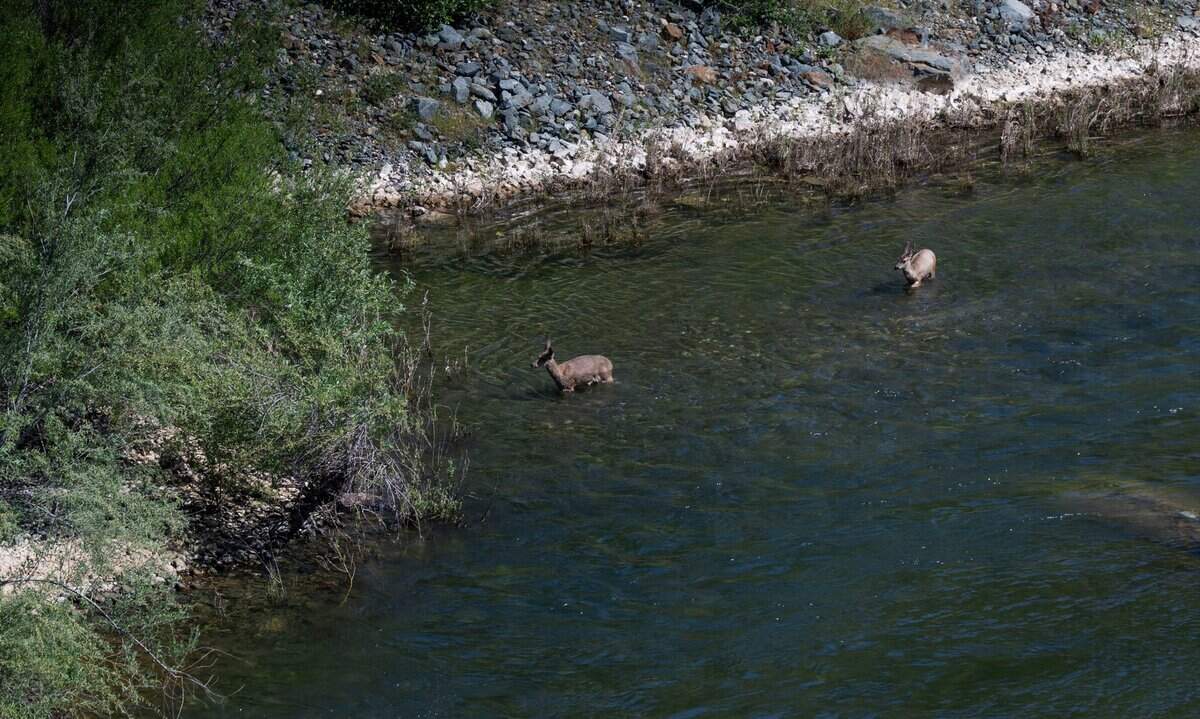
Stripers will likely enter the unlocked upstream waters, Moyle said, but that area’s habitat is not well suited for them.
“But even if bass populations increase and are found to prey on salmon, the trade-off for increased access to good habitat for other migratory fishes (salmon, steelhead) will be worth the cost,” he wrote. “I would be very surprised if striped bass predation would have a significant impact on salmon numbers.”
In the best interest of the fishes, Moyle said the “only decent alternative” would be to remove Daguerre Point and Englebright dams, which would create problems of mercury exposure.
Gary Flanagan, a Yuba River angler concerned about the fishway’s effect on the ecosystem upstream, said that the dilemma at Daguerre Point Dam, in a way, contradicts the typical environmentalist school of thought.
“This is one of the weird cases where a dam is actually protecting a resource,” he said.
Nature-like, not natural
The total project’s $100 million cost, an estimate including maintenance over time, falls primarily on Yuba Water Agency, with help of a $30 million grant from the state.
The agency responsible for New Bullards Bar Dam and other infrastructure throughout the river system primarily focuses on flood protection and water supply management in Yuba County. Collaborating with state and federal partners to build the fishway meets the agency’s mission while aligning with its responsibility to the species that swim the river, said Whittlesey, the water agency’s general manager.
“That relationship is really unique right now on the lower Yuba River,” Whittlesey said. “We’re able to come to the table and collaborate on solutions to fish passage (issues) that have existed for years. Many entities have been concerned about those issues and we’re finally taking actionable steps to improve the conditions there.”
Some anglers and river stakeholders felt left out of the project’s planning, as it was announced in 2023 and set in motion by the time public town halls took place earlier this year. With the project moving forward, officials have said that they will work with anglers to support the fishery, and monitor the waters for changes to the ecosystem.
“We have an opportunity here to reconnect habitats, which is so rare,” Purdy said, “and in an area like the Central Valley, which is so heavily manipulated.”
Some anglers hold out hope for a compromise of sorts to keep predators out of the fishway.
“All we’re asking is, just don’t open the thing wide open and have our salmon destroyed, and say, ‘Oh, we’re sorry,’” Rinella said.
Time will tell what happens when the two sides of the river reconnect for the first time in more than a century.