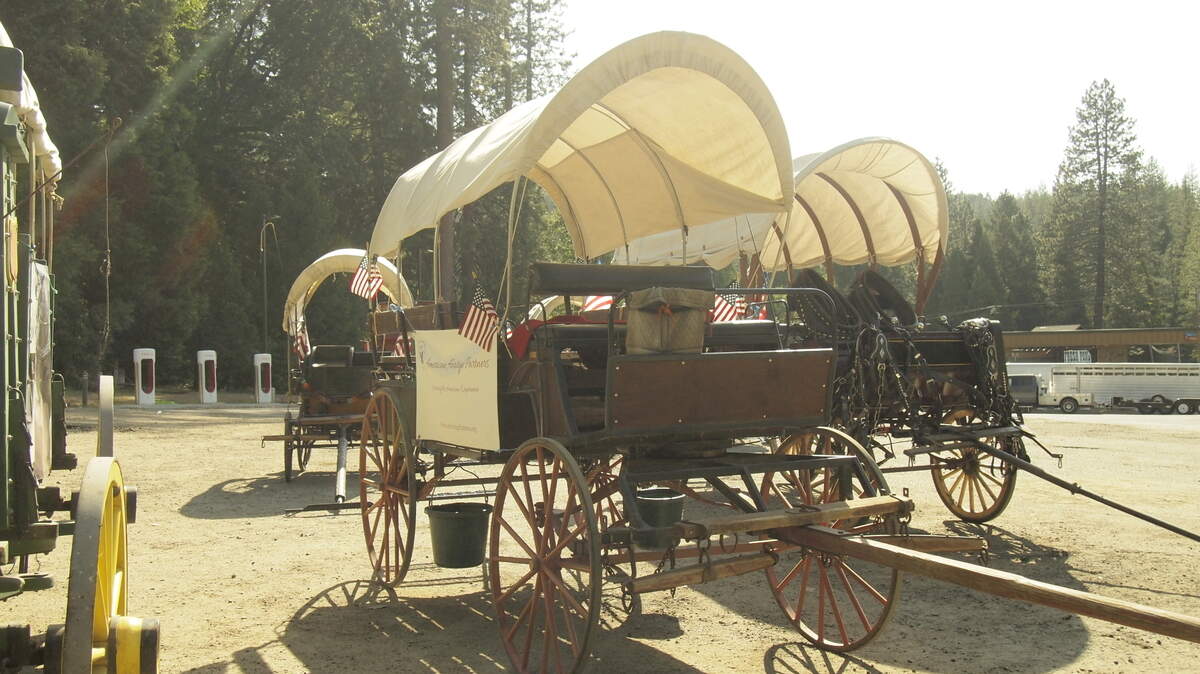
A wagon parked at Fresh Pond alongside a fleet of carriages. The horse-drawn 76th annual Highway 50 Association Wagon Train traveled from Round Hill, Nevada to Placerville, California.
Tina Li
If you’ve braved the heavy congestion on Highway 50 this past week, you may have spotted a procession of nearly a dozen wagons. The passengers and drivers wear everything from Western cowboy garb and buckskins to historic pioneer wear. They inspire passionate reactions: excited hands waving, filming, saying hello — but also a few choice gestures of frustration.
This week, the Highway 50 Association Wagon Train made their 76th annual trek from Round Hill, Nevada to Placerville, California. They followed the highway through Meyers, Tamarack Pines, Echo Summit, Kyburz, Fresh Pond and Pollock Pines, before ending Saturday in Placerville.
The whole trip is about 70 miles, and they forge west at a clip of about three and a half miles per hour. The horsepower? Actual horses.
Since their first journey in 1949 to revitalize small businesses along Highway 50, the Wagon Train has evolved into an officially recognized bi-state historic event celebrating the arduous path taken by gold- and freedom-seekers in the 1840s who eventually made their home in California.
George Alger, 75 years young, was first roped into the community during his self-described “cowboy phase” in 1980, when he worked at a hardware store in Sacramento and raised cattle in Roseville. His manager had paid to advertise on a wagon in the train and encouraged him to tag along on his day off. Alger was immediately hooked. In his 45 years with the group, he has served yearlong stints as the vice president, president, events coordinator and treasurer.
For the Wagon Train community, this annual trek is more than just a fun week in the year. It’s family. It’s time away from modern stressors. It’s a slower, more intentional way of life.
“You’ve never seen Highway 50. You only think you have, but you’ve never seen it at three and a half miles an hour,” Alger said. “And you’ll love the suspension on those wagons. You go over a quarter — you’ll know if it’s heads or tails.”
A long day on the road
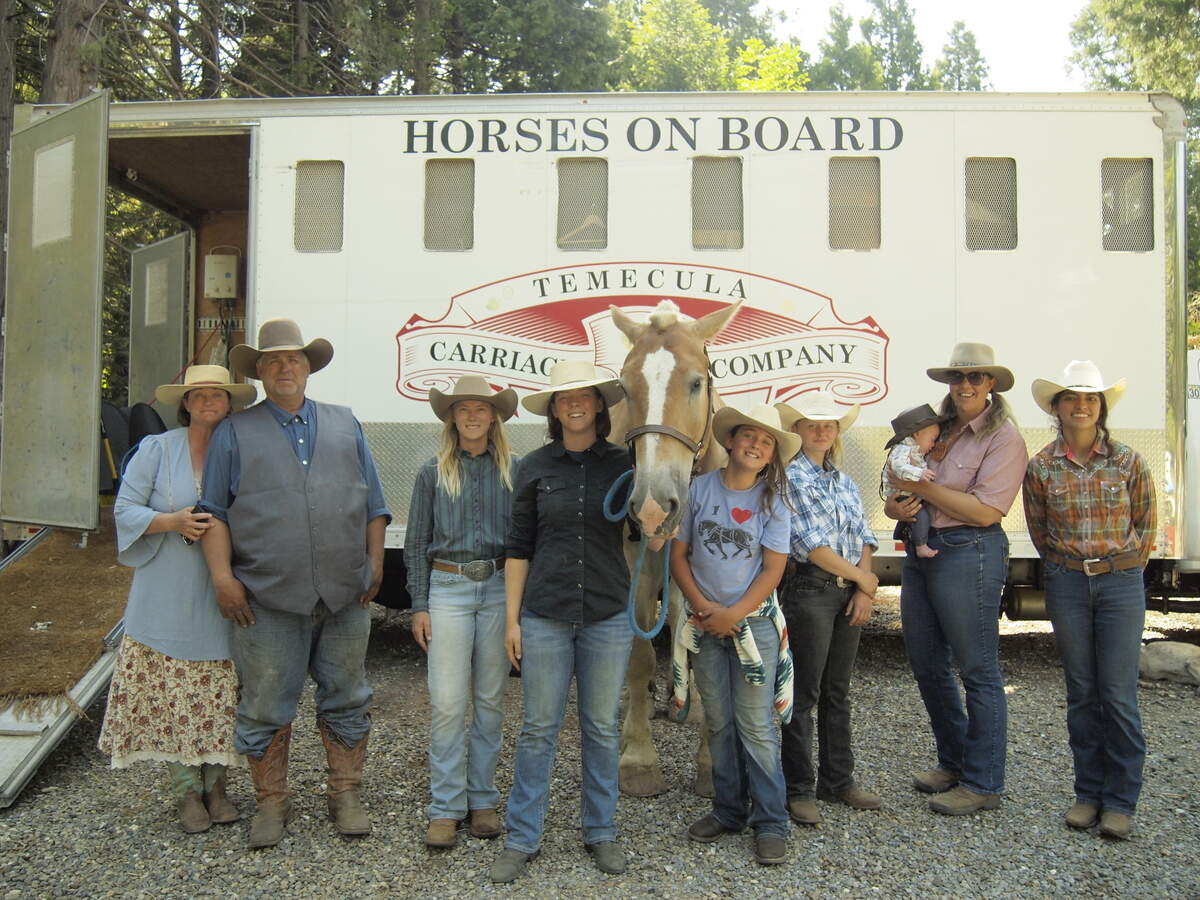
Mark Matson, owner of a horse carriage company in Temecula, starts his day on the road at 5 a.m. He and his team of drivers and helpers feed the horses, harness them, and then clear out camp — a two and a half hour exercise.
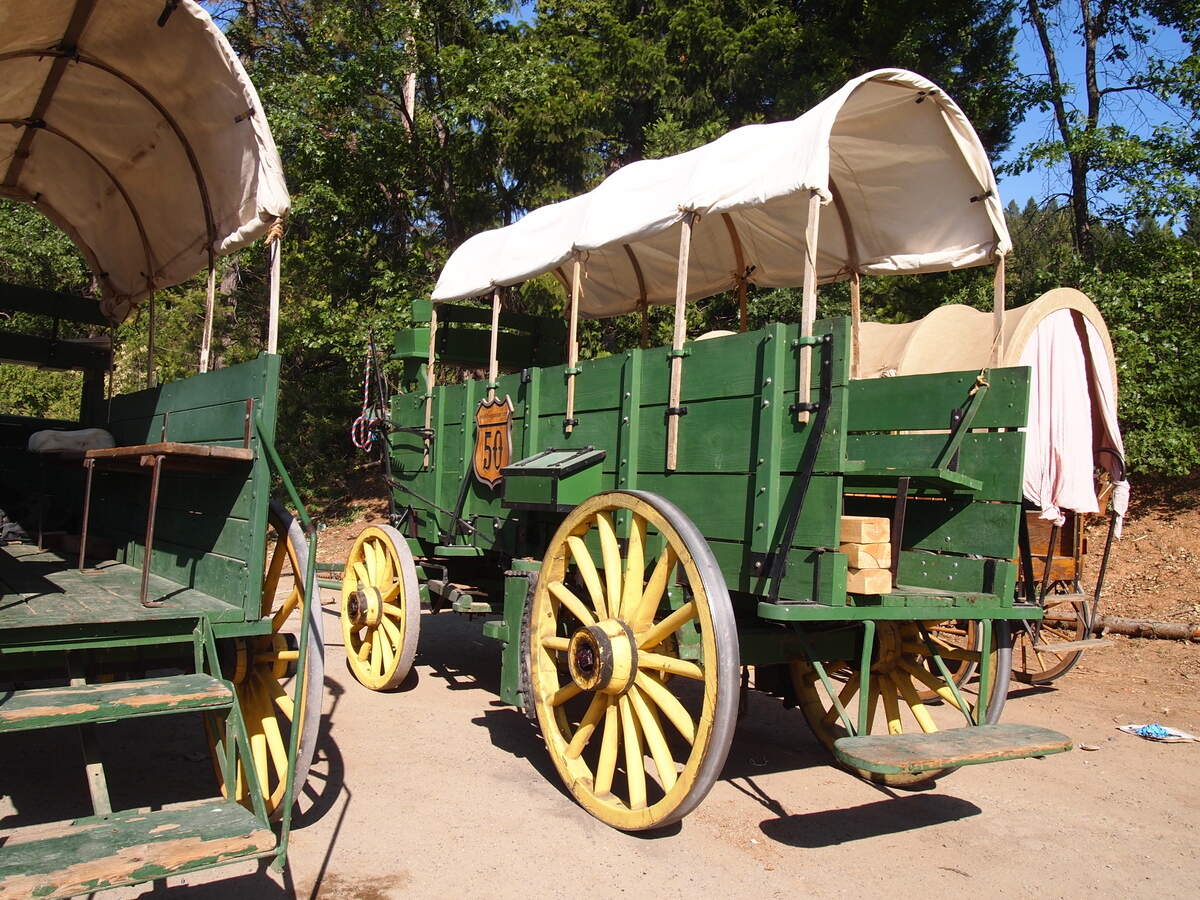
The wagon train departs at about 9 a.m. Depending on the terrain, they’ll cover anywhere from 5 uphill miles to 17 flat ones. Matson leads the pack with the largest wagon — an original from the 1860s — pulled by four horses under his reins.
The job is demanding: wheels must be inspected and greased, accidents like a broken carriage tongue can delay the whole train and the horses need constant care. In years past, extreme weather has tested them: they’ve faced 106-degree heat that required dousing horses with bottled water and snowy roads at 7,600 feet that made steel wheels slide on asphalt.
But the payoff? Stunning views of waterfalls, the Tahoe basin and old wagon roads winding beside the modern highway.
For the Temeculans, this is summer camp — just on a highway. Matson’s daughter, Anabel, is only 10 and the youngest of his team. Last year, she was named Junior Wagon Train Queen for her help tending the horses.
Matson, his wife Marika and daughter Annabel, and his crew of teamsters and helpers. They came all the way up from Temecula with their horses for the 76th annual Wagon Train. Tina Li
A big operation with mixed road reception
The Wagon Train isn’t your average road trip. The operation is massive: participants haul wagons and horses up to Nevada from all over California and coordinate nightly rest stops in shopping centers, ranches, even neighborhoods. And because they travel at about 1/20th the speed of traffic, they require a police escort.
According to California Highway Patrol Sergeant Mike Boore, the escort includes three cars: one in the front and rear, and a third rolling around to monitor traffic and keep drivers from recklessly speeding around the train. Occasionally, they’ll pull the wagons aside to let a backlog of traffic flow through.
Not every driver is thrilled by the Wagon Train, and they’ll make that clear when they pass by the train, Wagon Master and Board President Steve Downer said. Occasionally, drivers call the CHP to complain — especially during rush hour. In the worst case, Boore said, the convoy once caused a 16-mile backup.
But frustration often turns to fascination. Once people see it’s a wagon train, they often get excited. When they pull into neighborhoods, Downer said, they sometimes receive a crowd of people “10 deep on the sidewalk.”
Between insurance and permits and various expenses, though, the annual trek is expensive. El Dorado County, which provided over half their financial support, is pulling out after this year due to budget deficits. While the group expects to at least still ride again another summer, they’re planning new fundraising and outreach efforts.
At its peak in the 1970s, the Wagon Train had 36 wagons. When Downer and his wife Teresa joined 17 years ago, there were 14. Now, they average around nine. With mounting modern pressures — traffic, parking, housing logistics — they suspect the operation has reached its practical limit.
Still, the commitment remains. “It’s quite staggering, actually, for a bunch of rough, dirty cowboys,” Jerusha McRoberts, a new board member, said about the amount of work they do. “But we’re really perpetuating a way of life — and trying to keep it visible.”
A restored original wagon from the 1860s. When they hit the road, Matson drives this one up front; it’s pulled by four horses instead of two due to how heavy it is. Tina Li
Sharing the pioneer spirit
On Thursday evening, the Wagon Train group camped at Fresh Pond, parking next to Tesla charging stations and throwing a potluck dinner. Riders traded stories over ribs and salad. Some wore 19th-century dresses. Others kicked back in cowboy hats and boots.
Colleen Brown, a pet groomer, has travelled with the train for five years now. “It’s kind of addictive,” she said. She rides wearing her late grandfather’s cowboy hat. He was a proper cowboy, she remembers, and some of her earliest memories were playing with pigs and cows on the ranch.
From the Placerville area, David Duran sees the event as a performance. In his free time, he enjoys donning period garb — he goes Victorian for Halloween and he attends the fall Renaissance fair in Folsom — and he looked forward to the group’s Friday night “soiree” in Pollock Pines where the “whole town goes cuckoo” with dancing, music, and food.
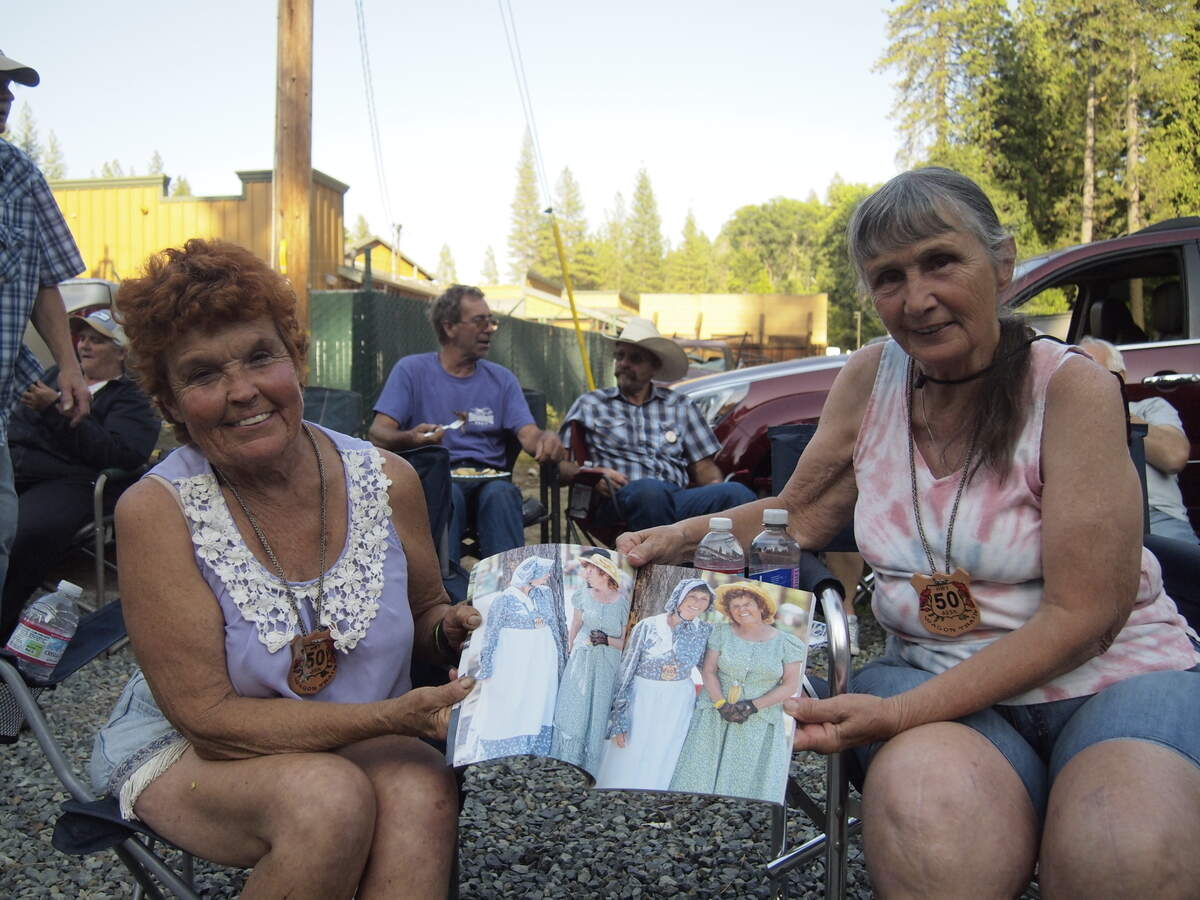
Suzi Southwick, 73, grew up watching the Wagon Train pass by her family’s cabin in South Lake. “I really want to do that,” Southwick remembered thinking all her life, until she finally decided to join last year. At the potluck, she’s holding a photo album her friend made for her, titled “Suzi’s 2024 Wagon Train Adventure.”
Suzi Southwick and Colleen Moore, holding their photo together in Southwick’s album. This is Moore’s eleventh and Southwick’s second year with the Wagon Train. Tina Li
For McRoberts, who runs a commercial carriage company and has ridden with the Wagon Train for 25 years, the event is about legacy. She was drawn to the community for the history, but as she watched older teamsters age out, she realized the only way to keep the tradition alive was to learn the craft herself.
She’s now one of the paid teamsters and on the board. Part Cherokee, her period garb of choice is a deerskin American Indian maiden’s dress.
Horse driving isn’t cheap or particularly popular anymore. But the Wagon Train gives this small, committed group a space to live their lifestyles — and to share it with the world. The week they spend together on the trail brings forth a supportive atmosphere that McRoberts says she doesn’t feel in today’s disconnected society.
The world may be speeding up, but for the Wagon Train folks, slowing down is the point.
“It’s not quite like it was back in the pioneer days,” McRoberts said. “But we’re getting that feeling of the pioneer and community spirit when we roll down the road together.”
This story was originally published June 7, 2025 at 5:00 AM.