
This legendary architect designed many Sacramento landmarks. Who was he?
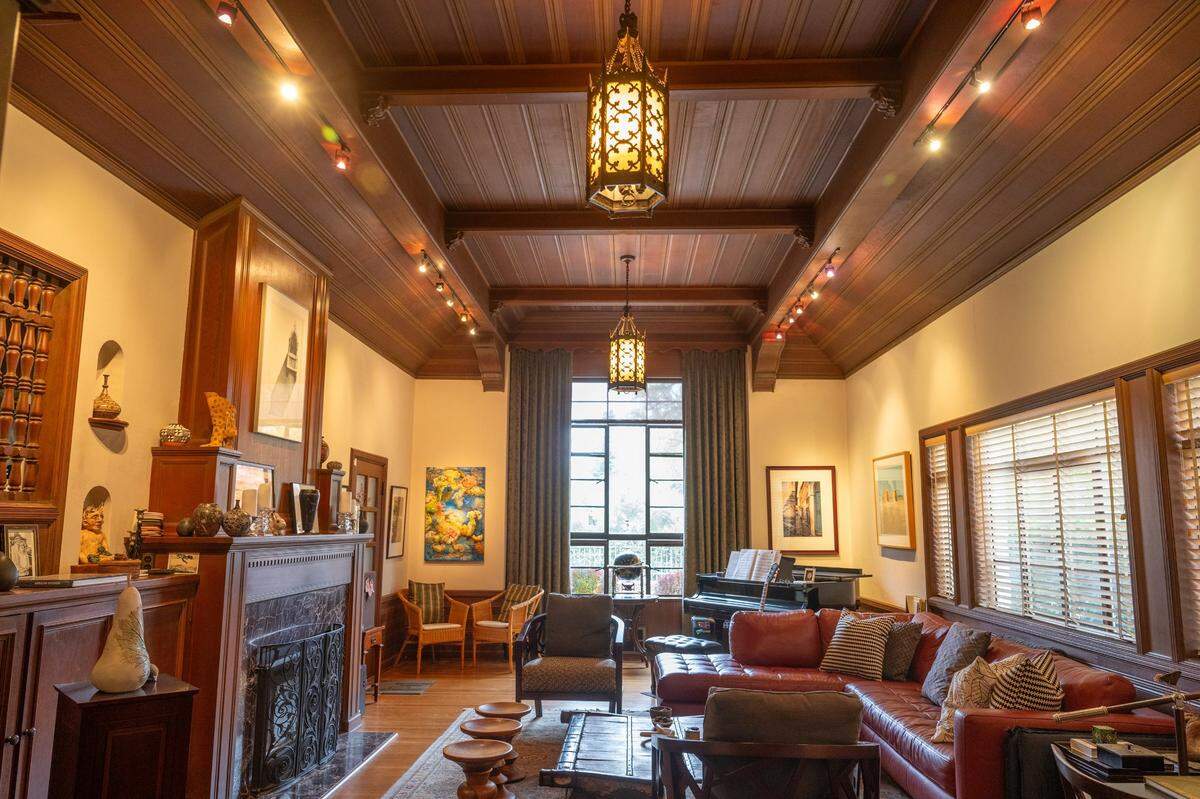
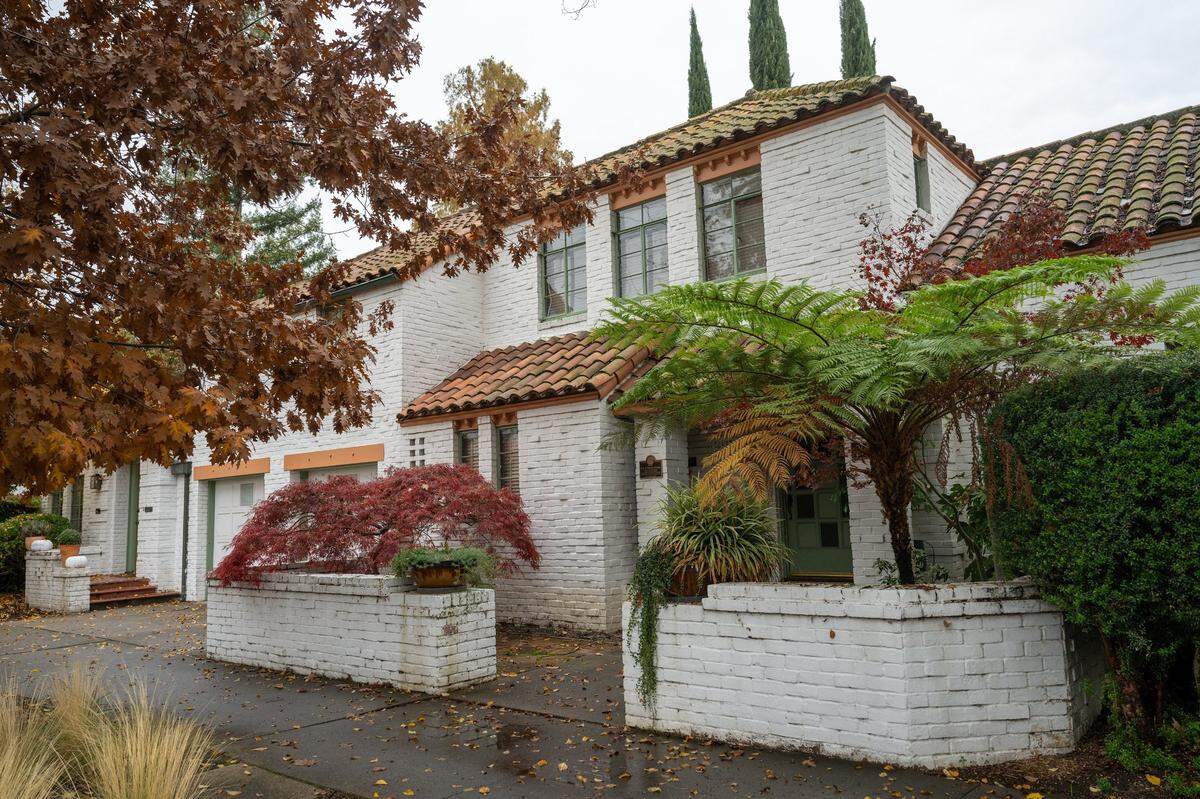
The 1937 Spanish Revival-style duplex in Land Park lacked initial curb appeal for architectural historian Don Cox, but that was before he entered the duplex’s palatial living room.
“That’s when all of a sudden your eyes go wide open,” Cox said.
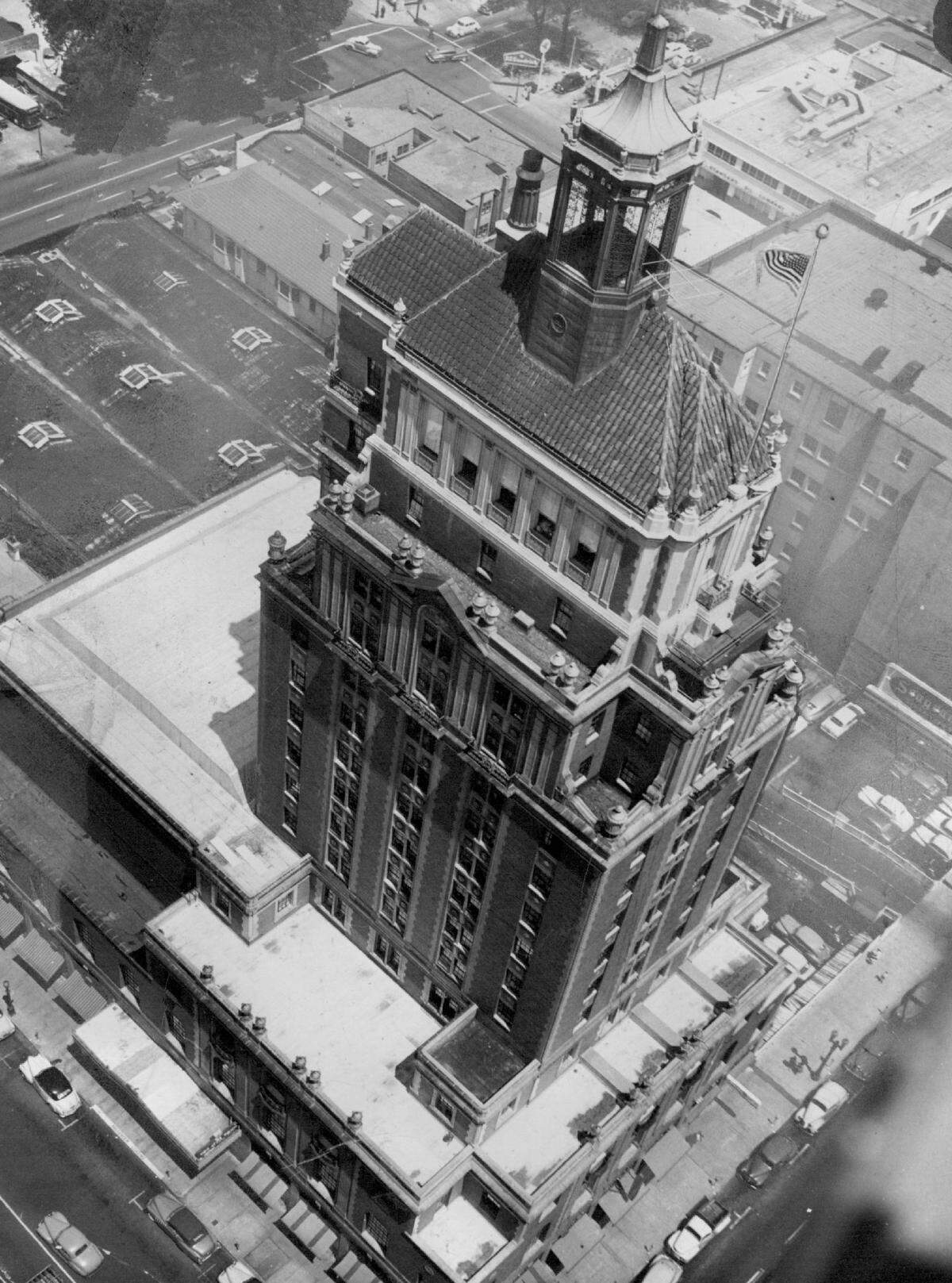
Leonard F. Starks designed the duplex at 2911 Riverside Blvd. for himself and his wife and is among the most prolific architects in Sacramento history. Starks, who worked locally between 1921 and 1965, designed numerous Sacramento landmarks that still stand, including the Elks Tower. He also was responsible for some of the city’s most-storied bygone buildings, such as the Alhambra Theatre.
Starks’ legacy and work have received renewed interest, with his duplex making it onto the Sacramento Register of Historic Resources in 2022. Current owner Peter Saucerman said this was a pandemic-era project for him. He worked with Cox and Paula Boghosian, a husband and wife team who co-own Historic Environment Consultants.
Artist David Garibaldi, who was unavailable for comment, also produced a portrait of Starks last year that now hangs at the offices of the firm that Starks founded in 1922, Nacht & Lewis at 600 Q St.
The firm’s office manager and informal historian Anthony Arroyo said one of its principals won an auction that allowed him to commission Garibaldi to do the piece, not long after Nacht & Lewis had an office renovation and was in need of new artwork.
These are just a couple of tributes for an architect whose work continues to surprise and impress people nearly 40 years after his death.
Buying history
Saucerman had been looking for a house when a friend, who worked as a real estate agent, called to tell him of Starks’ duplex. It was around 1995, a dormant period for real estate. The duplex had been sitting on the market for six months. Something that the friend told Saucerman, an architect, piqued his interest.
Saucerman’s friend told him, “It’s full of drawings and photographs and it’s really a trip to look at ‘em.”
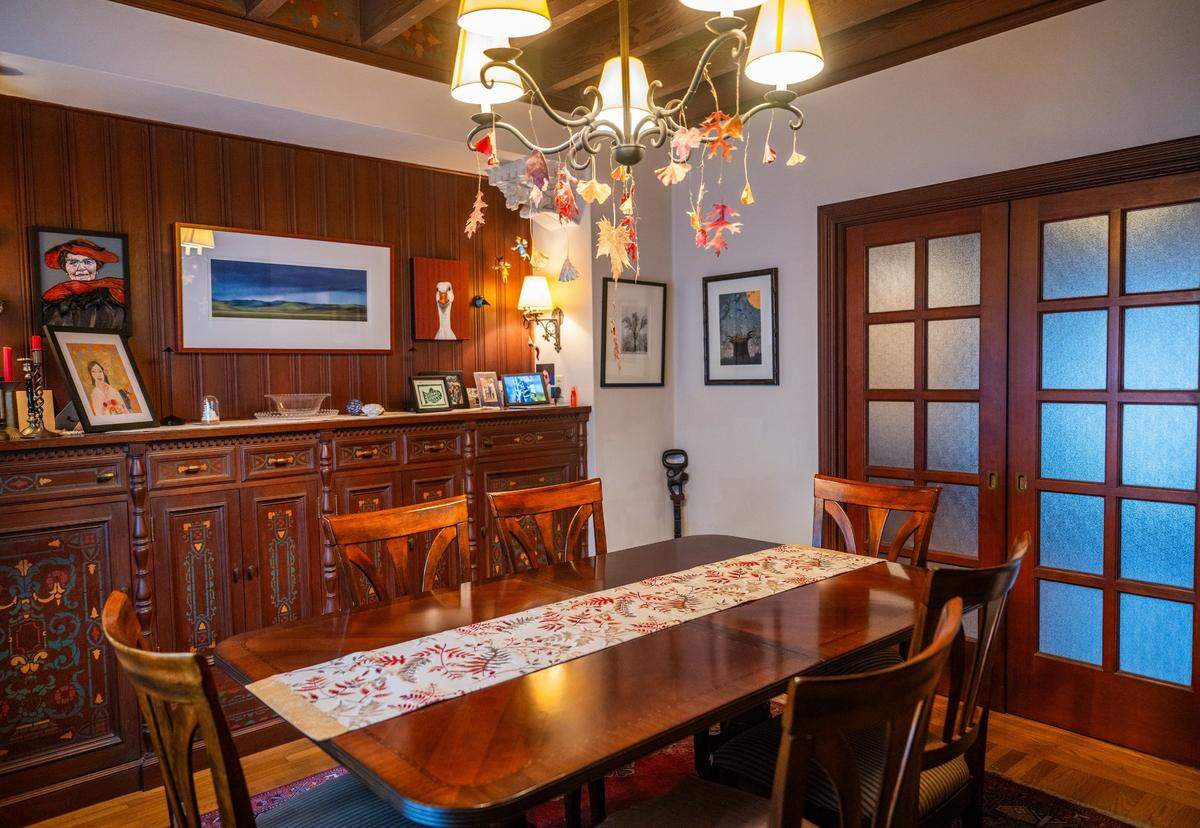
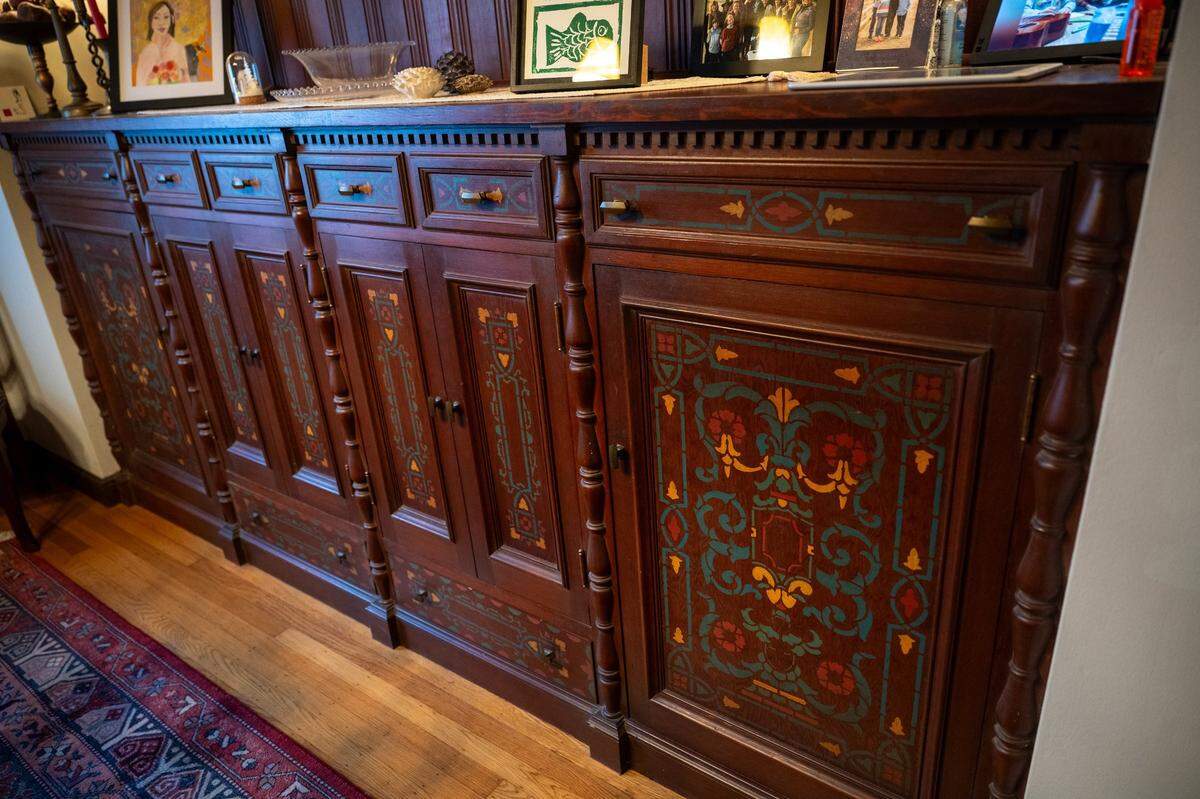
Today, a cache Starks left behind when he died in 1986 at 94 remains in living room cabinets at the duplex Saucerman, 71, now shares with his wife Susan Twining, 70. There are architectural drawings and old albums with photos dating back as far as 1915, showing both people from Starks’ life and projects he designed.
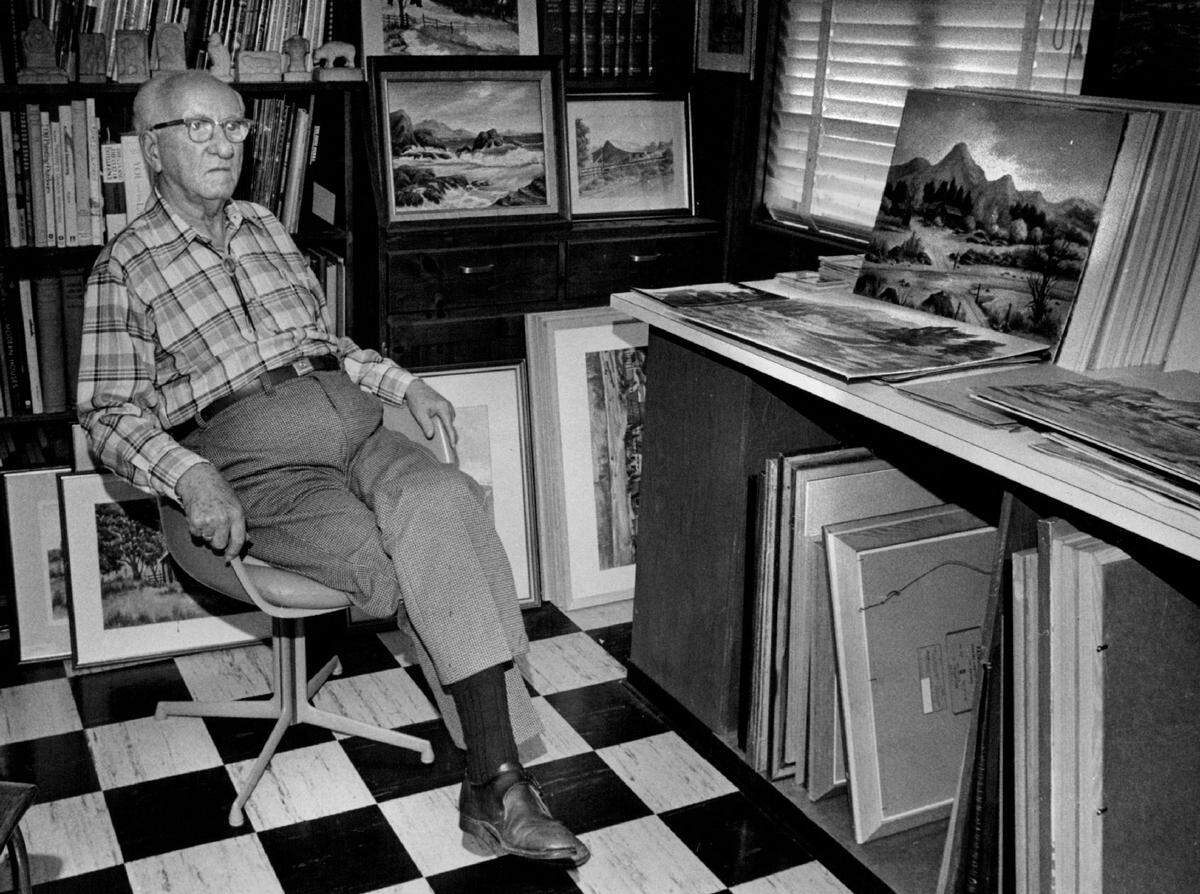
With Starks and his wife, the former Eleanor Whalen, never having children, his impact on the world primarily became his buildings. “The wonderful thing about architecture is you can point your finger and there it is,” Starks told The Sacramento Bee in 1965, shortly after retiring. “The results are tangible. Personally, it’s a very rewarding profession.”
The website of the architectural firm he founded in 1922, now known as Nacht & Lewis, includes a map with locations of 56 known Starks projects. They span from the former Fresno Bee building to Alturas Elementary School near the Oregon border. Starks designed 47 of the projects for locations in Sacramento.
Having been born in Healdsburg in 1891, Starks worked on the 1915 Panama-Pacific International Exposition in San Francisco, which featured numerous buildings created for the event. He later moved to New York City for a time, where we worked for Thomas Lamb & Company.
Starks’ obituary noted that he came to Sacramento in 1921 to design what would become the Senator Theatre. He arrived as a Thomas Lamb representative, according to a Sacramento paper from that year. He opted to stay local after deciding, as he told a later interviewer, per his obituary, that “you couldn’t beat the future of Sacramento.”
Starks in Sacramento
Starks was as prodigious for his work in the Capital Region as he was versatile. A first-floor display at a federal building at 801 I St., which Starks designed with his partner Ed Flanders in 1931, notes that it included 1,600 tons of steel, 60,000 bags of cement and 750,000 bricks. Original tenants included the Bureau of Indian Affairs, offices for a local Congressman and a fourth-floor courtroom.
“Good work usually outlives the architect,” Arroyo said. “Starks, in this case, so many of his projects have outlived him all over and all different types. And that’s kind of something that not too many firms nowadays do. He was kind of a jack of all trades.”
Starks did houses around Sacramento, an industrial building now home to the Fox & Goose Public House and a Studebaker dealership that today is Zócalo Restaurant.
There were many schools as well. Some of the schools were remarkable architecturally, such as C.K. McClatchy High School, which was built in 1937 as a Works Progress Administration project and added to the National Register of Historic Places in 2002.
Other schools that Starks designed, such as the former Norte Del Rio High School at 3051 Fairfield St. in north Sacramento, might have been more pedestrian. “It was a very simple design,” said Larry Lauszus, a Roseville resident who was one of the first graduating classes from the school in 1959. “There was nothing luxurious about it.”
Starks had connections within the government that might have helped him land projects. Arroyo says Nacht & Lewis has letters from Hiram Johnson, when he was serving as a U.S. senator, recommending that Starks be hired.
Starks’ retirement profile in The Bee in 1965 claimed he got the Senator Theatre because one of his good friends had been roommates with Herbert Hoover, who was then the president. The story might be apocryphal since Hoover wasn’t elected president until four years after the Senator opened, though Hoover was an influential figure politically at the time Starks was designing the theater.
Starks wasn’t necessarily partial to government work, as he told The Bee for his retirement profile. He appeared to be someone who could flex different muscles intellectually and do what was needed to forge a career.
“You just have to get the breaks, and there are a lot of very good architects who never do get a break and they wind up working for someone else or for the government,” Starks said then. “That’s very frustrating, because architects are very independent people.”
How Starks worked
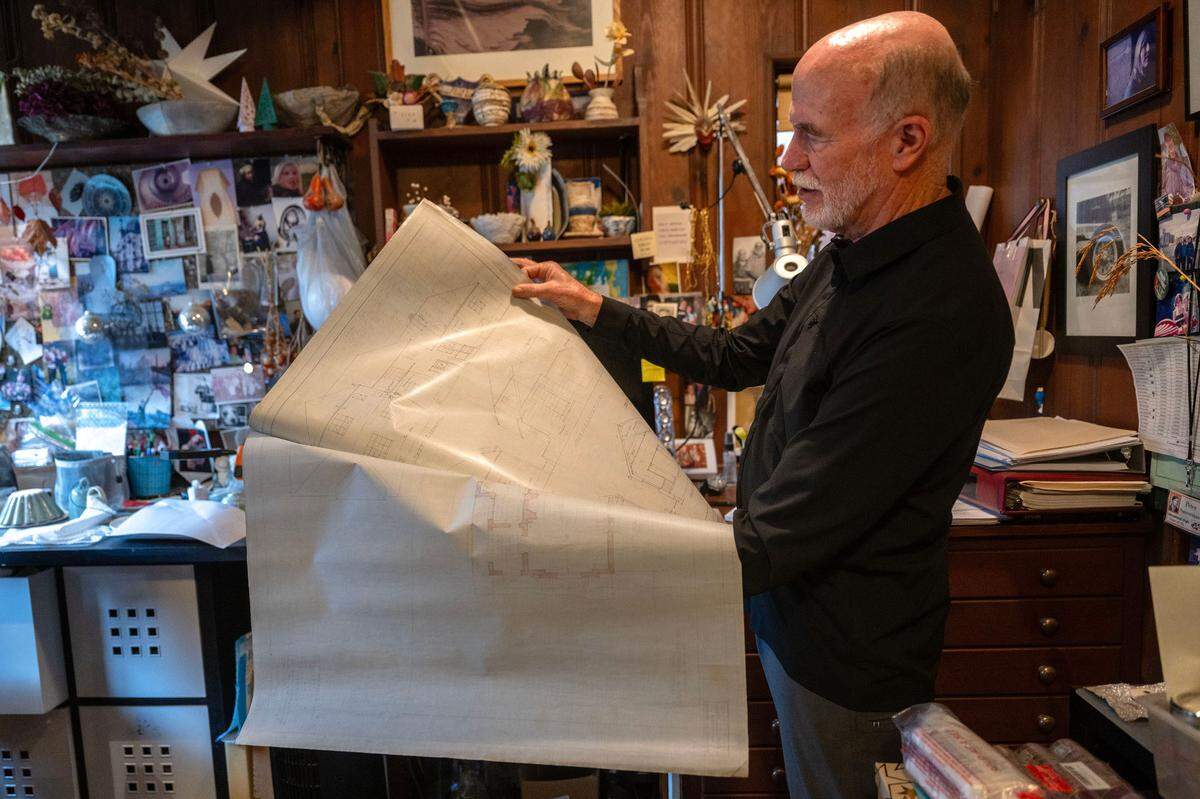
Starks was meticulous in his work, creating highly-detailed drawings. While teaching a beginning architectural drafting course at California State University, Sacramento, Saucerman once made the mistake of borrowing elaborate blueprints from Nacht & Lewis that Starks did for the Elks Tower to show to his students. Saucerman had been inspired by the elaborate drawing and lettering.
“It completely backfired,” Saucerman said. “It was completely depressing. They just looked at that stuff and said, ‘Oh my God. No. I’m not going to go into this career because of that.’”
That’s not to say that Starks scared everyone off. A man he hired following World War II, Bruce Adell paid tribute when Starks died in 1986. “His work was a good example of classical architecture,” Adell told The Bee then. “We younger fellows learned a lot from him.”
Throughout his career, Starks stuck to his methods. Arroyo said this was evident in the description that former firm partner Dan Nacht wrote in his autobiography about Starks.
“By the ‘60s, he still was doing things the same way,” Arroyo said. “He still wore a smock so that he wouldn’t get the drawings dirty. He still did everything by hand. He walked around the office smoking because you could do that back then.”
Starks didn’t limit himself to architecture. The basement at his former Riverside duplex includes a photo dark room. The Bee had an article in 1934 showing that Starks was making sculptures from soap. “Every architect should know something about sculpting,” Starks said then. “It affords a means of testing his imagination, showing him how accurate he is in creating an object from visual image.”
He was still sculpting in 1965 and had also taken up painting and carving, The Bee noted. “Anything you can do with mind and hands is rewarding,” Starks said then.
Broader recognition
When Saucerman sought to get Starks’ duplex onto the local historic register, Cox and Boghosian collaborated on a report that paid tribute to both Starks and his duplex. “It is a masterful composition of masonry forms of varied heights and shapes blanketed with a rich collection of tiled hip roofs,” the report noted.
Then there was that living room which, as the report noted, “with its richly wood paneled ceiling suggests the presence of a medieval gathering hall.”
Sacramento City Council voted 8-0 following brief discussion on May 24, 2022, to place the house on the local historic register.
The duplex now bears a plaque out front noting its historic significance, but it’s in no way become a mausoleum. On the contrary, the house and its inhabitants brim with energy.
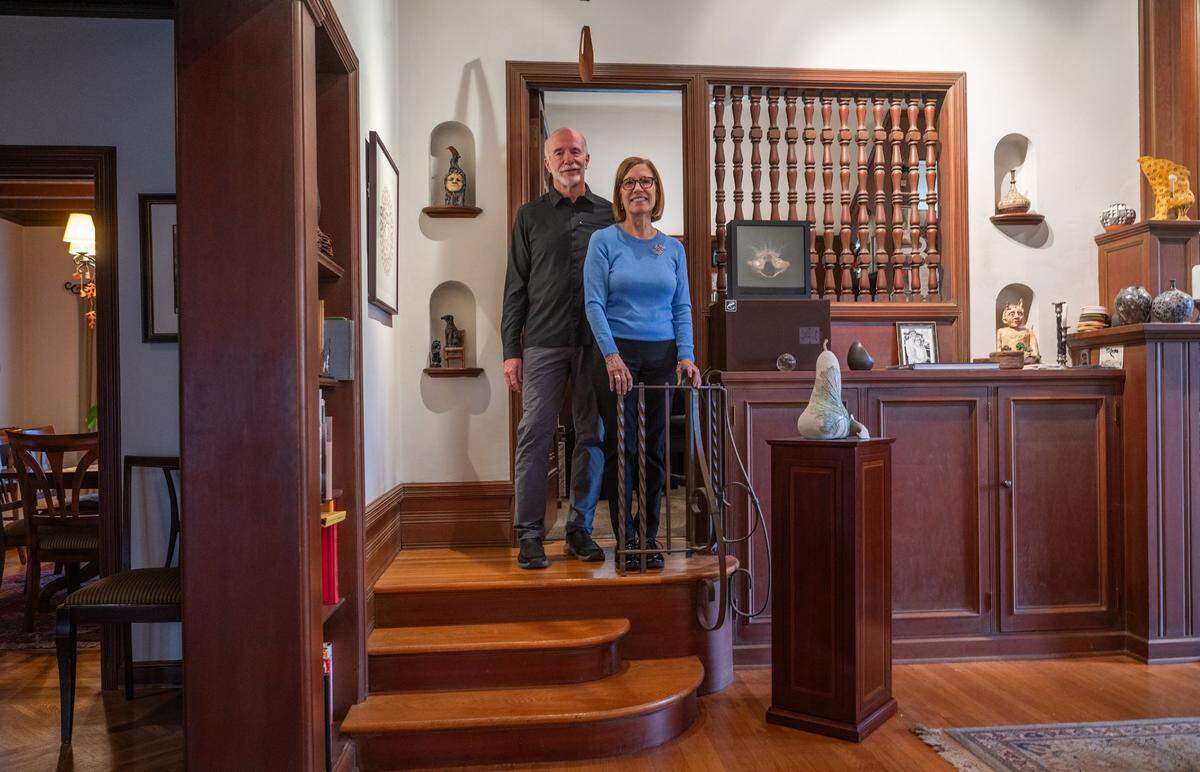
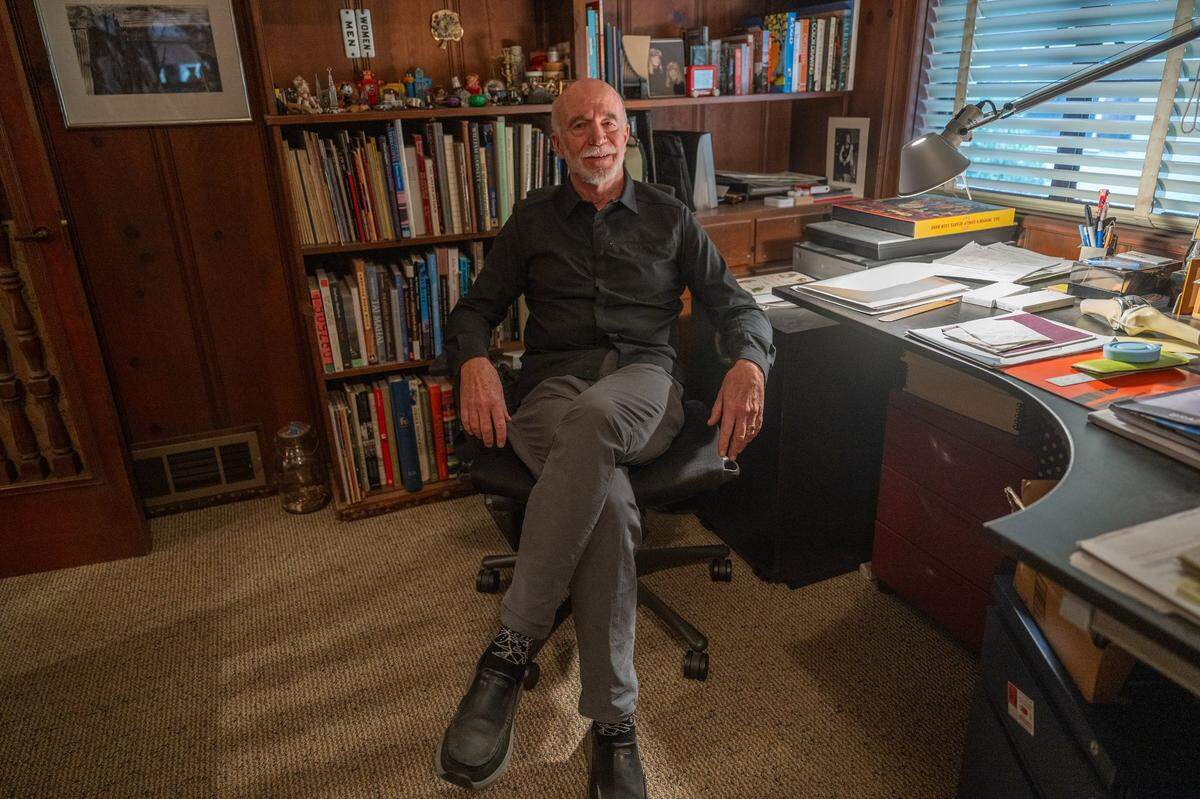
Up a landing off the living room, Starks created a small office for himself. Twining, a retired nurse, uses some of this space to make art. She feels inspired by the light that comes in, the knowledge that this was Starks’ space and by comments from friends who tell her how lucky she is to have a space where she never has to put her craft supplies away.
“I have a designated space for me to create,” Twining said. “And a lot of times people do stuff on a table in their house, and they have to put it all away. But Leonard made this house for being creative, and so Peter and I both take advantage of that.”
This story was originally published November 24, 2024 at 5:00 AM.