
Dozens of 20th century movie theaters disappeared from Sacramento. What happened to them?
Art Diaz stood near what might be one of the final remnants of a long-closed movie theater.
Diaz is a project superintendent for Midstate Construction Corporation, which is in the process of converting a circa 1906 building at 911 K St. in downtown Sacramento into affordable housing.
Multiple floors above where Diaz was standing operated as the Sequoia Hotel for over a century until the building’s conversion was announced last year. By contrast, the first floor has been many things, including: Alejandro’s Taqueria, which closed in 2022; a store in the mid-20th century; and from 1910 to 1955, under various names, a movie theater, which had the address of 909 K St.
Diaz and his crew discovered crown moldings as they were gutting the building in recent months. Diaz had been struck the day before about the building’s craftsmanship. “That workmanship, it’s so nice,” Diaz said. “We don’t have it no more. It’s gone.”
The crown moldings are remains of a bygone era of Sacramento history when dozens of movie theaters, some unremarkable, others palatial, dotted the local landscape. Most of these theaters are long gone, with the demise of some helping bring about change locally. In the hearts of film enthusiasts and people who once went to these theaters, though, they live on.
An era of grandeur: Sacramento’s spectacular theaters
Billie Holliday still remembers the California Theatre.
Holliday, who is 88, lives near Jackson and is named after the music legend, lived with her family in Oak Park during the 1940s. She and her sister would regularly walk to the theater, which opened in 1925, was located at 2931 35th Ave. and showed kid-friendly matinees on Saturdays and Sundays. Kids under 12 could get in for 9 cents, while those older paid 14 cents.
“It was a big theater that had loges and it had the balcony and it was very, very clean,” Holliday said. “The food bar… oh my God, it must have been 30 feet long. It was huge. And back then, you could get a bag of popcorn for a nickel.”
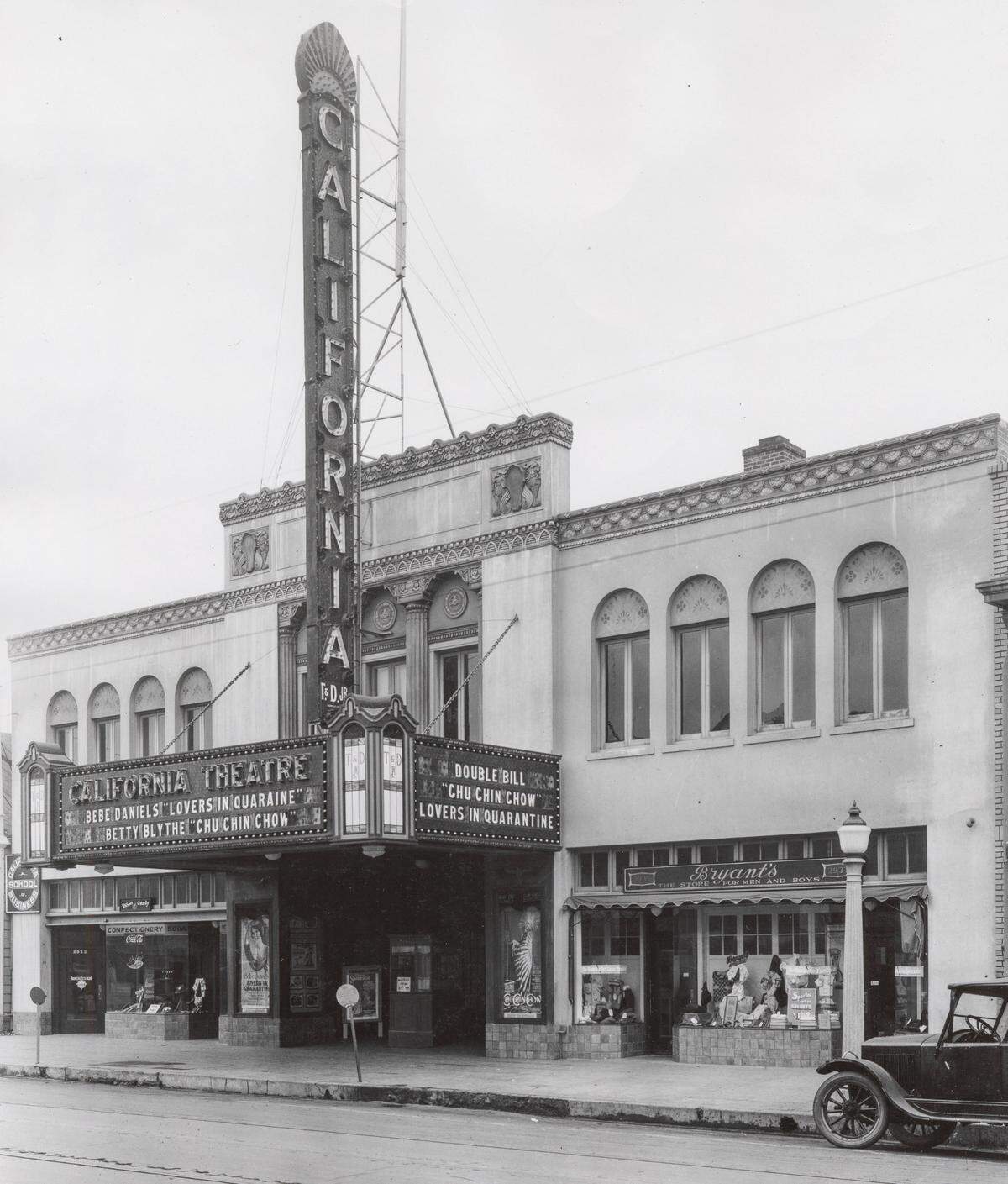
She reckoned she watched every film that came out of Hollywood from 1942-49 at the theater, particularly enjoying serials shown on Saturdays of Nyoka the Jungle Girl.
“That was my young life,” Holliday said of the theater.
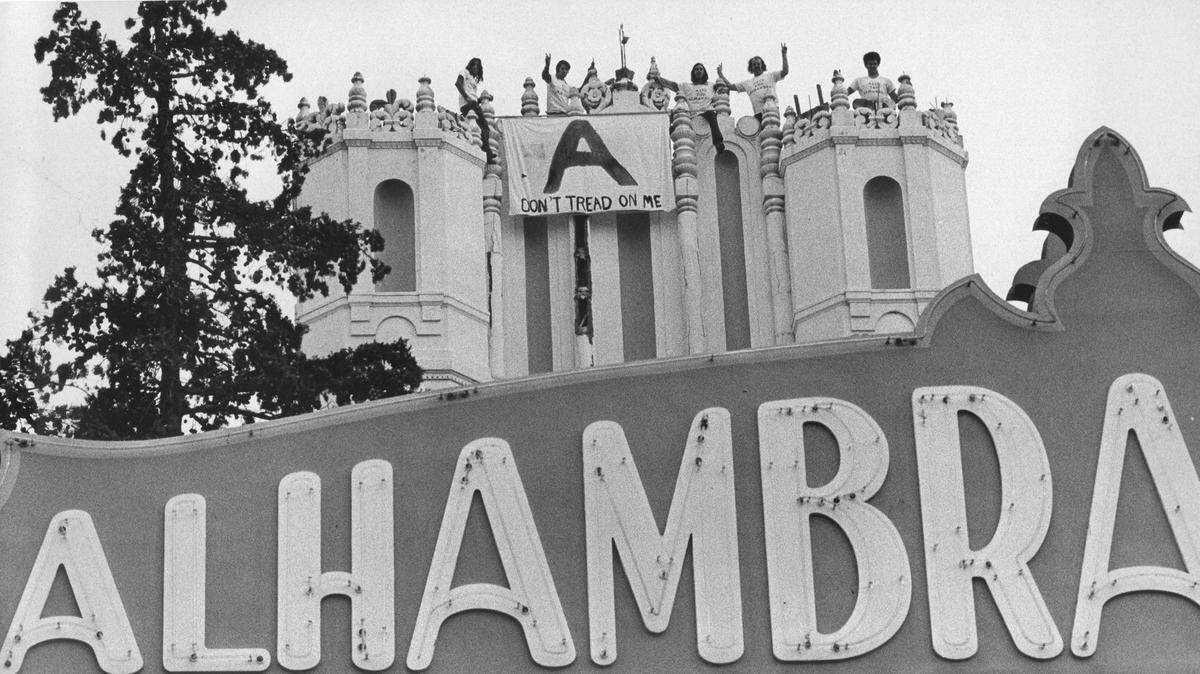
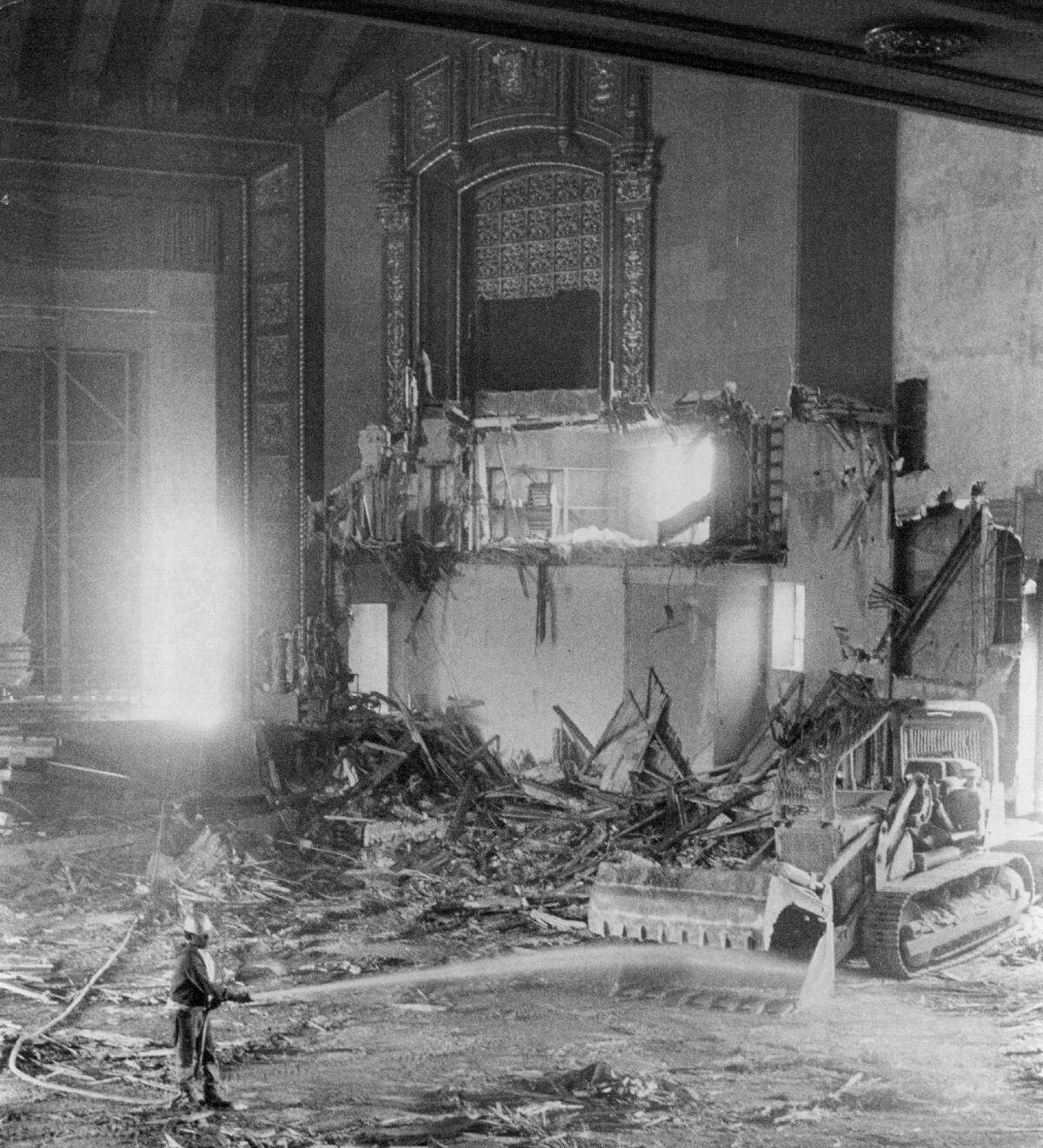
The Alhambra Theatre made a mark in the history of Sacramento that has shaped the city’s current ethos. The theater opened in 1927, boasting Moorish-style architecture and gardens. The theater’s 1973 demolition to build a Safeway at 1025 Alhambra Blvd. helped kickstart the local preservation movement.
But it’s just one of dozens of former theaters around the Sacramento region, with the website Cinema Treasures showing 43 closed movie theaters locally.
At 909 K St., the Sequoia Motion Picture Theater opened on Nov. 22, 1910 with the Sacramento Star reporting that it had 600 seats, opera chairs and an orchestra. Cinema Treasures noted that the Sequoia was renamed the Sierra Theatre in 1932, the Newsreel Theatre in 1941 and the State Theatre in 1946. The theater operated until 1955, with a Foreman and Clark store opening that September in the space, according to the Sacramento Bee.
Across from the theater, the 2,500-seat Senator Theatre opened in 1924 at 912 K St., designed by architect Leonard F. Starks, who also designed The Alhambra as well as the Elks tower, McClatchy High School and buildings for the 1915 Pan-Pacific Exposition in San Francisco.
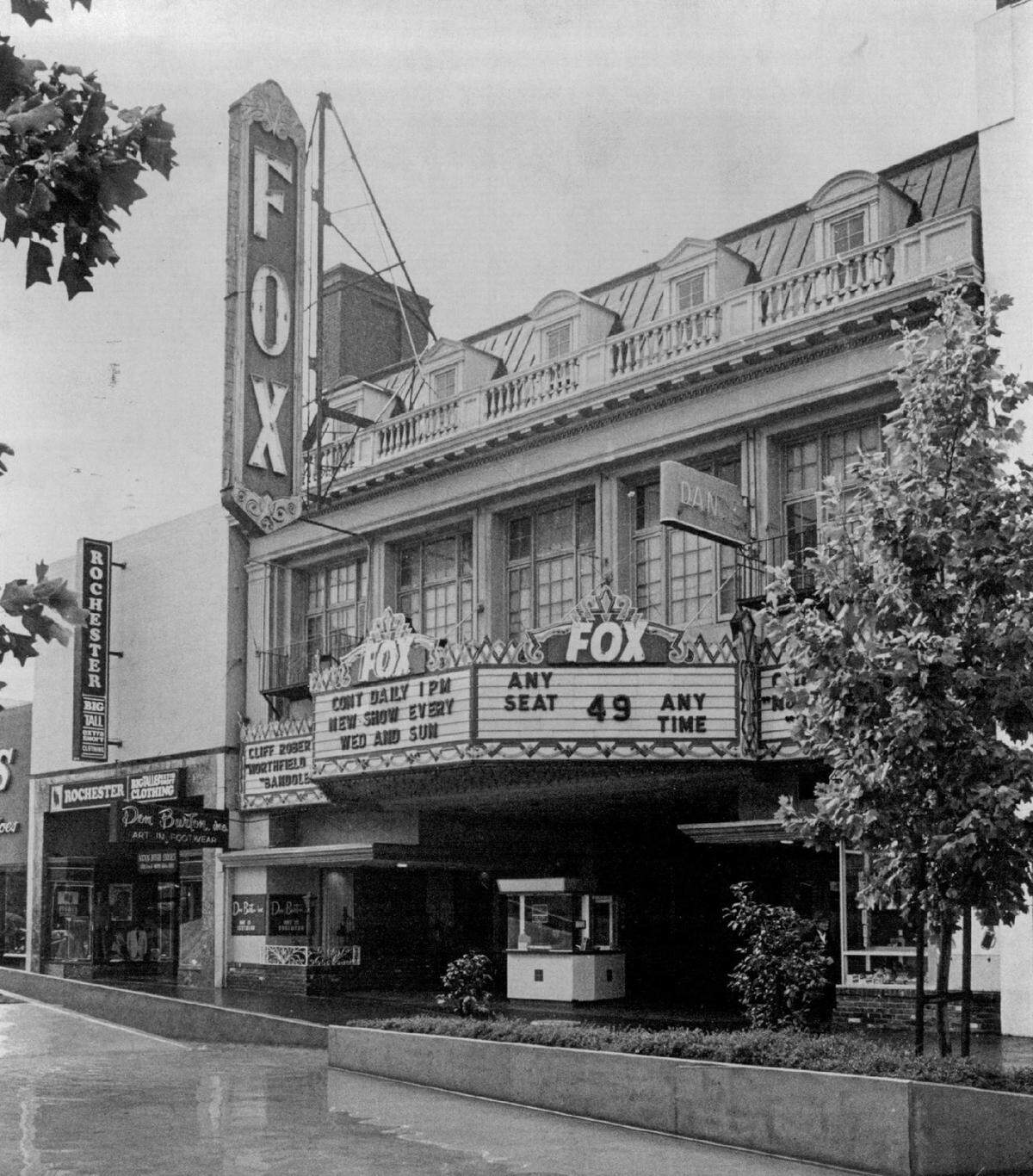
The venue became the Fox Senator Theatre in 1962, with a large Fox sign running up the building’s side. It wasn’t the only Fox movie house in Sacramento history. The 1,117-seat Capitol Theatre at 615 K St., where Golden 1 Center is now located, operated from 1906 to 1957 and was affiliated with Fox for a time, per Cinema Treasures.
Lori Dannenfelser, 68, would go to double features at the Fox Senator Theatre with her brother while they were growing up. She remembered how her mom would dress her in a sweater and good dress before she went to the movies. “You didn’t just go in your shorts and T-shirts like they do now,” Dannenfelser said.
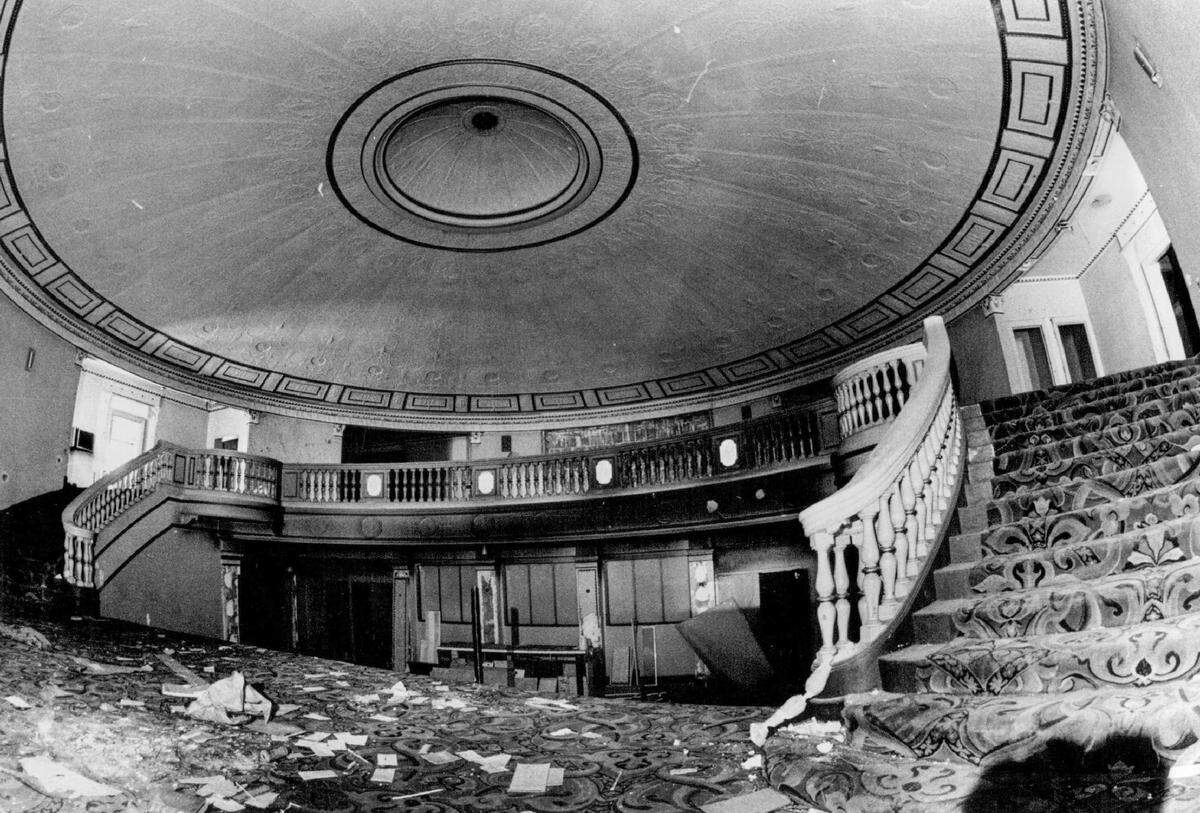
The Fox had entrances at both K Street and 915 L St. with a long hallway in between connecting two buildings. Gerry Watt, 71, who grew up in Roseville, said he remembered “how spectacular it was once you got into the auditorium.”
In 1978, Richard Rodda wrote about the Fox for The Bee.
“Patrons marveled at the grand staircases leading to the balcony, the oval dome of the auditorium with its multi-colored indirect lighting, the ornamental candles along the walls and the beautiful curtain and proscenium arch,” Rodda wrote.
Why old theaters went away
Some of Sacramento’s former movie houses quickly came and went, such as the Bijou Theater which opened in 1908 at 420 K St., became the Edison Theater in 1912 and closed in 1919. The land today is part of the Downtown Commons shopping center adjacent to Golden 1 Center.
Others started out as regular theaters before transitioning to offering seedier fare, such as the Plaza Theatre at 912 9th St. which opened in 1927 and, after a series of name changes, became an adult theater in 1969. The theater closed in 1975, according to Cinema Treasures. It stood roughly where the Library Galleria is located today.
In general, movie theaters were part of a nascent and growing culture in the early part of the 20th century. Michelle Pautz wrote in a research paper while she was an undergraduate at Elon University in 2002 that 65% of United States residents went at least once a week to the movies in 1930. By 2000, this figure stood at 9.7%.
Pautz, now an associate dean and political science professor at the University of Dayton, said the rise of TV allowed people to watch movies at home. And that was just the start. “Everything from today, from video games and social media and streaming options, just there’s so many more options and many more things that are competing for our entertainment,” Pautz said.
In Sacramento, what the change has meant is a lot of former theaters that, for various reasons, went away and haven’t been replaced.
The California Theatre closed after a fire on June 10, 1957 that began during the showing of a film. Two months later on Aug. 19, more than 60 firemen responded when a second fire broke out at the building, with police later arresting two boys on suspicion of arson.
This time, Fred Naify, district manager of United California Theaters, Inc. told The Bee that fire had so buckled the wall’s buildings it would have to be torn down. It appears to have been razed in 1959, with The Bee reporting that demolition was due to begin March 9.
In March 1972, John Burns of The Bee reported that Safeway had taken an option to purchase the Alhambra Theatre site. “The ornate, 1,800-seat Alhambra, built at a cost of $1 million during the heyday of motion pictures, has become something of an anachronism in the present era of small theaters,” Burns wrote.
County voters rejected a $1.5 million bond measure in April 1973 that would have allowed for public acquisition of the Alhambra. Demolition began within weeks.
“It just made me sick,” Holliday said. “I used to go there all the time. It was just a beautiful oasis.”
After the Alhambra
The loss of the Alhambra came in a general era of Sacramento history where preservation was something of an afterthought and redevelopment was bullishly pursued.
Across town on the city’s old west end, numerous residential blocks were leveled during the 1960s to build government offices or other non-residential land uses. The displacement of residents that occurred with redevelopment more than a half-century ago is felt by downtown businesses to this day.
Peter Dannenfelser, an architect and the husband of Lori Dannenfelser said the only good thing that came out of the loss of the Alhambra was that the city of Sacramento’s historic preservation department was created “to prevent things like that from happening again.”
A city webpage noted that Sacramento adopted a preservation ordinance in 1974 and now has a seven-member Preservation Commission. The city’s general plan also now includes a historic and cultural resources element.
The changes haven’t guarded against some losses.
The Fox Senator Theatre closed June 30, 1973. Two weeks prior, The Bee reported that Jack Vandenberg, president of Paramount Corp. of Sacramento, which owned the theater, approached both the city and county about purchasing it for $300,000. Sacramento County Supervisor Patrick Melarkey, who’d led the campaign to save the Alhambra, was uninterested.
“The Alhambra had an architectural value,” Melarkey told The Bee. “It was a unique entity with its gardens and its own parking – something not true of the Fox.”
The theater sat vacant another five years, with the California State Legislature briefly considering holding its 1976 sessions for the Senate and Assembly in it while the Capitol building was under renovation. Demolition began on the L Street half of the theater in September 1978, with a 14-story office building now on-site.
The K Street half of the former theater still stands, with the street numbering now 910 instead of 912. The building’s exterior bears a resemblance to photos of the theater on Cinema Treasures. Inside the building are offices. Dayna Ramos, a state worker, said there have been recent renovations. Still, there are some hints of the past. Ramos pointed out old wallpaper visible through an open air duct in the conference room.
Asked what it was like to work in a building that was once a movie theater, Ramos replied, “I wish it looked more like the movie theater… because it’s so beautiful.”
After he grew up, Gerry Watt worked in movie theaters. He was managing the Showcase Theatre at 412 L St. in the 1980s when the owners of the land decided to build a parking lot, he said. The theater was still drawing long lines. Some people directed their ire at Watt and his colleagues. He hung a sign in the box office window that read, “The only constant in life is change.”
Some classic theaters have stuck around in Sacramento, notably the Tower Theatre, which shows first-run movies and the Crest Theatre, which screens classic films and hosts live events. Watts worked long-term at each theater, managing the Tower and doing technical work for the Crest.
Asked why the Tower and Crest remained when so many classic movie venues went away, Watt replied it was partly a reaction among people to the loss of the Alhambra and the Showcase. He also noted feelings the Tower and Crest can evoke. He referred to restoration work done on the Crest with toothbrushes and scrapers.
“It was definitely a passion project,” Watt said.
He maintains a degree of pessimism, though.
“No matter how popular something is, no matter how beautiful it is, no matter how historically significant it is, you can never take it for granted,” Watt said. “It could disappear tomorrow.”