
LGBTQ+ community thrives in tiny Placerville club, enjoys karaoke and safe space
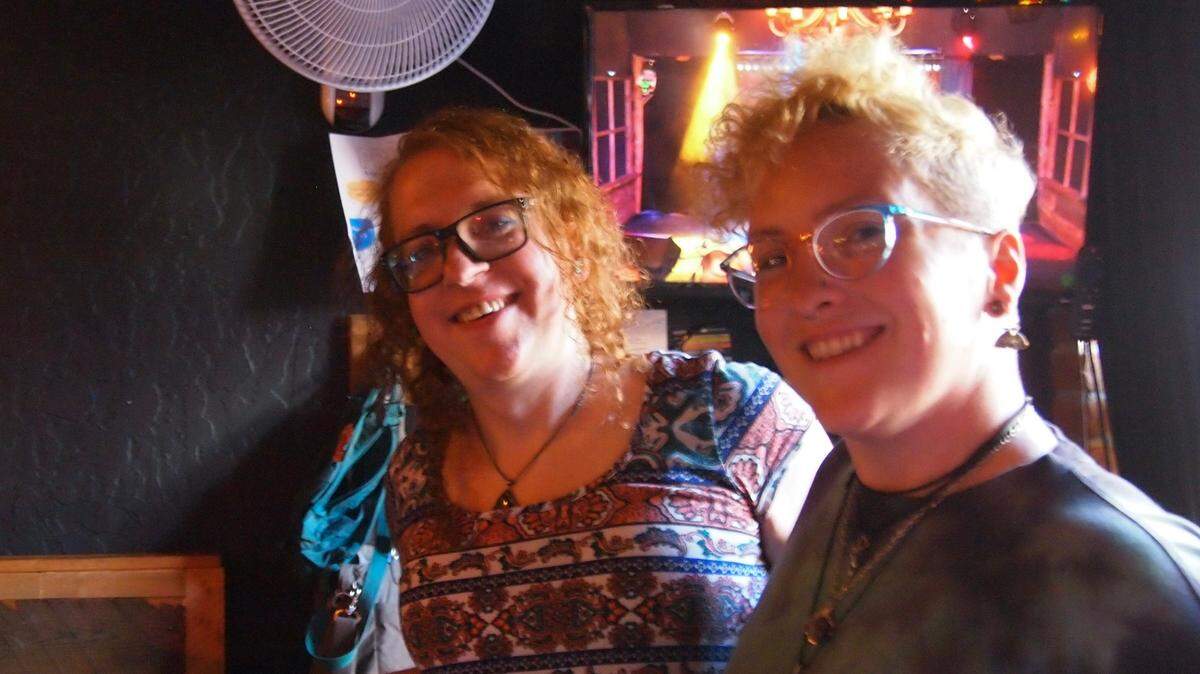
Playful synth lines buzzed through the Green Room Social Club as Rebecca Barry’s fingers skated across her sound mixer. She knew she had to pull out all the stops for the last Sunday of June. Behind her glasses, pink, purple and blue eyeshadow shimmered in a wink to the bisexual flag.
In Placerville, Pride Month doesn’t take the form of parades spilling into streets. Instead, the LGBTQ+ community remains behind closed doors — raves, drag shows and, recently, social gatherings in a small music venue on Main Street.
Barry, a 36-year-old transgender woman originally from New Jersey, moved to El Dorado County in 2014. Since January this year, she has hosted free monthly queer community socials in the Green Room. Karaoke, board games and the pleasure of conversation offer a low-stakes respite in a city that politically leans purple-red and in a nation with increasingly anti-trans policies.
“The reason why these events exist,” Barry said, “is so that queer people can have three hours — out of one day, out of a month — to just forget about all of the outside world and be surrounded with caring, like-minded people.”
A safe space
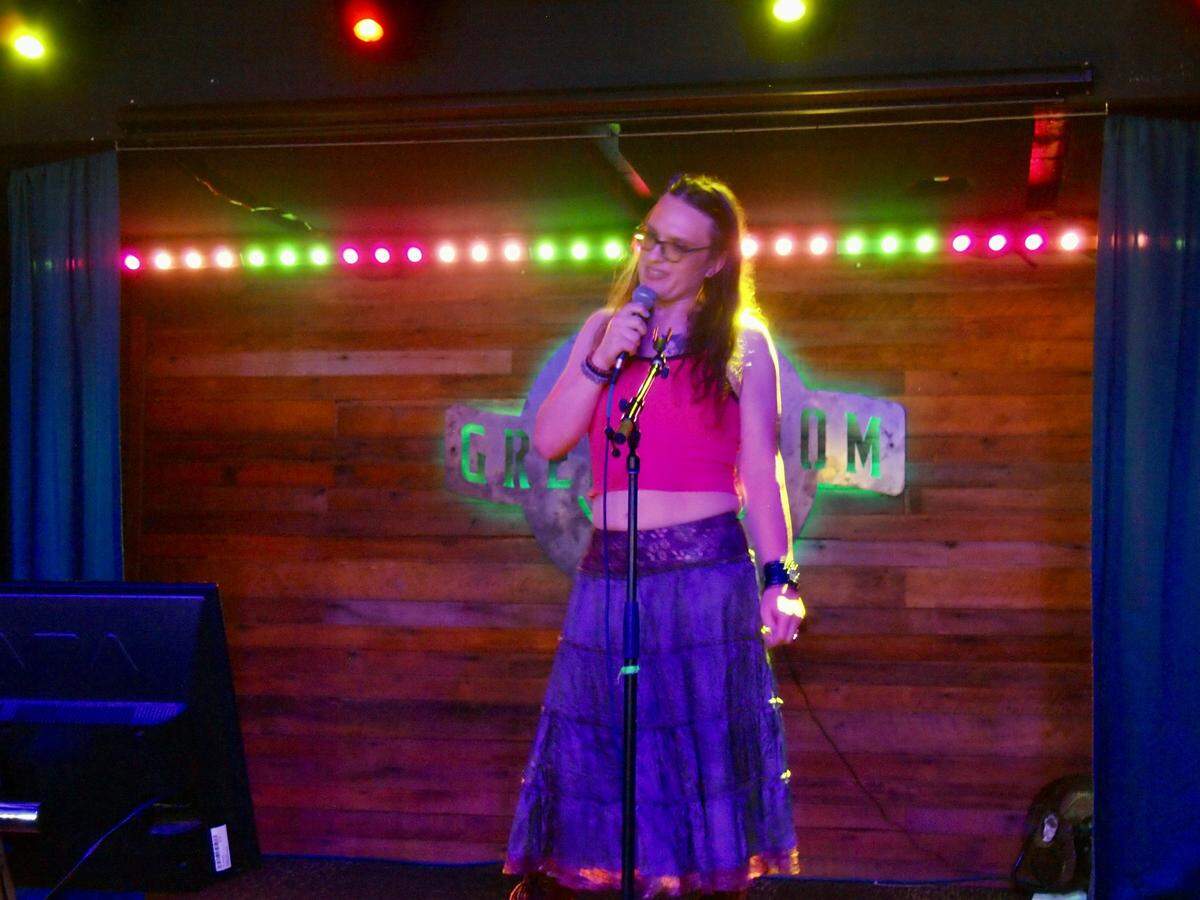
Backlit by the afternoon sun, attendees began filing into the Green Room right before 4 p.m. The karaoke sign-up sheet in front of the sound booth, where Barry stood mixing 2000s throwbacks and greeting guests, quickly filled up. Song choices ranged from oldies such as Cat Stevens’ “Peace Train” to a heart-wrenching rendition of “Man Or Muppet,” featuring a makeshift hand puppet.
Turnout on Sunday, around 40, was a new high for the social’s short history. Attendees spanned a variety of ages — a cluster of elderly men in Hawaiian shirts chatted at one table while parents took care of their children at another. (The first onstage were two young girls who sang Rosé and Bruno Mars’s “APT.” without a hint of stage fright.) Most were El Dorado County residents, but one woman, an ally, drove an hour from Auburn to support the event.
Growing up, Barry said she didn’t have a queer community to lean on. Before she began hosting the socials, she had heard of a group of queer people that used to meet regularly at the El Dorado County Federated Church to play board games and form community.
Last September, masked protesters demonstrated in front of the church with signs that read “Sodomites Out of Hangtown” — the city’s Gold Rush-era nickname. The attempt at intimidation worked. Though city reprimanded the protesters, the group dissolved shortly after.
Barry had not attended the gatherings, but “the fact that (...) people protesting them made the people there feel scared and unsafe that they stopped having the event” pushed her to start her own socials.
Choosing a location was easy. As the Green Room’s house audio engineer, she doesn’t have to rent the space.
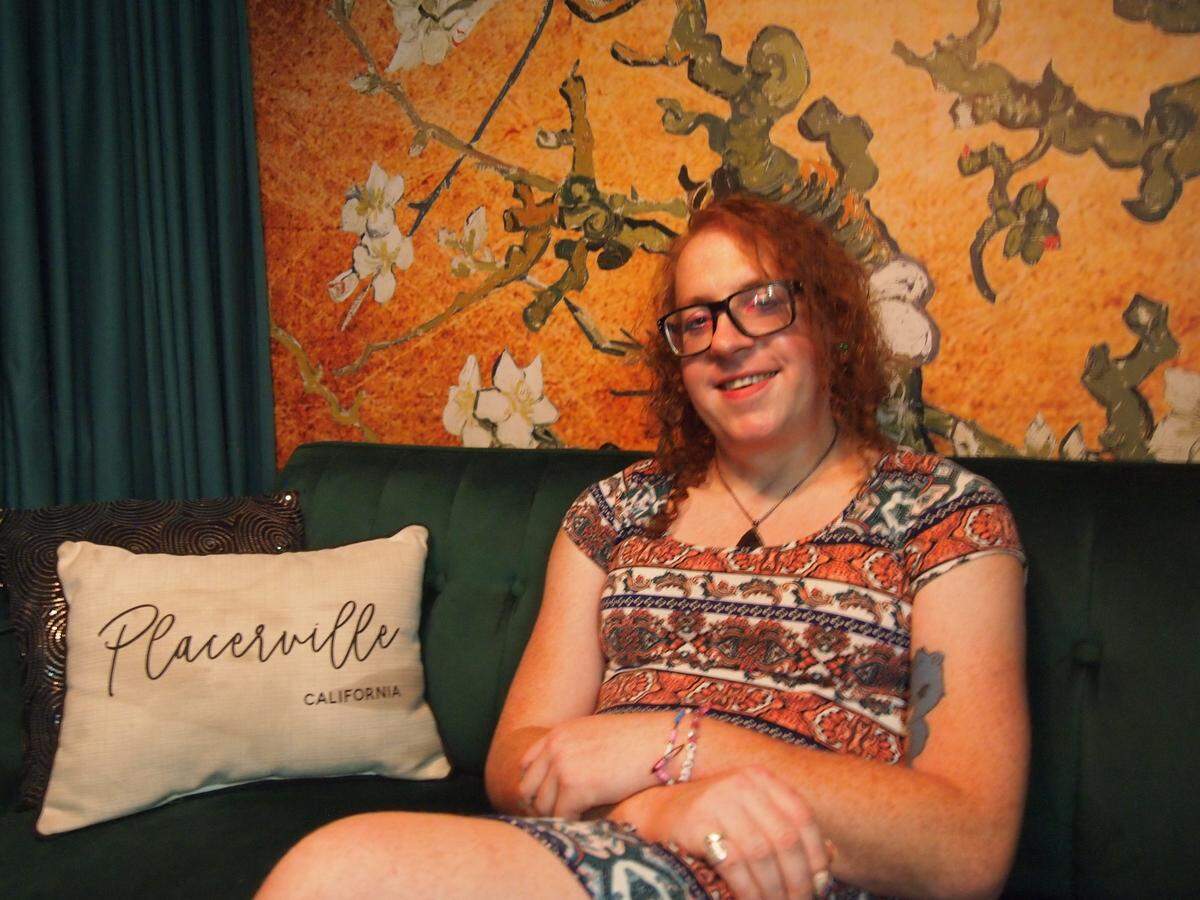
Barring the rainbow strobe lights that illuminate the karaoke singers, there’s nothing explicitly queer about the club. No pride flags, no pronoun pins.
“If society stopped putting us into this different category, I could just call this a community social,” Barry said. “But I have to have the word ‘queer’ in there so that queer people know that this is a safe space.”
Placerville residents Em and Justine Robbins, nonbinary and trans respectively, described themselves as “very reclusive, a little afraid to be” before attending the Green Room socials. A friend of theirs sent them a flyer for the first event, and they’ve gone to each one since then.
Sunday was their 12th wedding anniversary. They now had the option to spend it with community rather than alone at home.
“It’s just been really nice meeting more and more people that are like us, that understand us,” Em Robbins said. “And they are local. We don’t have to travel all the way to Sacramento, or all the way to San Francisco, or across state lines to Oregon — it’s right in our backyard.”
One attendee from El Dorado County noted that, while Placerville is “a lot more diverse than people realize,” its reputation as a predominantly white, Christian and socially conservative city makes Barry’s events even more important to the queer community.
An hour into the social, a newcomer with curly hair and a Dungeon Meshi shirt approached the Robbinses’ table and asked if she could join.
Maxine Valkov, a trans woman and a recent graduate of UC Davis, moved back to El Dorado County earlier this summer. She hoped to find a local queer community. When asked if she was surprised a queer-friendly social exists in Placerville, she answered, “Yes and no.”
“Obviously, my gut reaction was yes,” she said. “But when I think about it … we’re everywhere. Why wouldn’t we be in Placerville?”
Outside the Green Room
Visibility can serve as a double-edged sword for queer communities. It guides people to safe spaces such as Barry’s socials, but also leaves these spaces vulnerable to backlash.
Unlike the Federated Church socials, which she believes were advertised only through queer social media groups, Barry sends flyers to the El Dorado County group chat on Facebook. For every reply of support, there’s another branding her a groomer or telling her she’s going to hell.
Barry did not expect to become an advocate for the queer community. But she “doesn’t mind telling people to buzz off,” she said with a shrug, and takes time to reply to bigoted comments with polite refutations.
“I want people to see who their neighbors truly are,” Barry said. “I want people to see how I’m treated regularly.”
The social may be a safe space, but the reality of life for the queer community in the country — particularly trans people — inevitably seeps in.
One of President Donald Trump’s first executive orders stipulated that the government would only recognize a person’s sex assigned at birth, regardless of whether this corresponds to their gender identity. Clinics offering gender-affirming care to trans youth may risk losing federal funding if they continue doing so. Trans people can no longer participate in women’s sports teams or serve in the military. And Barry can’t get a passport with her gender marker.
She has “no plans of stopping” her socials, even if it means paying $300 out of pocket each month to cover advertising, the karaoke jockey and security. Outside the Green Room, she hopes to resume annual Placerville Pride events, which came to a standstill right before the coronavirus pandemic.
“I want for people to not feel like they have to be cooped up in a room, I want people to be visible,” she said. “We deserve to just exist and have the same shake at life that everybody else does.”
As the Green Room began to empty at 7:30 p.m., Valkov, the Robbinses and other attendees at the table went up to Barry to say goodbye. The circle of guests had already exchanged numbers and promised to rollerskate together in July. Barry hugged them one by one.
“I’m glad you enjoyed today,” she said. “See you next month.”
This story was originally published July 3, 2025 at 6:00 AM.