
Esparto fireworks blast spewed toxic fumes on Yolo County crops. What’s next?
AI-generated summary reviewed by our newsroom.
- Yolo County and state agencies to test soil and water after a fireworks blast.
- Officials plan debris removal, soil testing and possible groundwater sampling.
- Experts warn perchlorate may affect crops, water systems and public health outcomes.
The Yolo County Environmental Health Division and state agencies will analyze soil in valuable agricultural fields after a fireworks explosion earlier this month at an Esparto warehouse spewed toxic fumes on nearby crops.
The July 1 explosion killed seven people and leveled structures as fireworks burst into the air, sending black plumes across land that has grown almonds, mulberries, tomatoes and peppers.
Work to identify and remove hazardous materials began by clearing solid debris before testing the soil for contaminants, Yolo County spokesperson Laura Galindo said this week.
“At this time, evaluations are ongoing and no final determinations have been made,” Galindo wrote in an email.
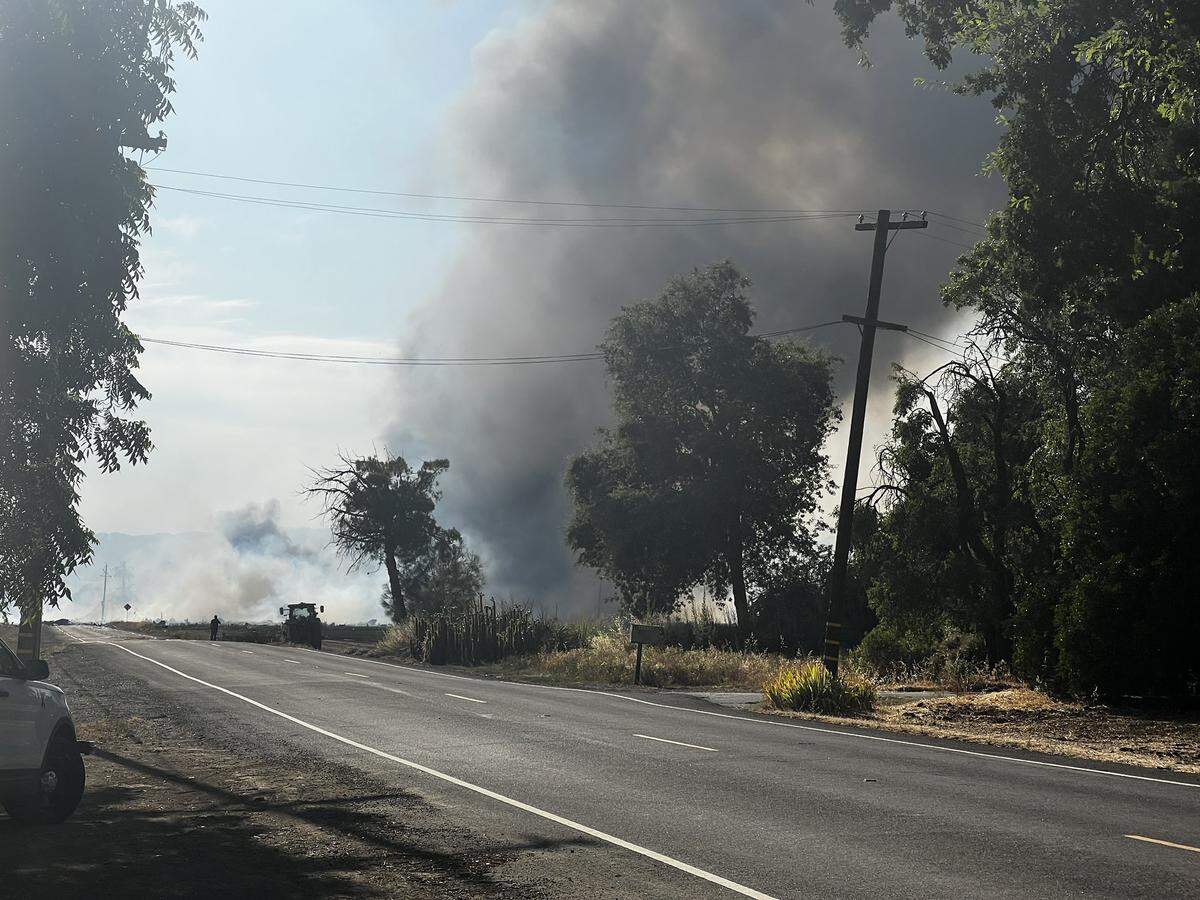
Sensitive populations — such as pregnant women and children — could breathe in harmful particulate matter contained in smoke and suffer respiratory problems, said Jun Wu, a professor of environmental and occupational health at the Joe C. Wen School of Population & Public Health at University of California, Irvine.
Fireworks, however, also include perchlorate, which can have short-term or chronic effects on the thyroid gland, such as hypothrodism, said Kim Van Meter, an associate professor of water systems science at Penn State. The condition limits thyroid hormones released into the bloodstream and can slow down a person’s functions, according to the National Institute of Diabetes and Digestive Kidney Disease.
Pregnant women and children are particularly vulnerable to perchlorate. An underactive thyroid gland can affect brain development for growing babies, according to Johns Hopkins medicine.
One of the fireworks companies at the site, Devastating Pyrotechnics, imported 750 pallets of perchlorate, according to previous Bee reporting.
Generally, firework smoke has inorganic matter, which is different from organic materials contained in wildfire smoke, Wu said. Common metals in fireworks include copper, potassium, strontium, barium, magnesium or aluminum to create the colors, she said.
There are very minimal effects if a person breathes in the perchlorate, Van Meter said. But chronic consequences can result if the chemical seeps into the groundwater and it is ingested, she said.
“It can stick around for a long time in groundwater,” she said.
Soil does not strongly absorb perchlorate, Van Meter said. But perchlorate is easily dissolved in water, and can be taken in by crops. People eating this food may experience short-term health effects, Van Meter said.
The spread of chemicals contained in fireworks is unknown. A variety of factors such as wind speeds and different weather conditions contribute to its reach, Wu said.
In Esparto, the top few inches of soil around the area will be removed and tested to determine if there are any contaminants above screening levels, Galindo said.
“If groundwater is suspected of being contaminated, groundwater samples may be taken and analyzed in the lab,” she added.
Van Meter, who is not involved in Esparto’s clean-up efforts, said officials should monitor the pathway of perchlorate to determine where it went. If chemicals ended up in water, the engineers could create a water treatment in which they create low oxygen conditions and introduce microbes to make it harmless.
The California Department of Public Health, Office of Environmental Health Hazard Assessment, California Environmental Protection Agency and California Governor’s Office of Emergency Services are all working with local agencies to create a plan to remove solid debris and then will work on taking samples from the site, Galindo said.
“Clean up of the facility site has not started yet,” Galindo said. “When it does, it will likely take weeks or months.”