SMUD shared customer data with police, prompting privacy, racism concerns
AI-generated summary reviewed by our newsroom.
- SMUD shared electricity usage data with police, triggering armed home visits.
- Lawsuit claims racial profiling and privacy violations in SMUD data practices.
- Over 33,000 Sacramento-area addresses disclosed to law enforcement since 2014.
Brian Decker was asleep in his Rancho Cordova home just after dawn on an October morning in 2020 when he was jolted awake by sirens. A police bullhorn sounded through the suburban quiet, barking his name and demanding that he come out with his hands up.
Terrified, he complied, emerging from his house in his underwear to find four Sacramento County Sheriff’s Office patrol cars, lights flashing and sirens wailing, and officers with their guns drawn, Decker said in a sworn affidavit that appears to be confirmed in video shot by a neighbor.
“Shocked, traumatized, and with no chance to put on clothes, I was forced to walk backward out of my home in only my underwear at gunpoint with sirens blaring and officers screaming commands over a bullhorn,” Decker said in the affidavit. “After I came out, I was handcuffed and forced to sit in the back of a police car for over two hours.”
Finally, he learned the reason why: the Sacramento Municipal Utility District had flagged his home as a place where residents used a lot of electricity, sharing the information with sheriff deputies who saw that as a sign he was trying to grow marijuana there illegally.
He wasn’t.
Decker is suing Sacramento County over the incident, and he is also a witness in a separate case against SMUD and the Sacramento Police Department that challenges the utility’s practice of providing law enforcement agencies with data on the amount of electricity that households use.
His experience is a potent example of what privacy experts say can go wrong when personal data is made public, said Matt Bishop, a digital privacy expert at UC Davis.
“There are two problems here,” Bishop said. “The first one is the invasion of privacy. The second one is — what if you get it wrong?”
’Smart metering’ brings privacy concerns
Smart-metering, the practice of collecting digital data on when customers use electricity in real time, was hailed as a way for providers to better manage strained electrical grids and understand consumer usage. It allowed utility companies to bill customers more if they used energy at peak times, and made it easier to track outages.
But privacy experts have fretted for years that such data could also reveal intimate details of consumers’ lives, and lead to just the sort of misunderstandings that Decker and others have experienced — sometimes with dangerous consequences. In recent years, police have sought data not just from public utilities, but from digital platforms and even neighborhood security cameras, prompting a larger discussion on whether and how such data should be shared.
“The inferences that are drawn could lead to very, very bad consequences for the individual,” Bishop said.
The information shared with law enforcement agencies about Decker and others was meant to help them zero in on places where marijuana is being grown illegally, because indoor grows use a lot of electricity. But the dragnets being cast by police who seek data on thousands of households at a time are also netting people who put up a lot of Christmas lights, heat or air condition large homes or, as in Decker’s case, mine cryptocurrency.
Some had visits from armed officers at their homes, while others received frightening letters from the city of Sacramento saying they were suspected of illegal conduct, evidence submitted in one of the cases shows. In the case of the city, officers came to search homes after the residents received a letter saying they were suspected of illegal activity, depositions said.
“The power company, whose job it is to give us energy, is acting as the deputy police department, treating everyone in the city as a suspect and coming up with leads for the police to do investigations,” said Adam Schwartz, privacy litigation director for the Electronic Frontier Foundation, the digital liberty group that is backing the lawsuit against SMUD and Sacramento police and whose attorneys are representing its plaintiffs.
The public utility has shared information on electricity usage with law enforcement officers from Sacramento, Elk Grove, Rancho Cordova and Sacramento County, evidence submitted in the case shows. Police services for Rancho Cordova, where Decker lives, are provided by the Sheriff’s Office.
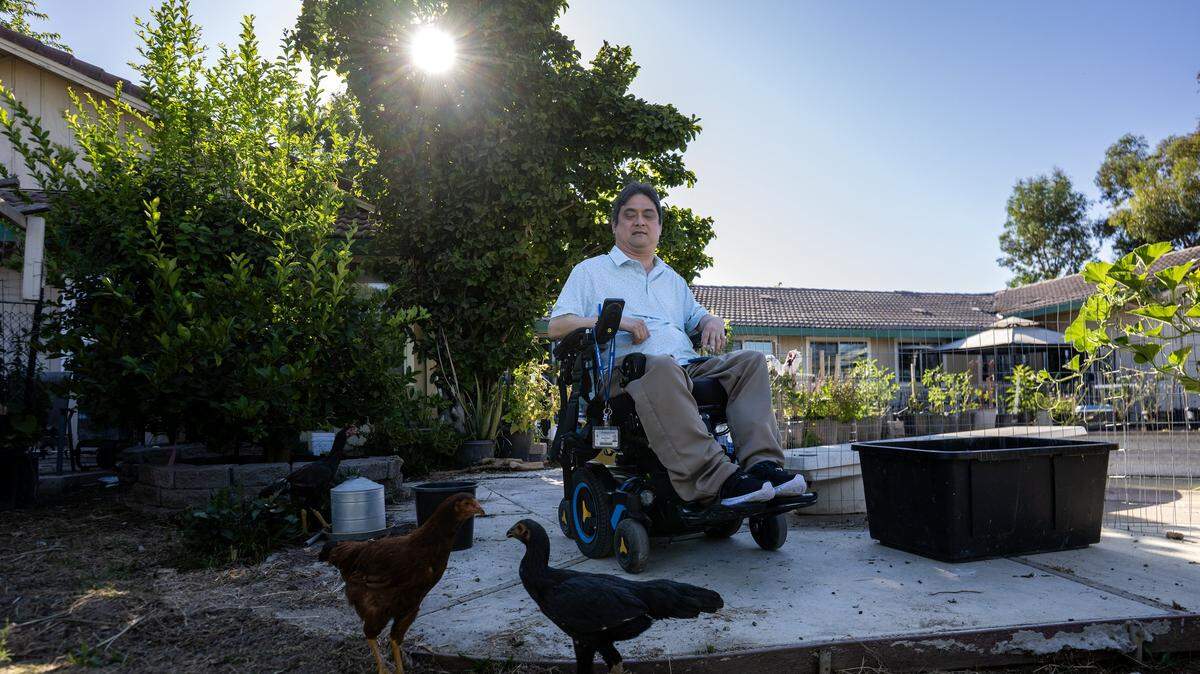
A trove of testimony and evidence filed in July in the ongoing lawsuit in Sacramento Superior Court provides a new level of detail to accusations first levied in 2022 in the case, filed by the Asian American Liberation Network, a progressive organizing group, and Khurshid Khoja, an advocate in the legal marijuana industry. The case was soon joined by Alfonso Nguyen, a wheelchair-bound Sacramento County man who said armed deputies forced their way into his home after SMUD shared data on his electricity usage with them.
At issue is a provision in state law that bans public utilities from sharing customer data unless it is requested as part of a law enforcement investigation. SMUD says that it has simply complied with legal requests from police agencies. But opponents say that vague requests for massive amounts of citizen data do not meet the definition of an ongoing investigation, because there are no named suspects, locations or specific crimes. Instead, the digital liberty advocates backing the lawsuit against SMUD and Sacramento police say that the agencies are trying to generate leads based on personal details of people’s lives that, in themselves, rely on faulty assumptions.
The case, which is scheduled for its first major hearing in October, also accuses the utility and the police department of racism and racial profiling, citing text messages and email conversations in which employees of the two organizations appear to be focusing on enforcement actions at homes owned or rented by people with Asian names, perhaps spurred by cases showing that Chinese organized crime groups are involved in growing marijuana illegally in the U.S.
Charging a wheelchair leads to visit from law enforcement
Alfonso Nguyen, 51, is a community college counselor who lives with his mother in Sacramento County near Elk Grove. He uses an electric wheelchair that needs to be charged regularly, and must keep his home warm in the winter and cool in the summer due to a disability that makes it difficult for his body to regulate its temperature.
SMUD knew this, because he consulted the utility when he moved into his home, seeking ways to keep electricity costs down.
But that didn’t stop his name and home from being shared with law enforcement, who have shown up, armed, twice over the years to demand access to nonexistent marijuana plants.
The first time, a sheriff’s deputy pushed past Nguyen in his wheelchair to search the home without a warrant, he said. The second time, a deputy placed his hand conspicuously on his holstered gun and threatened to come back with a warrant and arrest Nguyen.
The incidents terrified and traumatized his mother, a refugee from Vietnam who was repeatedly arrested by that country’s Communist government after the Vietnam War in the 1970s, he said.
“Every time they want to arrest my parents, without warning, they just come and knock on the door and take them away,” he said of the family’s life in Vietnam. “Sometimes for a couple days, sometime for months.”
The arrival of armed deputies at the family’s Sacramento County home tore open that wound, he said, each incident causing his mother, now in her 70s, to need medication for anxiety.
Neither Sacramento police nor the sheriff’s office would comment on the legal cases or the issue. But in a legal document filed with the EFF case, the city of Sacramento agreed that a chart showing law enforcement requests for information on electricity use by zip code could be admitted as evidence and was, to the best of the city’s knowledge, an accurate reflection of documents and information that the city had provided. Other documents among the thousands submitted were also accurate, the city said.
That chart, compiled from thousands of documents including emails and other communications, shows that law enforcement agencies asked SMUD 91 times for information on consumer electricity use from 2014 to 2023.
A 2014 request from the Sheriff’s Office asks for data on high electricity usage from three ZIP codes, resulting in the sharing of 20 addresses, the chart shows.
On Aug. 9, 2023, Sacramento police asked for electricity use data from 25 ZIP codes within the city, resulting in information on 10,238 customers. Elk Grove and Rancho Cordova police also made requests and received information on electricity usage, based on ZIP codes. About 33,000 addresses were sent to law enforcement agencies within the county over a nine-year period, the data shows, although some of the addresses were likely repeats.
Over the years, the threshold of electricity use flagged for inclusion in the lists dropped dramatically, from about 7,000 kilowatt-hours per month in 2014 to 2,800 kWh per month in 2023, the discovery data shows.
Sacramento police requested the information with the most frequency, the discovery documents show.
Searching for Asian names
Emails and text messages uncovered in the lawsuit’s process of discovery, or obtaining evidence, from SMUD and Sacramento police show that employees of the utility were well aware that the goal of the searches was to find marijuana grows, and that there was an emphasis on people with Asian names.
In one text message, a SMUD employee urges an unnamed law enforcement correspondent to “send me a request” for a particular address. The house, the SMUD employee writes, uses a lot of electricity and “is Asian.”
In another, the SMUD employee notes that “multiple Asians” have been associated with a particular house since 2017.
The information being shared with police comes from data gathered by the so-called smart meters installed by SMUD at some 600,000 properties between 2009 and 2012.
Unlike analog meters, which were read by hand every three months and only provided a basic total for a household’s electricity use, the smart meters track usage in real time, allowing the utility to track surges in use and daily patterns. SMUD allows homeowners to opt out of the smart metering program, but they must pay $145 to have an analog meter installed, the company’s website shows.
When analyzed, information from a smart meter can reveal intimate details of a person’s life, said Bishop, such as when they like to cook or take a shower. And law enforcement officials could easily misinterpret data showing that, for example, someone’s Christmas lights flick on at the same time every night, as an indication of light and climate control equipment for a pot grow, Schwartz said.
Both Decker and Nguyen said they had notified SMUD long before their data was shared that they had high energy needs at their homes. Decker installed a solar panel array to help defray the cost and impact of the electricity used by his computers and crypto mining activities, and submitted a report to SMUD explaining why his usage was elevated.
Nguyen had SMUD send an expert to his home to see if there was a way to reduce the power usage at his home, and followed their directions for conservation.
Now, he said, his faith in the due process protections offered in the country to which he and his parents fled has been shaken.
“The thing that bothers me the most was we came to this country with the belief that we are protected under the law, and basically that is broken at that time,” Nguyen said. “The second thing that’s still lingering on my mind to this day is, ‘Why?’”
This story was originally published August 3, 2025 at 3:15 PM.
CORRECTION: Story has been updated to correct the name of the Electronic Frontier Foundation.