
Gold Country Fair in Placer County allows 4H students to plan for their future
AI-generated summary reviewed by our newsroom.
- The Gold Country Fair is expected to draw about 50,000 visitors during its 51st annual gathering.
- The Junior Livestock Auction saw students sell animals raised through 4H programs.
- The Gold Country Fair ends Sunday.
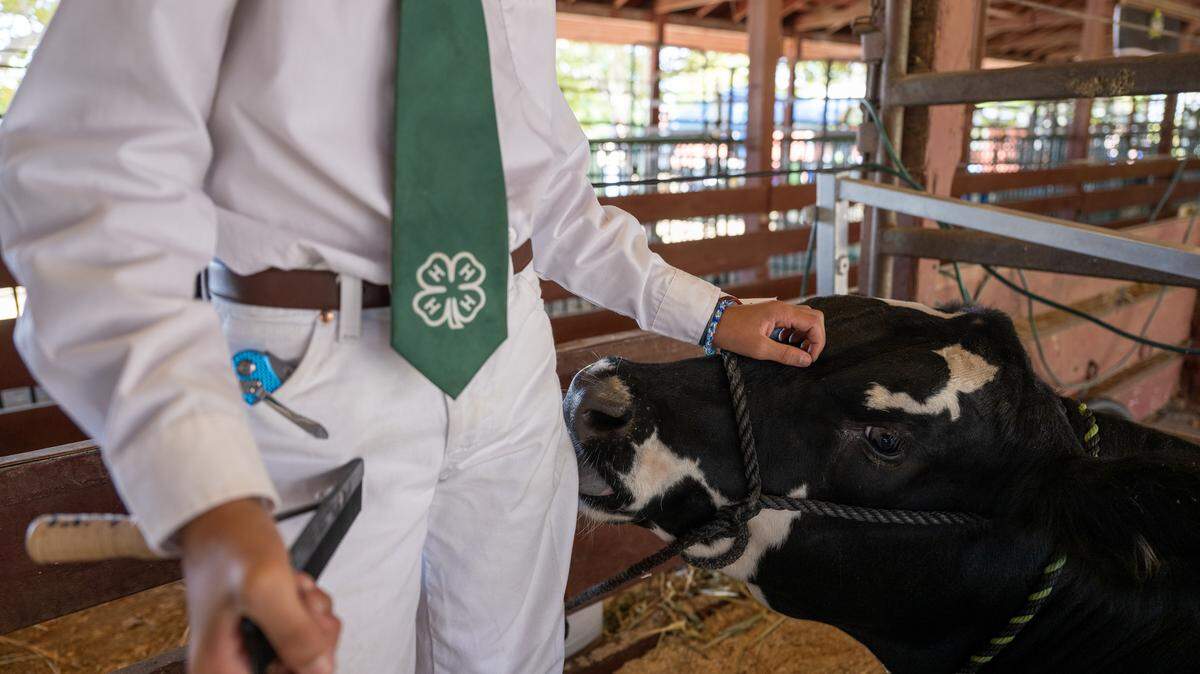
Victor Campos gently combed away sawdust clinging to Oden’s hide as an auctioneer’s voice echoed Saturday through the Gold Country Fair. The moment Victor spent months preparing for was now just minutes away.
The seventh grader prepared to guide Oden up onto a stage so dozens could bid on buying it for meat. He raised the lumbering animal from its birth and compartmentalized his feelings when thinking about his steer’s demise. The funds raised from selling Oden will go to his retirement funds, said Dawn Campos, Victor’s great-grandmother.
“That will be his legacy,” she said of Oden as it licked Victor.
Saturday marked the third and penultimate day of the Gold Country Fair in Auburn and brought a morning filled with anticipation and excitement as students, after raising animals, saw their work peak at the auction. More than 50,000 people were expected to descend on the fairgrounds during the four-day event, according to the fair officials.
The Gold Country Fair, which ends its 51st edition on Sunday, also represented a celebration for California’s 175th birthday. On Sept. 9, 1850, President Millard Fillmore signed legislation granting California statehood.
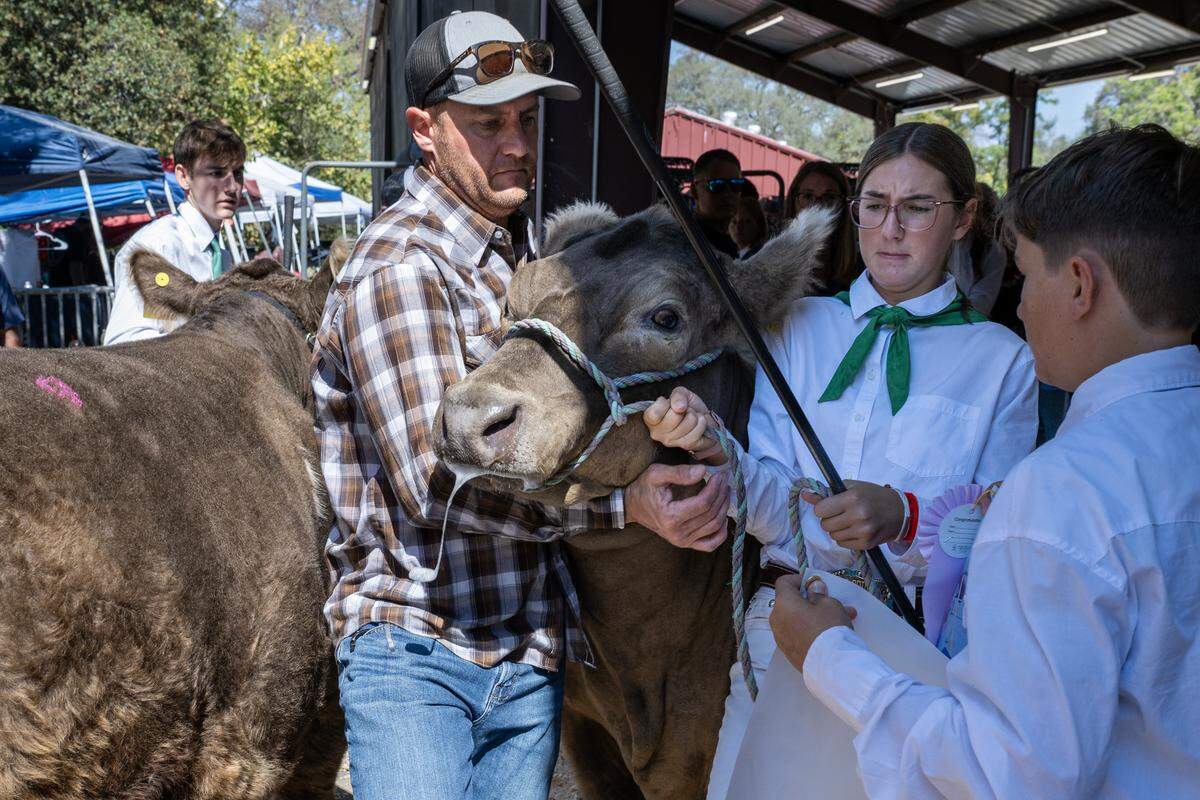
The auction, filled with sponsors engaged in a fast-paced bidding war, was completely filled as residents raised their paddles. Children squealed as they ran toward bleating goats and other animals.
Stella Budelli, 11, wrangled her goat onto a stage, and watched as a representative from Les Schwab Tire Center won her animal. This was her first time raising a goat for Saturday’s Junior Livestock Auction.
She was nervous as dozens in the crowd gazed back at her, but still radiated excitement. Every morning and night, she would feed her goat (named “The GOAT,” for ”Greatest Of All Time”), and saw her hard work pay off once he was bought.
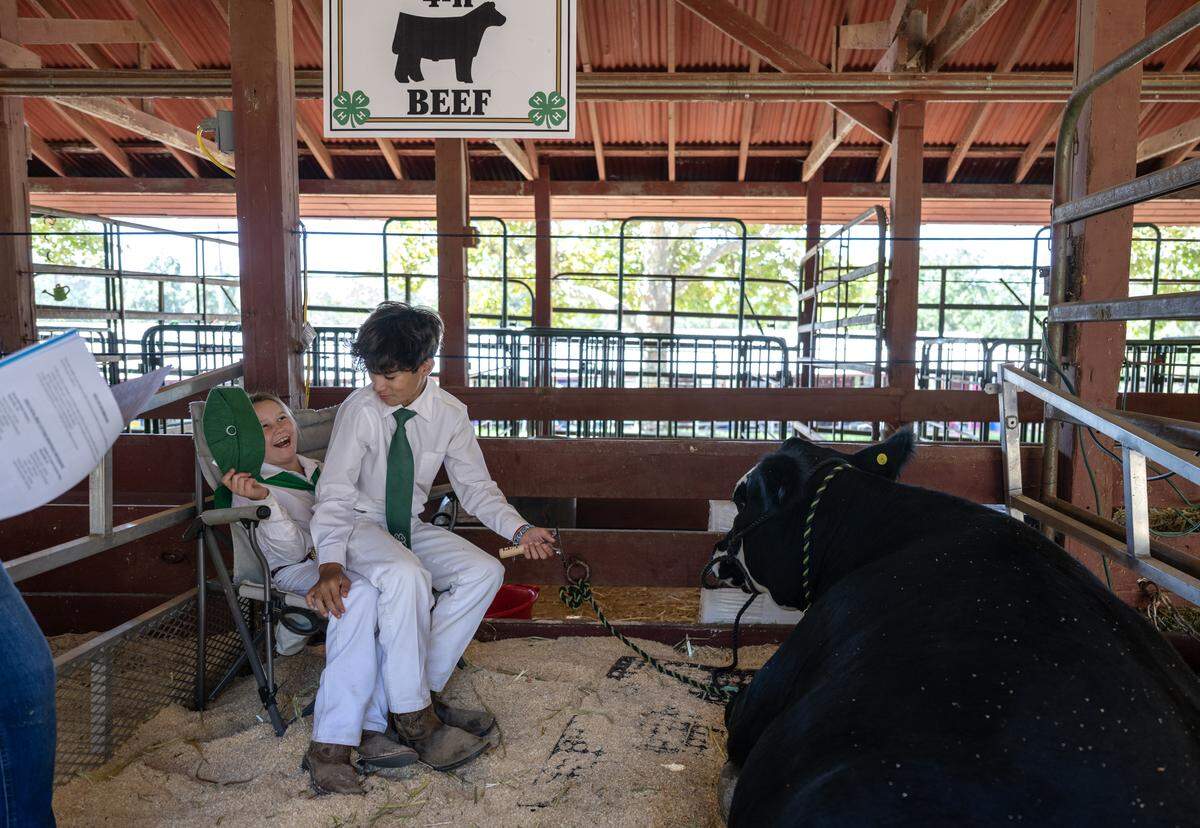
For Victor Campos, the 4H program allows him the chance to bond with other competitors and swap tips on how to raise their animals. And he learned how to speak in a public setting, while educating others on the cattle industry.
“My buyers have been very pleased with the quality of my beef,” he wrote in a pamphlet outlining his biography.
This year also marked the first year he qualified for the master showmanship, or a chance to show off five to six different animals, of all types of species. He’s been preparing to answer questions about different animals by judges.
At 12 years old, Campos is already thinking ahead with his earnings collected from participating in the 4H program.
“I have now begun saving for my college education and a car,” he wrote in a biography pinned outside where Oden sat. “I’m excited for what the future holds for me!”
This story was originally published September 6, 2025 at 4:14 PM.
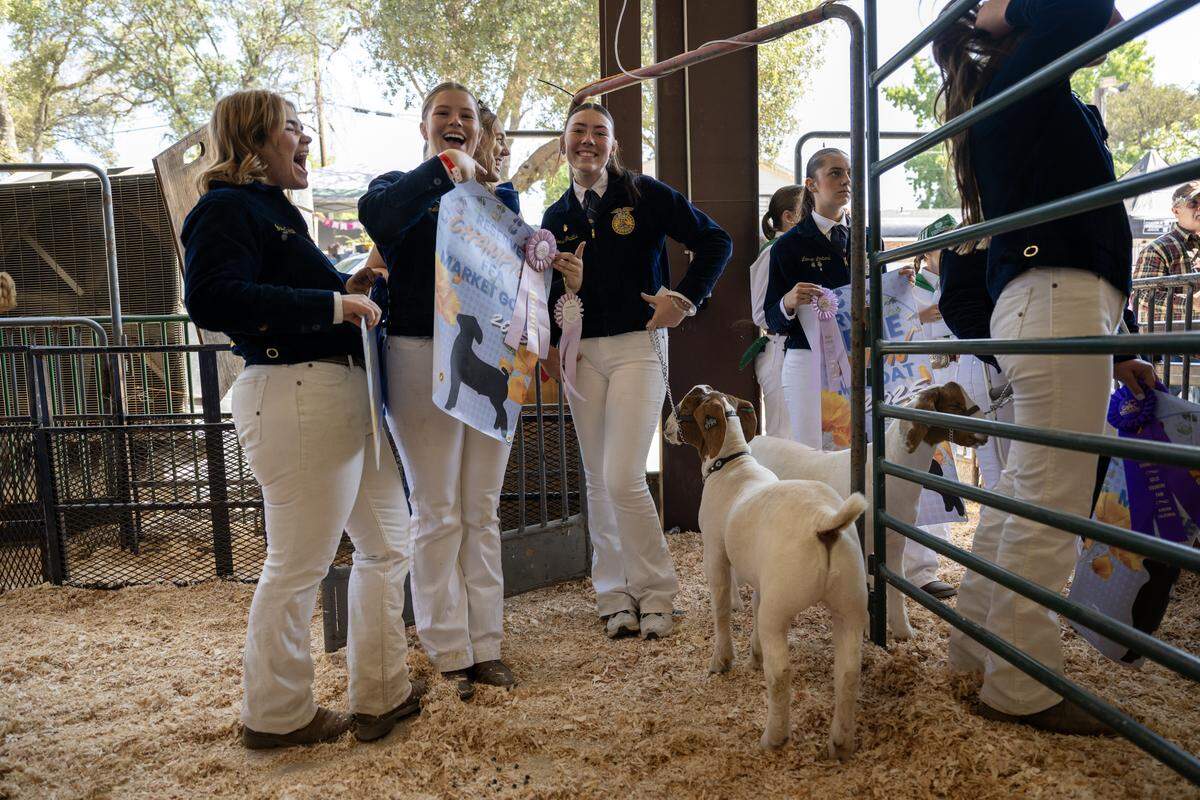
CORRECTION: A photo caption incorrectly identified some FFA auction participants as being from 4H.