As Sacramento leaders talk homeless solutions, some want region to ‘move quicker’
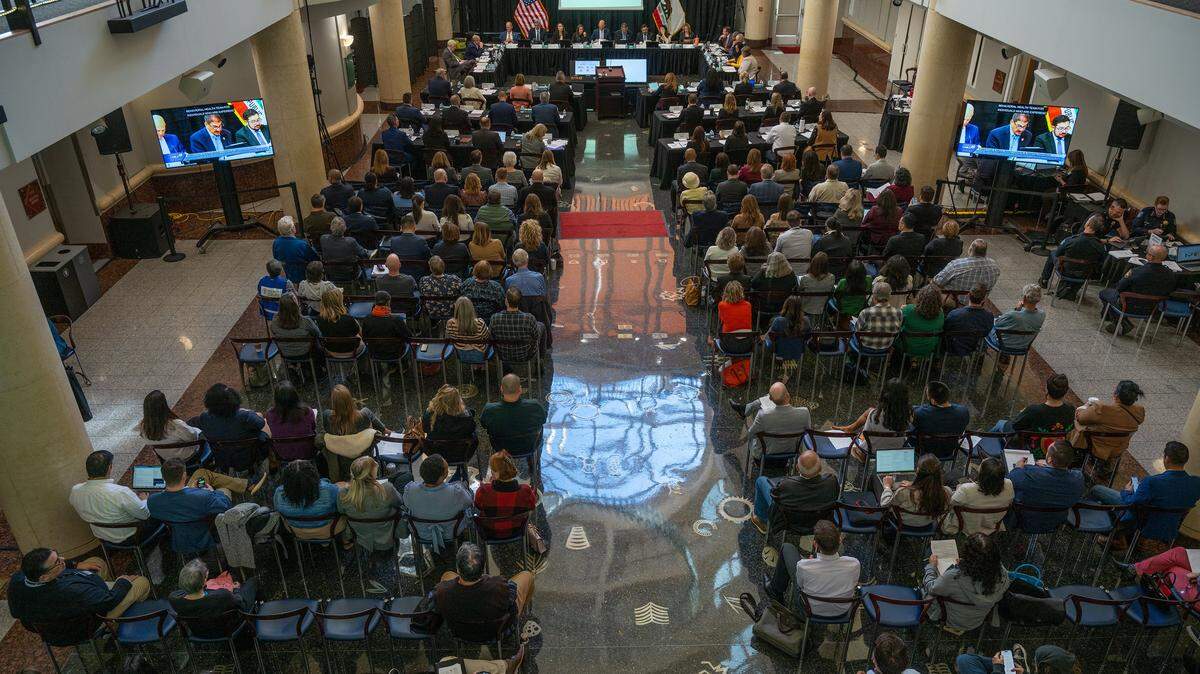
Elected leaders for Sacramento County and most of its cities met for several hours Tuesday at the Tsakopoulos Library Galleria to discuss homelessness in the region and local government bodies’ approach to addressing the crisis.
The meeting, billed as the County-City Collaboration on Homeless Services and Behavioral Health, convened the Sacramento County Board of Supervisors, the Sacramento City Council, and one elected official from each of Citrus Heights, Elk Grove, Folsom, Galt and Rancho Cordova.
Some leaders who spoke, including Supervisor Pat Hume, expressed optimism, urging colleagues and compatriots to continue and advance the conversation in the near future. They discussed the possibility of holding additional meetings or codifying the entity as a joint powers authority.
Others, including Sacramento Vice Mayor Karina Talamantes and some residents who spoke during the meeting’s public comment period, shared frustrations that the meeting did not offer action items or a more definitive plan for how to proceed. Talamantes called upon the elected officials to “move quicker,” particularly in the face of state and federal budget cuts that are poised to worsen the situation.
Here’s more of what was discussed at Tuesday’s meeting.
McCarty weighs in
Sacramento Mayor Kevin McCarty ducked out shortly before the end of Tuesday’s meeting, with Sacramento County Supervisor Phil Serna telling the room that the mayor had to depart for a flight.
Reached by phone shortly thereafter, the mayor touted the results of an informal poll taken during the meeting among elected officials about whether to create a group that would work on homelessness. The county has been making presentations to local jurisdictions about a potential group, the Sacramento Homeless and Housing Board.
“The thing that I’ve always supported and which was never easy to get everyone to agree upon, is the decision that we should have a shared-structure entity to work on homelessness,” McCarty said.
McCarty noted that the officials polled had been unanimously in support of the idea.
“So I think that’s significant,” McCarty said.
Was meeting productive? One official says: ‘No’
At the end of the county’s vision session, the board was asked by Mosaic Solutions and Advocacy if they believed the meeting was productive. Thirteen members said it was. Sacramento Councilmember Caity Maple answered, “somewhat.”
Talamantes answered: “No.”
Talamantes, whose council district includes Sacramento’s Natomas and Northgate neighborhoods, Talamantes said in an interview that she wished the board would come back with actionable items to vote on, like a joint powers agency or another date to meet to discuss “next steps.”
She said that because of federal funding cuts, Sacramento and California will end up with more homeless people.
Sacramento needs to act faster, she added.
“We need to treat it as an emergency, which homelessness is,” Talamantes said. “It’s a humanitarian crisis. And I just want us to move quicker.”
Herman Barahona, the founder of the Sacramento Environmental Justice Coalition, approached public comment to speak on behalf of the “six people who died” from Camp Resolution. The camp was a city-sanctioned homeless encampment that closed in August 2024.
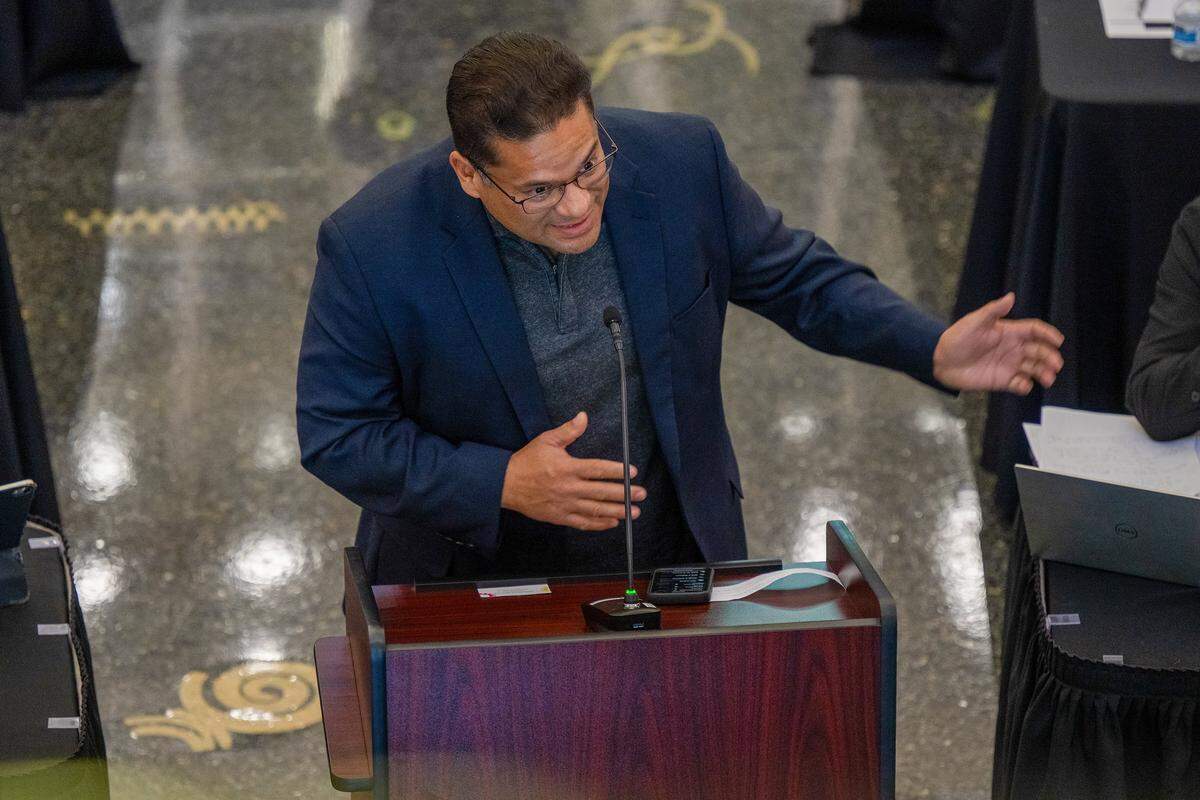
Barahona talked about Shawn Adams and her spouse, who he said died in a motel their doctor was paying for after they were evicted from Camp Resolution.
“These cases are a simple but tragic example of the negligence of human beings that matter,” Barahona said. “They matter to us, and I hope that this effort begins to see the dignity that needs to be given respectfully to all of our folks.”
Barbara Ramm, a member of Decarcerate Sacramento and a community activist, called the meeting a “waste of time” and criticized that the board did not vote on any actionable items.
“I feel like it was a bigger Board of Supervisors, city council meeting. They did nothing,” Ramm said. “There’s no like, ‘We’re gonna do these three things or even one thing.’ They’re just there letting people talk.”
Reactions to potential group
The potential Sacramento Homeless and Housing Board appeared to be more of a subject of focus during the afternoon session, with multiple officials weighing in about the efficacy of creating a group.
Sacramento County Supervisor Patrick Kennedy said he had a take “a bit like a turd in a punchbowl to throw out there.” Kennedy wanted to know why it would be necessary to create an organization involving eight different jurisdictions when, he said, homelessness was primarily a problem in Sacramento and unincorporated parts of the county.
A representative for public policy firm Mosaic Solutions and Advocacy, which was helping guide discussion among elected officials, responded that transient people move around. The rep also suggested that different jurisdictions had different things they could be doing around homelessness that were worth sharing.
There was some discussion among officials about what form the organization should take, be it MOU (memorandum of understanding) or JPA (joint powers authority). Hume drew laughter by saying it could perhaps be a BBQ.
Most seemed to be in favor of creating such an organization, including Sacramento City Councilmember Caity Maple.
“To the extent that we can make decisions and move quickly, I think that’s a really good thing,” Maple said.
Mayoral candidate skeptical on a new agency
Flojaune Cofer was grateful that Tuesday’s meeting was happening.
But there were limits to Cofer’s gratitude, which she admitted in an interview as the meeting was breaking for lunch.
“I’m a little frustrated that we’re not hearing more from people who are directly impacted by the issue of homelessness and we’re not focusing a lot of the narrative on solutions, in particular housing,” said Cofer, who lost a tight race last year to McCarty to become Sacramento’s mayor and who sat in the crowd at the Tsakopoulos Library Galleria.
For Cofer, the day’s event might have been too little, too late.
“Just the idea that all of these cities in the county are finally coming together to discuss... the No. 1 issue in the region is — it’s incredibly late and it’s unfortunate that it’s happening right now,” Cofer said.
She questioned what the new board would be able to do.
“That sounds like another bureaucratic agency,” Cofer said. “And what I would want to know is: What are they going to do that’s different than what’s being done now?”
Can Sacramento build its way out of homelessness?
Sacramento Councilmember Roger Dickinson said the “reality is” that Sacramento County will never build its “way out of sheltering homelessness” altogether.
Dickinson, whose district includes North Sacramento, Hagginwood, Del Paso Heights and part of the American River Parkway, said 30% of the county’s homeless population is represented in his district.
“We have to prevent people who are at risk becoming of homeless from ending up in that condition,” Dickinson said. “And by the way, it’s a lot less expensive than it is to help people off the street once we’re there — doesn’t mean we don’t invest (in) people on the street.”

Concern varies by city
Folsom Mayor Sarah Aquino said her city’s biggest concern is not homelessness. She said that while the “majority of the population” in the city of Sacramento is worried about homelessness and affordable housing, Folsom does not have the same challenges.
“If you poll the people in Folsom right now, homelessness will not be the biggest issue, at least not from those residents,” Aquino said. “It’s from its traffic, its development, its e-bikes and e-scooters
One survey elected officials filled out before the meeting showed concerns with the state of homelessness for Rancho Cordova, Citrus Heights, Elk Grove, Folsom, Galt and Isleton mostly deemed of “moderate concern” to “minor concern.” For Sacramento County and the city of Sacramento, most chose that it is a “critical concern.”
Hume, Desmond call for more dialogue
Supervisor Rich Desmond advocated for the joint council to have more meetings. Galt Mayor Shawn Farmer agreed, saying without this forum, there has been a “disconnect.” He added that Sacramento County needs to build more affordable housing.
“If we all sit around like this and we all share our thoughts, I feel like…someone who says something here makes me think of better thoughts,” Farmer said.
Hume advocated for using real-time data to understand the complexity of housing and homelessness in the county, which he said should continue with more “dialogue.”
“I don’t know that most of us on this dais could name numbers on ‘How many housing units do we already have?’” Hume said.
Federal, state safety nets fall short
Alex Visotzky, the senior California policy fellow for the National Alliance to End Homelessness, presented to the board about what federal and state cuts will mean for homelessness prevention within Sacramento County. In his opening remarks, Visotzky said housing options for low-income residents are slim.
“We are in a crisis…we don’t have housing that’s affordable for low-income people,” Visotzky said. “The safety net to make up the difference there is woefully insufficient.”
He referred to the White House’s Fiscal Year 2026 budget, which includes a 44% decrease in rental assistance and cutting the federal Community Development Block Grant, which funds low-income development programs for local governments.
Visotzky added that only one in four households seeking federal housing assistance obtains it. According to the National Alliance to End Homelessness, around 92% of single, working-age adults are unassisted.
‘We need places for them to go’
During the behavioral health presentation of the meeting led by Ryan Quist, the county’s behavioral health services director, McCarty asked what would be the most effective way to get homeless residents with mental health illnesses engaged in prevention programs. In his question, he referenced Nurse Ratched, the antagonist from the book and film “One Flew Over the Cuckoo’s Nest,” who controlled patients in a psychiatric ward.
“I think that there’s been a shift that we’re not going to go back ... in the state hospital system with Nurse Ratched,” McCarty said. “But for certain individuals that need compulsory treatment, I think that we’ve acknowledged that, but it’s not always working.”
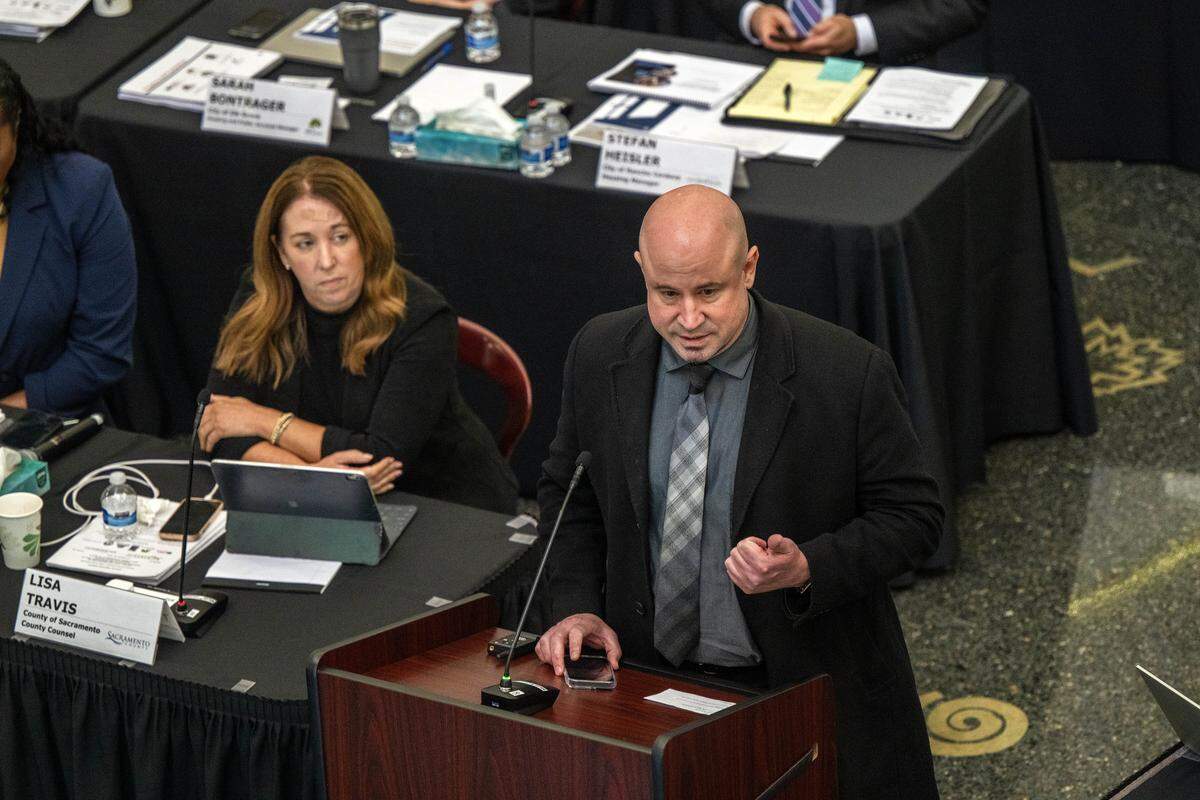
In response, Quist said the solution is housing, which was followed by loud applause throughout the library galleria. Quist added that the vacancy rate is about 1%, according to the county’s analysis.
“Our service providers report every day that they’re having the hardest time finding locations for people to be housed,” Quist said. “They’ll have them in services to help them with their substance use, and then where do we put them after they come out of residential treatment? We need places for them to go.”
Sacramento County DA: More local control needed instead of SHRA
Sacramento County District Attorney Thien Ho rose from the crowd to address the meeting.
Near the end of his remarks, Ho mentioned his hopes for some areas of focus, including bringing homeless services back under local control and shifting some responsibility away from the Sacramento Housing and Redevelopment Agency, or SHRA.
“SHRA is really efficient in certain areas, but frankly, control of SHRA as it relates to our homeless processes should move back to local authorities or to another authority that can have supervision,” Ho told the room.
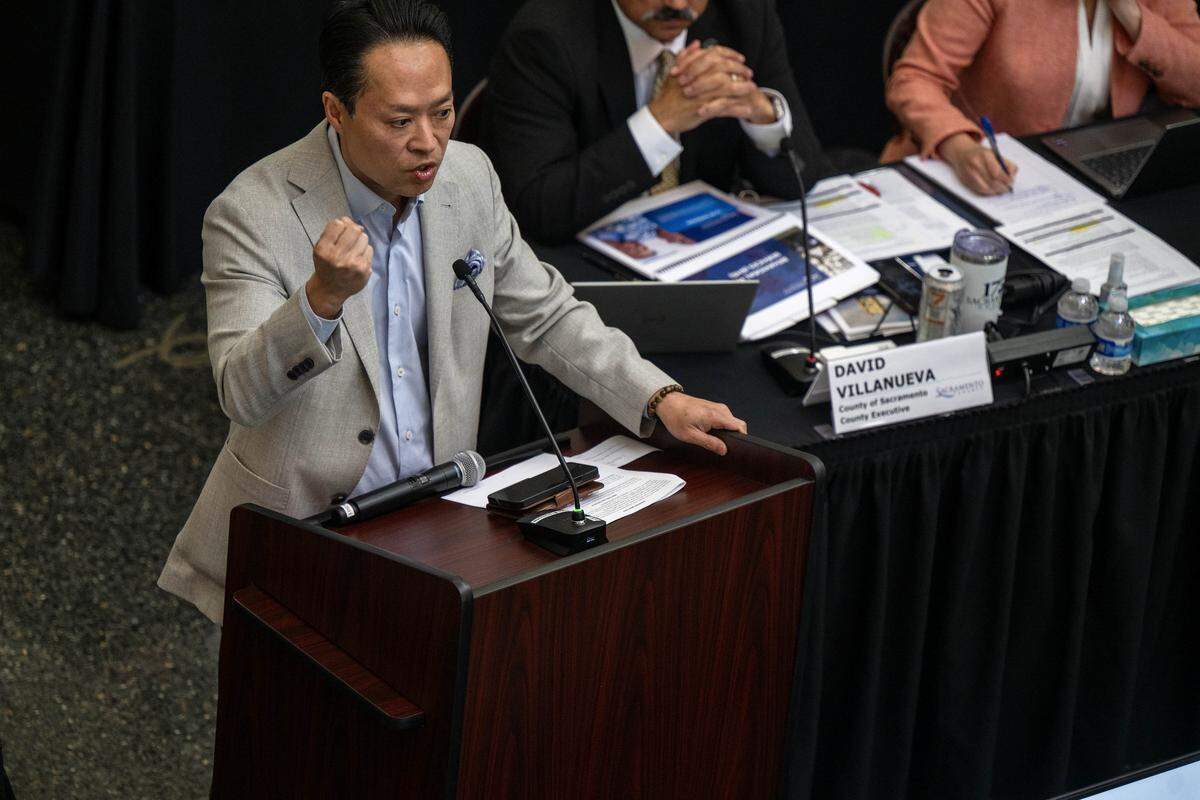
The county has been making presentations to local jurisdictions in recent months about creating a new group, the Sacramento Homeless and Housing Board.
Shortly after he left the room, Ho gave an interview to The Sacramento Bee where he reiterated his desire to move focus away from SHRA.
“I think local control is good,” Ho said. “This is a local crisis that needs to be handled differently depending upon the local jurisdiction that you’re in. So we should give the power back to the local jurisdictions… to create the most effective solutions to solve the homelessness crisis.”
Is the status quo working?
The public policy firm Mosaic Solutions and Advocacy asked elected officials to answer questions regarding homelessness.
Among those was whether the “status quo” method of addressing homelessness is working. All elected officials in the meeting answered that it was not, except for Elk Grove Mayor Bobbie Singh-Allen, but she later clarified she was referring to how Elk Grove addresses homelessness.
When asked if the county and cities are working together properly, most of the city elected officials stated, “no,” while most of the county supervisors answered “yes,” but that the relationship could be stronger.
Sheriff Cooper speaks
Shortly before he addressed the meeting, Sacramento County Sheriff Jim Cooper spoke to The Sacramento Bee.
“I think it’s good, discussion’s always good,” Cooper said in an interview. “In my mind, homelessness has been politicized for a long time and we need to take the politics out of it.”
Tuesday’s meeting comes amid word that the county is attempting to work with local jurisdictions to create the Sacramento Homeless and Housing Board. Cooper said he’d heard a little about this effort, though he added that the issues for cities can differ.
A defining element of the region’s issues with homelessness over the past year, since the U.S. Supreme Court gave the okay for West Coast cities to clear encampments, has been how quickly new ones, even sizable ones, can pop up within city limits in Sacramento.
He said that there were no longer large encampments in unincorporated areas of the county. “I think the thing that differentiates us is there’s no middleman,” Cooper said.
When Cooper addressed the meeting, he said that if large encampments pop up, they are addressed within 24 hours.
Undersheriff Mike Ziegler, sitting at the same table with Cooper, called Tuesday’s meeting a good opportunity. “For several years, we’ve had the county and the city not having the same vision of how to help the homeless,” Ziegler said.
The work can be painstaking, with Ziegler saying that for every 1,000 people contacted for services, 14% want resources.
Sacramento Homeless and Housing Board in works
The all-day meeting follows efforts to create a new group, the Sacramento Homeless and Housing Board.
Sarah Bontrager, housing and public services manager for the city of Elk Grove, said the county has been making presentations to local jurisdictions. The potential group would allow elected officials “to make some policy recommendations and some funding decisions for certain sources of funding at the regional level,” Bontrager said.
Bontrager said she believed the county hoped to have a memorandum of understanding ready early in the new year.
In recent years, the city of Sacramento and Sacramento County had created a partnership around homelessness following criticism that two sides could improve their collaboration.
Sacramento County has more than 6,000 residents experiencing homelessness, according to the 2024 Point in Time count.
The work comes amidst questions on the future of homeless services locally. The potential new group the county is discussing creating could also change operations for Sacramento Steps Forward, which currently operates the local Continuum of Care designated by the U.S. Department of Housing and Urban Development.
“It would definitely change the continuum of care and then kind of align the continuum of care, the county and the cities to serve in one unified capacity,” Bontrager said.
One notable change would be that the board of the Sacramento Homeless and Housing Board would include elected officials, rather than homeless services providers who have traditionally sat on the local continuum of care’s board.
It is not the first recent attempt to shift how homeless services are overseen in the Sacramento region. In February, Sen. Angelique Ashby introduced a bill, SB 802 that would have made former Sacramento Housing and Redevelopment Agency executive director La Shelle Dozier head of the Sacramento Area Housing and Homelessness Agency.
The bill drew immediate backlash from elected officials in the region and had its most recent hearing in July cancelled at Ashby’s request. Dozier announced in late August that she would retire from SHRA and has since taken a job in Washington, D.C.
Tuesday’s meeting comes with at least one prominent housing advocate wondering what might be in store for SHRA.
“I think there’s going to be pressure to sideline SHRA one way or the other — either move towards, again, a homeless authority, or take it all away from them,” said Ron Javor, 80, former lead counsel for the California Department of Housing and Community Development and a past board member for the Sacramento Housing Alliance and Sacramento Self-Help Housing.
Also on-tap for Tuesday could be talk of looming budget cuts at both the state and federal level that could impact service availability for homeless or needy families.
“We have challenges coming ahead of us,” said Sacramento City Councilmember Eric Guerra, who called for Tuesday’s meeting. “Obviously, the federal cuts are significant. There’s going to be more folks that are going to be facing hunger, housing insecurity (and) less resources at the state.”
Javor was also interested in what could happen with Sacramento Steps Forward.
“I mean, there have to be some cuts,” Javor said.
He added, “They’re like everybody else. They take little pieces of this and that. They get administrative cuts on top of other things. And I think, I mean, they used to have some SHRA… money. I don’t know if that’s there anymore.”
Guerra said the question was now how the county and cities could work together to deal with the circumstances that have been handed down. He said Tuesday’s meeting was positive.
“Everyone’s going to have that opportunity to chat today,” Guerra said.
This story was originally published October 28, 2025 at 10:04 AM.