SMUD must stop giving police customer usage data based on ZIP code, judge rules
AI-generated summary reviewed by our newsroom.
- Judge orders SMUD to halt ZIP-code electricity usage sharing with law enforcement.
- Court found SMUD violated utility data rules but rejected constitutional claims.
- Plaintiffs say ZIP code-level sharing led to wrongful raids, racial targeting allegations.
A judge has ordered the Sacramento Municipal Utility District to stop providing details on customers’ electricity usage to law enforcement agencies unless a specific criminal investigation is underway.
The ruling, issued Thursday by Sacramento Superior Court Judge Shelleyanne Chang, stemmed from a 2022 lawsuit alleging that the community-owned utility shared electricity usage data across large areas of the city and county, leading to false assumptions about customers’ activites and violated state privacy protections.
While Chang found SMUD violated rules limiting how public utilities may share customer data, she ruled the actions did not violate constitutional protections nor did it constitute racial disparity as argued by privacy advocates and a civil rights group.
Chang dismissed the city of Sacramento as a defendant and ruled the Asian American Liberation Network lacked legal standing to sue. A separate case brought by a SMUD customer — who alleges sheriff’s deputies raided his home under the mistaken belief it was a marijuana grow house — is still pending in Superior Court.
The lawsuit, filed with the aid of a privacy rights group called the Electronic Frontier Foundation, alleged that SMUD was providing data on electricity usage for all residents in certain ZIP codes to police agencies throughout the county to help them proactively locate illegal marijuana grows. The actions resulted in terrifying encounters for some consumers, who awoke to find armed law enforcement personnel at their doors, guns drawn, looking for marijuana growing equipment that didn’t exist.
“This lawsuit is about the privacy of hundreds of thousands of SMUD customers,” said EFF president Adam Schwartz. The data collected by smart meters for SMUD should be “used to manage the electricity grid as opposed to assisting police to investigate people that there’s nothing to be suspicious about.”
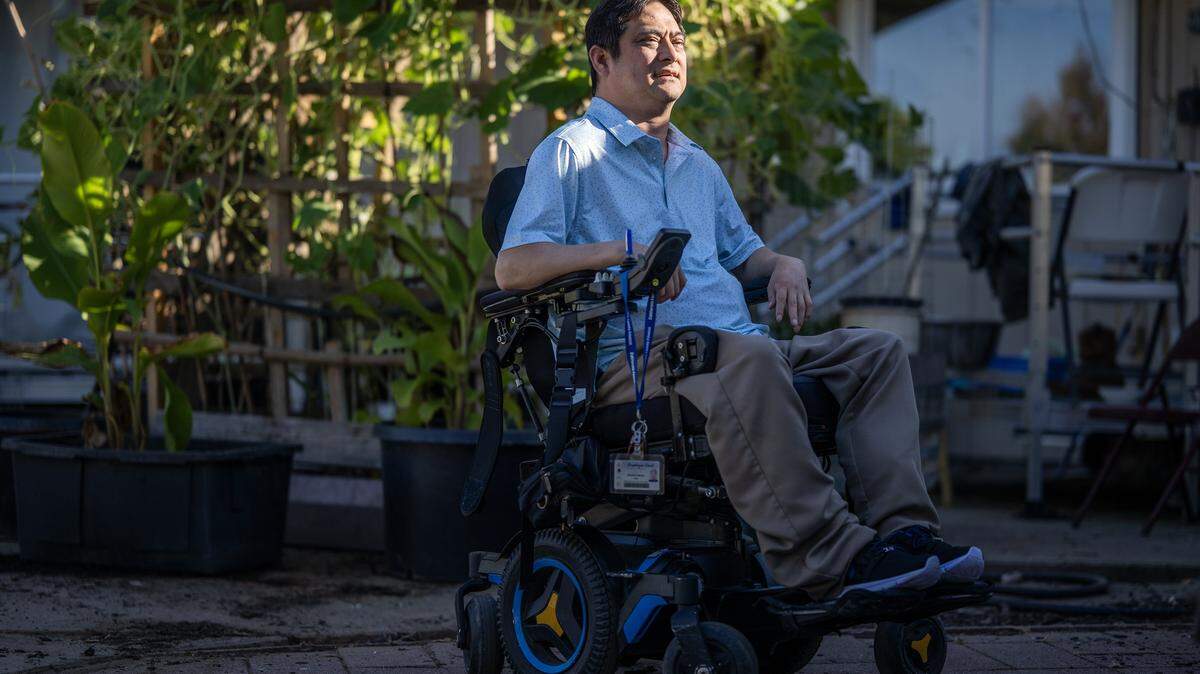
One plaintiff, Alfonso Nguyen, is a college counselor who uses an electric wheelchair and lives with his mother near Elk Grove. He said their high energy use — due to the wheelchair and temperature needs — led deputies to wrongly suspect them of growing marijuana.
The mother and son have twice faced aggressive enforcement actions from sheriff’s deputies insisting that there must be a marijuana grow on the premises, incidents that Nguyen says violated his rights and terrified his mother, a refugee from Vietnam who faced arrest under that country’s authoritarian post-war regime.
The lawsuit had also argued that SMUD and the city of Sacramento had engaged in racial profiling, because both made assumptions that high electricity usage by people with Asian surnames signaled the presence of an illegal marijuana grow.
Evidence included internal emails between SMUD employees and Sacramento police referencing Asian-sounding names in connection with organized crime investigations.
In part because the group making that claim was denied standing in the case, Chang ruled against the plaintiffs on that issue, but Schwartz said the ruling banning mass sharing people’s usage data achieved the same end.
“The program was bad for every customer of SMUD because it invaded their privacy,” Schwartz said. “The program was especially bad for Asian customers. ... We can hope that this discriminatory practice is going to be over now.”
Chang gave SMUD 60 days to demonstrate it had ended the practice of sharing electricity usage data on a ZIP code level with law enforcement.
SMUD said it would “happily comply with the court’s decision,” which it described in a statement as clarifying the degree to which it must comply with law enforcement requests. The decision confirmed the utility’s position that it was not violating constitutional privacy rights, the statement to The Bee said.
“SMUD has been complying in good faith with a broad California law that requires it to provide customer usage data to law enforcement as part of their investigations,” the utility said.
“SMUD is grateful for the clarification in the law from this decision, which relieves SMUD from having to respond to one particular type of labor-intensive request from law enforcement for meter usage data,” the utility said.
This story was originally published November 21, 2025 at 12:33 PM.