As Sacramento cable TV nonprofits plan merger, county’s budget casts uncertainty
AI-generated summary reviewed by our newsroom.
- A Sacramento County agency is set to hear the budget for public media institutions.
- County staff projected 15-25% cable revenue declines; nonprofits dispute impact.
- Nonprofits request funding through fiscal year 2027 to secure alternative revenue sources.
The plans were put into place to merge the work of two Sacramento nonprofits that provide resources for students and residents to create videos and podcasts.
The integration, between nonprofits Access Sacramento and the Sacramento Educational Cable Consortium, accelerated in September as elected officials were scheduled to approve the associated budgets. The organizations are largely funded by a Sacramento County government agency called the Sacramento Metropolitan Cable Television Commission, which provides money to public media institutions but has seen funding slow down since 2016.
The commission, composed of representatives from the county Board of Supervisors and local cities, was scheduled to vote on the organizations’ budget in September. That vote was delayed, in part because Access Sacramento and Sacramento Educational Cable Consortium leaders said they learned county staff proposed crippling budget cuts just days before the September meeting and needed more time to plan a merger. A budget meeting was scheduled for December.
But now, hours away from a Wednesday afternoon meeting to approve the nonprofits’ budgets, Sacramento Metropolitan Cable Television Commission executive director Shawn Ayala has yet to meet with Access Sacramento and the Sacramento Educational Cable Consortium ahead of this month’s budget meeting, said Joe Barr, the board chair for Access Sacramento. The cable commission is scheduled to meet at 2:30 p.m.
“We’re being open and transparent with them and communicating with them along the way, but it has not been reciprocated,” Barr said.
Ayala did not immediately respond to an emailed request for comment.
What Barr described as a lack of transparency also comes as the nonprofits offered a different revenue projection than county staff.
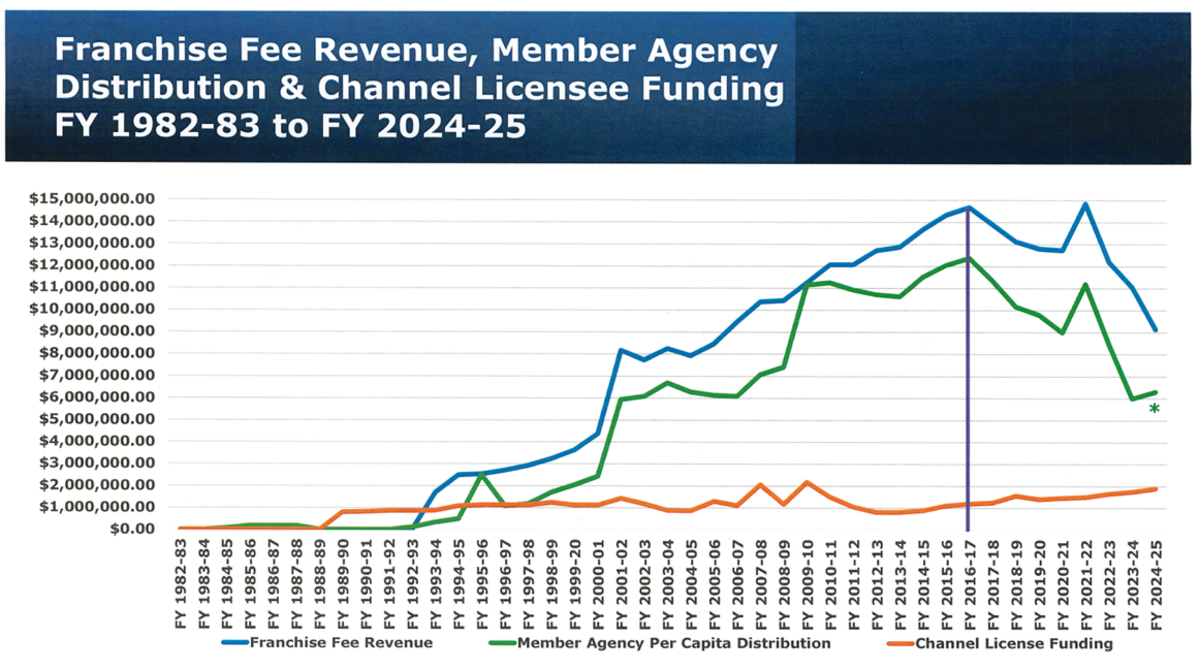
In the 1980s, cable companies built wires across regions to offer customers entertainment options. The companies charged their residents an extra fee — because the construction often happened on public land — and that money went to government agencies to fund public media, according to The Sacramento Bee’s previous reporting.
The money grew until 2016. Then the money dropped, aside from a spike during the COVID-19 pandemic, according to The Bee’s previous reporting.

Ayala, during the September meeting, showed projections for a 15%, 20% and 25% decline in revenues for the upcoming years.
The proposed September budget showed the nonprofits losing all funding by August, said Aaron Heinrich, the director for the Sacramento Educational Cable Consortium. But this fiscal cliff shown by Ayala is not the only explanation, he said.
A 15% year-over-year decline in funds shows the revenue would total about $8 million next year and $5 million at the end of this decade, according to an analysis conducted by the Buske Group, a local organization that has been working with public media and government agencies for 45 years.
Heinrich hopes the commission approves the integration and wants both entities to be funded until the end of the 2027 fiscal year. That gives the nonprofits time to secure other funding streams to stay afloat.
It’s a bit of mystery for Barr where the commission staff has gotten its projections from.
“If we had been communicating through this period over the last few months, we might have been able to understand all of this better,” Barr said. “But we don’t understand it.”