
Why Yuba County lifted its ban on ultralights, the motorcycles of the sky
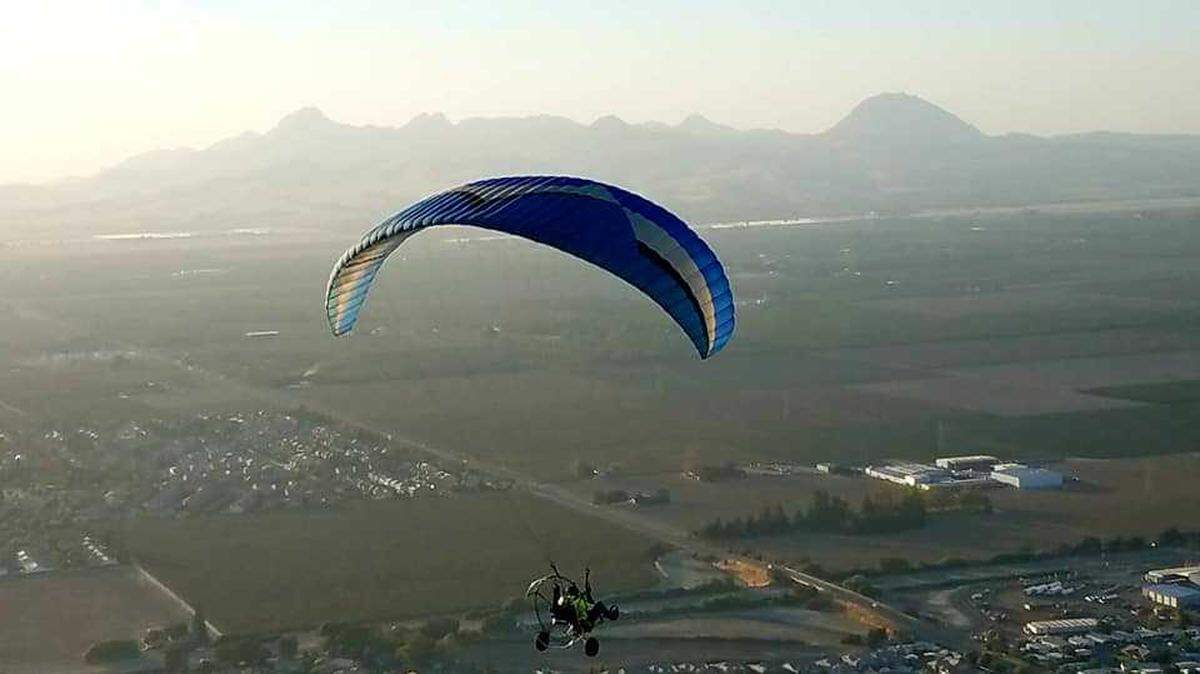
Yuba County supervisors last week voted to allow ultralight planes to fly from the Yuba County Airport, ending what amounted to a yearslong ban of the recreational flying machines that prompted a formal complaint to the Federal Aviation Administration.
But those who fly the relatively lightweight and low-powered planes — or motorized parachutes — said the new rules still limit their access to the airport and consequent airspace.
“The ultralights are kind of like the little guy, and their rights get infringed on a lot,” said David Shelton, an ultralight pilot. “If people don’t keep stepping up then the rights slowly go away.”
For the first time in nearly four years, county officials approved a new operating plan that designated a specific area on airport grounds where ultralight planes may operate, and also a low-altitude flight pattern for pilots to navigate to and from the airport.
The pivot to allow ultralight planes happened weeks before a late December deadline for the county to respond to a formal complaint to the FAA filed by Shelton, one of several local ultralight pilots who have spoken against the county’s ban.
The complaint accuses the county, due to alleged discrimination caused by not allowing ultralights access, of being out of compliance with requirements necessary to apply for and receive federal dollars for the airport. The complaint claims that the airport violated assurances tied to more than $1 million in federal grants accepted by the county since 2022.
By the books an ultralight could now take off from Yuba County Airport, but the pilots have said the new rules created additional barriers to access.
The relatively small ultralight community has called for a workshop to hash out the specifics of the new guidelines, which they claim are more restrictive than other airports and stricter than required of other aircraft. County officials have agreed to meet and discuss the matter further with the pilots who believe their rights to access the air above Yuba County remain violated.
The new procedures require ultralight pilots to pay a monthly fee for airport access and acquire a key card from the airport manager, and also to show proof of insurance.
“What is unfortunate right now is that instead of just restoring the access that they unlawfully took away, they are attempting to place additional requirements in place that continue to be discriminatory and create unreasonable costs,” said Harley Milne, an ultralight pilot who set a Guinness World Record by flying a powered paraglider in all 50 states.
“They just are making it very challenging to gain access back to the airport.”
What’s an ultralight — and what happened?
An ultralight is somewhat of an amorphous concept. The relatively lightweight, typically single-seat planes come in different shapes and sizes. Two of their key distinctions are qualities they lack: a need to register as an aircraft, or a pilot’s license to fly.
Under 254 pounds and significantly cheaper than other planes to buy and operate, an ultralight is an affordable and accessible means of reaching the sky.
Some have analogized ultralights to other planes as motorcycles are to cars, which begins to explain the stigma some pilots have seen applied to the recreational act of flying them, particularly when launched from airports.
“It would be a lot like if the county tried to ban motorcycles from the federally funded interstate,” Shelton said.
The effective ban lifted this week dates back to early 2022, but grand jury reports from more than a decade ago highlighted safety concerns pertaining to ultralight planes taking off from the county airport.
At the time, the grand jury recommended moving the ultralight operations to the west side of the airport to avoid other aircraft while giving access to the Feather River. Deciding on and gaining approval of a new ultralight location took nearly four years, according to county officials.
The county proposed multiple locations for the relocated ultralight space, Airport Manager Jason Kopping told supervisors, before coming to agreement with the FAA on a spot in the northeast section of the property.
Supervisor Jon Messick said that lifting the ban took as long as it did because of the back and forth with the FAA.
“Every time we’d find a place the FAA would ultimately reject it,” Messick said. “We finally found — after three-plus years — we finally found a place the FAA approved.”
A right to fly
Short of access to spacious private property, ultralight pilots often depend on public airports to fly. But rules for ultralight flying tend to vary among local airports.
“I have to admit that each and every single airport tends to operate a little bit differently, and it has a lot to do with the internal politics within the cities and the counties,” Milne said.
County officials said that the new requirements of ultralight pilots mirror what’s necessary for other airport users. But the pilots say the insurance, permission structure and monthly fee go beyond what other airports ask of them.
“This is not something that other airports do at all,” Milne said.
This story was originally published December 14, 2025 at 5:00 AM.