Meteor shower, ‘dramatic supermoon’ to clash in California night sky. When?
A spectacular supermoon and the first meteor shower of the new year will soon appear in the California night sky.
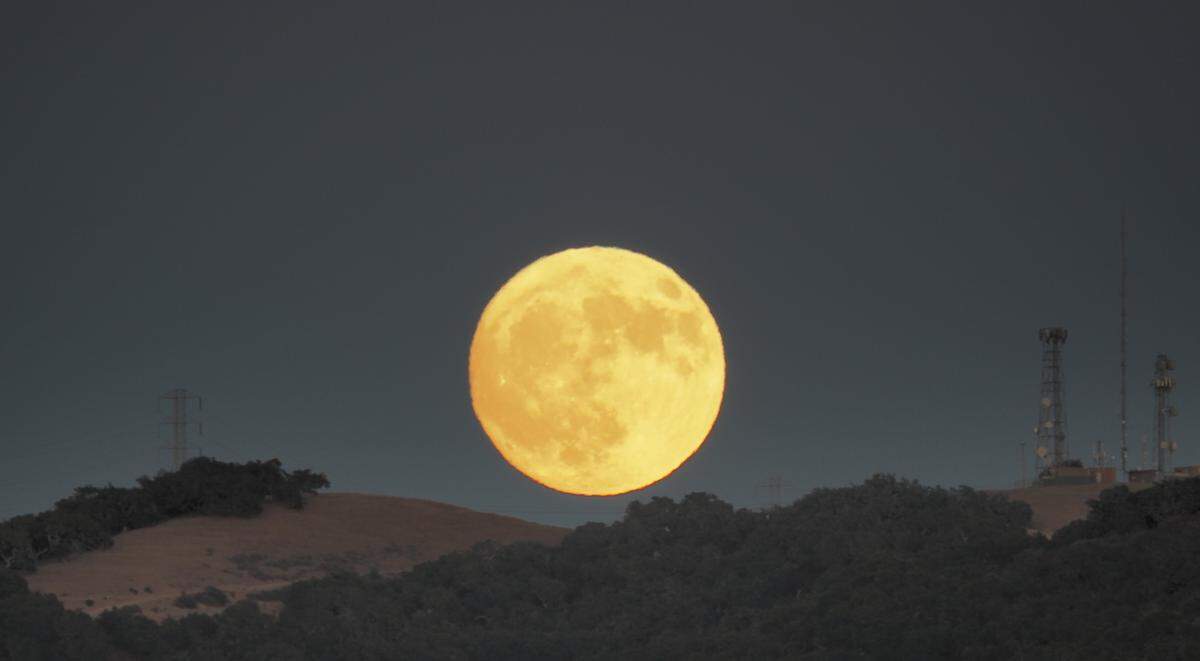
The supermoon will be the fourth massive moon in a row to rise above the Golden State. It will look both larger and brighter to local stargazers.
Here’s how to observe some of the most stunning celestial sights this January.
How to see Quadrantid meteor shower
The first meteor shower of 2026 will peak overnight from Friday, Jan. 2, to Saturday, Jan. 3.
The Quadrantids are usually a prolific stream of shooting stars. But this year the shower will be dulled by the supermoon.
“Activity will be severely compromised in 2026 as a full moon occurs on Jan. 3,” the American Meteor Society said. “The bright moonlight will obscure all but the brightest meteors.”
However, skywatchers should still be able to view up to 10 meteors per hour under clear and cloudless conditions, according to National Geographic.
According to NASA, the Quadrantids are comprised of bright fireball meteors that have long streaks of exploding light and color.
National Geographic recommended seeking out shooting stars in the pre-dawn hours when the shower’s radiant will appear high in the sky, near the Big Dipper constellation.
When to watch January supermoon in California
The first full moon of 2026 will reach peak illumination at 2:02 a.m. on Saturday, Jan. 3, according to online calendar Time and Date.
The January wolf moon will look larger than typical because the full moon is happening at perigee — the point when the moon is at its closest to Earth, National Geographic said.
“Catch a dramatic supermoon during the first weekend of the year,” National Geographic said. “The spectacle ... can make the orb appear up to 14% bigger and 30% brighter than usual.”
Californians can get the best glimpse of the larger-than-usual full moon at sunset or sunrise, when the moon will appear supersized near the horizon, according to National Geographic.
How did wolf moon get its name?
The January full moon is called the wolf moon because the animals are often heard howling at this time of year, according to the Old Farmer’s Almanac.
“Howling and other wolf vocalizations are heard in the wintertime to locate pack members, reinforce social bonds, define territory, and coordinate hunting,” the almanac said on its website.
Other names for the full moon in January include the center moon, since the moon is roughly in the middle of the cold season, as well as the frost exploding moon, the cold moon and the severe moon, according to Farmers’ Almanac.
How to observe a giant Jupiter
The best sighting of Jupiter in 2026 will take place on the nights of Friday, Jan. 9, and Saturday, Jan. 10.
On these winter evenings, the gas giant will be at opposition — the point when Earth will sit in between the fifth planet and the sun.
At this positioning, Jupiter will look larger and more luminous in the night sky, National Geographic said.
The next time the planet will be this close to earth won’t be until 2027, according to the publication.
“Find it in the east around sunset, near the Gemini constellation,” National Geographic said. “It forms a pyramid with Sirius and Orion’s belt.”